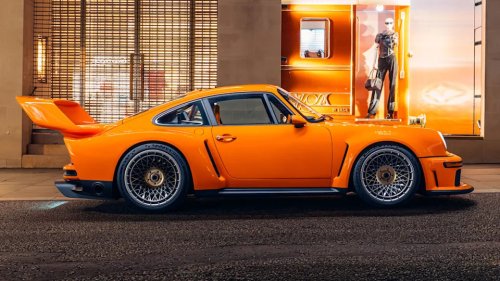
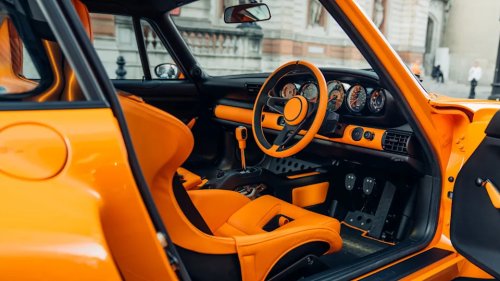
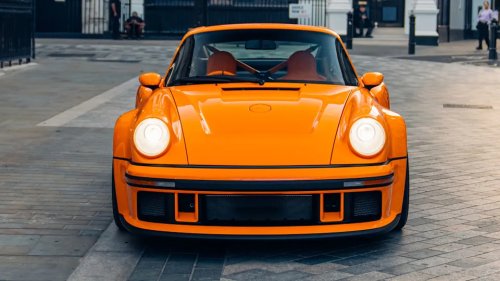
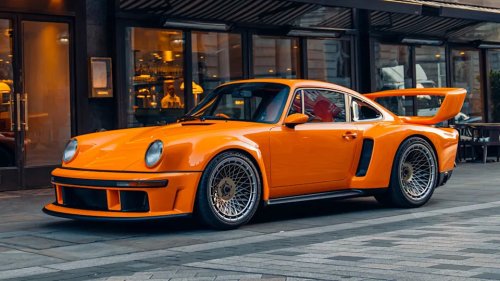
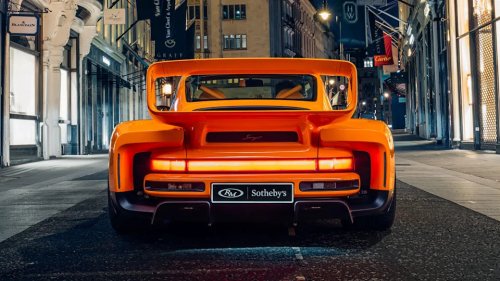
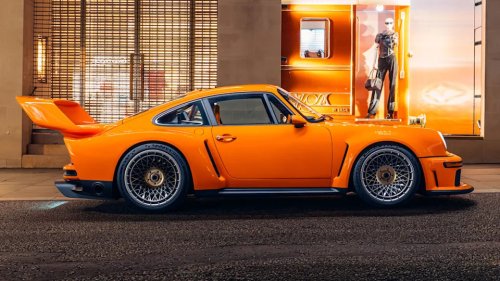
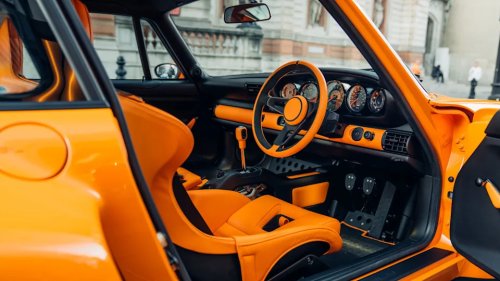
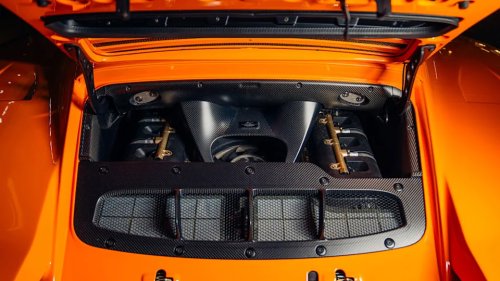
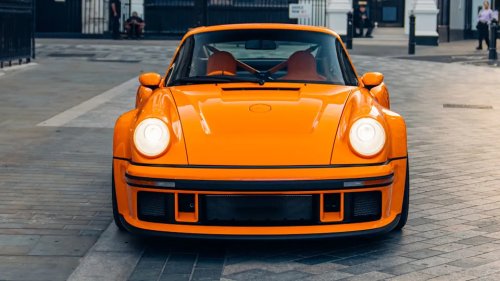
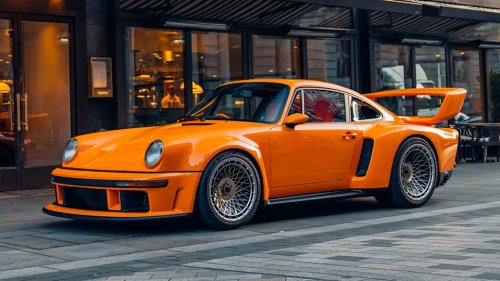
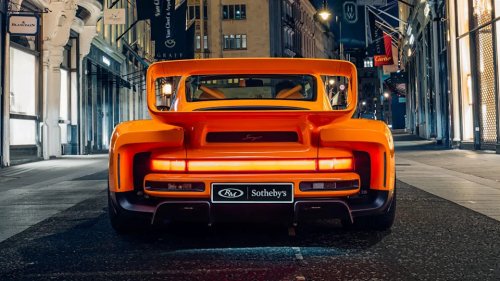
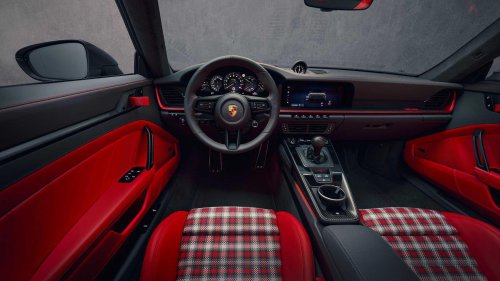
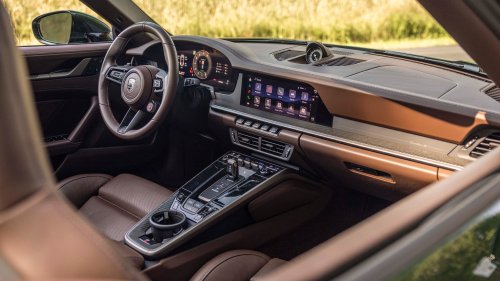
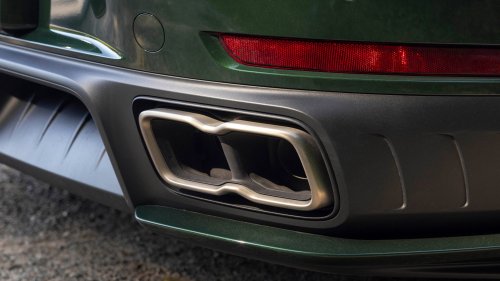
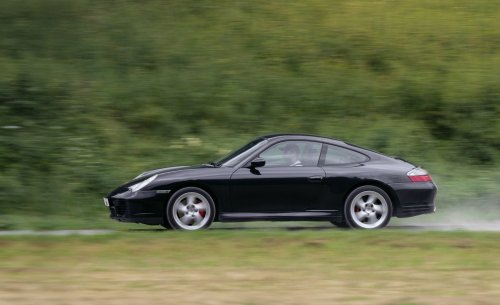
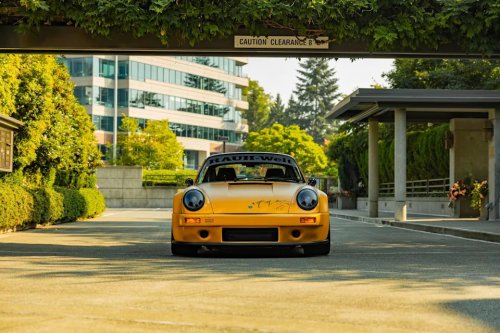
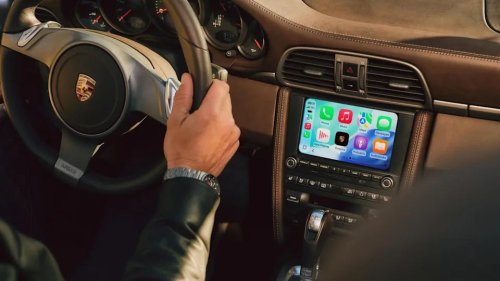
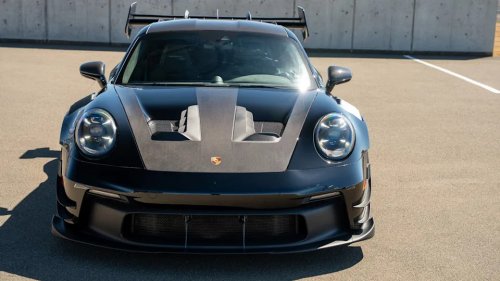
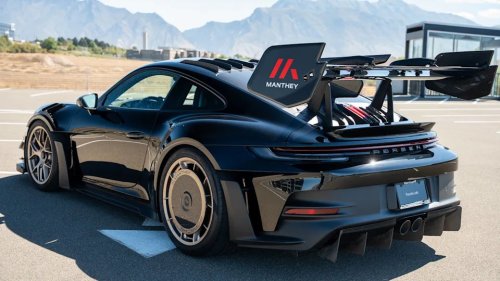
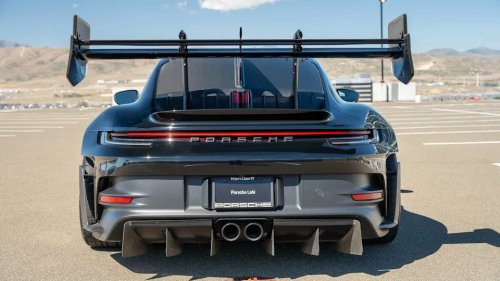
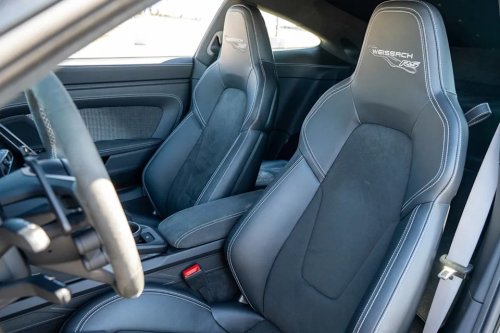
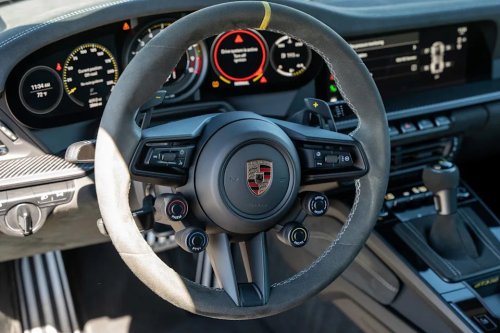
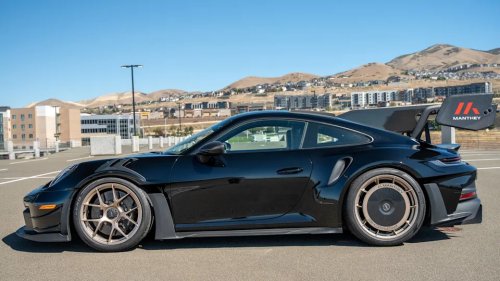
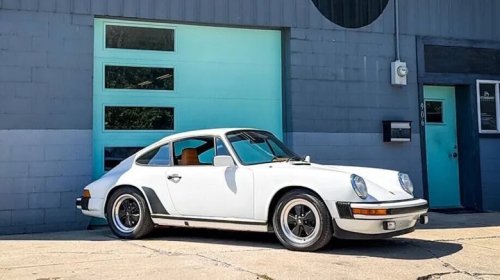
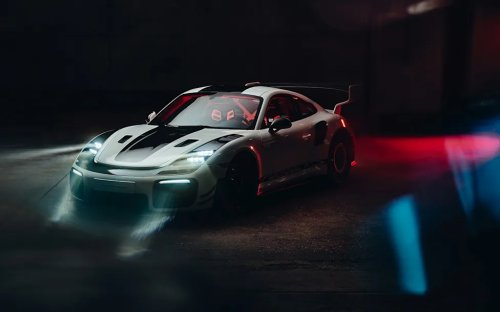
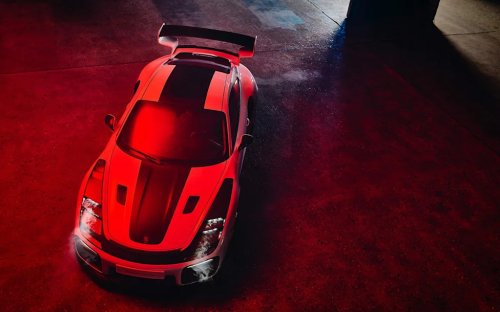
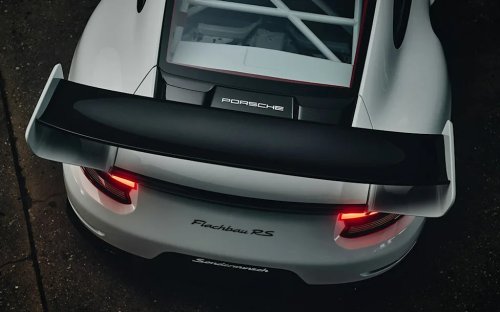
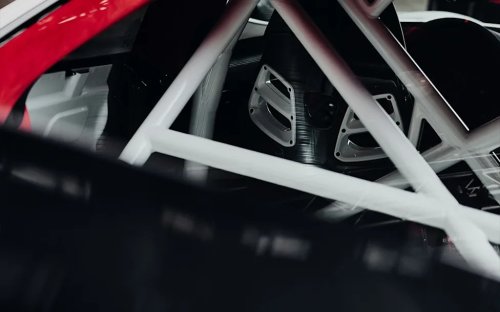
Porsche Built One 911 Flachbau RS, Then Homologated It Like a Production CarPorsche registered the model names Flachbau and Flachbau RS back in May 2025, and the sports-car internet did what it always does with a naming filing: assumed a limited run was coming. The answer, revealed ahead of the car's Monterey Car Week debut, is one car. Singular. A 2018 991.2 911 GT2 RS with the Weissach Package, dropped off by its owner and handed back by the Sonderwunsch department roughly three years later wearing a flat nose, a ladder of LED slivers where the round headlights used to be, and the Nordschleife stitched into the headrests.One car. Three years. Crash simulations, airbag deployment validation, a hydropulse rig, a lighting tunnel, a wind tunnel, three separate test vehicles and 50 laps of the Nordschleife. Nobody spends that on a one-off unless the one-off is also a rehearsal.The nose is styling. The headlights are engineering.Grafting a flat front onto a 911 is not new — independents have been doing it since the Reagan administration, and a good one still looks terrific. What separates a factory job from a body kit is everything that has to move because the nose moved.AdvertisementAdvertisementDropping the front fenders and cutting slatted louvers into them to vent pressure out of the wheel arches forced a redesign of the fuel filler flap and the mechanism underneath it. The front bumper is entirely new. And the lighting is new in the hardest possible way: three LED elements stacked in tiers, with the low beam and high beam each just under 1.5 inches tall and the daytime running light thinner than 0.78 inches.Height is the enemy in a headlamp. Regulations do not care how elegant your lens is; they specify how much light has to land where, and beam pattern is a function of optical geometry that gets meaner as the housing shrinks. Getting a compliant low beam out of an aperture roughly 38 millimeters tall is a genuine problem, which is why Porsche booked time in a lighting tunnel rather than eyeballing it. Move a headlamp and you also change its aim, its relationship to the rest of the car's mandatory lighting, and its approval status. That gap — between a look and a homologation — is the whole story here.The U-shaped carbon element on the hood is a direct lift from the Martini-liveried 935/78. Photo: Porsche AGThree test cars for one customer carThe validation program is the most revealing part of the announcement, because it reads like a production sign-off rather than a special order.Porsche ran the digital work first: crash simulations, airbag deployment validation, structural analysis of the loads the new wing would feed into the body, and CFD to clean up the aerodynamics. Only after that passed did tooling for the modified panels get approved. Then came hardware. The wing went onto a hydropulse rig for vibration testing and was checked for static load capacity. Three test vehicles were built. There were runs at Mendig airfield, wind tunnel and lighting tunnel sessions, and 50 Nordschleife laps plus endurance work at Weissach that together simulated roughly 93,200 miles of wing loading.AdvertisementAdvertisementFatigue-testing a wing to 150,000 kilometers of customer use, on a car that will realistically cover a few thousand miles a year, is either absurd or telling depending on how cynical you feel. It is also precisely the work the aftermarket never does. A conversion shop can build something visually identical and legally end up with a modified vehicle whose original type approval no longer quite describes it — a problem that surfaces at inspection time, at claim time, and in any jurisdiction that takes lighting approval seriously. Porsche went back and re-earned the paperwork. The car is road-registered in Europe, and that sentence is the expensive part of this entire project.The aero numbers, read honestlyThe rear wing borrows its S-shaped mounts from the 992-generation 911 GT3 R rennsport and sits nearly two inches higher on this car. It adjusts manually through three positions, and Porsche patented both the adjustment mechanism and its position markings — a curious thing to protect on a car that exists once.At roughly 211 mph in the High Downforce setting, the Flachbau RS generates about 1,221 pounds of downforce on the rear axle. Porsche's own comparison against a GT2 RS wearing the Manthey Kit: two percent more rear downforce in High, three percent in Low.Two percent. Credit to Porsche for publishing a number that unimpressive. For scale, Manthey's kit for the 991.2 lifts rear downforce from 93 to 200 kilograms at 124 mph, and aerodynamic load climbs with the square of speed — scale that 200-kilogram figure up to 211 mph and you land in the same neighborhood as the 1,221 pounds quoted here. Which is the point. The Flachbau bodywork is not buying grip; it is proving it did not cost any. Reshaping the front of a car this finely balanced without upsetting it is the achievement. The two percent is just the receipt.AdvertisementAdvertisementLars Kern handled the Nordschleife validation, which is a tidy piece of continuity: he is the same driver who put a Manthey-kitted GT2 RS around the 12.9-mile lap in 6:43.300 in June 2021, on road-legal Michelin Cup 2 R tires. Manthey has been busy on this side of the Atlantic too.Three manual wing positions, patented markings, and carbon aero discs on the rear wheels to cut drag. Photo: Porsche AGThe whale it is chasingThe 935/78 earned its nickname the hard way. It ran a 3,211 cc turbocharged flat six making 845 horsepower, and it was the first racing car with water-cooled cylinder heads sitting on otherwise air-cooled cylinders — an engineering answer to a valve-area problem air cooling could not solve. Norbert Singer designed it in the space the Group 5 rulebook forgot to close, which is why it looked less like a 911 than anything before it. At Le Mans in 1978 it touched 366 km/h — 227 mph — on the Hunaudières straight before a misfire and an oil leak dropped it to eighth. At the Silverstone 6 Hours that same year it won by seven laps.The Flachbau RS quotes it in two places. The U-shaped carbon element on the hood lifts a graphic from the Martini livery, and the paint is Grand Prix White, a color Porsche introduced on the 911 in 1974 and mixed fresh here against a historic 911 pulled from the company's own collection. Porsche has been mining its own livery archive aggressively lately.The road-car precedent matters more. Between 1982 and 1989 Porsche sold 948 slant-nose 930 Turbos through Sonderwunsch — 58 of the first series, 204 of the second with pop-up headlights, and 686 of the third. Even counting later conversions, the Flachbau is still one of the rarest 911 body styles there is.AdvertisementAdvertisementAnniversary homages are everywhere at the moment — Lamborghini is building 99 Revueltos dressed as a Miura — but nearly all of them are paint-and-badge exercises. This one needed new tooling and a fresh road approval.If you are American, this is a viewing exercisePorsche states plainly that the car is homologated for road use in Europe at the customer's request. It debuts in California. Those two facts do not resolve into a US title.The default escape hatch from federal safety standards is the 25-year rule, and the donor car is a 2018 — so, 2043. NHTSA's Show or Display exemption, meant for vehicles of unusual historical or technological significance, caps you at 2,500 miles a year and generally will not approve a car when a US-certified version of the same make, model and year already exists. Porsche federalized and sold the 2018 911 GT2 RS here at $293,200, plus $31,000 for the Weissach Package. That makes Show or Display a hard argument to win.Which leaves temporary importation: granted in annual increments, up to three years duty-free or five with duty paid, and the vehicle has to be exported or destroyed when the clock runs out. It is a show car in the legal sense as well as the promotional one. Anyone who followed the 100-car Nurburgring tribute GT3 already knows the shape of this problem.AdvertisementAdvertisementAnd even if the paperwork could be forced through, the lighting would end it. FMVSS 108 is not the European standard those stacked LED units were designed against, and headlamps are the single most common reason a European-legal car cannot be made American-legal without replacing the parts that made it interesting in the first place.What this does to the value of a GT2 RSThe reflex with a low-mileage 991.2 GT2 RS Weissach — a car that has traded comfortably above its original sticker for years — is to leave it alone. Cutting one up is normally how you turn a blue-chip 911 into a bespoke car worth less than the sum of its parts. The classifieds are full of tastefully modified Porsches selling at a discount to stock examples.This is the exception, and the reason is documentation, not bodywork. A gold plaque on the passenger side reading Werksunikat 2026 – Flachbau RS, a Sonderwunsch build file, and a validation program run out of Weissach are the entire argument. A visually identical conversion from a talented independent would be worth a fraction of it — and would be a harder insurance conversation, since agreed-value coverage on a one-off needs an appraisal, and a factory paper trail makes that trivial where an aftermarket build makes it a negotiation.Note what did not change. The 3.8-liter twin-turbo flat six is untouched at 700 horsepower and 553 lb-ft, at the customer's request. The roughly 70-pound reduction came from carpets, sound deadening, the PCM head unit — replaced by a leather-lined cubby — the entire audio system, and individual wires nobody needed anymore. Even the warning triangle and towing eye mounts were deleted, with both items moved into a removable box so they can be left in the garage on track days. On a GT2 RS Weissach, already down around 3,200 pounds, finding another 70 is legitimately difficult. It also barely matters. This was never about lap time.Everything forward of the seats stayed. Everything behind them went. Photo: Porsche AGOne car, or the first one?Porsche registered two names. It patented a wing mechanism. It built three test vehicles, ran a full digital and physical validation program, and homologated a new body shape for the road. Then it announced a single example.AdvertisementAdvertisementCompanies that intend to build exactly one of something do not usually secure naming rights to a variant they have not announced. Whether Flachbau RS becomes a 992-generation limited run or stays a line in Sonderwunsch's ledger, the costly part is already finished and filed. Porsche has spent the past year telling investors it will lean harder on high-margin combustion specials while it stretches the 911 into the middle of the next decade. A homologated slant-nose body with a trademark attached looks an awful lot like inventory.















 +27 others