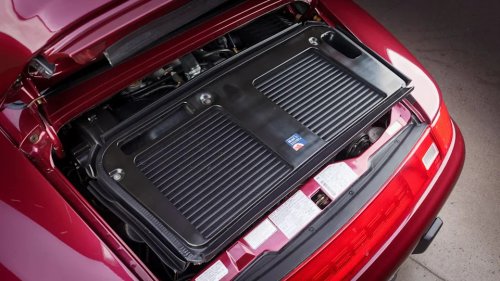
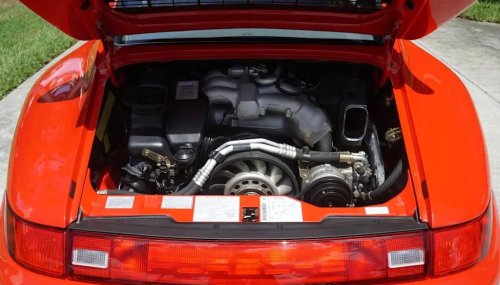
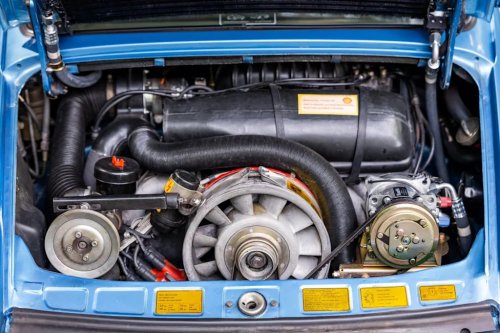
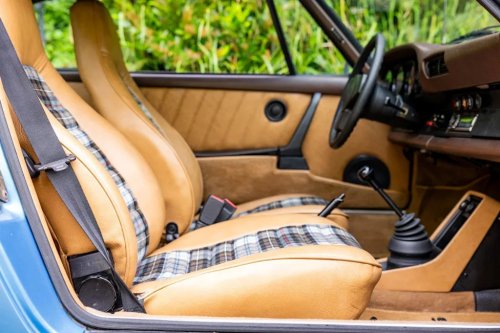
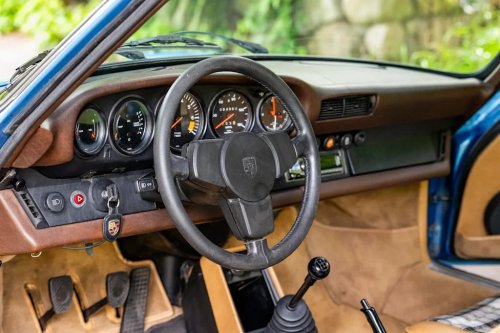
The Porsche 911 Engine Number Is the Originality Detail That Moves the MoneyModern Car CollectorJohn LloydTue, September 22, 2026 at 3:30 PM UTCAdd us on GoogleEvery air-cooled Porsche 911 on the market has an engine in it. Far fewer have the engine Porsche put in them. That gap drives the biggest originality swing in the long-hood and impact-bumper market. The Porsche 911 engine number stamped into the crankcase settles the question. A seller's listing copy does not. Two 1973 Carreras can use nearly identical language and still sit tens of thousands of dollars apart. One kept its original case. The other runs a perfectly good engine from a different car.The crankcase stamping, not the engine specification, is what a matching-numbers claim rests on.Why the Porsche 911 Engine Number Outranks the Engine TypePorsche stamped a unique number into the crankcase of every 911 flat-six. That number ties one engine to one chassis. Casting marks, case material and displacement only identify a type of engine. The stamped number identifies an individual. So "it is the correct 2.4-litre E-spec motor" and "it is the engine this car left the factory with" mean very different things. Only the second claim earns a premium. Muscle-car buyers already know what a matching-numbers claim should prove. The Porsche version leans on factory paperwork instead of a VIN derivative, so you have to check it differently.Case material gives you a fast sanity check. Porsche used aluminium crankcases on the earliest cars. Magnesium followed through much of the 1968 to 1977 run. Aluminium returned with the 3.0-litre SC. An "early two-litre" sitting on a magnesium case has already answered the question. The number also encodes model year and engine type. A stamping that decodes to a later year than the chassis ends the conversation. By contrast, Corvette buyers read an engine pad stamping derived from the car's own VIN, which is a different mechanism entirely.What the Kardex and Certificate of Authenticity Actually ProvePorsche's Kardex is the factory record card for early cars. It shows how the factory specified and equipped a given chassis. For the wider air-cooled run, Porsche issues a Certificate of Authenticity. That document lists the chassis number, the engine number, the transmission number, paint and interior codes, and the original option list. It costs little and arrives in weeks. It is also the only way to compare the numbers on the car with the numbers Porsche recorded.The certificate also records interior and paint codes, so presentation claims can be checked too.Neither document authenticates the car in front of you. Both describe the car that left Zuffenhausen. Five decades of later history fall outside their scope. Other manufacturers now entering the documentation business hit the same limit. Treat a certificate as the yardstick, not the verdict. Sellers who call one "proof of originality" are quietly conflating the two.A Factory Exchange Engine Is Not a Mystery SwapOwners rebuilt, replaced and upgraded these engines as a matter of routine. Porsche itself supplied exchange units through its dealer network. A documented factory replacement with invoices is one thing. An unnumbered case of uncertain origin is another. Discount both against a verified car. Only one of them leaves you with no history at all.When Modification Beats OriginalityThe market also pays for the opposite approach, provided the work is coherent and disclosed. Heavily reengineered air-cooled Porsches trade on the builder's reputation rather than on factory records. A modified car with the right name attached can outprice a standard one. The expensive mistake runs both ways. Never pay an originality premium for a car whose value rests on its modifications. Never pay a builder premium for an unsorted original.Disclosed, well-executed modification is a different value proposition. It is not a lesser one.What Buyers Should Verify Before Paying the PremiumOrder the Certificate of Authenticity, or the Kardex on an early car, straight from Porsche using the chassis number. Never rely on the seller's copy.Read the engine number off the crankcase yourself. Compare it digit by digit with the certificate, and take your own photographs.Check the transmission number too. Gearboxes get swapped casually, and matching-numbers claims routinely skip them.Confirm the crankcase material and the year prefix in the engine number both suit the model year of the chassis.Inspect the stamped area closely. Look for welding, filler, uneven digit spacing, wrong character shapes or fresh machining.Verify the chassis number everywhere it appears, including the front luggage compartment stamping and the separate body number. A re-shelled car will not reconcile.Get the rebuild trail on the fitted engine. Ask who did the work, when, what they replaced, and whether they reused the original case.If the engine is a replacement, ask for paperwork showing when and why. Then price and negotiate the car accordingly.Hire an air-cooled specialist for the inspection, and put the numbers findings in the bill of sale. The same discipline applies to any first collector car purchase.AdvertisementAdvertisementNone of this makes an original-engine 911 quicker or more reliable. A freshly rebuilt replacement engine often drives better. The original case buys certainty instead, and the market pays for certainty. Verify the number before the money moves and you buy a documented fact. Verify it afterwards and you buy a story, then hope it holds.Join our Newsletter, follow our Instagram page, and follow us on Facebook.




















 +15 others



































![Porsche, It's finally here: Porsche puts wireless EV charging into production [video]](https://cdn.topcarnews.net/thumb/id/aHR0cHM6Ly9pMC53cC5jb20vZWxlY3Ry-ZWsuY28vd3AtY29udGVudC91cGxvYWRz-L3NpdGVzLzMvMjAyNi8wOS93aXJlbGVz-c19tYWluLmpwZWc_dz0xNTAwJmFtcDtx-dWFsaXR5PTgyJmFtcDtzdHJpcD1hbGwm-YW1wO3NzbD0x/1a04f9f19968e2d3eb15f335c21c92a5.jpeg?t=20260922&post_id=63825)
![Porsche, It's finally here: Porsche puts wireless EV charging into production [video]](https://cdn.topcarnews.net/thumb/id/aHR0cHM6Ly9lbGVjdHJlay5jby93cC1j-b250ZW50L3VwbG9hZHMvc2l0ZXMvMy8y-MDI1LzAzL0RFUy0xMDM4X0VsZWN0cmVr-LUJhbm5lcnNfRVZzXzA3OTdjMi5wbmc/e850e929e3168f8c7ff73cd888e54add.png?t=20260922&post_id=63825)