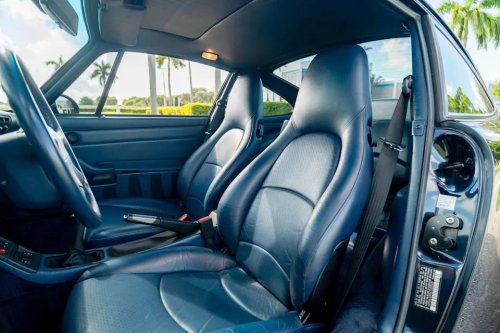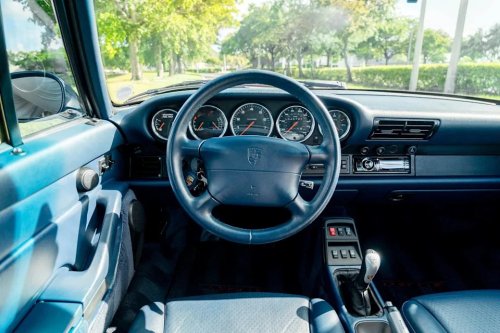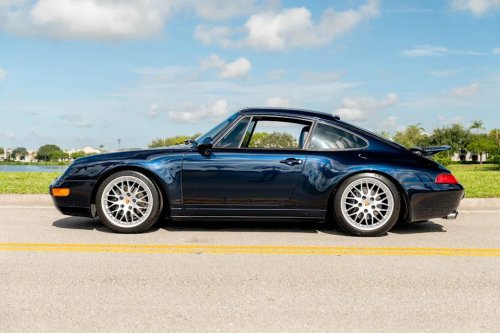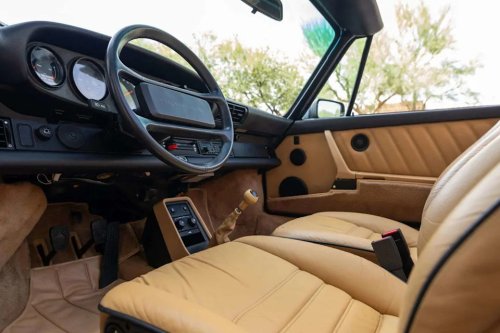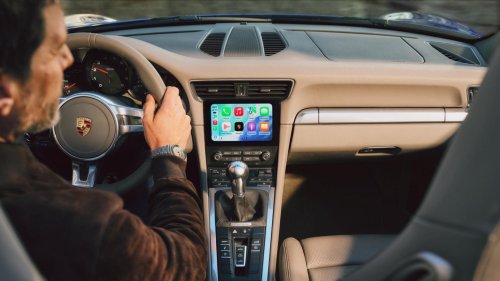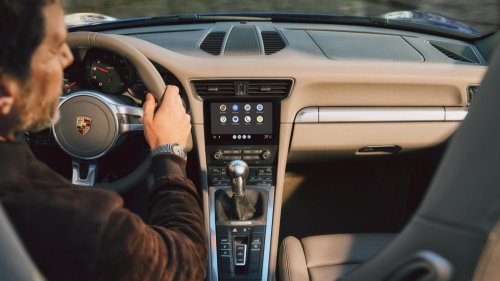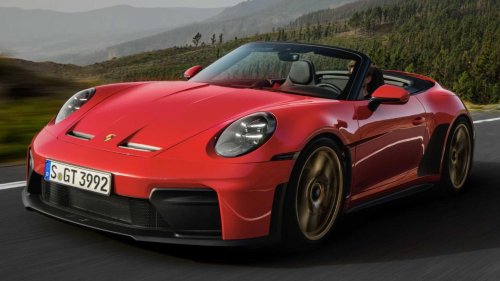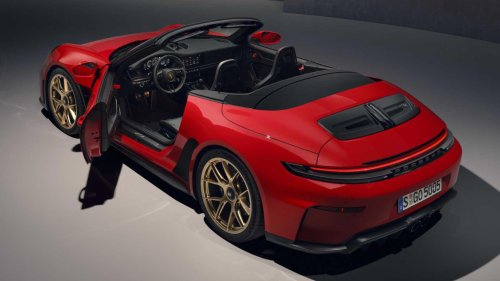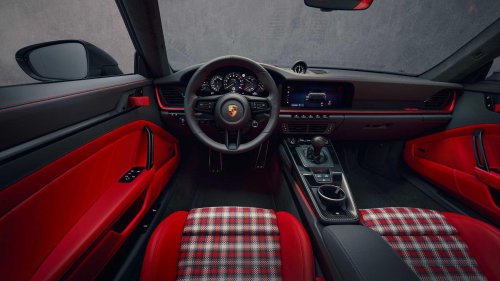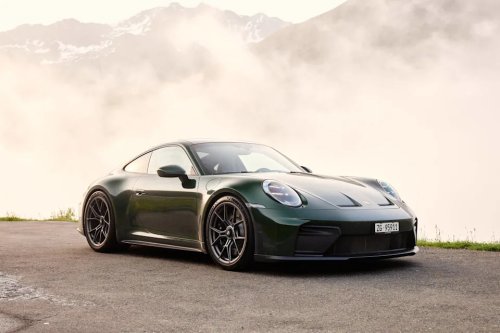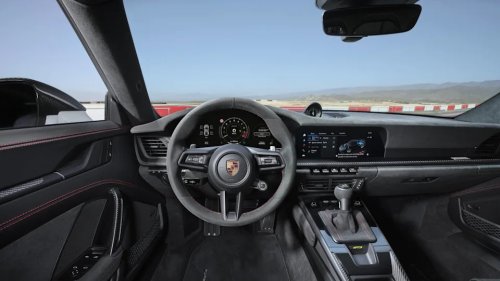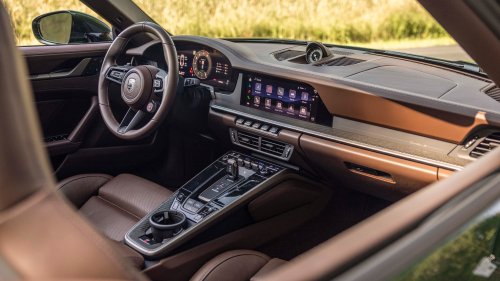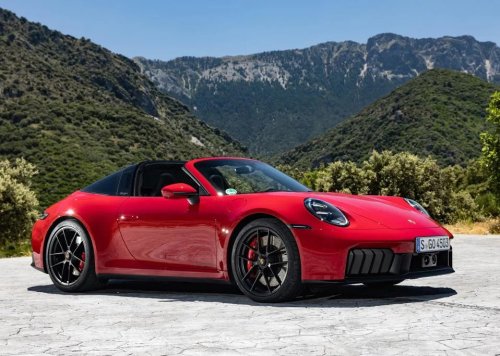
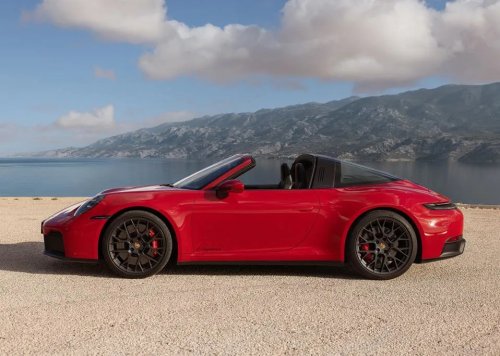
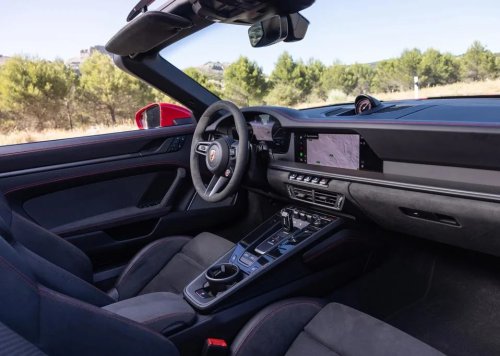
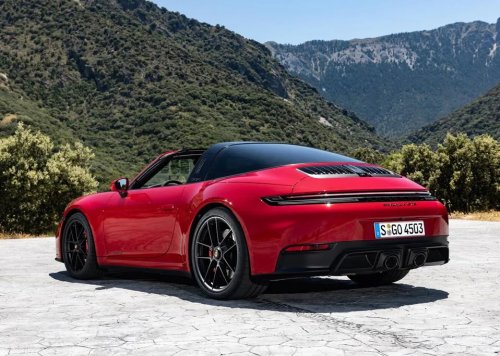



















Test-Driving The 2026 Porsche 911 Targa 4 GTSForbesMichael Harley, ContributorUpdatedThu, September 17, 2026 at 4:25 PM UTCAdd us on Google2026 Porsche 911 Targa 4 GTS in Carmine Red©2026 PorschePorsche introduced the original 911 Targa at the 1965 Frankfurt motor show. The new-for-1967 "safety cabriolet" blended a hardtop coupe with a droptop convertible, an innovative design intended to bypass anticipated U.S. National Highway Traffic Safety Administration (NHTSA) rollover safety regulations that threatened to ban fully open convertibles. Porsche's solution, named after the Targa Florio road race, featured a sturdy stainless-steel-clad fixed roll bar, a removable center panel, and a fold-down plastic rear window. Consumers loved it—demand quickly outpaced production capacity as buyers embraced the unique and stylish design.Porsche slightly altered the Targa recipe over the next several decades, eventually replacing the iconic hoop with a sliding glass roof for three generations of 911. Then, in 2014, the German automaker debuted a new retro look that restored the classic Targa visual identity. The reborn design, introduced on the Type 991.1, featured the familiar prominent bar behind the seats, wraparound rear glass, and an opaque roof panel above the front occupants. But thanks to modern technology, it also introduced something new—an innovative power-operated roof mechanism engineered to perform a carefully coordinated mechanical dance each time it opened and closed.The iconic profile of the 2026 Porsche 911 Targa 4 GTS, in Carmine RedThe 2026 Porsche 911 Targa 4 GTS (T-Hybrid), a Type 992.2, sports a decklid badge that comprehensively spells out the vehicle's name. There's a lot to unpack, but for the layperson, it's easiest to think of this derivative as a near-mechanical twin of the Porsche 911 Carrera 4 GTS—except the coupe's fixed alloy roof has been replaced with the power-operated Targa roof.AdvertisementAdvertisementLike the GTS, the Targa 4 GTS is equipped with the recently developed 3.6-liter flat-6 fitted with an electric exhaust turbocharger. A second electric motor is integrated into the 8-speed PDK dual-clutch transmission and is powered by a compact 400-volt traction battery. Unlike a conventional hybrid, the battery isn't engineered to propel the vehicle. Instead, it stores recovered energy and distributes it based on need and optimized use to power the single e-turbo and the integrated transmission-mounted motor—Porsche calls this its "T-Hybrid" setup.You don't need to dwell on the T-Hybrid system's considerable mechanical complexity and German innovation (it could fill the volume of a book). Instead, what matters from behind the wheel is its relentless, immediate thrust and impressive output: a combined 532 horsepower and 449 pound-feet of torque. Instrumented testing puts the 0-60 mph run in under three seconds, with a top speed of 194 mph. It's bloody fast, as they say on the other side of the Pond.Mechanically, the Targa 4 GTS mirrors nearly all the go-fast, enthusiast-tuned upgrades fitted to the Carrera 4 GTS. The Targa 4 GTS shares the Carrera GTS's adaptive PASM chassis, rear-axle steering, GTS-specific anti-roll bars, and rear helper springs. Unlike the Carrera GTS, however, it forgoes the 10-mm-lower PASM Sport Suspension, preserving a slightly more touring-oriented chassis calibration. Other GTS-spec goodies include standard rear-axle steering, bigger brakes (PCCBs are optional), and staggered-sized wheels—it wears 20-inch front and 21-inch rear Carrera GTS wheels, with 245/35 ZR20 front and 315/30 ZR21 rear performance tires (my test vehicle was running on Goodyears).The driver-oriented GTS trim package includes Sport Chrono (with the steering-wheel mode selector), Sport Plus programming, launch control, and the Sport Response function for maximum short-duration powertrain response. The standard seats are four-way Sport Seats Plus, upholstered in Race-Tex with leather elements. (Comfy, but I recommend upgrading to the 18-way Adaptive Sport Seats Plus with Memory Package—some of the most comfortable and supportive seats my aging back has ever experienced.)AdvertisementAdvertisementThe Targa roof deserves its own paragraph, as it's one of the most complicated—and satisfying—roof mechanisms in the automotive business. With the Targa fully stopped or parked, press the switch and the rear glass and clamshell-like rear deck rise together and are lifted over the rear of the vehicle (they extend so far rearward that the ultrasonic ParkAssist sensors scan to ensure the area is clear during the operation). The fabric-covered roof section releases, folds into a compact Z-shape, and stows behind the rear seats before the glass and deck lower into place. The sequence takes about 20 seconds. It is less a convenience feature than a mechanical ballet—and because the car must remain stationary, it invites an audience (especially since the best viewing position is outside the vehicle). I opened the Targa roof during a fuel stop, and I spent the next 10 minutes talking about it to strangers. I closed it in a parking lot and ended up fielding a handful of random questions. It literally stops passers-by in their tracks.The cockpit of the 2026 Porsche 911 Targa 4 GTSWithout question, the Targa roof is magnificent. But it adds complexity, additional seals, motors, and sensors, and more weight than a simple coupe roof—the Targa 4 GTS has a curb weight of about 3,870 pounds, which is about 235 pounds heavier than the Carrera 4 GTS. (While that additional mass sounds significant on paper, it adds a mere .1 of a second to the 0-60 time.)In the real world, the Targa 4 GTS is a superstar with practical virtues. Within my first hour with the Targa, I was battling a downpour during a summer thunderstorm. I closed the roof, and the cabin was sealed like a drum while the standard AWD offered tenacious grip on the slick roads (Porsche's innovative "wet" drive mode really works). Later that afternoon, I opened the roof to enjoy the warm sunshine on a highway drive. With the windows up and at cruising speed (50-70 mph), buffeting isn't an issue thanks to the integrated wind deflector at the top of the windshield. I met some friends for pizza later that evening—I cruised there with the top and windows down, enjoying the cool breeze.While the 911 Cabriolet always seems to remind the driver they are in a convertible, the Targa doesn't. Credit the large wraparound heated rear glass, which gives an expansive view in the rearview mirror and lets in much more ambient light (the Cabriolet has a much smaller rear window). The fixed roll bar and the heavily insulated roof panel also contribute to the feeling of being in a coupe—in sharp contrast to the sprawling fabric overhead in the Cabriolet. While I'd never say that the Cabriolet isn't good at isolation when its roof is raised, the Targa feels more buttoned-up, weatherproof, safer, and more secure.AdvertisementAdvertisementPutting the enthusiast-tuned "GTS" to the test, I ran the Targa 4 GTS up and down my favorite canyon road. Regardless of the drive mode, it's a capable canyon carver that utilizes its T-Hybrid powertrain to deliver immediate torque even under light throttle input. Although the sport exhaust note sounds muted and more distant than on the Carrera 4 GTS coupe (even with the Targa roof open), the performance is 100 percent there. You can toss the Targa into a corner, and it will pull itself out of the bend with magical prowess. Braking, always a Porsche strength, is a non-issue. Someone who has driven all of the 911 variants (like me) can feel the additional weight of the Targa platform, but it didn't seem to slow my progress on public roads in any measurable way.2026 Porsche 911 Targa 4 GTS in Carmine RedWith a base price of $203,300 before destination, options, and the inevitable Porsche Exclusive temptations, the 911 Targa 4 GTS is hardly the sensible 911 choice. A track junkie will note that the Carrera 4 GTS coupe is cheaper, lighter, and faster around a circuit. And a dentist in Palm Springs will likely point out that a Carrera 4 GTS Cabriolet provides a more complete open-top experience. But the Targa's job is to be neither—it has always occupied its own peculiar space in the 911 family. It is a fast, technologically ambitious grand-touring 911 with an unmistakable silhouette, 60 years of celebrated history, and the ability to turn heads with the press of a button.This article was originally published on Forbes.com