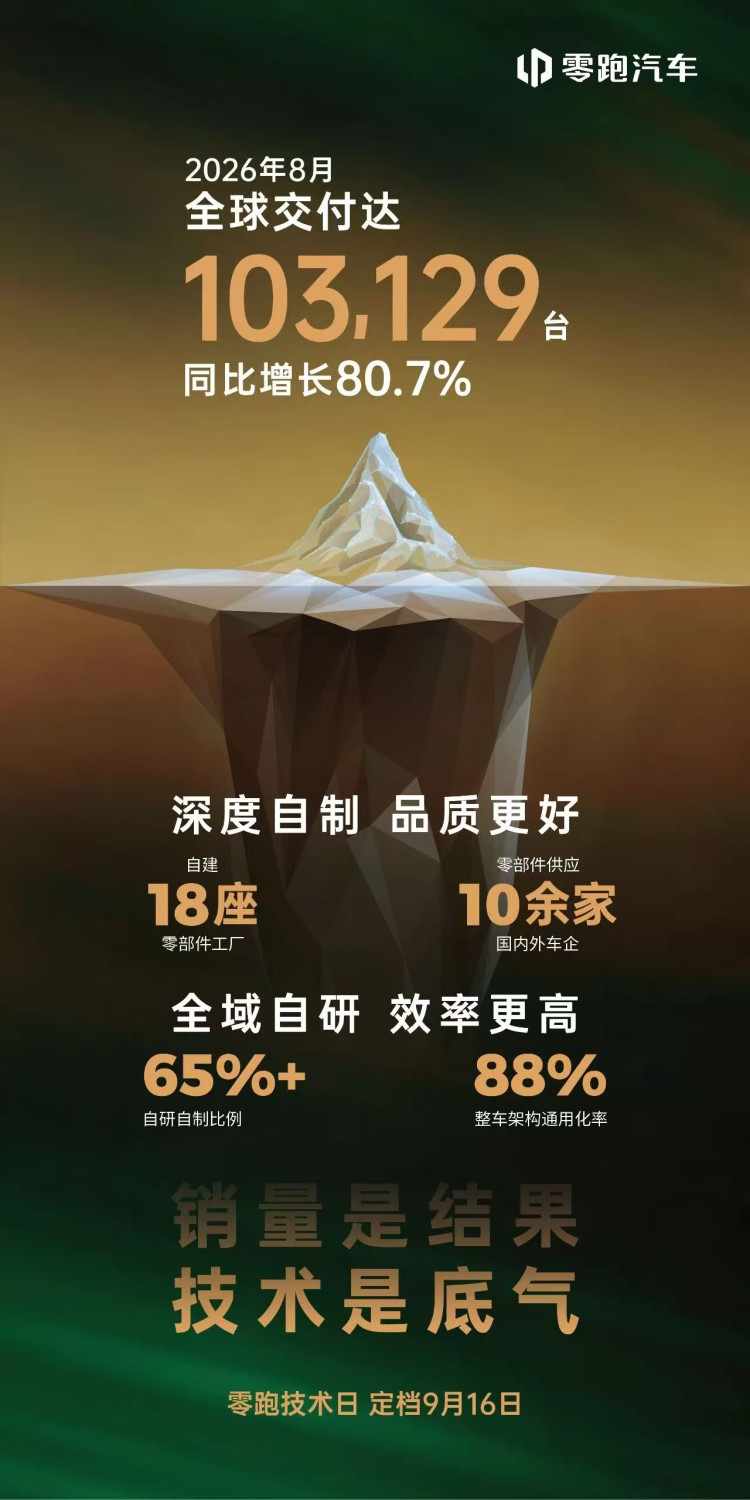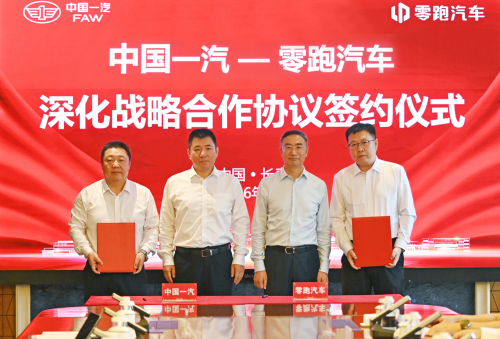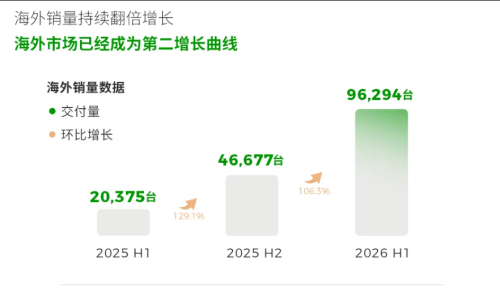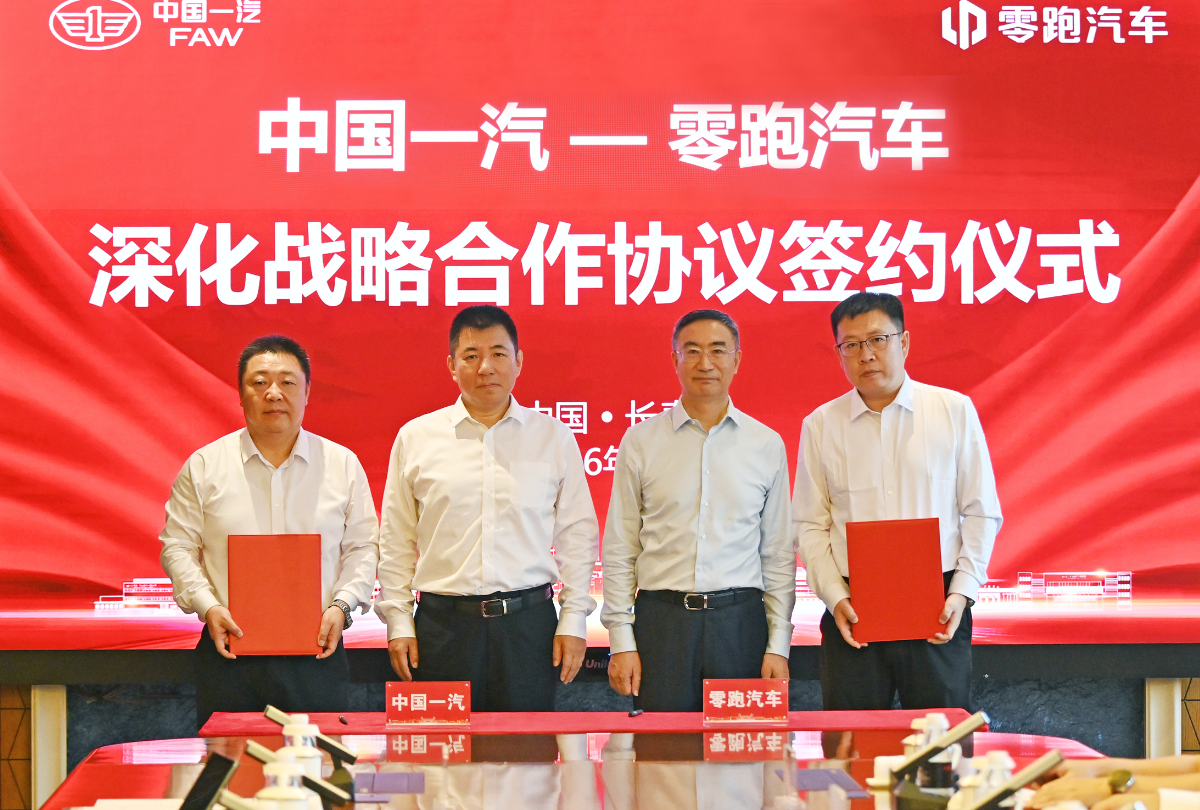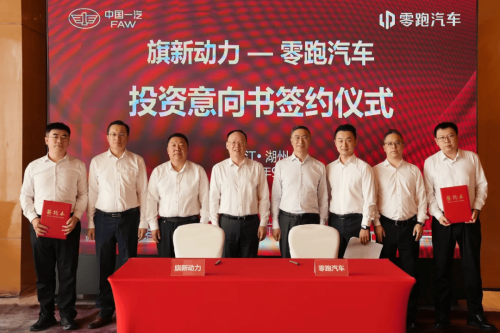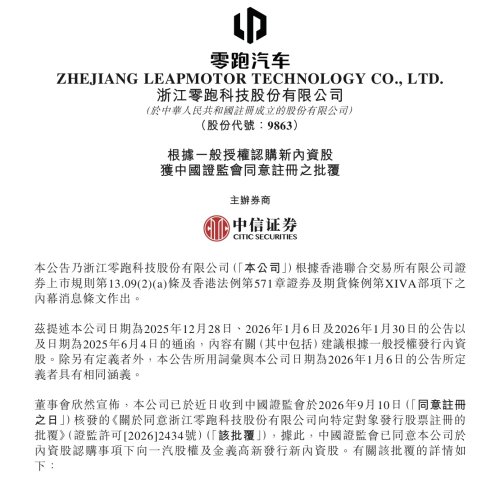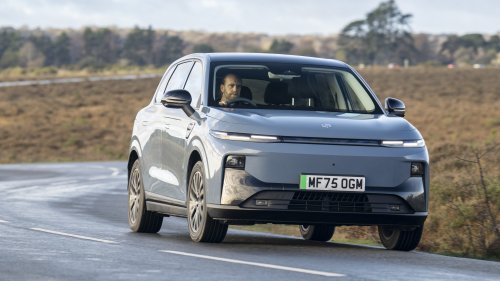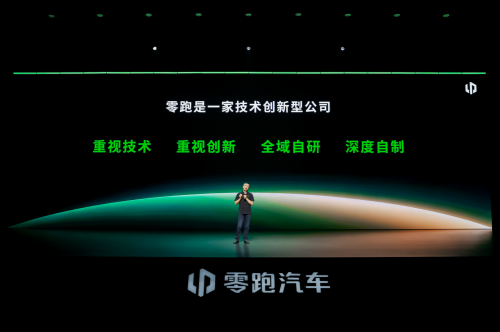
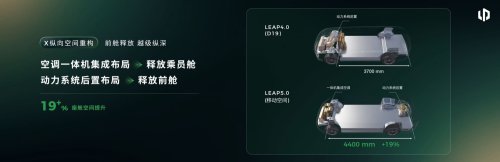
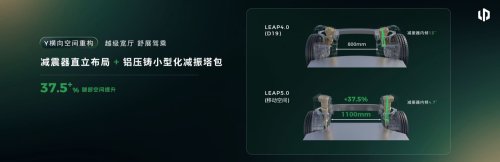
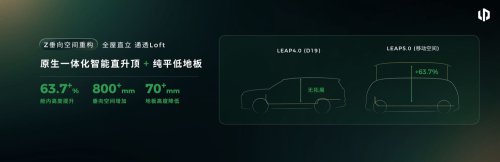
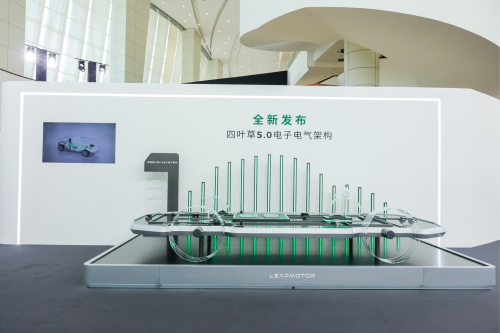

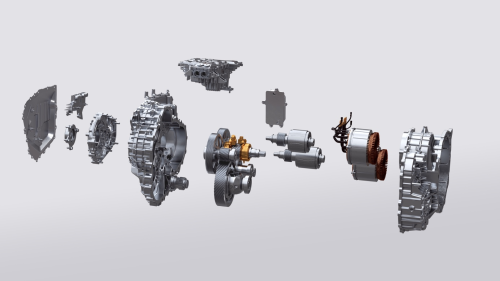
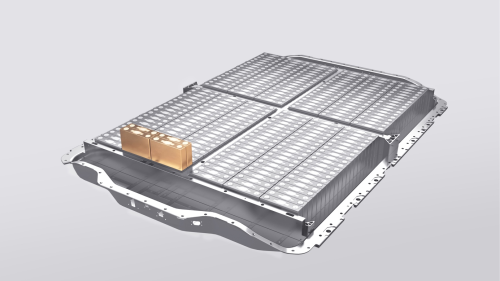
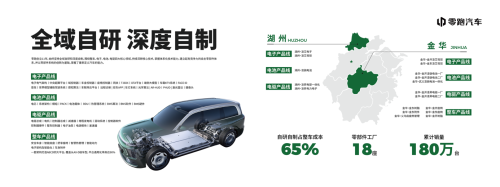



















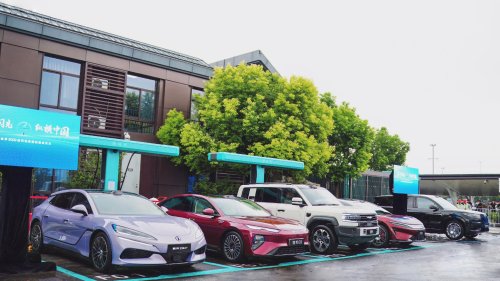
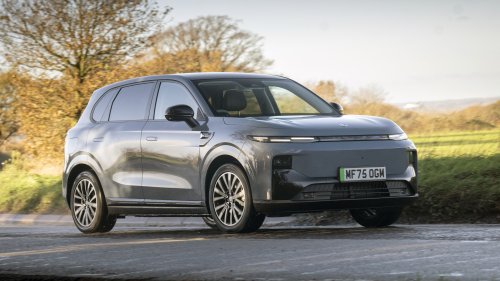


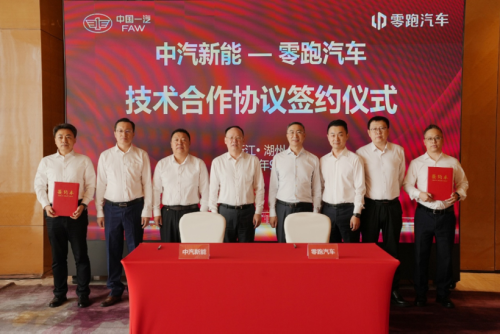
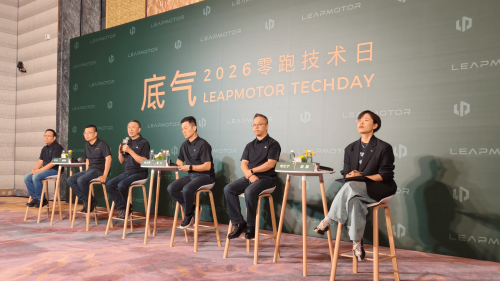
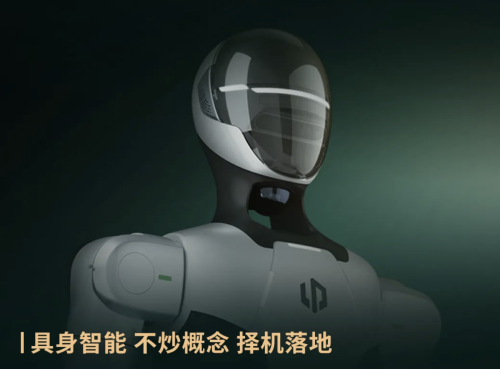
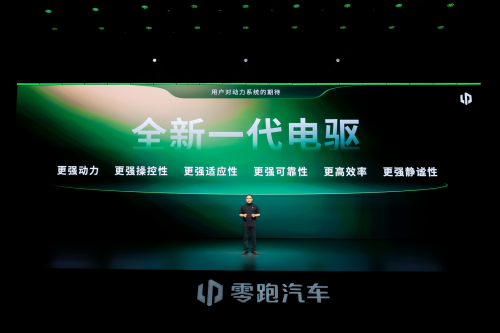
Gasgoo Munich- By 2026, the penetration rate of new energy vehicles (NEVs) in China has stabilized above 50%, even crossing the 60% threshold. Yet, a curious trend has emerged: technical discussions within the industry are fading. In their place, we see endless price wars, ever-lengthening configuration lists, screens stacking up, and computing power specs climbing higher...Consequently, a narrative has taken hold: NEV technology is converging, innovation has peaked, and competition has been reduced to stacking screens, computing power, and price cuts. When launch events focus on piling up specs, a question surfaces: Has automotive technology really reached its limit?On September 16, the 2026 Leapmotor Tech Day, themed "Confidence," offered a different answer. Leapmotor didn't dodge this industry proposition; it met it head-on. The event saw the release of the all-new LEAP 5.0 vehicle architecture, three core technologies, and multiple technical reserves. From vehicle architecture to core systems, and from automotive tech to embodied intelligence, Leapmotor aimed to prove one thing: technology hasn't hit a wall—only "shallow innovation" has.Image Source: LeapmotorThe "Tech Peak" Theory Focuses on "Surface-Level Specs"The popularity of the "tech peak" theory has real roots. In recent years, the core "three-electric" technologies of electrification have indeed entered a plateau: battery energy density improvements are slowing, motor efficiency is approaching physical limits, and the marginal returns on range and acceleration are diminishing. Without explosive breakthroughs in these visible parameters, the industry easily concludes that technology is converging.But the problem is equating "parameters" with "technology." Parameters are the result; architecture and systems are the cause. When the industry optimizes within legacy frameworks—400V platforms, distributed electrical/electronic (E/E) architectures, independent low-voltage batteries—parameters struggle for qualitative leaps. But what if we step outside these frameworks and redesign from the ground up? We find plenty of structural problems waiting to be solved.Zhu Jiangming, founder, chairman, and CEO of Leapmotor, offered a direct judgment at the conference: "The replacement of internal combustion engines (ICE) by electric vehicles is essentially an industrial shift from mechanics to electronics. From the underlying technical architecture to the vehicle's functional experience, and from core components to system integration, there is still vast room for innovation." Leapmotor will not innovate just for show; every innovation must land on the next generation of products.He added: "There are still many aspects of new energy vehicles that can be changed—it just depends on whether you want to change them. If you think about changing, there are many things to change." This directly responds to the "tech peak" theory: it's not that there is no space, but whether there is the willingness and ability to mine it.Architecture Layer: LEAP 5.0 Redefines "Space" and "Electronics"Whether technology has peaked is most directly tested by architecture.Traditional vehicle spatial layout revolves around driving: the engine occupies the front compartment, the driveshaft runs through the cabin, and shock towers intrude on wheel arches. These inertias from the ICE era mean many cars "look big but have little usable space." The industry's approach in recent years has been to carve out space bit by bit within traditional layouts. Leapmotor chose to rebuild from scratch.Image Source: LeapmotorOn the physical level, LEAP 5.0's new mobile space architecture expands simultaneously along the X, Y, and Z axes. Along the X-axis, by integrating the super-integrated air conditioning unit and rear-mounting the powertrain, space taken by systems is returned to the cabin, increasing interior length by 19%. Along the Y-axis, through vertical damper layout and integrated small aluminum cast tower packages, the "chair corners" protruding into the cabin are minimized and straightened, increasing front-row leg width by 37.5%. Along the Z-axis, via a flat low floor and native integrated smart lifting roof, a drop and a lift raise cabin height by 63.7%. This three-dimensional expansion achieves a space utilization rate of over 100%. Space is no longer a fixed floor plan; seats and functional zones can be flexibly combined according to the scenario.Even more noteworthy is the reconstruction of the energy management system. Through three major innovations—module aggregation, moving the AC box out of the passenger compartment, and agent-side integration—Leapmotor reduced thermal management parts from 69 to 21, compressed longitudinal space occupation from 580mm to 310mm, and shortened piping from 6.2 meters to 3.3 meters. The industry's first super-domain thermal management system uses a 14-way valve to connect originally independent cooling and heating circuits, supporting 48 switching modes and 54 energy interaction modes. Winter heating power reaches 18kW, leading the industry by 20%.Cao Li, head of the vehicle product line, pointed out: "Apart from safety and intelligence, energy utilization and range are what everyone cares about most with EVs. The essence of heat is energy. We simplify the heat exchange process to the utmost—fewer parts, shorter heat transfer paths. This means higher system reliability, longer range, and faster cooling and heating times." He revealed that this super-integrated module is already equipped on Leapmotor's mass-produced vehicles and is currently the module with the highest integration level on EVs.Image Source: LeapmotorOn the electronic level, the Clover 5.0 central domain control architecture achieves true central integrated control. Unlike the past where each domain controller made its own decisions, now only one central domain controller decides, while others execute—resulting in faster reaction and shorter wiring. The vehicle uses 48V power supply, reducing wiring heat loss to 1/16 and cutting power wiring weight by 50%. The vehicle's Ethernet adopts an asymmetric bandwidth scheme, matching the characteristics of high downstream traffic (10G) and low upstream traffic (100M). The Car-Cloud AgentOS deploys core Agents on the vehicle side for low latency and privacy security, while cloud Agents handle complex reasoning and long-term memory. Ultimately, the vehicle wiring is shortened to less than 500 meters—the shortest in the industry.The significance of LEAP 5.0 lies not in leading in a single parameter, but in proving that when the industry is still adding features to traditional cars, redefining space and electronic architecture from the bottom up can still release huge innovation dividends. This architecture was created for a new category of products under Leapmotor's second brand. Related products will debut in 2027, featuring the ability to freely combine forms such as a restaurant, cinema, bedroom, and coffee bar.System Layer: "First Principles" Innovation in World Models, Hybrids, and CTCIf architecture reconstruction is the skeleton, the three core technologies are Leapmotor's direct response to the "tech peak" theory at the system level. None are patches on existing solutions; they are redesigns from the ground up.Image Source: LeapmotorLWM World Model Intelligent Driving does not rely on BEV perception or rule-based code. Instead, it uses a cloud world model plus an in-vehicle real-time world model for end-to-end decision-making, with LiDAR serving as safety redundancy. It supports multiple computing platforms like 200TOPS, 640TOPS, and 1280TOPS. Rules are used only for legal compliance, reducing code volume by 90%. The cloud enables fleet-level collaborative learning. Leapmotor promises free upgrades and lifetime free use for all LiDAR version users, bringing advanced driver assistance systems down to vehicles priced under 100,000 yuan.The MM-i Multimode Hybrid Electric Drive enters the plug-in hybrid arena with three industry-firsts: generator reuse for driving, coaxial integration of dual electromagnetic clutches, and intelligent dual-motor control. Peak system power is 206kW, 28% higher than peers; the unit weighs 106kg, 40% lighter than peers; width is 313mm, 25% smaller. Shift time is shortened to 150ms, with drive efficiency at 91.5% and generation efficiency at 94.4%. It covers A0 to D-segment vehicles, allowing high-performance hybrids to fit into A0-class small cars. Leapmotor has thus completed a full power layout covering "pure electric + range-extended + plug-in hybrid."Image Source: LeapmotorWu Cun, head of the electric drive product line, stated that the overseas hybrid market still has a long window, and users have higher requirements for mid-to-high-speed acceleration. MM-i can improve the 80-120km/h acceleration of segment peers from the 8-second range to 4.5 seconds. He also shared his understanding of the essence of new energy: "The essence of new energy is not to remove the internal combustion engine, but to remove carbon. If your hybrid can deliver a pure electric experience and reduce carbon emissions, then I consider it new energy technology." This directly addresses the debate over whether plug-in hybrids are a transitional solution—the essence of the technical route dispute is not the form, but the effect.The CTC 3.0 high-low voltage integrated battery eliminates the independent low-voltage battery used in the industry for a century, integrating the 12V low-voltage battery function into the large battery pack. Low-voltage battery capacity is increased sevenfold, it is maintenance-free for life, and saves over 2,000 yuan per vehicle in maintenance. Leapmotor has also open-sourced related patents to the entire industry; if widely promoted, it could reduce the use and disposal of tens of millions of low-voltage batteries annually.Addressing external concerns about crash safety, battery product line head Song Yining analyzed: "The 12V system has just moved from the outside into the area of the large battery pack. The function remains; it is still two independent power supply paths for high and low voltage. All safety redundancy functions remain unchanged."Image Source: LeapmotorHe further explained the starting point of the innovation: "External lead-acid batteries often lose charge after a year or two. Smart cars consume more power than before, potentially leaving them dead in less than a week. The ambient temperature in the front cabin under exposure is very bad for battery life, and collision accidents can also lead to vehicle insecurity. Since we have such a large power battery pack, why can't we use power cells for low-voltage power supply? One innovation solves all redundancy and cost problems." This demonstrates how "first principles" thinking is implemented: not asking "what does the industry do?" but asking "what do users actually need?"The three technologies point to the same conclusion: when parameters converge, true differentiation comes from underlying system reconstruction. The World Model is algorithmic architecture reconstruction, MM-i is original hybrid drive structure, and CTC 3.0 is underlying power supply innovation—none can be achieved by integrating supplier solutions; they must rely on full-domain self-research capabilities.System Layer: Competition Moves from "Spec Stacking" to "Systemic Capability"Behind one architecture and three systems lies the systemic capability accumulated through Leapmotor's 11 years of full-domain self-research and deep in-house manufacturing.Currently, Leapmotor has built 18 component factories, autonomously controls 65% of vehicle costs, and achieves a platform commonality rate of 90%, backed by a team of 9,500 engineers. Since 2026, monthly deliveries have consistently broken the 100,000 mark, ranking among the top three Chinese new energy brands, with profitability achieved for three consecutive half-years. Products have entered 45 countries and regions worldwide, with cumulative sales exceeding 1.8 million units.Image Source: LeapmotorEven more noteworthy is that Leapmotor's technical capabilities are not only used in its own products but are also being exported to the industry. Vehicle-level technology empowers partners like FAW and Stellantis, while electronic systems have secured 5 partnerships, electric drive systems 8, and battery systems 10. External technology supply has become the company's second growth curve. Being recognized by peers and selected by partners is itself the best proof of Leapmotor's technical strength.In past years, competition in new energy vehicles focused mainly on single parameters—range, computing power, screen size, 0-100 km/h acceleration. But as these parameters gradually converge, the real gap will be reflected in systemic capabilities: the ability to achieve higher configurations at lower costs, the speed of rolling out new technologies across the entire product line, and the ability to make "difficult but correct" structural innovations in underlying technology. The vertical integration capability brought by full-domain self-research and deep in-house manufacturing gives Leapmotor the conditions to innovate in ways that companies relying on supplier solutions cannot.Returning to the initial question: Has automotive technology really peaked? The answer is certainly no.With a set of LEAP 5.0 architecture, three core technologies, and multiple technical reserves, Leapmotor proves to the industry: the so-called "tech peak" is essentially the peak of "shallow innovation" that stays on the surface. The replacement of fuel vehicles by electric vehicles is an industrial transformation where electronics replace mechanics. From the underlying technical architecture to the vehicle functional experience, and from core components to system integration, there is still a vast amount of innovation space waiting to be tapped.Leapmotor's second brand's new category products will debut in 2027. Whether it can translate technical momentum into market advantage remains to be tested by time. But at the very least, with one architecture and three systems, Leapmotor has proven one thing: technology has not reached its end; only the innovation that stays on the surface has. The true deep waters have only just begun.