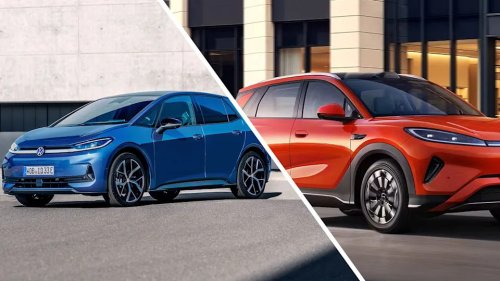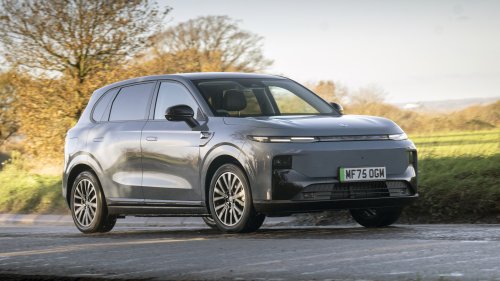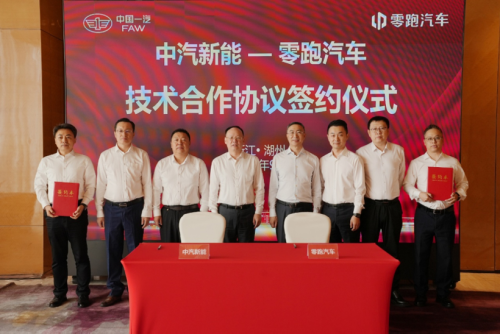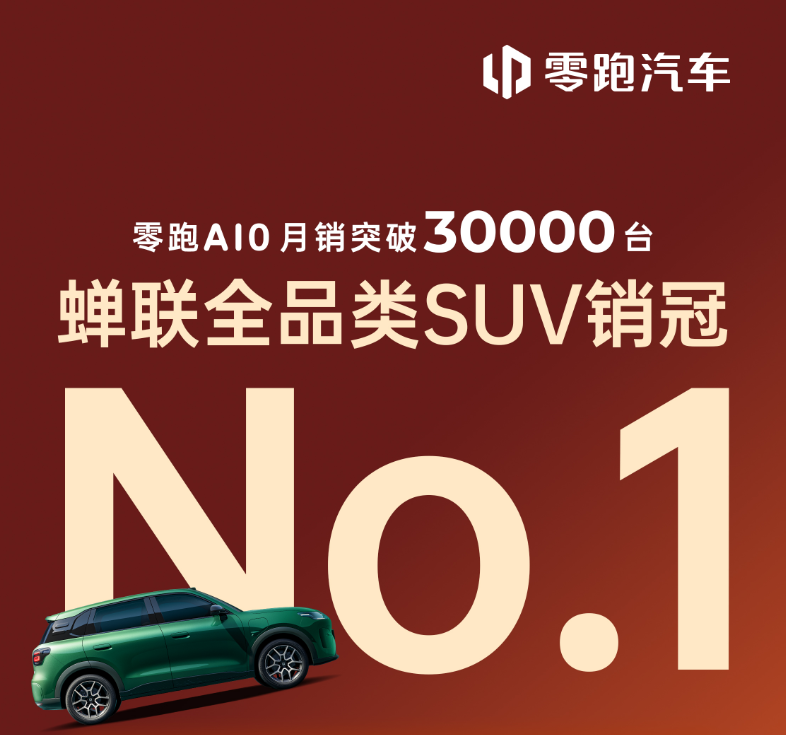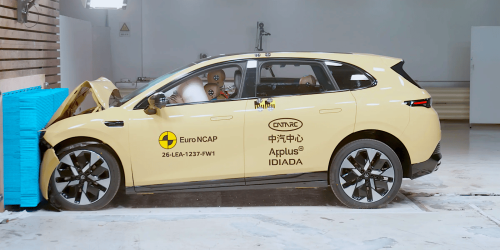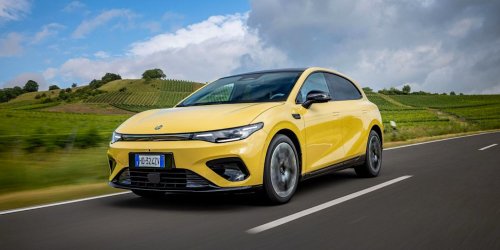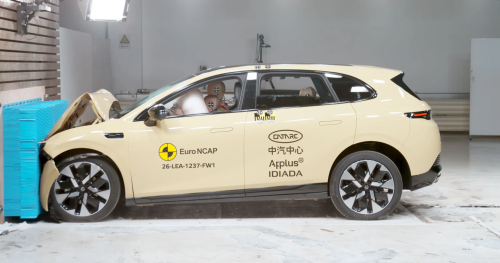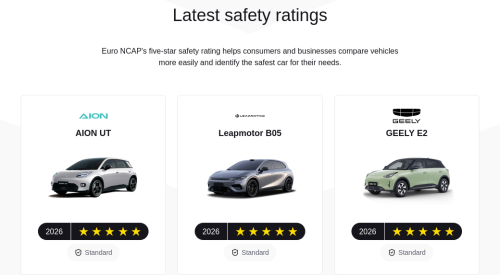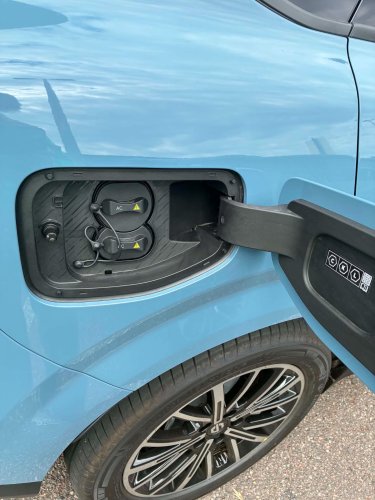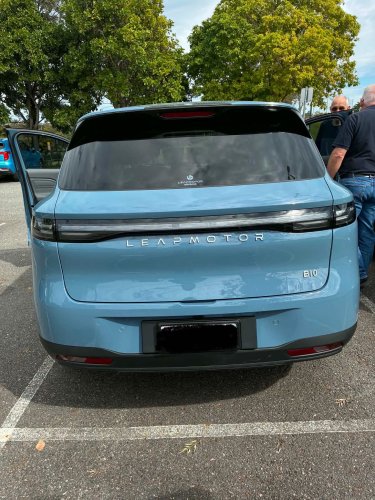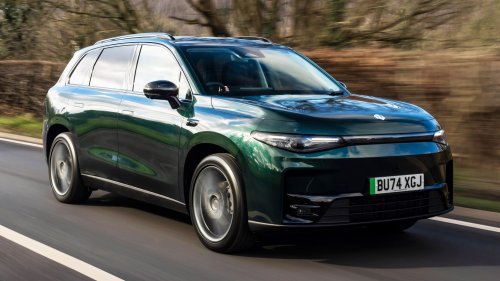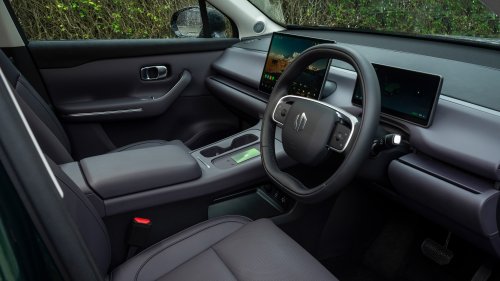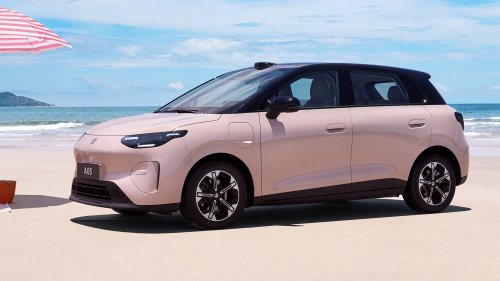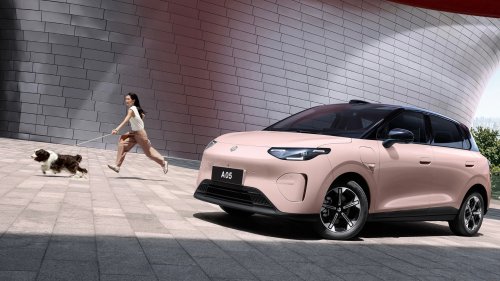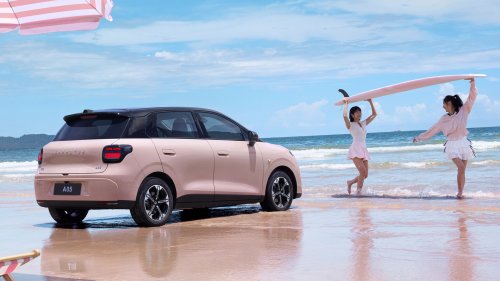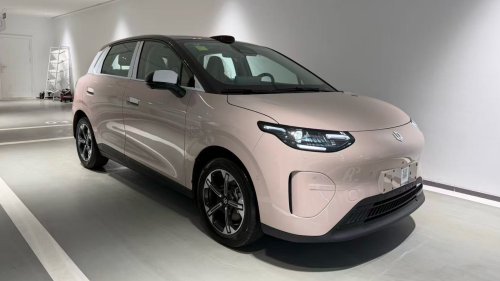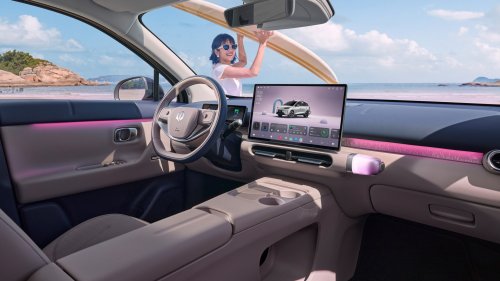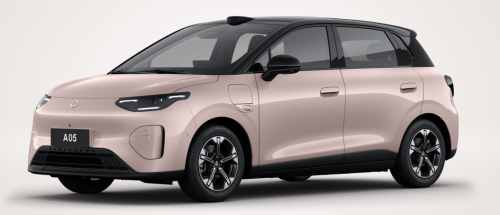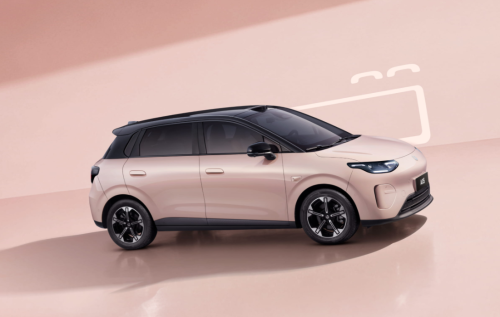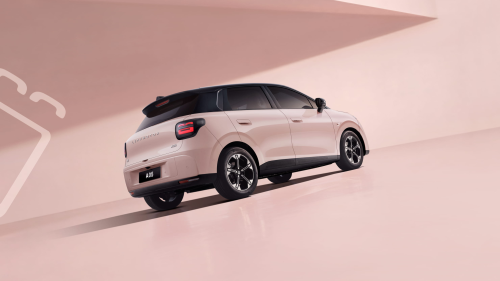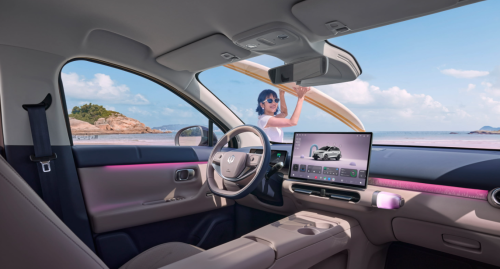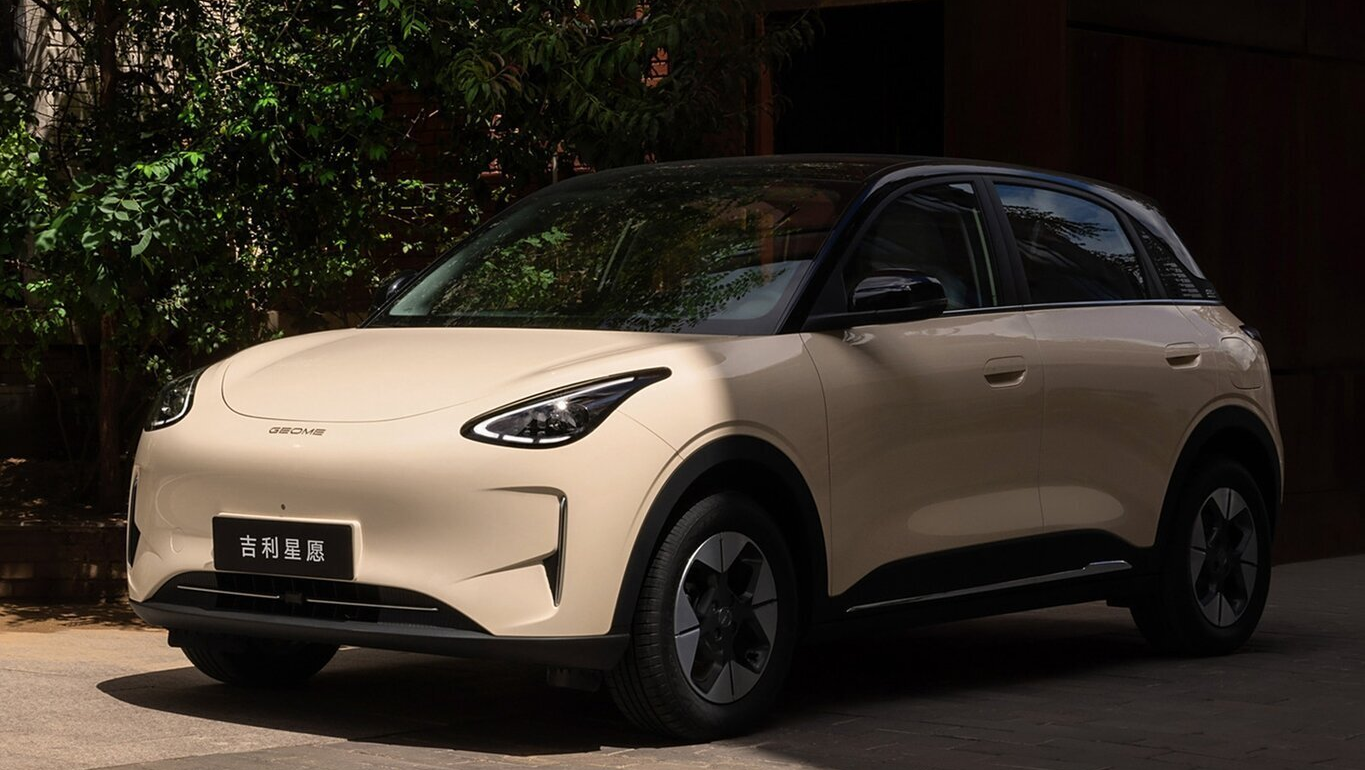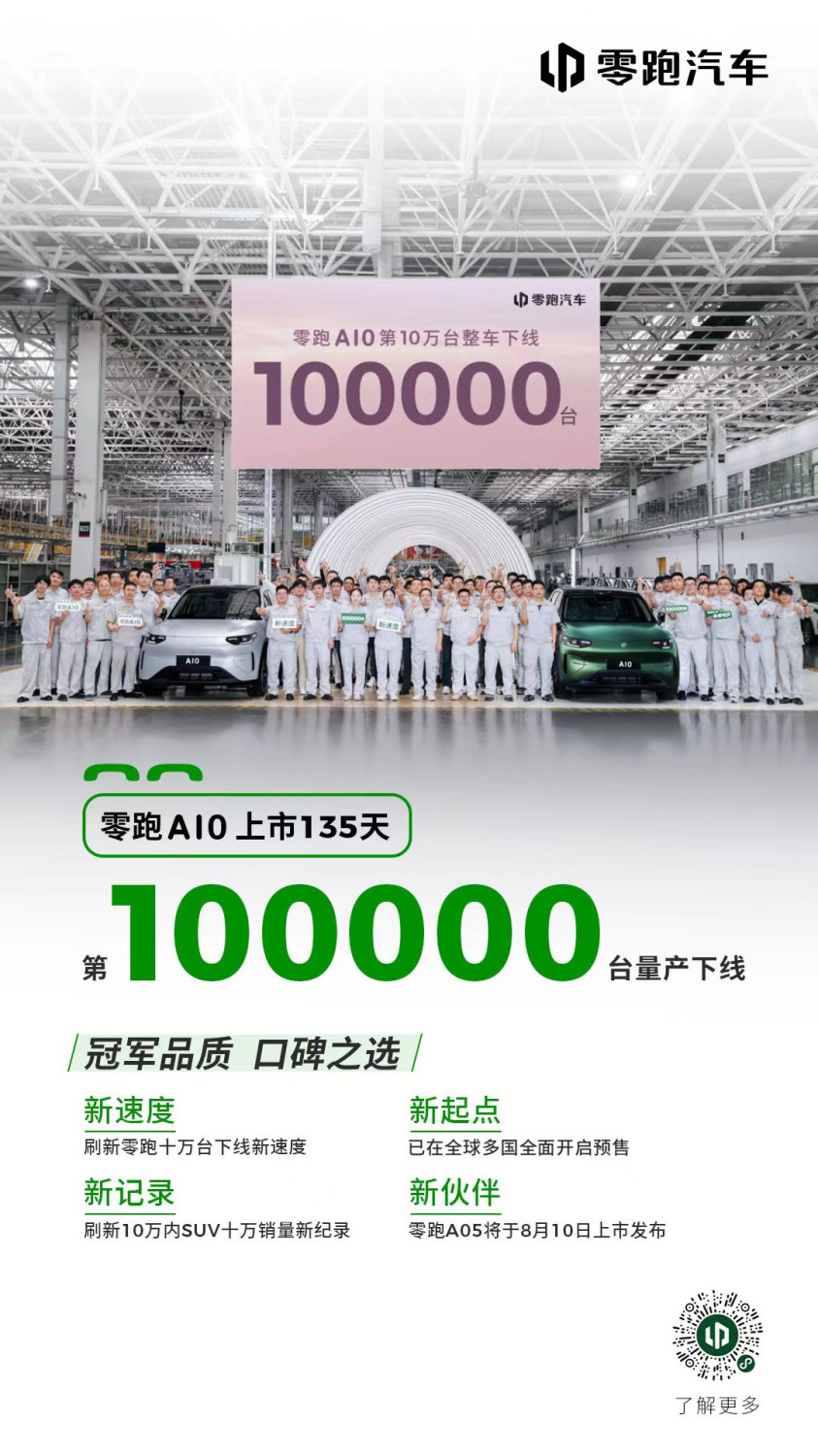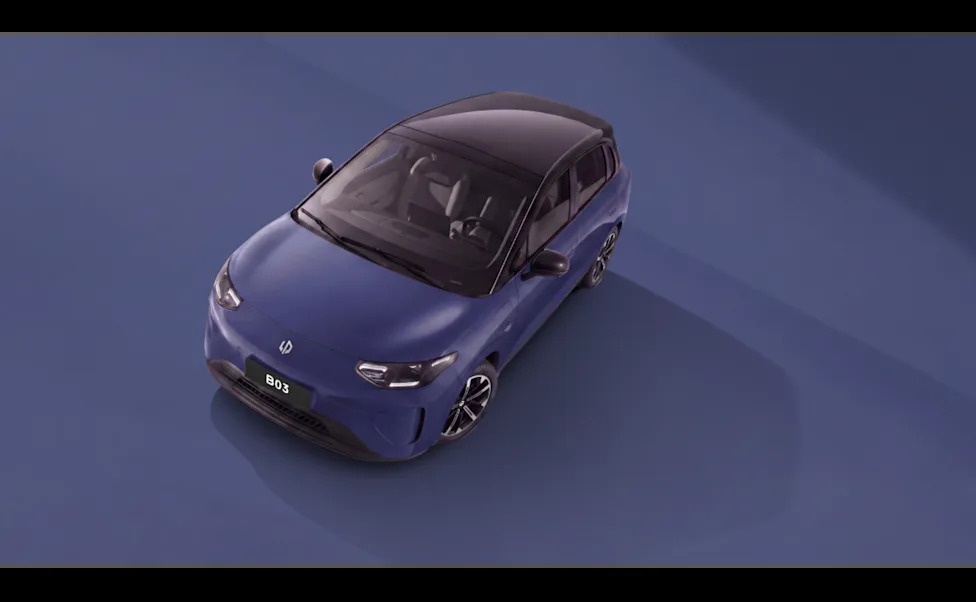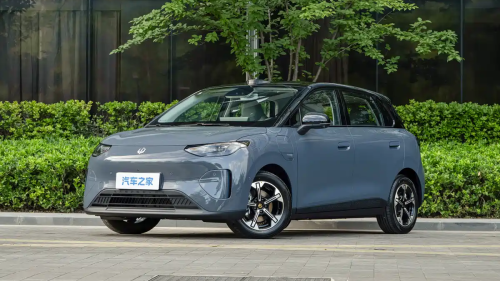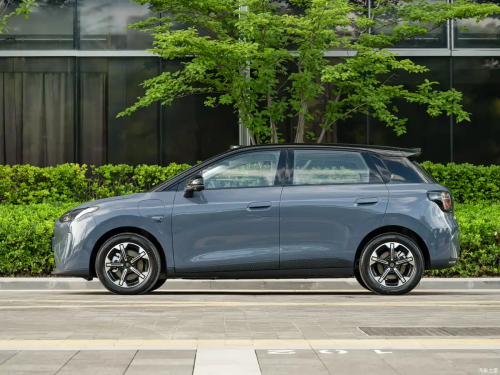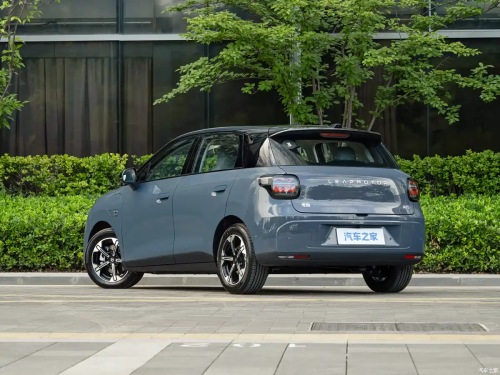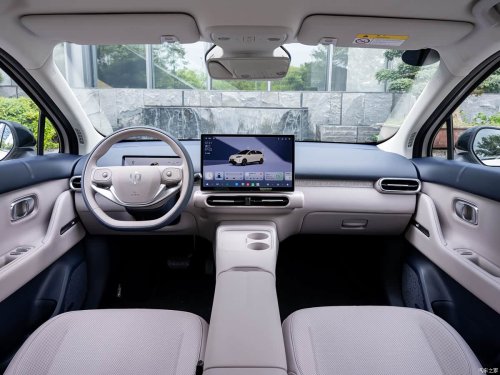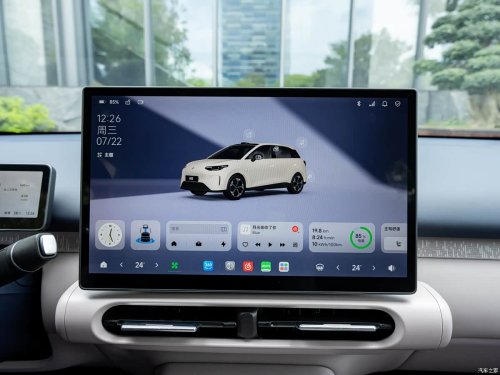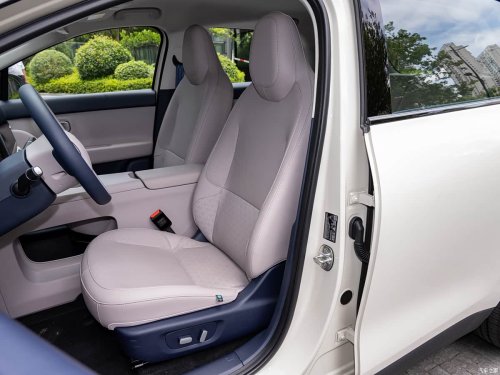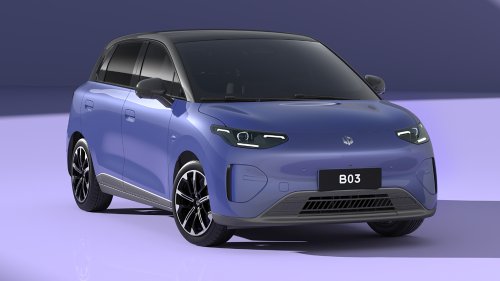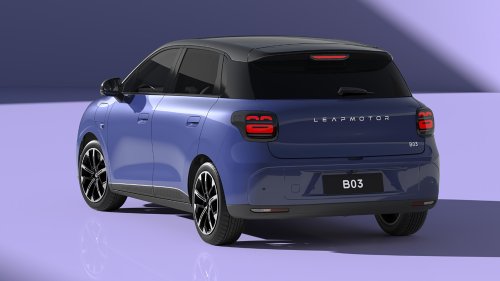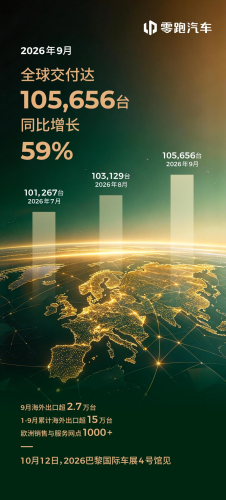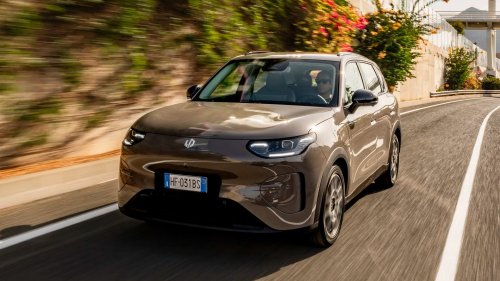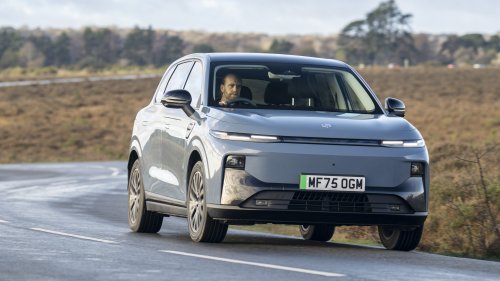
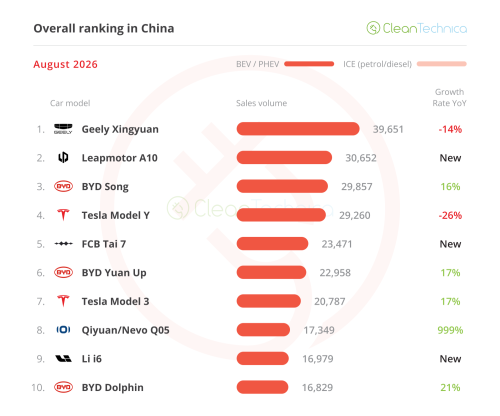
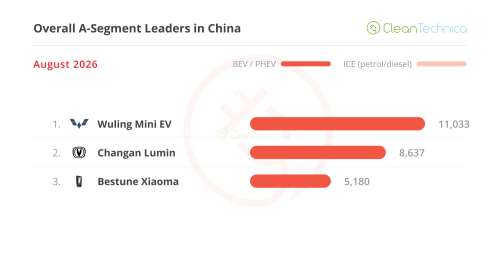
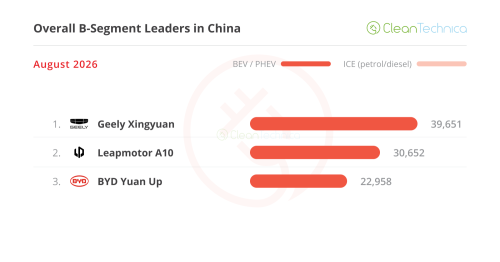
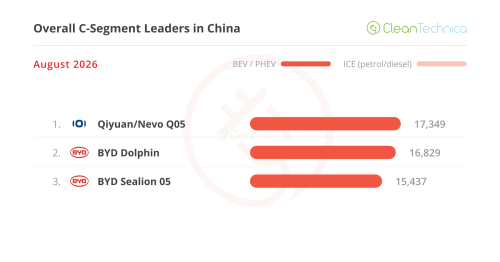
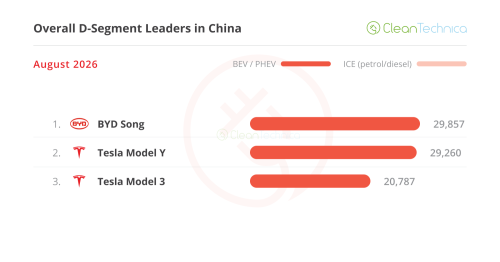
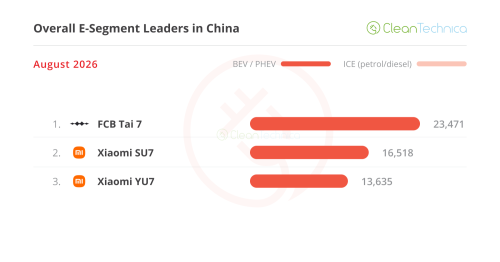
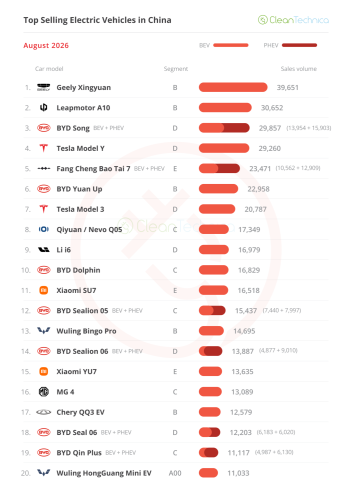
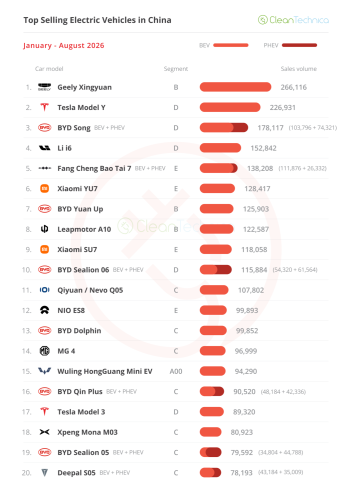
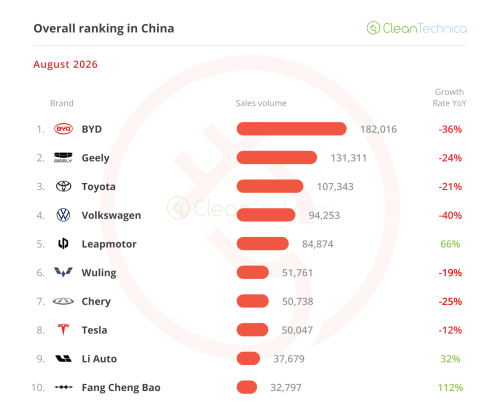
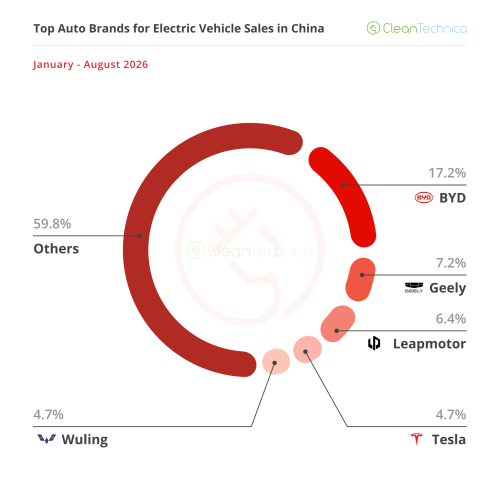
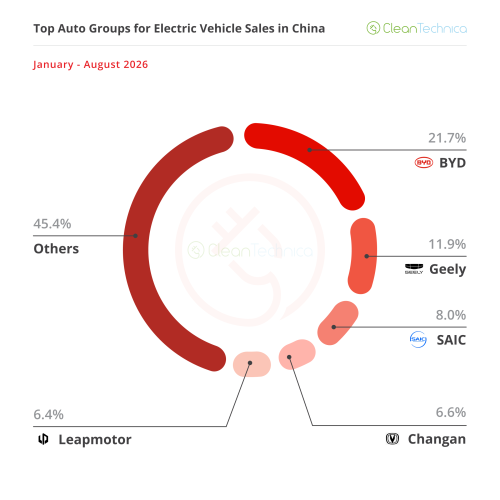



















High gas prices and a never-ending wave of new BEVs has allowed August to reach 65% EV market share, a new record! However, while record market share was achieved in the past thanks to strong EV sales, this time, the record achievement is thanks to a significant ICE (internal combustion engine) crash. The overall market dropped 24% year over year (YoY), to around 1.5 million sales. In the midst of a sea of red — plugin hybrids (PHEVs) fell 30% and extended range models (EREVs) were down 22% — the only powertrain with positive numbers were BEVs, which rose 1% YoY. Adding the 45% BEV share to PHEVs (20% share) meant that, in August, a record 65% of all cars sold in China had a plug! If this trend continues in the future, the Chinese market will be fully electrified before 2030, and will be 100% BEV before 2035! This great result pulled the 2026 share up, to 57%, already 3% above the full year result of 2025. BEVs on their own were up to 38% (versus 33% in 2025). At this pace, I expect the final number for 2026 EV share in China to be above 60%, with BEVs alone north of the 40% mark. And when the largest global automotive market gets this electrified … then the ICE industry is in serious trouble. (Which means that investing money in R&D for ICE technology today is throwing money out the window, as there won’t be enough time to pay back the investment costs.) Another interesting statistic is that the breakdown between pure electrics and plugin hybrids is shifting, to the profit of BEVs. At the beginning of the year, PHEVs were profiting from the incentive-derived BEV drop, but pure electrics are returning with a vengeance. August showed a 69% vs. 31% breakdown, to the benefit of BEVs, with the 2026 average at 67%/33%. Historically, this is the highest BEV share since 2023, and a step in the return to the 80% vs 20% breakdown of the first years in the Chinese EV market. With PHEVs losing incentives at the end of this year, 2027 could be the first year since 2022 to see that kind of sales breakdown. Another seismic change happening in the Chinese automotive industry is the increasing importance of exports for local OEMs. In August alone, close to a million units (888,000) were exported, a 78% jump YoY, with the EV share of those exports following closely the domestic market — 58% EV share in August vs. 40% in the same month last year. Due to these significant monthly EV exports from Chinese automakers, along with the rise of local players — like Vietnam’s Vinfast, Turkiye’s Togg, or India’s Tata and Mahindra — legacy OEMs are not only struggling in the Chinese market, which is the largest in the world, but also being squeezed elsewhere, so it is nothing more than a pipe dream to think that they can sustain the EV tsunami by keeping their ICE models in markets outside China. A secondary effect of this export push is that because Chinese exports are also heavily electrified, export markets are being electrified as Chinese OEMs gradually gain share. The ICE extinction is also visible in the overall ranking, as we have another all-EV top 10 in August in the overall market — eight of them being pure electric models! (As such, starting next month, I will no longer show the overall top 10 — because … redundancy). Looking at the best sellers in several size categories, the ICE extinction is also quite visible. All size categories had 100% plugin podiums, and of these, only three models were not 100% BEV. Having a quick look at the five size categories, the highlight is the Fang Cheng Bao Tai 7 beating the Xiaomi models. Although, with the cell phone maker turned into an EV startup close to launching its new Giga-SUVs (Skynomad, N70, and N90), FCB’s leadership could be short-lived. Also, two notes regarding the two smallest categories: The B segment is having its best moment ever as competitors try to replicate the Geely Xingyuan formula. No one has managed to get close to it so far, but Leapmotor is on the way there, as its new A10 crossover continues to ramp up production. And Leapmotor is not done yet with the B segment, as the A05 hatchback, a true Geely Xingyuan fighter, has landed and was already at over 8,000 units in August. And with a new-generation BYD Seagull also landing soon, aimed squarely at beating the Geely Xingyuan, the subcompact category is now the hottest thing in the Chinese EV market. As for city cars, sales are affected by the subsidy cut that came at the beginning of the year, with the category slowly recovering from the dismal results of the early months. While the Wuling Mini EV is still the only relevant player overall, the Changan Lumin has reached 8,637 units in August, a new year best, allowing it to win silver in the category. It beat Bestune’s Xiaoma and Geely’s Panda to get there. But what the category really needed was fresh metal. BYD Racco, anyone?… Here’s more info and commentary on August’s top selling electric models: #1 — Geely Xingyuan A BYD Dolphin for BYD Seagull money ($10,000 USD). This was Geely’s internal memo to describe the formula for the Geely Xingyuan when developing its star model. With an interesting name — Xingyuan translates as “wishing upon a star” — it seems that Geely had its wish granted. The small hatchback has given the Hangzhou OEM the much coveted best selling model trophy. In August, the Geely model won another best seller trophy, thanks to 39,651 registrations, which had something of bittersweet taste — on one hand, it was the hatchback’s best result since last November, but on the other, it still represented a 14% drop over August 2025. Proof that competition never sleeps in China, Geely’s hatchback is now having to deal with Leapmotor’s B-segment contenders, the A10 and A05; the new-generation Wuling Bingo; Chery’s new QQ3; let’s not forget about the BYD’s Yuan Up; and, above all, the new-generation BYD Seagull, which has just one goal — to steal the Xingyuan’s Best Seller crown. #2 — Leapmotor A10 Things continue to go well for the startup brand, with its new baby A10 promising to be the star player of an already strong lineup. Thanks to 30,652 registrations, the small crossover continues to ramp up production, winning its first silver medal on the way. The model has the usual value-for-money focus of the brand, and a low, low price of 66,000 yuan ($10,000). On top of that, however, the A10 offers something close to a distinct personality, as the design eschews the white product standard design of Leapmotor for something more personal, mostly thanks to the front and back lights and a floating roof effect. One wonders how high the crossover will sit on the table once it is at cruising speed. Best seller material? #3 — BYD Song (BEV+PHEV) BYD’s midsize SUV continues to implement the transition to the new generation. Thanks to the ramp-up of the new Ultra body, BYD’s star player was 3rd, scoring 29,857 registrations, which placed the YoY score back in the black. Sales were up by 16% compared to the same month last year. Once the new generation is fully ramped up, the Song will once again be a fierce adversary for the competition to beat. The new Ultra generation features lidar and 1,500 kW DC charging, and these two features aren’t even the most impressive aspects of the model! That would be the price. It starts at 152,000 yuan (or $22,000) with the 76 kWh battery, and it goes up to 180,000 yuan (or $26,000) with the 83 kWh battery. For comparison, the Tesla Model Y starts in China at 259,000 yuan ($38,250)…. Expect the Song to experience a second youth in the second half of the year, and while it should be next to impossible to displace the Tesla Model Y from the runner-up spot, the last place on the podium should be doable this year. And maybe gold in 2027? #4 — Tesla Model Y The extended wheelbase version, imaginatively called “L,” is helping the Model Y’s fortunes in China. Still, in August, deliveries reached 29,260 units, a significant 26% drop over August 2025. The long wheelbase version is proving to be of big help for the US crossover, keeping the Model Y’s sales afloat, but new variants can only do so much. When most direct competitors are transitioning into 800V platforms and adding new features, the six-year old Model Y is starting to look a bit old. Still, the Tesla crossover has enough demand to provide it a podium position this year. Next year, though? Hard to see it getting there. #5 — Fang Cheng Bao Tai 7 (BEV+PHEV) BYD’s premium arm Fang Cheng Bao has a success on its hands. This big Land Rover SUV, the Tai (Ti?) 7, scored 23,471 registrations last month, a new year best. The BEV versions of this Chinese Defender were recently launched (92 & 106 kWh batteries), including with Flash Charging technology, and they have been selling like hot cakes now that the market is shifting to pure electrics. In August, the BEV versions (12,909 units) have even outsold the PHEV ones (10,562)! Thanks to a successful boxy design, competitive specs, and a nice interior, for its price range, this is one of those models that just begs to be sent overseas — going after not only the posh SUVs of premium brands, but also the gas guzzling Land Cruisers and Patrols of this world. Looking at the rest of the best seller table, the highlights start with the #6 BYD Yuan Up, which scored its best result since last September — 22,958 registrations — thus putting three B-segment vehicles in the top six positions. The other highlight was the Tesla Model 3 coming out of nowhere and jumping to 7th, thanks to 20,787 registrations, its best result so far this year. Was this a one-time thing, or is the Tesla sedan back in form? With no visible changes to its value proposition, one wonders about the reason for this newfound strength. As for the second half of the table, two more B-segment BEVs are getting themselves noticed, with the new generation of the Wuling Bingo scoring its best result so far (14,695 registrations) and the nameplate’s highest score since May 2025 while the new Chery QQ3 EV went up to 17th thanks to a record 12,579 registrations, meaning that the production ramp-up is still happening. Outside the top 20, the main event was the Haval H10 landing with a bang in the land yacht category. This monster of an SUV looks like it could flatten whole mountains under it. With 600 hp and weighing 2,600 kg, this is Great Wall’s bet to beat all of the Fang Cheng Bao SUVs. With such a strong start, it seems it might just do it…. Another large PHEV on the way up sits under Chery’s luxury arm, Luxeed, which seems to have hit a home run with its new minivan, the V9. With 8,312 registrations in only its 4th month on the market, the Luxeed V9 is now the best selling MPV in China — welcome news for an OEM that has a somewhat chaotic brand policy (Chery has the namesake brand, but then there’s also, Exeed, Jetour, iCar, Luxeed, Rely, Karry, Omoda, Jaecoo, Ebro, and Lepas). Further down the food chain, the promising Xpeng Mona L03 crossover is already showing up on the radar, having delivered 8,424 units in its second month on the market, already making it the best selling model of the brand in August. Great things are expected from the Mona L03. Now it is the time to see if this attractive EV follows expectations. Speaking of great expectations, after the resounding success of the Leapmotor A10, now it is time for its hatchback sibling, the A05, to start ramping up production. The model reached 8,340 registrations in its second month on the market. One wonders how high the A05 will go, and also, a no less important question, will it cannibalize the A10? I mean, put them side by side and the only difference seems to be that the A10 is running on stilts…. Looking at the 2026 ranking, the podium remained the same, and unless something unexpected happens, it should stay as it is until the end of the year, with the small Geely repeating its 2025 win, the Model Y returning to silver after its bronze in 2025, and the BYD Song getting back onto the podium after a one-year absence. Below the podium positions, the Fang Cheng Bao Tai 7 took profit from a positive month and went up to 5th, while the Leapmotor A10 continued to rise and jumped two positions in August to 8th. Considering that the Leapmotor small crossover is still ramping up, I wouldn’t be surprised if it ended the year ahead of the FCB Tai 7. And in 5th… In the second half of the table, the BYD Dolphin was up to 13th and might climb yet another position in September (the #12 NIO ES8 is only 41 units ahead). And with current trends favoring compact to small EVs… it seems like an easy catch. But the major news lies elsewhere. We have a veteran (Tesla Model 3) returning to the table, in 17th. The Texan sedan hopes to climb a couple more positions in September. In 19th, we have a new model on the table, the BYD Sealion 05, which hopes to become a contender for the best seller title in the compact category. Looking at the overall manufacturer ranking, it is a sea of red. Everyone is losing sales — big time. Toyota’s 21% drop could be considered a win when we look at the 36% drop of BYD, the 24% drop of Geely, and the 40%(!) crash of the once almighty Volkswagen, now only in 4th. So, if the big boys on top are crashing, who is winning? Leapmotor. The Hangzhou startup was up an astonishing 66% YoY, to 84,874 registrations, ending the month with yet another record and fewer than 10,000 units below Volkswagen. And with plenty of fresh metal coming in (A10 and A05 ramping up, D19, D99…), expect sales to continue on the way up, endangering the positions of not only VW and Toyota as they try to adapt to the new realities of the market, but even big shot Geely could become threatened by Leapmotor. I mean, it just takes Leapmotor’s A10 and A05 starting to steal relevant sales from the Geely Xingyuan and Geely could see its silver medal slip from its hands and into Leapmotor’s…. Looking below the top 10, another startup is experiencing surging sales, with #24 NIO jumping 104% YoY to 21,000 units, all thanks to the success of its ES8 and ES9 land yachts. With the ES8 starting at $57,000 USD and the ES9 starting at $73,000 USD, it is no wonder the average selling price of a NIO now stands at around $65,000 USD…. On the other hand, there are plenty of foreign makes in deep red, with the worst of them being Honda, only 18th in August. The Japanese brand saw its sales crater by 50% YoY in August, to 27,000 units. Meanwhile, fellow Japanese automaker Nissan, which a few months ago seemed to have found a way to pull its sales up in China, is back in (deep) red, having seen its sales crash 55% in August to 24,000 units, allowing it to be only 21st on the table. Long story short: the Chinese automotive market is currently a tale of two different markets — a shrinking old ICE one, where foreign legacy OEMs still hold the majority, and the increasingly more significant EV market, where local brands dominate the landscape. Looking at the auto brand ranking, there’s really not much news. Leader BYD is firm in the leadership position (17.2%, up 0.1%), while runner-up Geely is holding onto its 7.2% share. This means that rising Leapmotor (6.4%, up 0.3%) is fast approaching Geely. It wouldn’t be surprising if the startup brand become the new silver medalist in a couple of months. Meanwhile, Tesla (4.7%) held on to the 4th spot, but with #5 Wuling (4.7%) looking like a threat in the rearview mirror. Still, expect Tesla to keep the #4 position, as its September peak should help it gain distance over Wuling. Looking at OEMs/automotive groups/alliances, BYD is leading, with 21.7% share of the market, up 0.3% in August. The leader is benefitting from the continued success of Fang Cheng Bao, and from a strong month coming out of Denza. Meanwhile, #2 Geely lost 0.2% share and got down to 11.9%, but the multinational conglomerate still has the runner-up spot secured. #3 SAIC was down (8% now vs 8.1% in July), but remained firm in the last place on the podium, while #4 Changan remained in 4th (6.6%, down 0.1%). Having said that, the 5th placed Leapmotor (6.4%, up 0.3%) could surpass Changan soon, and maybe even threaten #3 SAIC later in the year. Leapmotor is becoming a serious business, thanks to a focused lineup that is at the same time broad, covering everything from city cars to full size ones, but without going into the byzantine follies of BYD — where you have several models for just one category (example: midsize sedan BEV category: BYD e7, Qin L EV, Seal 06 EV, Seal). With the mainstream market already covered, Leapmotor is now stepping it up a notch. It is getting ready to launch a second brand in China later this year, no doubt of the premium variety since Leapmotor is very much following in the footsteps of BYD. If Leapmotor wants my 2 cents on this, after launching the second brand in China, it could approach Stellantis and buy/JV Lancia on the cheap, rebadging its premium models with the Italian logo in Europe. I mean, when luxury brand Maserati teams up with JAC and Huawei to make their next models, with a Chinese version being sold as Maextro and the Italian version coming out as Maserati, what is stopping Stellantis from doing the same for Lancia? Anyhoo … I digress. At this pace, I wouldn’t be surprised if in a few years (2030?), Leapmotor becomes a larger automaker than Tesla … globally.