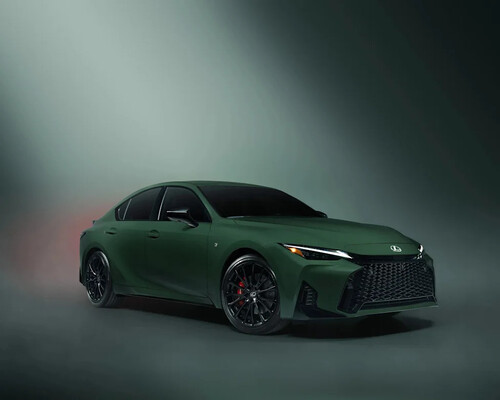
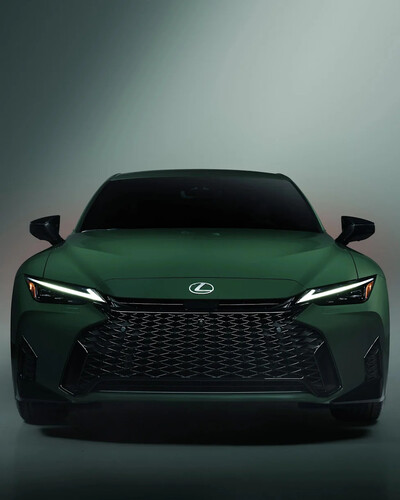
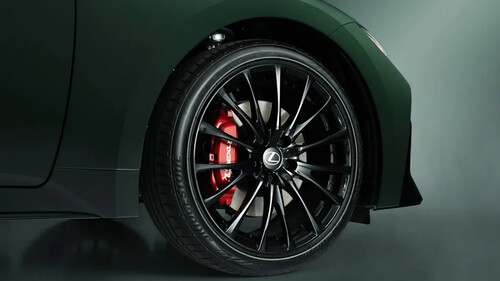
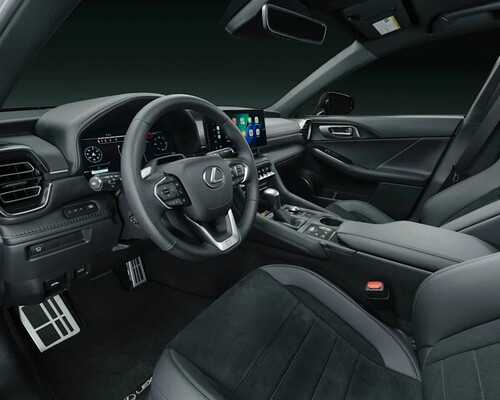
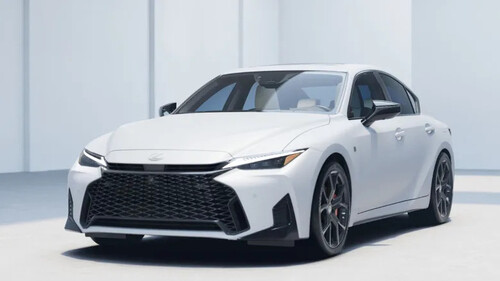
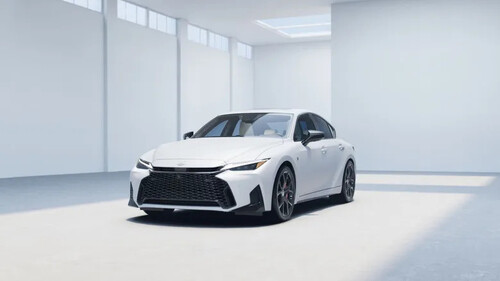
is this the last reliable luxury car Testing the 2026 Lexus IS 350 F Sport to see if it really is the last truly reliable luxury car you can buy in 2026. Lexus has updated the IS 350 for 2026, with both the IS 300 and IS 500 now gone from the lineup. Before you buy any compact or mid-size luxury sedan, make sure you watch this review. The AutoGuide Creators Series tells stories and amplifies creators from the car world, including family life, car buying advice, commuting tips and car culture. 2026 Lexus IS 350 Review: Old-School Luxury Done Right Is the 2026 Lexus IS still worth buying in today's rapidly evolving luxury market? After a week behind the wheel of the updated IS 350, the answer isn't as simple as yes or no-but it's far more interesting than you might expect. A Rare Breed in a Modern Market The Lexus IS stands apart as one of the last "old-school" luxury sedans you can still buy new. While much of the segment has shifted toward downsized turbo engines, electrification, and increasingly complex tech, the IS sticks to a simpler, proven formula: natural aspiration, traditional engineering, and a focus on long-term durability. That philosophy defines the car-and, depending on your priorities, may be its biggest strength. What's New for 2026 The current-generation IS dates back to 2014, though it has received multiple updates over the years. For 2026, Lexus gives it another refresh, including revised front and rear styling and a more significantly updated interior. The lineup has also been simplified. The IS is now offered exclusively as the IS 350, with a single powertrain choice. The Powertrain: A Dying Breed At the heart of the IS 350 is a 3.5-liter naturally aspirated V6-an engine that feels increasingly rare in this segment. Producing 311 horsepower and 280 lb-ft of torque, it's paired with a conventional automatic transmission: a six-speed with all-wheel drive, or an eight-speed in rear-wheel-drive U.S. models. On paper, the numbers are respectable, but the real appeal lies in how the power is delivered. Without turbocharging, there's less low-end punch compared to rivals, but the tradeoff is a smoother, more linear response and a more refined driving experience overall. And, crucially, this engine is built to last. Reliability as a Core Strength Lexus' reputation for reliability isn't accidental-it's the result of a deliberate engineering philosophy centered on incremental improvement and proven components. The IS 350's V6 avoids many of the complexity traps seen in modern engines. There are no turbochargers, no aggressive fuel-saving gimmicks like cylinder deactivation, and no complicated dual-clutch or CVT transmission. Instead, it relies on a time-tested setup that has been refined over years of production. The result is a drivetrain widely regarded as exceptionally durable, with the potential to run hundreds of thousands of miles with minimal issues. Driving Experience: Balanced and Engaging Despite its focus on reliability, the IS hasn't forgotten its sporting roots. The chassis features a rear-wheel-drive bias, giving it a balanced, composed feel through corners. Higher trims add adaptive suspension and a limited-slip differential, enhancing both handling and driver engagement. At the same time, ride quality remains comfortable enough for daily use, making the IS a genuinely well-rounded sport sedan. Interior: Modernized Without Losing Touch Inside, Lexus has struck a careful balance between modernization and usability. A new digital instrument cluster and larger infotainment display bring the IS up to date, with wireless Apple CarPlay and Android Auto now standard. But unlike many competitors, Lexus hasn't abandoned physical controls. Climate settings, seat functions, and drive modes are still operated through tactile buttons and knobs-a welcome change in an era of touchscreen overload. Material quality remains a highlight, with excellent fit and finish, durable upholstery, and a design that avoids the overuse of glossy black plastics. The Downsides For all its strengths, the IS 350 isn't without flaws. Fuel economy is the most obvious drawback. The V6 delivers solid performance, but at the cost of efficiency, especially given its requirement for premium fuel. In a segment increasingly dominated by hybrids and turbocharged four-cylinders, it feels dated. That sense of being behind the curve is reinforced by the lack of a hybrid option in North America, despite such a variant existing in other markets. Interior space is another weak point. Rear seat room is tight, making it less practical for families or taller passengers. There's also a slightly awkward driver footwell design that may not suit everyone. Pricing and Value The 2026 Lexus IS 350 starts in the mid-$40,000 range in the U.S., climbing into the low-$50,000s depending on trim. In Canada, pricing ranges from roughly $59,000 to $69,000. That positions it directly against competitors like the BMW 3 Series, Audi A4/A5, Mercedes-Benz C-Class, and Genesis G70. On paper, those rivals offer more modern tech and, in some cases, better efficiency. But none match the IS when it comes to long-term reliability and ownership costs-two factors that increasingly matter in today's market. Verdict The 2026 Lexus IS 350 is not a cutting-edge luxury sedan. It doesn't chase trends or lead the segment in technology. Instead, it doubles down on something increasingly rare: simplicity, durability, and a driving experience rooted in traditional engineering. If you're looking for the latest innovation, there are better options. But if you value long-term reliability, build quality, and a more analog driving feel, the IS 350 remains one of the most compelling choices in the segment. In a market moving rapidly toward electrification and complexity, the Lexus IS feels like a holdover from another era-in the best possible way.