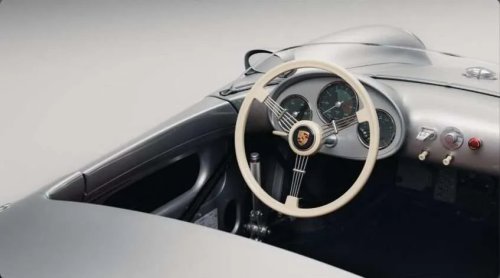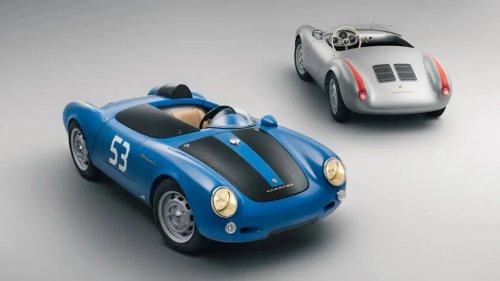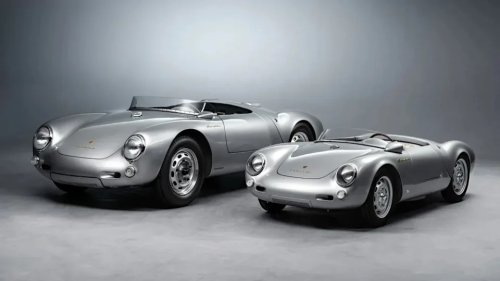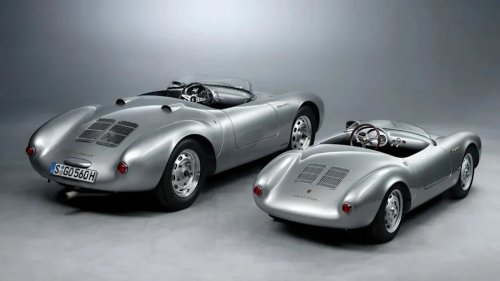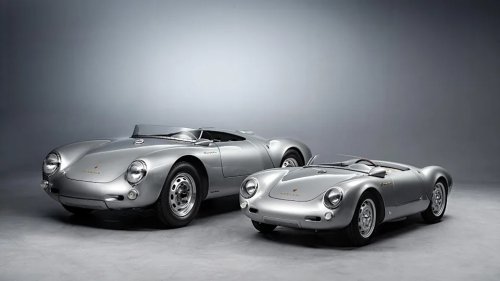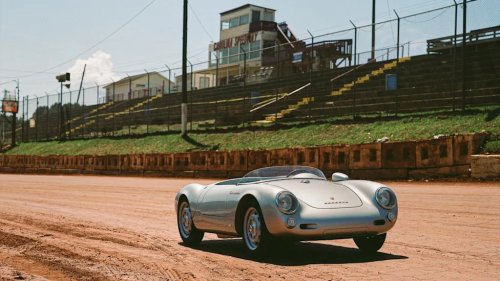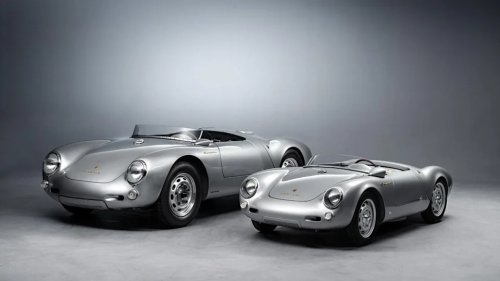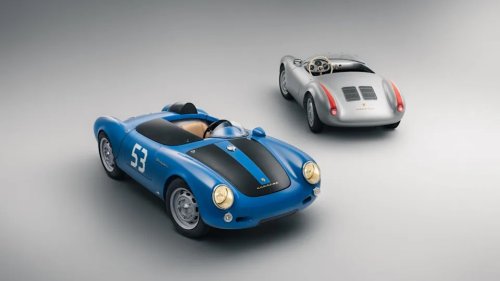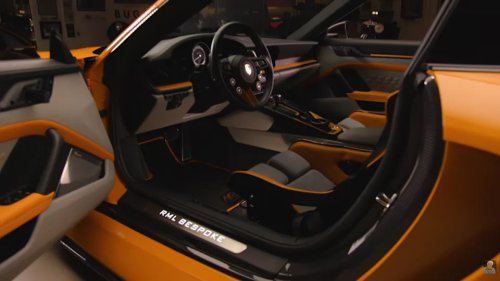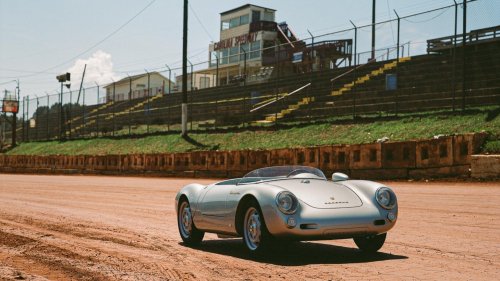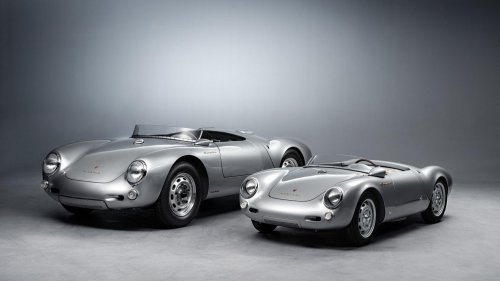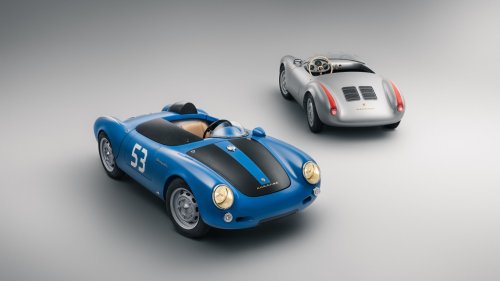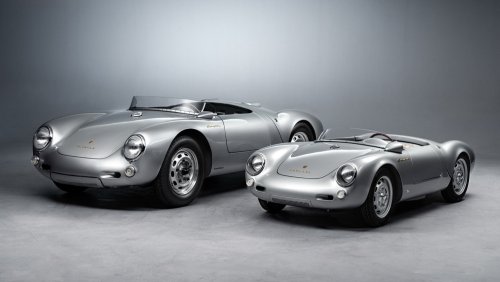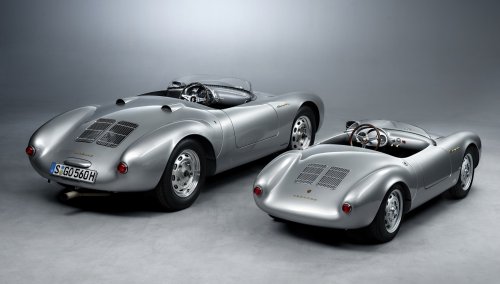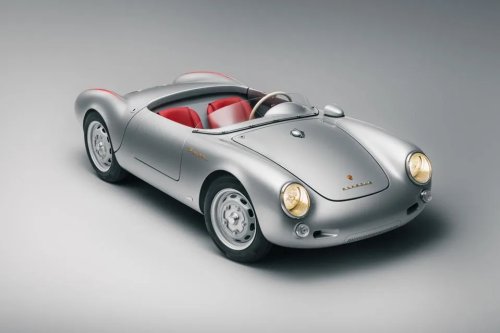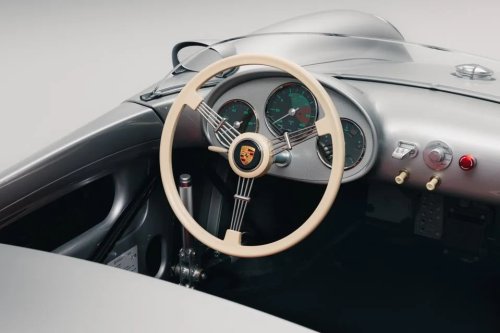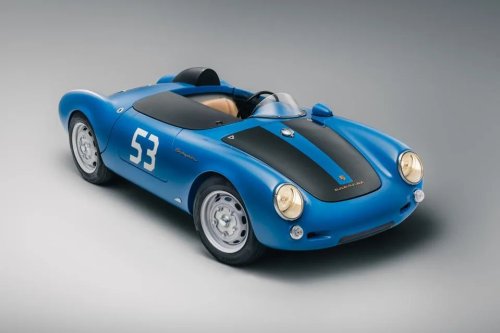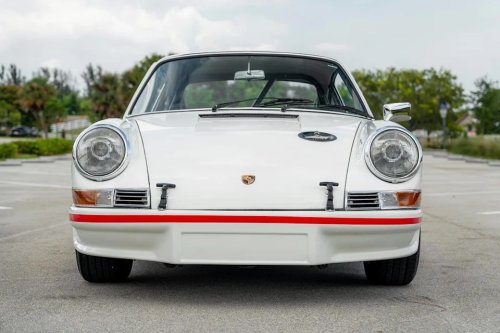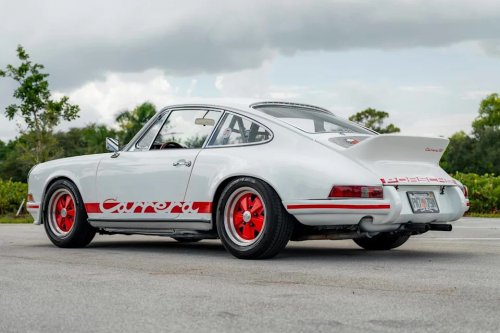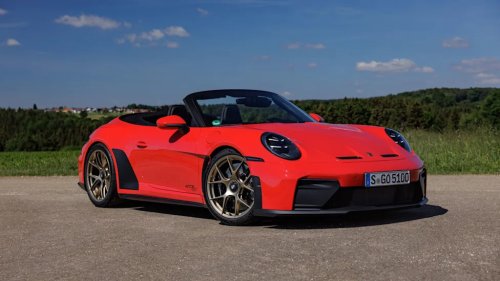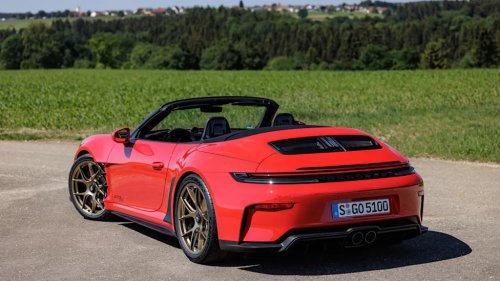
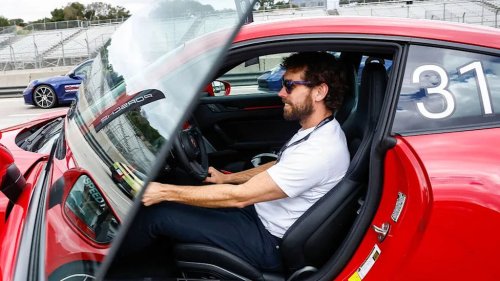
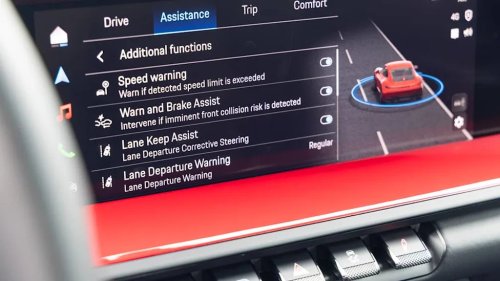
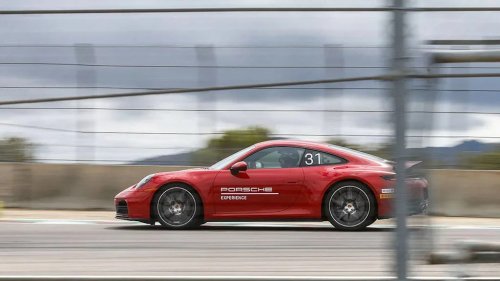
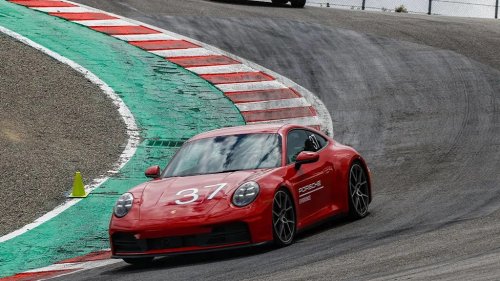
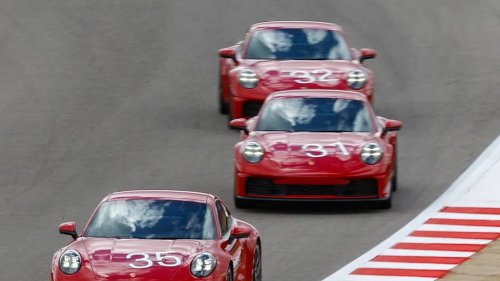
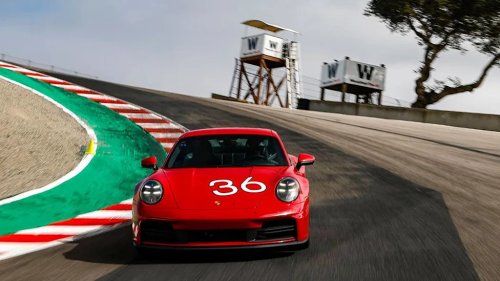
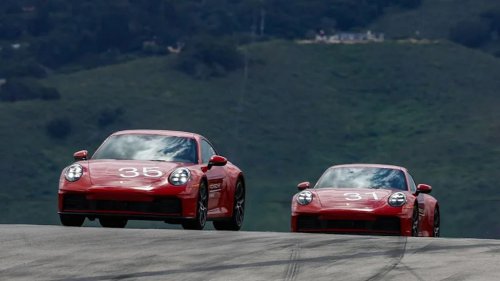
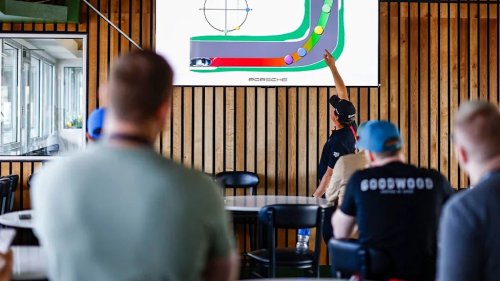
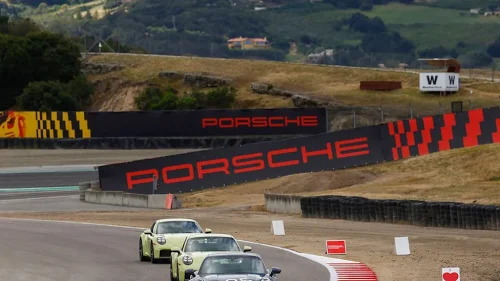













Porsche's new Track Experience (PTX) at Laguna Seca gives enthusiasts the chance to drive one of America's most famous race tracks with professional instruction—and after spending a day behind the wheel of a Porsche 911 Carrera S, it's one of the most rewarding driving schools I've experienced.What Makes Porsche's Laguna Seca Driving School DifferentWhen Porsche launched the 930 Turbo in 1975, famously laggy and snappy boost led to immediate widowmaker status and inspired the creation of the original Porsche Sport Driving School. Held at Hockenheimring and 10 other circuits around Europe, with legitimate Porsche engineers onsite as instructors, the curriculum of multiple courses catered to drivers of all skill levels from total beginners to full-on professional racers.Porsche's long history at Laguna Seca stretches back to the earliest 356, 550 Spyder, and RSK race cars.Courtesy ImageThe school launched in the United States at Road Atlanta and Sebring in 2000 before moving to Barber Motorsports Park in 2003. But this year, more than two decades later, Porsche expanded to arguably the most iconic track in America at Laguna Seca. Laguna Seca can challenge even the most experienced drivers, chock-full of long straights and terrifying fast curves, then of course, the long blind uphill climb toward the infamous corkscrew. AdvertisementAdvertisementI've driven many Porsches on many tracks, but especially chasing a weekend when Porsche rebooted historic Apple liveries for IMSA racing, a day imitating the racing line of pros in prototypes proved much more immersive than I initially expected. After all, not too many car companies can trust their cars—much less their clientele—to push as hard as the PTX at Laguna Seca allows, which only makes the lessons learned in the process all the more lasting.Learning Laguna Seca Behind the Wheel of a Porsche 911 Carrera SAs the sun just started burning off Monterey morning mist, a lineup of 992.2-generation 911 S coupes awaited a varied group of media colleagues gathered to experience Porsche's latest addition to the automaker's increasingly experiential offerings. In fairness, a reasonable 473 horsepower and 390 lb-ft of torque from a compact twin-turbocharged 3.0-liter flat-six might not sound particularly intimidating amid the insane outputs of modern EV and hybrid hypercars these days. But bear in mind that 930 Turbo back in 1975 inspired so much fear with just 260 horsepower, a prodigious number in period that only reveals the inflationary effects of automotive arms racing. Adjusting to my 911 S, an excellent training tool if not quite as enchanting as a GT3.Courtesy ImageOf course, the 992.2 adds nearly 1,000 pounds of mass, partially because of the switch to a PDK automatic as the Carrera S's only available gearbox. Though a serious bummer to prevent any practice of manual shifting skills, the 911S instead lets drivers focus on Porsche's rear-engined chassis dynamics, following the perfect racing line, and finding all-out pace right up to the limit. I started out a bit overawed, perhaps, after an instructor went around asking for prior experience. I'd only driven one car for one day at Laguna Seca previously, and knew the track better on two wheels from private moto days. But I arrived hot off the Aston Martin Valhalla launch, which felt a bit reassuring since that seven-figure supercar pumps out more than double the power of the 911 S.Still, I wanted to avoid holding anybody up—groupings with drivers of similar skill levels make all the difference on a track day, and yet the coaches placed me in a group with a fellow journo from Germany who had spent the previous night regaling our crew with tales of driving tens of thousands of kilometers on the Nürburgring. Third in our group came another Men's Journal contributor, the veteran speed demon known as Basem Wasef. Time to quash the inner competitive fire and dedicate myself to hopping in and pushing harder from the jump, rather than taking my normal slow warmup period to adjust to a new car on a new track.Modern driver aids might save lives, but have no place on a race track (other than keeping Porsche Stability Management activated).Michael Teo Van RunklePorsche set up the cars at Laguna Seca with radios and data loggers, but we still needed to go in and choose our driving modes. No switching traction and stability control fully off, the coaches warned, lest we wanted to sacrifice our insurance coverage too. The data might come in handy later, but the one-way radios allowed for coaching from the front of our four-man lead-follow group: one instructor followed by a rotation of three students. My red S, car number 31, included a little number sticker on the rearview mirror—a welcome inclusion since I can never remember anything while driving on a race track anyway.AdvertisementAdvertisementAs usual, the day started with a bit of classroom instruction. We skimmed a presentation on tire contact patch ("fat and happy" versus "skimpy and wimpy"), the "friction circle" theory showing tire grip vectors, and then CPR for "Correct, Pause, Recover." When all else fails, Plan B for "Brake Hard." I cracked a joke about Plan C for Combat to crickets—clearly not many F1 movie fans in the house.A normal customer day would then proceed to drills in the parking lot, learning the principles of threshold and trail braking in a straight line, then on a coned-off autocross circuit, before finally playing with oversteer and understeer while sliding around on a wet skid pad with Porsche Stability Management (PSM) turned fully off. Instead, with our group deemed experienced enough, we just jumped right into the waiting cars.Straightaways at Laguna Seca don't always run straight. In fact, Turn 1 can be thought of as a hill, a corner. and a straight.Courtesy ImageFollowing behind our instructor, despite my initial hopes to jump on my colleagues out of the gate, we spent the first 15 minutes at a snail's pace. Probably for the best, though, since every track—and especially Laguna Seca—can catch out newbies who will benefit from a quick primer. Over the radio, a disembodied voice called out dips and bumps, where to brake and where to aim, then of course, how to fly under the WeatherTech bridge after swan-diving off the corkscrew.We rotated who followed directly behind the leader, and already started catching up to other groups proceeding even slowlier. Journalists assembled from all corners of the web this day left a bit of doubt hanging in the air, but after those first few laps, Wasef and I both expressed hope the pace might pick up quickly in the second session.Why the Corkscrew Is Every Driver's Biggest TestIn retrospect, the slower warmup gave me a chance to adjust more to the 911 S than the track. Most of my previous Porsche experience on racing circuits came behind the wheel of more dedicated machinery: the GT3 and GT4 RS models, plus a Clubsport more recently. The 911S with softer suspension, and specifically these cars optioned without Sport Chrono which meant no Sport+ driving mode, also rode on Pirelli P Zero tires that I knew tend to oil up when hot. Plus, a chance to adjust to eight-speed PDK versus the GT models' seven-speed. This gearbox undeniably takes the cake among all automatics, but even Porsche's seemingly telepathic shift logic still can't predict the future, so I wound up sticking in manual mode to help with some rear-end stability by engine braking with those little turbos.Like diving off a five-story building, while swaddled in Porsche's utilitarian vision of luxury.Courtesy ImageI also arrived dealing with a lingering hip injury, which meant I needed to brace my left foot on the dead pedal—no two-foot driving on this day, sadly. And yet all the factors bouncing around my bedraggled mind flew right out the window once we came down the straightaway on the first fast lap, and I found myself sissy lifting over the crest of Turn 1. Not this timidity again, brain!AdvertisementAdvertisementAt Laguna Seca, the motorcycle line runs a little wider. But after a repave of the 2.24-mile circuit completed in 2023, the inside crest of Turn 1 at Laguna turned into a bit more of a tabletop. This can often cause a double bounce, and in fact, is the exact location of the closest I've ever come to crashing a car in my whole life. That day, in a Hyundai Ioniq 5 N, I stayed in the juice hugging the lefthand side but then hit the hilltop with my steering angle just slightly off from straight—the bounce whipped me hard toward pit exit, then my recovery sent me all the way to the right where I may have dipped a tire in the dirt before I could completely put the "Pause" in "CPR." The 992.2 weighs about 1,400 pounds less than the I5N, though, but that lagging memory still haunted my brain. I needed to learn to trust the suspension and weight distribution, which took serious intestinal fortitude. Once I fully committed a couple of times, the hard braking zone downhill toward Turn 2 tended to cause some serious tail shimmy that often required a bit of fingertipping on the steering wheel to steady before the double apex hairpin.Not too many automakers can trust their cars to take a flogging all day without breaking a sweat.Courtesy ImageA few times from the back of the group, I needed to lift off throttle well before the crest, in some sketchy moments pulling wide right or even slamming on the brakes—precisely because the others kept struggling with the exact same thoughts. And yet, our coach came on the radio more than a few times admonishing "Michael, stop peeking around!" But he probably couldn't quite see the third car in our line of four nearly causing a pileup, which I kept trying to avoid.Finally, the time came to pull out all the stops. We pushed up to nine-tenths, the kind of driving that only makes sense to legally or sanely undertake on a track. I wanted to drop Wasef off my tail, and we found a solid dance throughout the rest of the day where a mistake by either party required some time running even harder to catch up. AdvertisementAdvertisementAt this speed, any excursion off the dedicated racing line led to a borderline disconcerting amount of tire debris from the race weekend chunking up the tires. Seriously risky stuff, for windshields and expected versus available traction alike. I never want to be that guy at a media program—and hey, it happens—but our group even just below the threshold where confidence turns into tragicomedy still consistently caught up to the others. Waiting for a point-to-pass on the straights or slowing down for 30 seconds to let a gap build became a regular occasion throughout every 15-minute session.What You Actually Learn During Porsche Track ExperienceAfter a brief lunch break, a voice came over the radio warning of an obstacle at the top of the blind hill leading to the Corkscrew. Sure enough, on our first lap out, a dearly departed bunny rabbit splattered on the asphalt right where we needed to hit full braking pressure. And right in the middle of my weakest spot on the track, admittedly. Turn 1 requires guts, but the setup to the Corkscrew always boggles any attempts at comprehension. On a motorcycle, I typically shift my weight left while scooting wide right, then drag a knee momentarily before sending it over the ledge.The Corkscrew looks scary in photos, but mastering the proper line requires putting such fears right out of mind.Courtesy ImageLaguna Seca boasts the Corkscrew matches jumping right off a five-and-a-half story building. On a hardcore superbike, somehow the experience feels calm and controlled. So why, from the sanctuary of a sports car riding on four wheels, does any semblance of safety seem to entirely evaporate?Leading up to the Corkscrew, Turn 6 features a peculiar dip right at apex, where the S suspension fully compresses and unloads. This pushes the car out to the edge of the tarmac during a critical uphill acceleration section that ends up fully straddling the rumble strip on the other side of the track! Try to catch a moment's respite here, because the Corkscrew approaches from over the hill. And yet, now a six-foot rattlesnake has slithered out to snack on the bunny, effectively adding a moving speedbump to the setup that changes location after every lap. Wonderful.AdvertisementAdvertisementMaybe this additional challenge cleared my mind, letting me focus on the flow instead of forcing the car through infernal variations of the same theme. A few laps later and I finally figured out to brake a little less, point slightly straighter than the old "Broccoli tree" line, and launch the front two tires—seemingly in a wheelie—before landing five and a half stories downhill and punching toward the bridge.Two cars on a track always start racing: fellow students at PTX quickly turn into competition.Not quite the Rossi line, but close! Then, through to Turn 9, and 10, and 11—what I typically consider my catchup zone, a series of smooth transitions with comforting camber that just feel right every time. Here, I sometimes exceeded the driver coach's pace with my line and throttle application, then hard braking toward the straightaway once more. (Or more likely, he charitably handed us a second or two back to let the group reform again.)I flicked through one solid slide coming around Turn 11, which revealed just how well PSM works, keeping me right on the edge of tail-happy drifting where speed and slip angles merge perfectly. Such a level of engineering—even in the non-track-star S—rewards the driver with exponential gains once every corner and straightaway starts to sync up. Fly over Turn 1, dive into Turn 2 with late turn-in, where Wasef actually preferred going wider than me as a test of the double apex theory. I held onto the trail braking a little longer, prompting a bit more rotation while sliding right within the realm of sanity, and then on my most solid laps, got back early early early on the gas, all throttle and ripping up a couple of shifts before Turn 3.In the flow now, especially when right on the lead car's tail (and other than approaching the death zone, anyhow). Then another slow bit to let the crew catch up, and back to full-gas and every ounce of brake pressure, the Pirellis pumped up on the edge at almost all times. Feathering in steering as little as possible, weight transfer and recovery as important as directionality, turning Laguna Seca into a reminiscence of ice driving in Finland earlier this year. A little classroom work goes a long way toward comprehending where tire traction builds, fades, or gives way.Courtesy ImageImpressive, to say the least, for the 911S. But also a bit torturous, given the line of much more hardcore GT3s waiting next to the pit wall all damn day. The GT3, sadly, that I call the single greatest car available for sale from any automaker (at least, in Touring trim with the six-speed manual and Lightweight Package). Harder, better, faster, stronger. But of course, with greater speed and cost comes higher risk. These courses ain't cheap and Porsche clearly plans to capitalize on the GT3's appeal while trying to head off the inevitable errors that will naturally happen on any racetrack.AdvertisementAdvertisementA little gift to wrap up the day, though: one GT3 hot lap with a pro driver. Straight up to redline, forget a warmup. Not even a hint of lifting over Turn 1, the smoothest trail braking liftoff of my life—even on cold tires—around Turn 2, impeccable conservation of momentum, hard up the hill, flat down the Corkscrew, endless grip far earlier than ever expected. Ugh.Is Porsche's Laguna Seca Driving School Worth the Price?If I signed up for PTX Laguna Seca myself, I'd have to go either GT3 or GT4. With no HANS device necessary, I also recommend bringing a personal helmet rather than using the provided open-face lids. The classes start at $3,500 for a single day and climb to $14,000 for three days in the Masters RS program, which requires prior course completions and instructor approval. Then again, Porsche allocated the last batch of my favorite among the road cars that are even somewhat accessible to mere mortals—the Cayman GTS 4.0—to the curriculum, also. Decisions, decisions. The GTS 4.0 probably lacks the finer edge for dedicated track work, in fairness. And maybe trying to experience the whole breadth of a fleet as varied as Porsche's makes mores sense, as likely the broadest lineup from any automaker that can function and flourish while taking a full day's flogging.Lead-follow instructors at PTX gauge pace and adjust accordingly to match each student's skill level.Courtesy ImageBut there's still nothing anywhere near as incredible as piloting a Porsche around a tough and technical track like Laguna Seca. Even in this ridiculous career, I spent the day learning repeated lessons about how much more I still need to learn about the driving line, trail braking, tire grip, and the character of the cars themselves. Back home, I checked out my Vbox data. Comparing laps, my quickest at 1:42.60 in the last session still revealed how much the instructor slowed us down through portions of the circuit. We could probably do a fair amount better on Michelin tires, too, and with a bit more attention paid to tire pressures over the course of the day's fluctuating temps.AdvertisementAdvertisementMore important, of course, more practice. For my vision, the connection from car to hands and feet, the mental acuity to drive anywhere near the limit for hours in a day. After three hours plus, my mind and body probably felt the aftereffects while driving back down to Los Angeles much more than the 911 S. Any day at the race track beats a workday at the computer, though. And no similar driving school in America other than Laguna Seca can bring up those same memories of Porsche motorsport glories past.This story was originally published by Men's Journal on Jun 29, 2026, where it first appeared in the Gear section. Add Men's Journal as a Preferred Source by clicking here.