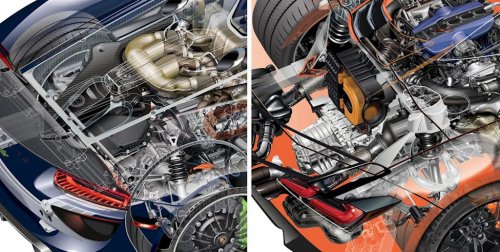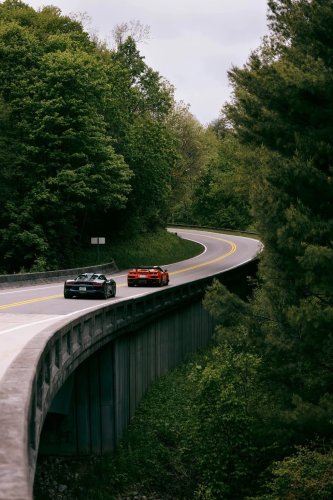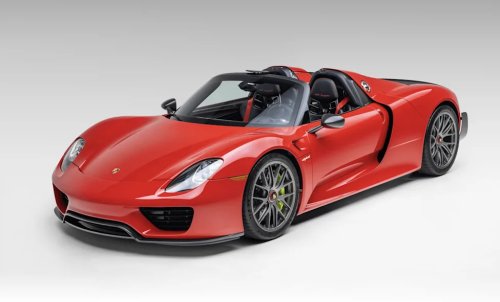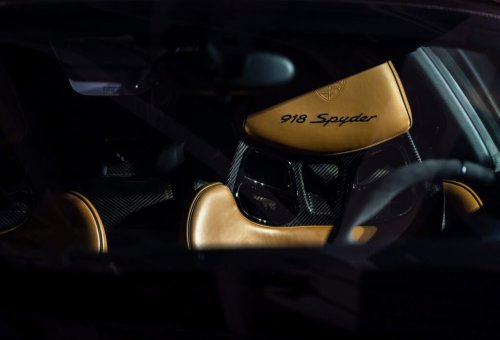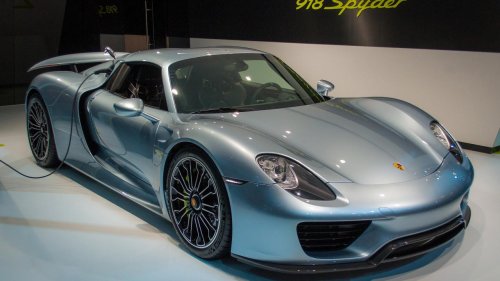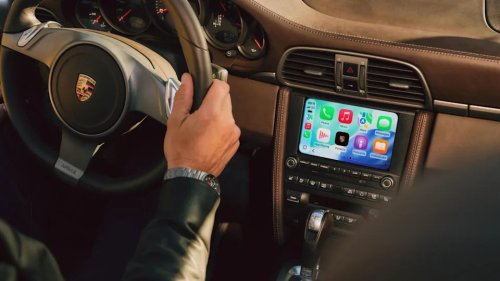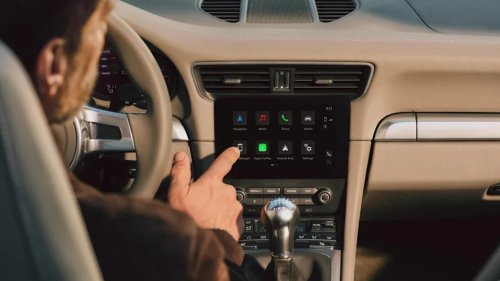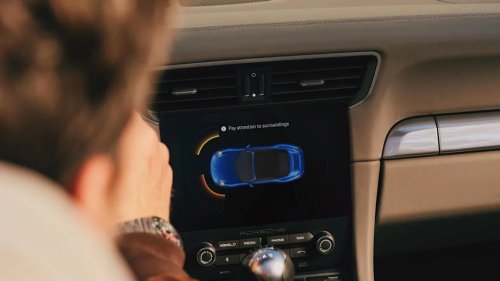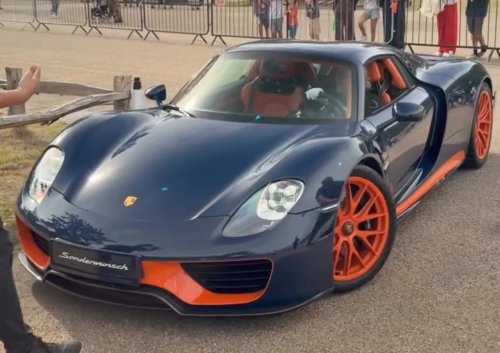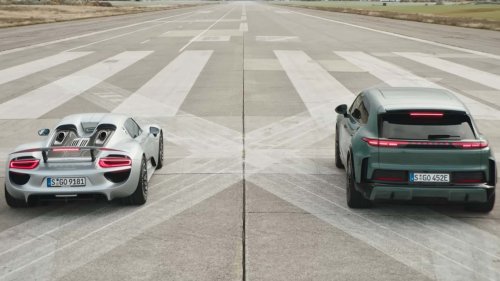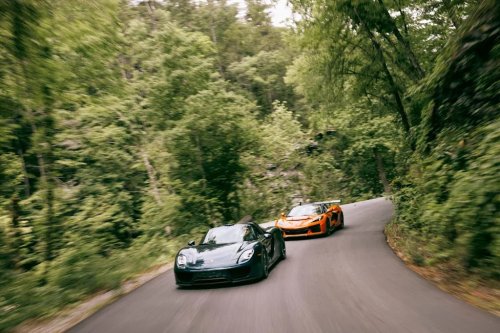
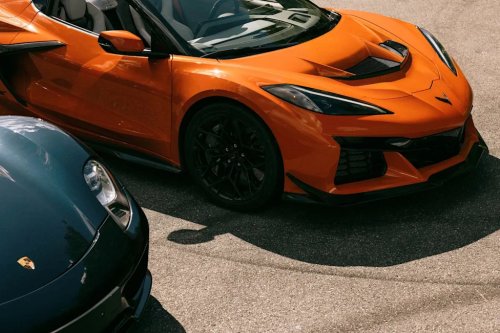
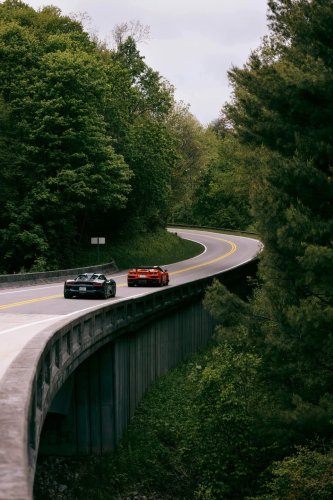

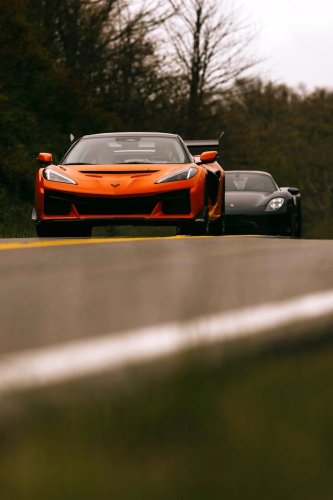
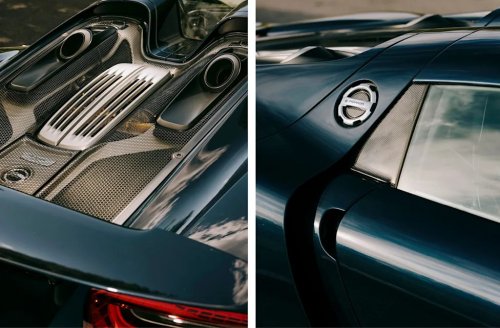
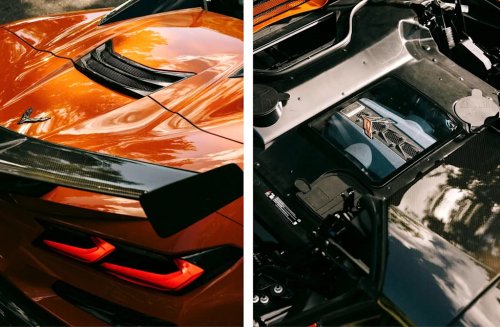

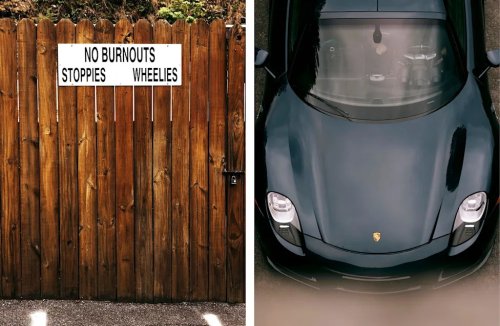
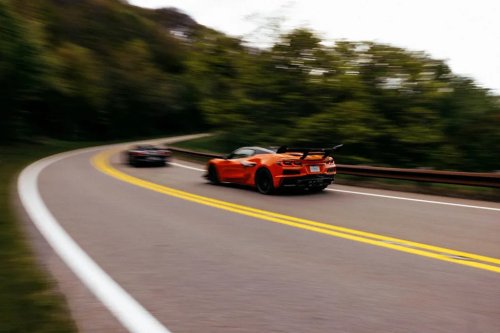
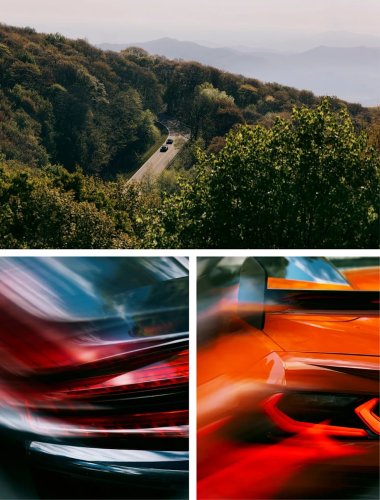
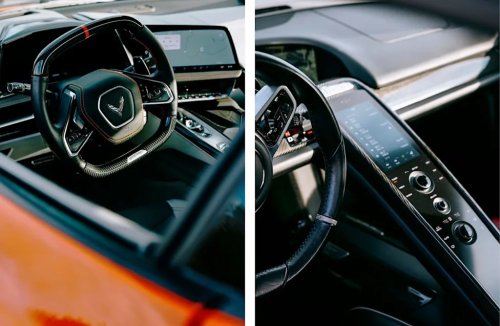
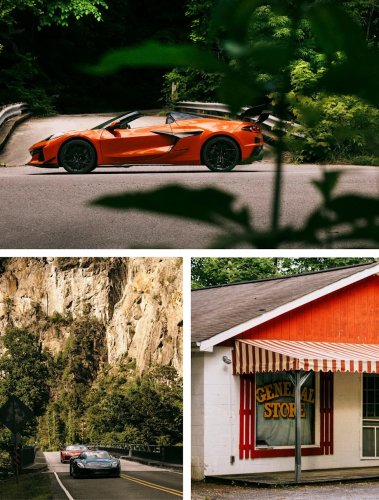
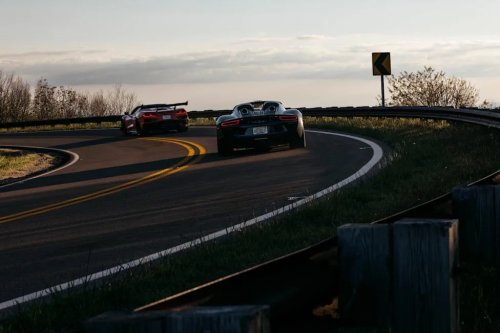



















Corvette ZR1X and Porsche 918: Unlikely PartnersGrowl BrothersIt has been 16 years since Porsche revealed the 918 Spyder. A decade and a half is a lifetime in automotive terms—and it's a year beyond that. But look at the Porsche's gas-electric hybrid powertrain, which pumps out 887 hp by combining a V-8 and two electric motors. It's today's hypercar formula. In the years since the 918's debut, electrification has become the standard method for adding power everywhere from the exotic-car stratosphere all the way down to, well, the Toyota RAV4 (the plug-in can hit 60 mph in under six seconds). Chevrolet joined the game with the 2024 Corvette E-Ray and used the same components to juice the already-insane 1064-hp ZR1 to an even loonier 1250 hp in the ZR1X.This story originally appeared in Volume 36 of Road & Track.Hearst Owned - Hearst OwnedWhich brings us to this bizarre moment comparing a Corvette with the 918. Even at a quarter-million dollars, the ZR1X outguns anything with spark plugs for the same money—and many that cost much more. But who buys a $212,195 ($252,775 as tested) Corvette because it's a bargain? Instead of a straight comparison, the 918 Spyder and the Corvette ZR1X are here to be appreciated in the context of each other: the first of its breed alongside a spiritual descendant.Growl BrothersThe 918 Spyder on these pages is a nonsalable prototype still in Porsche's possession and occasionally loaned out under the pretense of keeping it exercised. It's like having a buddy with an amazing car collection and a corporate-level tire budget. This 918's home base, the Porsche Cars North America headquarters in Atlanta, is less than a day's journey from the Cherohala Skyway and the abundance of spectacular roads entwined amid the borders of Georgia, Tennessee, and North Carolina. It's as close to driving heaven as anywhere east of the Mississippi, fulsome with a wide variety and high density of corners and unburdened by much early-morning traffic. The views are pretty good too.Growl BrothersThis terrain also showcases the benefits of hybrid power in an era when even a base Corvette Stingray is more than enough car for the road. Both of these cars are easy, even friendly, to drive. But neither should be taken lightly. There are limits and more than enough power to exceed them. The electric motor at each car's front axle adds stability both on and off throttle in an environment where preserving a margin of safety is vital.Growl BrothersAdvertisementAdvertisementCompared with its hair-trigger predecessor, the Carrera GT, the 918 Spyder is nearly domesticated. The 918 shifts toward a more wieldy performance, unbelievable power in a chassis without nasty surprises. It continued some of the Carrera GT's greatest assets, though, such as carbon-fiber construction and a race-based engine. The 918's 4.6-liter V-8 is similar to the one in the RS Spyder that won the ALMS championship from 2006 to '08. The motorsport lineage appears in its free-revving character, 9150-rpm redline, and modest 398 lb-ft of peak torque. The high-voltage electric bit compensates with instantaneous thrust: A 6.8-kWh battery pack feeds a 154-hp motor set between the engine and dual-clutch transmission, as well as a 127-hp motor for the front wheels. That's enough juice for 12 miles of plug-in electric-only range.Growl BrothersThe electric portion of the ZR1X's powertrain plays a more accessory role, adding 186 hp to the 1067-hp twin-turbo V-8. Electric-only operation is limited to Shuttle and Stealth sneak-out-of-the-gated-community modes.Hearst OwnedWhile the 918 puts its electric angle front and center, even defaulting to hybrid operation at startup, the Corvette hides the vegetables. Or, in terms of fuel economy, the Corvette deep-fries the vegetables. Its EPA combined rating of 14 mpg earns it a $2800 gas-guzzler tax, a tariff the Porsche dodged with 22 mpg combined.With modern power also comes modern heft. The ZR1X weighs nearly 320 pounds more than the 918 Spyder, additional mass more than offset by the ZR1X's extra power.(left) Vertical pipes sound amazing and also make for a short exhaust length. (right) One welcome trait of the 918 Spyder's age is a physical latch hidden behind the door instead of a solenoid switch.Growl Brothers(left) The big wing tends to hinder trunk access. (right) Edge Blue paint on the LT7's valve covers is only visible halfway through the convertible hardtop's power operation.Growl BrothersAdvertisementAdvertisementThe Corvette is fewer than four inches longer and three inches wider and taller than the 918. In terms of physical impressions, however, the Corvette seems much larger. You sit deep in the 918, the car wrapped around you so much that there's no elegant way to exit. The ZR1X seat is mounted higher, closer to eye level with crossovers. That eases ingress and egress but also dampens the sensation of speed. Slightly. The Corvette is incomprehensibly fast. Zero to 60 passes in just 2.1 seconds, with 100 mph arriving less than two seconds later.Both cars thrill even when driven below their limits, which is important when the limits are so high.Growl BrothersNot that the 918 Spyder is much slower. A four-tenths deficit to 60 mph borders on imperceptible. If anything, the Porsche responds with more immediacy in scenarios where the Corvette is still building boost. The biggest subjective difference is that in the Porsche, fully flooring the accelerator for a moment or two is manageable. In the Corvette, scenery blurs so quickly that the driver must think about braking before their foot hits the firewall.(left) If all the motorcycle riders behaved themselves, signs like this wouldn't be necessary. ( right) The 918 Spyder has a squarish footprint, in contrast to the bootylicious ZR1X.Growl BrothersFortunately, the Corvette does have all the brakes. The massive 10-caliper front, six-caliper rear carbon-ceramic discs, an upgrade from the standard ZR1's units, are unflinchingly capable. In virtually any other context, the 918's binders would be considered otherworldly powerful, but here they're second place with an occasional hint of the electric regeneration coming through the pedal. To be fair, the Corvette's mighty stopping power is aided by sticky Michelin Pilot Sport Cup 2 R tires that come as part of the $1500 ZTK Track Performance package and downforce magnified by the $10,495 Carbon Fiber Aero package. The 918's Michelins lack the R designation and offer a smidge less grip but come up to temperature more quickly. On 50-degree mornings, even the tighter switchbacks along Cherohala require a concerted effort to warm up the ZR1X's tires. When they're cold, there's a numbness that masks the car's abilities.With tires in their temperature window, though, the Corvette's steering becomes more articulate, conveying precisely how much grip is building through a corner. The ZR1X is pointier than the Porsche, more eager to turn in and change direction (no doubt aided by the aggressive camber setting revealed by an alignment report in the glove box). And yet, at higher speeds, the Corvette feels more planted, glued to the tarmac in sweeping corners, where the Porsche starts to feel slightly light.Growl BrothersThe 918's heavier, more deliberate steering communicates more connection to the road. The lack of sound deadening means you hear all the mechanical noises alongside every stray piece of road grit flung off the tires. Presumably, this is by design. The noise and the cabin's exposed carbon fiber are reminders that the 918 is a true exotic. Most of the time this is thrilling. But trundling in Hybrid mode with the engine below 3000 rpm, the exhaust note does drone.AdvertisementAdvertisementThe Corvette offers more isolation and comfort, plus optional cooled seats, highlighting the yin and yang of accessible performance. A car that hides its power level as well as the ZR1X does is easy to enjoy in traffic or over a long trip but somewhat mutes the purpose of all its capability.Growl BrothersBoth cars handle rough roads brilliantly and suitably for daily-driver use. Which makes sense, considering that making this much power remotely manageable depends a lot on all four wheels keeping good contact with the road. The 918's active suspension has a stiffer Sport setting that offers little advantage on anything but marble-smooth surfaces. In the ZR1X, the suspension, which gets progressively stiffer by small increments, is tied to the drive mode.And the Corvette's selectable modes and multistage Performance Traction Management system show another thing that's changed since the 918 debuted. The 918 has a single rotary selector on the steering wheel (similar to but simpler than the one used across the Porsche lineup today) that toggles between Electric, Hybrid, Sport, and Race. It's more immediately accessible, whereas fine-tuning the custom modes and activating PTM in the Corvette requires acclimation. A small, subtle example of how a wealth of choice can also take you out of the driving experience.(left) The squircle steering wheel is the C8 Corvette's most glaring flaw. (right) Infotainment and climate controls in the 918 are close at hand but make you take your eyes off the road.Growl BrothersTo be perfectly clear, the ZR1X is in no way lacking. It is a monumental achievement: almost 50 percent more power at less than a third of the 918 Spyder's base price when new, delivered in a way that's thrilling even at lower speeds and modest levels of commitment. The 918 Spyder is more visceral, even when it's running purely on electric power and the subtle whine of the motor is audible. But why this Porsche really succeeds in its mission is that with all its technology, the experience is still centered around the engine. The motors act as the enabler to the brilliance of the V-8, which sounds great at 5000 rpm and absolutely wails above 7000.AdvertisementAdvertisementThe 918 set the standard for hybrid performance. The ZR1X follows that template in the sense that if you didn't know about its single high-voltage motor, you might not even notice it. If anything, the Corvette is even more engine-centric than the Porsche. If there's any knock against the ZR1X, it's that the standard ZR1 is already more than fast enough. After two days of driving through the mountains, I convinced myself that the X keeps its back end more in check, but it's difficult to tell how much without a direct comparison between the two super-Vettes.(top) An X appended to the ZR1 badge is the only exterior giveaway to the hybrid variant. (bottom left) Guess which of these two cars drew more attention? It wasn't the one with the big wing and bright paint. (bottom right) What kind of general store doesn't have Michelin Pilot Sport Cup 2 tires in stock?Growl BrothersConsider the ZR1X a glimpse at the Corvette's long-term future, one already on display in hybrid exotics such as Lamborghini's Revuelto and Temerario or the Ferrari F80 and Testarossa. A bigger slice of electric power bringing even more performance without detracting from the foundational role of a howling V-8.Without the Porsche 918 Spyder, it's less likely that the ZR1X or any of those other cars would be what they are today. The 918 nailed the assignment and, in doing so, forged an unlikely path to prolonging the reign of high-performance internal combustion. If you love the Corvette ZR1X—and you should—thank the 918 hybrid.Growl BrothersA car-lover's community for ultimate access & unrivaled experiences.JOIN NOWHearst OwnedYou Might Also LikeIf You Can Only Own One Car, Make It One of TheseThese Are the Most Popular Cars by State