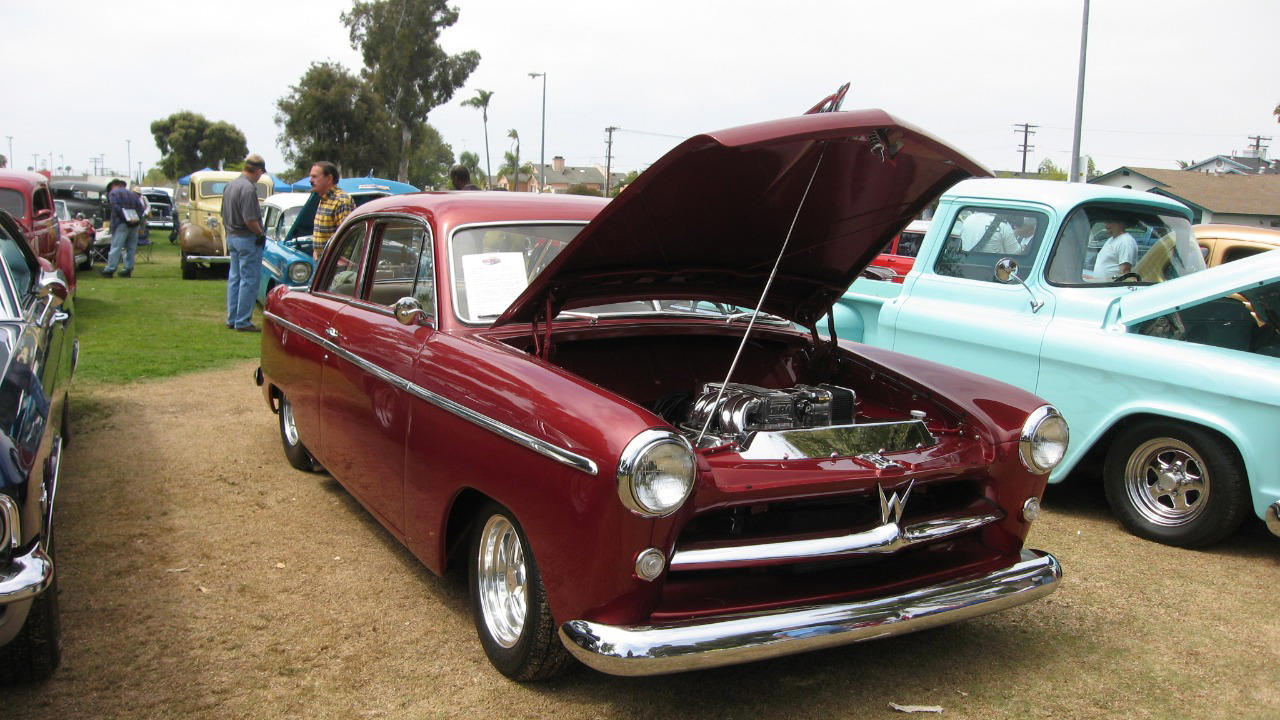



















How the 1952 Willys Aero tried to modernize simplicityThe 1952 Willys Aero arrived at a moment when American cars were growing larger, heavier, and more ornate, yet it pursued a different path. Compact, aerodynamically clean, and mechanically straightforward, it tried to translate wartime Jeep pragmatism into a modern passenger car. In doing so, the Aero attempted to prove that simplicity itself could be updated for the postwar age. From wartime Jeep builder to compact car hopeful Before the Aero, Willys was best known for the Willys MB, the quarter-ton 4×4 that, along with the Ford GPW, became the U.S. Army’s standard light reconnaissance truck in World War II. That utilitarian machine evolved into the Willys Jeep, which later became a commercial success. According to period histories, the company leaned heavily into Jeep-based wagons and trucks after the war and largely abandoned conventional passenger cars while it rode that momentum. By 1952, Willys recognized that a Jeep-only strategy left it exposed as the American market shifted. A passenger car return offered a chance to reuse the firm’s reputation for toughness in a more refined, family-friendly package. The result was the Willys Aero line, including the Willys Aero Ace, which attempted to combine compact dimensions with contemporary styling and better fuel economy than full-size rivals. Aerodynamic style with aircraft overtones Willys did not choose the name Aero casually. Enthusiast accounts describe the Willys Aero as shaped with aircraft-inspired thinking, with curved lines and a relatively low silhouette intended to reduce drag and visually distinguish the car from taller, bulkier sedans of the period. Compared with the upright Jeep wagons in the same showrooms, the Aero looked sleek and almost delicate, which was part of its appeal. Contemporary observers often compared the Aero’s appearance to other early fifties compacts, including cars that resembled the Henry J or certain Studebaker models. A Facebook discussion on The Aero Willys notes that some viewers saw echoes of early British Vauxhall designs as well. Rather than heavy chrome extravagance, the Aero relied on smooth sheet metal and restrained ornamentation, a decision that aligned with its engineering focus on efficiency. Engineering a light and efficient compact Under the skin, Willys tried to move beyond traditional body-on-frame construction. Reports on the Aero Willys describe a structure that integrated body and frame elements, often referred to as an Aero Frame design, in which the body shell and structural members worked together while the cowl and inner fenders provided mounting points for the front suspension. This approach reduced weight and improved rigidity compared with many conventional frames of the era. The Aero Willys models built between 1952 and 1955 were repeatedly described as practical, clean-lined compact vehicles. Their relatively low mass, combined with modest four and six-cylinder engines, allowed them to deliver strong fuel economy. One period account of the Aero notes claims of up to 35 miles per gallon when equipped with overdrive, a figure that positioned the car as thrifty transport at a time when fuel consumption was becoming a selling point for budget-minded buyers. The Willys Aero Ace and the search for modern comfort Within the range, the Willys Aero Ace served as an upscale expression of the concept. A profile of a 1952 Willys Aero Ace highlights how Willys tried to offer more than basic transportation, with better interior trim and additional convenience features that aimed to attract buyers who might otherwise shop larger domestic brands. The Aero Ace still sat on the same compact footprint, but it added a veneer of comfort and style that tried to bridge the gap between economy car and mainstream sedan. Later enthusiasts have treated the Aero Ace as a kind of blank canvas. A feature on a modified 1952 Willys Aero Ace describes one example that kept the original body but updated the running gear substantially, which speaks to the underlying strength of the structure and the car’s adaptability. Owners who appreciated the clean body lines often saw no need to alter the exterior, preferring instead to modernize mechanical components while preserving the original design intent. Driving character shaped by Jeep heritage Although the Aero was not a Jeep in disguise, its character clearly reflected Willys Jeep’s experience. Commenters in a discussion of a 1952 Willys Aero Ace described it as a Willys Jeep in a car body, a shorthand for the way the company’s rugged engineering sensibility carried over into the compact. The use of proven Willys powertrains, including engines that also appeared in tractors such as the Empire and in early Land Rover projects, gave the Aero a reputation for durability that contrasted with its delicate appearance. Owners who shared memories of Aero Willys cars often recalled straightforward mechanical behavior rather than high performance. One contributor in a thread on The Aero Willys described an Aero with an F-head six that could cruise near the speed limit comfortably, while another mentioned swapping in Volvo running gear. These anecdotes reinforce the idea that the car’s simplicity made it approachable for home mechanics and tuners, which in turn helped the design age gracefully even without factory support. A near miss in the compact car race In hindsight, the Aero looks like an early preview of the compact boom that Detroit would embrace later in the decade. An analysis of the 1953 Willys Aero Lark positions the model as a kind of failed sneak preview of later compacts such as the Ford Falcon and other domestic small cars. At the time, however, major manufacturers were skeptical of the volume potential for smaller vehicles. The Chevy Sales staff, when asked about a proposed compact called the Cadet, reportedly gave a thumbs down to the idea that they could sell 300,000 per year, and the Cadet project was abandoned. Against that backdrop, an independent firm like Willys faced steep odds. The Aero Willys story shows a company trying to anticipate a shift in buyer preferences before the larger players committed to the segment. Without the marketing resources or dealer reach of the big three, and with limited capital to keep updating the design, the Aero could not turn its engineering promise into dominant market share, even though some reviewers regarded it as a good little car in everyday use. Exported tooling and a second life abroad Although American production of the Aero Willys ended after a few years, the design did not disappear. Accounts of the 1952 to 1955 Aero Willys explain that the car’s designs and tooling were shipped to Brazil, where production continued under various names into later decades. A redesigned model developed by Brooks Stevens built on the original structure and styling themes, which extended the car’s influence far beyond its modest U.S. sales. This Brazilian chapter illustrates how the Aero’s blend of simplicity and modernity made sense in markets that valued durability and efficiency over annual styling changes. The same attributes that limited its appeal in a mid-fifties American showroom, where buyers often chased size and flash, became strengths in an environment where a clean, compact sedan could serve as practical family transport for years. Why the 1952 Aero still matters Today, the Aero Willys is nearly forgotten in mainstream automotive memory, yet it continues to attract a small but dedicated following. Enthusiast groups that share photographs of surviving examples, including a 1955 Willys Aero Custom spotted in Council Bluffs, Iowa, often remark on how few remain, in part because early Aero Willys cars were rust-prone. Those that survive tend to be cherished, whether preserved close to stock or heavily modified with modern drivetrains. More from Fast Lane Only Unboxing the WWII Jeep in a Crate 15 rare Chevys collectors are quietly buying 10 underrated V8s still worth hunting down Police notice this before you even roll window down