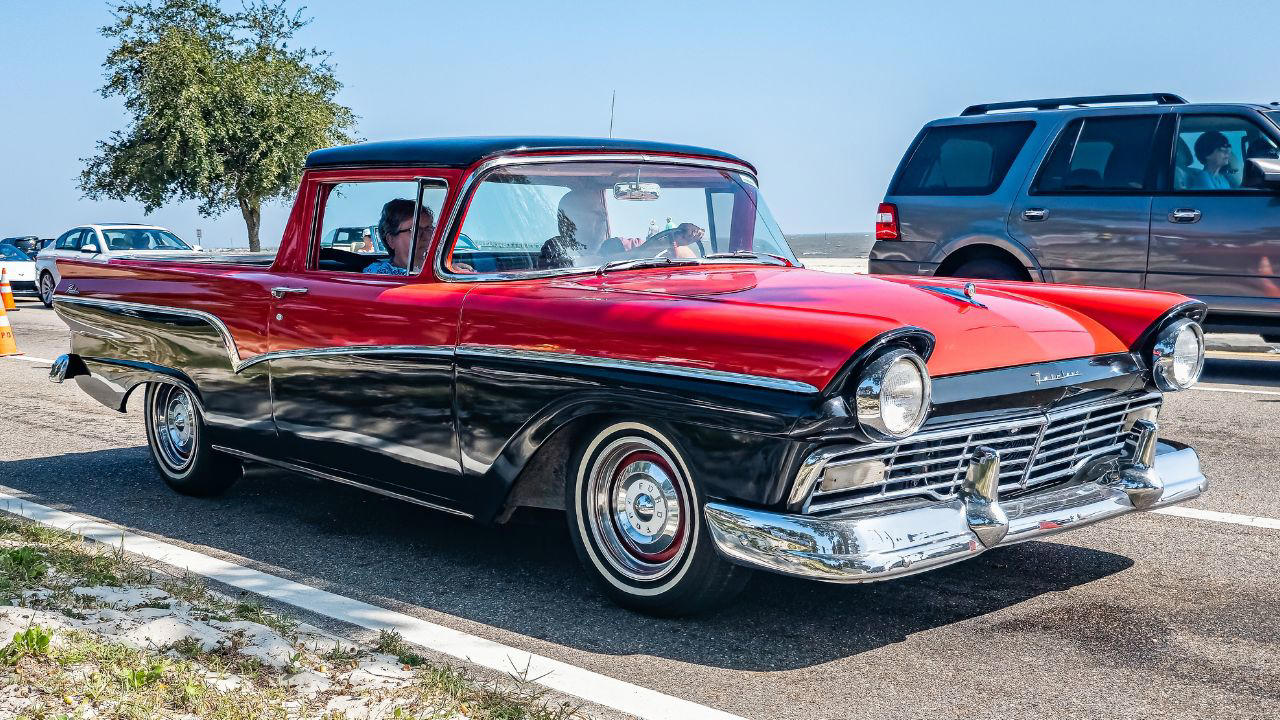


























Ford’s 1957 Fairlane 500 tried to balance style and sales and mostly didThe 1957 Ford Fairlane 500 arrived at a moment when Detroit styling was turning sharper and more futuristic, and when sales bragging rights against Chevrolet mattered as much as chrome. Ford needed a car that looked fresh enough to win showroom traffic yet sensible enough to sell in huge numbers, and the Fairlane 500 became the spearhead of that effort. It mixed jet age lines, new engineering and carefully pitched luxury, and the market response showed that the balance largely worked. Today the 1957 Fairlane 500 sits in the shadow of the mythic 1957 Chevrolet Bel Air, but period numbers and surviving cars tell a different story. Beneath the nostalgia for tailfins and two-tone Chevrolets, Ford’s flagship full size line combined styling drama with a broad range of engines and trims that appealed to families, status seekers and performance fans at once. Ford’s big gamble in a changing market By the late 1950s, Ford could not afford to look like a conservative alternative to Chevrolet. The company pushed into what enthusiasts now call the jet age, with longer, lower bodies, more glass and sheetmetal that looked ready for a runway. Contemporary accounts describe how Ford, in 1957, took a bold leap with a brand new lineup that was sleeker, safer and better handling than its 1956 predecessors, a shift that some fans still credit as the company’s first genuinely modern car program, as seen in coverage of the Ford redesign. The Fairlane name had already been in Ford showrooms, but the 1957 Fairlane 500 badge signaled a step up. It was the top trim in the full size range, positioned to catch buyers drifting out of the shrinking medium price segment that period dealer films described as being hit by a sales decline in 1957, a theme echoed in surviving promotional footage such as the 1957 Ford vs comparison. Ford wanted those customers to see the Fairlane 500 as a smart alternative to more expensive Buicks and Oldsmobiles, without scaring off traditional Ford families on a budget. Styling that chased the jet age without losing restraint Visually, the 1957 Ford Fairlane 500 carried the new Ford look to its most dramatic conclusion. Enthusiast writeups describe the 1957 and 1958 Ford Fairlane 500 models as highlighting a transition in Ford styling and engineering, bridging classic 1950s ornament with emerging performance trends, a point repeated in coverage of the Ford Fairlane line. The car sat lower than its predecessor, with a longer wheelbase and a profile that made the hood and trunk appear almost level. Straight side spears and modest tailfins gave it motion without the flamboyance that would define some later 1950s designs. Collectors often single out the two tone paint schemes and the sweeping chrome trim that framed the rear fenders, details that gave the Fairlane 500 enough flash to compete with Chevrolet while still looking slightly more restrained. Specific show cars such as the 1957 Ford Fairlane 500 “White Pearl” illustrate how the redesign gave the Fairlane 500 one of the most distinctive silhouettes of the decade. Enthusiast descriptions of that car stress how the new body showcased the model’s long, low stance, a look that helped secure its place in automotive history and is often referenced when discussing the White Pearl Fairlane. Inside, a calculated move upmarket Ford understood that styling alone would not win buyers who had started to expect more comfort and luxury from their family cars. Accounts of the 1957 and 1958 Fairlane 500 stress how interiors were upgraded with more opulent materials and features, with enthusiasts summarizing this shift under the label Interior Luxury. The Fairlane 500 cabin used richer fabrics, brighter trim and more detailed door panels, along with options such as better radios and power accessories that had once been the preserve of higher priced brands. These touches were not accidental. Ford was trying to court buyers who might have considered a Buick or DeSoto but were now wary of the medium price segment’s slide. By offering a car that felt plush inside yet still wore a Ford badge, the company could keep those shoppers inside its own showrooms. At the same time, the Fairlane 500’s interior still had to look familiar and durable enough for everyday use, which kept the materials stylish rather than extravagant. Engines that backed up the look Under the hood, the Fairlane 500 offered a range of V8 engines that could match its aggressive styling. Descriptions of the 1957 Ford Fairlane 500 as a stylish and powerful car emphasize that it represented the best of American automotive design and engineering, with the “500” badge attached to versions that could be ordered with strong V8 power, as highlighted in coverage of the Ford Fairlane 500 as a Classic American Beauty The car also fit squarely into the broader American fascination with V8 performance. Period engine charts describe a spread of powertrains from more modest V8s suited to family driving up to high output versions that could compete on the drag strip. Some enthusiasts point to a supercharged setup that produced around 300 horsepower in limited applications, a figure that aligned the Fairlane 500 with the most powerful factory offerings in the country. This range allowed Ford to sell the same basic body to buyers who wanted economy and to those who wanted bragging rights. Transmission choices followed the same pattern. Contemporary summaries of the 1957 Ford Fairlane note that it was available with both manual gearboxes and a two speed automatic transmission, a configuration that appears in enthusiast discussions of the Ford drivetrain. That flexibility made the car accessible to buyers who still preferred to shift for themselves as well as to those ready to pay extra for the ease of an automatic. Sales: the year Ford finally topped Chevrolet All of this design and engineering effort was aimed at a single scoreboard: the annual sales race with Chevrolet. For much of the 1950s, Chevrolet had been the volume leader, and the 1957 Chevrolet Bel Air later became a symbol of the era. Yet period figures show that the story in showrooms was more complicated. Enthusiast compilations that cite the Standard Catalog from Krause Publications give a final tally of 1,522,406 for Ford versus 1,51 and change for Chevrolet in the 1957 model year. Another breakdown of the same race notes that in 1957, Ford narrowly outsold its rival, with Ford selling 1,522,406 cars during the 1957 model year, a figure repeated in discussions of how Ford sold 1,522,406 vehicles to edge out Chevrolet VS in that contest. Those numbers matter in the context of the Fairlane 500 because this model sat at the top of Ford’s volume line. While the company also sold entry level and mid level trims, the Fairlane 500’s mix of style, performance and comfort helped lift the average transaction price and gave Ford a credible answer to Chevrolet’s Bel Air hardtops and convertibles. The sales win did not erase Chevrolet’s cultural dominance, but it showed that Ford’s strategy of pairing modern styling with broad appeal had worked in the short term. Rivalry, pride and the Chevrolet Ford narrative The 1957 season also fed a deeper rivalry that has persisted for decades. Enthusiast discussions frame the year as a moment when national pride and brand loyalty were wrapped up in the fierce rivalry with Chevrolet, with some fans arguing that Ford unleashed a name that unexpectedly turned the tables, a theme echoed in commentary on the Chevrolet Ford battle. Contemporary owners and collectors still debate whether the 1957 Chevrolet Bel Air or the 1957 Ford Fairlane was the better car. In one enthusiast group, a self described statistical Junkie insists that Ford cars absolutely outsold Chevrolet in 1957 and urges skeptics to look up the figures, while others counter that the Bel Air remains the more iconic design even if Ford won that year’s numbers game, as seen in a long thread comparing Ford and Chevrolet. That split verdict captures how the Fairlane 500 balanced style and sales. It did enough to win the year on raw numbers and to satisfy Ford loyalists who saw it as the better driving and more modern car. At the same time, Chevrolet’s slightly more flamboyant design and heavy presence in popular media helped the Bel Air claim the larger share of cultural memory. How enthusiasts remember the Fairlane 500 Among collectors today, the 1957 Ford Fairlane is often praised for capturing the spirit of 1950s American automotive style while blending bold design with dependable performance. Enthusiast groups describe the 1957 Ford Fairlane 500 in particular as embodying that mix, with some posts explicitly calling the Ford Fairlane 500 a perfect expression of American car culture. Owners trade stories of long road trips, family memories and teenage drag races, often highlighting how the car felt both glamorous and practical. That dual personality is part of why survivor cars remain popular. Restorers can build a stock appearing Fairlane 500 with period correct two tone paint and interior trim, then choose whether to emphasize comfort, performance or both under the skin. The car’s reputation has also benefited from the broader reassessment of Ford’s 1950s engineering. Where Chevrolet’s small block V8 has long been celebrated, more enthusiasts now recognize that Ford’s chassis and suspension in 1957 delivered real improvements in handling and safety. Video essays that look back at how Ford beat Chevrolet in parts of the 1950s often feature personal stories of long term Ford ownership, such as a presenter who has owned a 1955 Ford Club sedan since youth and uses that experience to explain how Ford Club products built loyalty. A car built on transition Seen from today, the 1957 Fairlane 500 reads as a car built on transition. It bridged the rounded forms of early 1950s sedans and the extreme fins that would arrive a couple of years later. It served buyers who still wanted full frame, rear wheel drive comfort but were starting to expect more performance and luxury features in the same package. Enthusiast commentary on the 1957 and 1958 Fairlane 500 models consistently returns to this theme of transition, describing how these cars reflected both classic 1950s style and emerging performance trends, a balance that can be traced in the 500 m discussion among Ford fans. The Fairlane 500’s combination of a modern body, upgraded interiors and a wide engine lineup made it a template for how Detroit would approach full size cars into the 1960s. That context helps explain why the Fairlane 500 did what Ford needed it to do in 1957. It did not blow past Chevrolet on image, and it did not revolutionize the family car. Instead it met buyers where they were, offered just enough glamour to feel new, and delivered the practicality and price that turned interest into sales. The fact that Ford could claim 1,522,406 units sold and a narrow victory over its rival suggests that the balance was not only deliberate but effective. More from Fast Lane Only Unboxing the WWII Jeep in a Crate 15 rare Chevys collectors are quietly buying 10 underrated V8s still worth hunting down Police notice this before you even roll window down