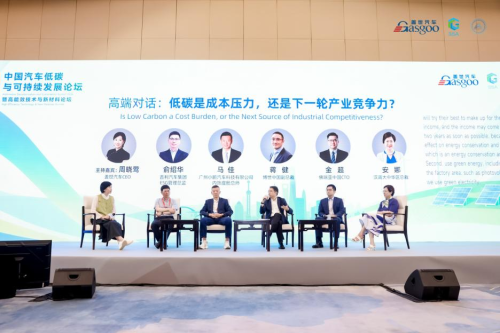
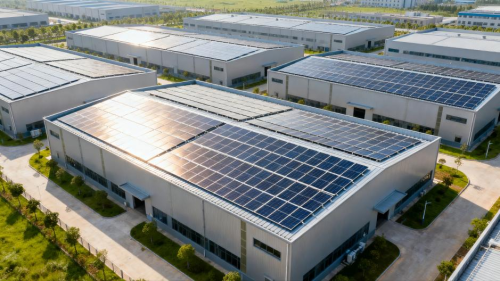
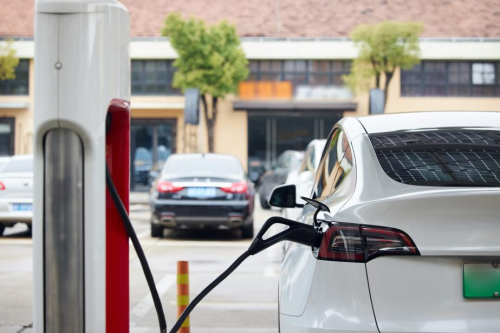



















Gasgoo Munich-"Decarbonization is no longer optional." Jiang Jian, vice president of Bosch China, captured the urgency of the auto industry's low-carbon transition at the recent "Automotive Decarbonization and Sustainability Summit 2026," hosted by Gasgoo. "Especially for an industry where going global is the trend, cutting carbon is a mandatory subject."Image source: 699pic.com As the EU's Carbon Border Adjustment Mechanism takes effect and battery passports loom, major global markets are tightening requirements on product carbon footprints. For China's auto industry, low-carbon transition has shifted from an option to an imperative. But in reality, where does this transition rank in corporate development? When will the investment pay off? And what are the biggest hurdles? During a roundtable at the forum, representatives from Geely Auto, XPENG, Bosch, Forvia, and Henkel offered their perspectives from both OEM and supply chain viewpoints.How to Prioritize the Low-Carbon Transition?With domestic competition remaining fierce, where exactly does low-carbon transition sit in the corporate strategic landscape?“For Geely Auto, decarbonization is definitely a must-answer question,” said Yu Shaohua, ESG management director at Geely Auto Group. The automaker has long prioritized this shift, establishing a sustainable development committee and a dedicated ESG office within its strategic planning center. The company quantifies metrics across R&D, procurement, and manufacturing, integrating them into operational assessments.Ma Jia, XPENG's chief engineer for interior cabins, echoed that sentiment, noting that low-carbon practices are now an industry consensus. XPENG places strategic importance on this, including the use of circular materials. “By 2030, XPENG's exports are expected to reach 1 million units. In many overseas markets, carbon footprint and green energy performance are critical competitive advantages,” Ma said.Compared to OEMs, supply chain companies feel the urgency more acutely from dual pressures: regulatory compliance and customer demands.Jiang noted that since 2020, Bosch has achieved carbon neutrality in operations (Scope 1 and 2) across more than 470 locations worldwide. Now, the focus has shifted to Scope 3—reducing emissions along the upstream and downstream value chain. “From suppliers and logistics upstream to emissions across the product lifecycle, we have to cover it all.”Image source: GasgooFor Forvia, carbon neutrality was established as a core strategic direction early on, according to Jin Chao, CTO of Forvia China. Beyond meeting European regulations, the company actively responds to China's carbon reduction strategies and timelines. Through continuous tech investment, it is positioned to meet requirements across different global regions.Jin added that carbon reduction is a KPI for every employee at Forvia, with specific assessment items in year-end reviews. In daily product development, carbon emission is a core metric running through the entire innovation process.Anna, president of Henkel Greater China, emphasized that as a family-owned business with 150 years of history, Henkel consistently treats “for the generation to come” as a key strategic pillar.Automotive is a major business unit for Henkel. Anna mentioned the European alliance Catena-X, noting Henkel is a founding member. The company aligns its products with the alliance's standards to ensure data transparency and actively participates in related work in China and local industry associations. Additionally, 10 of Henkel's factories in China now run on 100% green electricity.Clearly, despite different paths, low-carbon is no longer an extra credit assignment for any enterprise—it is the entry ticket determining future market access and competitive landscape.How to Calculate the Cost?As low-carbon moves from concept to practice, a hard reality sets in: Is this just burning cash, or an efficiency revolution? Where should the money go, and when will returns materialize?Yu admitted that every link in the transition faces cost pressure. On the product side, new energy vehicles iterate too fast. Where OEMs used to launch a few models a year, now it's a dozen or more, driving up R&D costs. On the supply side, costs rise as vendors adopt green power or purchase certificates.Manufacturing faces pressure too, but Geely chose this as its breakthrough point. The company is building solar installations to cut electricity costs and developing energy management platforms that track data down to individual devices, using AI to optimize consumption. Savings from manufacturing are then funneled back to support the supply chain.Yu stressed this isn't about squeezing prices, but collaborative cost reduction—digesting pressure through efficiency gains. Geely has compiled its manufacturing decarbonization experience into training materials and formed “empowerment project teams” to visit suppliers. Many have already agreed to join the effort.For Ma, early-stage costs inevitably rise. Over 70% of energy consumption in EVs comes from upstream minerals and materials, requiring industry-wide coordination. However, he highlighted an overlooked Chinese advantage: domestic green power costs roughly 40% to 50% of European levels. If parts and mineral companies use green power at scale, export models can turn regulatory pressure into a competitive edge when facing EU carbon footprint rules. “Short term, it's a cost increase. Long term, it's definitely positive. Low carbon is inevitable.”Jiang agreed that investment is necessary, but the amount depends on execution. The cost isn't necessarily as high as imagined.Bosch's path is clear: continuously push energy saving (a routine annual effort); actively transition energy sources, including on-site solar; and purchase green power and carbon credits to improve carbon neutrality quality. Take energy saving: while projects require capital, Bosch aims for quick returns. “We want earnings to quickly cover the investment, often within a year or two. Because energy saving brings tangible financial results.”The data speaks for itself: since 2019, Bosch China has implemented over 1,200 energy-saving projects, saving nearly 200 gigawatt-hours. In 2025 alone, its Chinese factories will generate about 65 gigawatt-hours from their own solar renewable resources. Jiang's conclusion: investment isn't terrifying if planned well; some spending generates cash flow rather than being a sunk cost.Image source: VCGRegarding payback cycles, Jin said experience suggests 3 to 5 years. Despite heavy upfront costs and slow short-term returns, he emphasized, “Customers already treat this as a prerequisite for selecting future suppliers,” so Forvia will keep investing.He revealed that thanks to carbon reduction tech, Forvia recently secured several new projects from domestic Chinese OEMs. In his view, going global is the main driver for OEMs to select low-carbon parts. As domestic policies clarify, Jin expects export experience will accelerate China's alignment with global changes.Anna didn't give a timeline but focused on process innovation. Take metal surface pretreatment: the painting shop consumes the most energy in auto production. Traditional processes require heating bath solutions above 60 degrees, making the shop feel like a sauna in summer. Through material innovation, Henkel enabled room-temperature pretreatment. This cuts emissions and significantly lowers energy costs for OEMs.If decarbonization tech can achieve cost reduction through process innovation, Anna argued, that is the industry's future direction—and exactly what Henkel aims to deliver as a supplier.Where Do the Biggest Challenges Lie?The road to low-carbon transition is far more complex than imagined, with resistance spanning policy, technology, and awareness.Yu pointed out that “every country has different policies, dictating different directions—this is a massive challenge.” Geopolitics adds complexity, requiring tailored strategies for different regions. From dual-credit policies to the EU's CBAM and battery passport regulations, understanding and responding effectively to these diverse rules is a major hurdle.Ma added that while the EU is moving forward, North America is different, with EV incentives fluctuating. “Policy uncertainty is the biggest challenge for companies like ours.”Jiang highlighted two practical difficulties.First, pulling the entire supply chain along. After achieving operational carbon neutrality in 2020, Bosch China is now pushing suppliers to join in. But the auto chain is long; upstream tracing goes deep, making coordination hard. Globally, Bosch uses the CDP platform and has pushed 4,500 suppliers to disclose carbon data, including over 720 in China. Yet the work remains difficult; aligning the whole supply chain on a common goal is no easy feat.Second, decarbonizing across diverse product lifecycles. Range extenders, pure electric, diesel, and hydrogen each have their place. Bosch continues to invest in hydrogen, but the industry is still in commercial exploration. “Which technology to pick, which path to take—this is extremely challenging for enterprises.”Image source: VCGJin took a broader perspective.First, the gap in consumer awareness. Parts of Europe saw temperatures hit 44 degrees Celsius this year, giving consumers a visceral sense of why decarbonization is needed. Chinese consumers, however, don't feel this urgency yet and lack an intuitive understanding of “what happens if we don't reduce carbon.”Second, the tension between global solutions and local adaptation. Forvia uses hemp fiber for interiors in Europe with great results, but China has limited hemp and abundant bamboo. European colleagues, unfamiliar with bamboo beyond seeing it in parks, doubted its properties. It wasn't until a Japanese luxury OEM explicitly requested bamboo that the European team recognized its viability as an “Asian flax.” Now, Forvia is developing bamboo-based applications to meet Asian customer needs.Jin argued that while global solutions matter, they must fit local resources. Furthermore, China's technological accumulation in carbon reduction deserves recognition in the global arena.Anna addressed another challenge from the chemical industry's perspective: uneven distribution of raw materials. Henkel has pushed localization for years. Now, as Chinese OEMs expand globally, Henkel is attempting “reverse localization”—exporting formulas developed in China to European markets. In Anna's view, Chinese companies usually start with exports, but tariffs and local regulations inevitably force them toward local production. Building a supporting local supply chain will become a new challenge.Where Are the Breakthroughs in the Next Five Years?Looking ahead five years, the industry must face how to deepen decarbonization paths, coordinate policies, recognize standards, and share costs.Yu pointed to zero-carbon industrial parks as a concrete lever. OEMs are surrounded by clusters of parts factories, with 60% to 70% of parts supplied locally. “The state has provided a great platform—zero-carbon parks—and this will accelerate in the next five years.” OEMs and parts suppliers should collaborate to develop these parks, which would significantly help the supply chain save energy and cut carbon.Ma brought the focus back to the domestic market. While exports drive decarbonization, “the main battlefield is still China.” He suggested domestic regulations reference European standards, leaning policy toward low-carbon and green practices. “That way, OEM competition isn't just about price and cost.” The implication: decarbonization should become a competitive threshold in the domestic market, not just an export compliance issue.Jiang offered two specific policy suggestions. First, on green power procurement: resources are uneven, so clearer national policies are needed to make green power more accessible to companies. Second, the lack of unified carbon accounting standards and data mutual recognition mechanisms complicates cross-company and cross-border collaboration.Jin proposed a bolder idea: establishing a multinational carbon reduction technology organization led by China. The goal is twofold: first, “to prove to the world that China is investing and has advanced technology”; second, to help the global market reduce emissions “at lower cost with better value for money.”In his view, the Chinese auto industry has made massive green innovations but suffers from poor storytelling, with overseas markets still defining Chinese products by the “low price” tag. “We ask others to tell our story, but Chinese companies must learn to tell it themselves.”Anna returned to the topic of cost. Recycled materials are pricier than virgin ones, and green power requires certificates—these are hidden costs borne by companies. She suggested China establish an official certification body to recognize corporate decarbonization investments. “Convert this cost into a credit or an entry threshold, so compliant companies get proper compensation.” This is essentially a call for an institutionalized value feedback mechanism, so decarbonization isn't a burden shouldered by companies alone.The status of low-carbon in the industry has shifted. It is no longer icing on the cake but a hard metric determining whether a company stays at the table. As for how to do it, how much to spend, and with whom, every enterprise has its own path and calculation. But the direction is singular—there is no turning back. For Chinese automakers to truly stand on the global stage, they need more than just speed and product; they must learn to set rules and tell stories. This transition has only just entered the deep water.