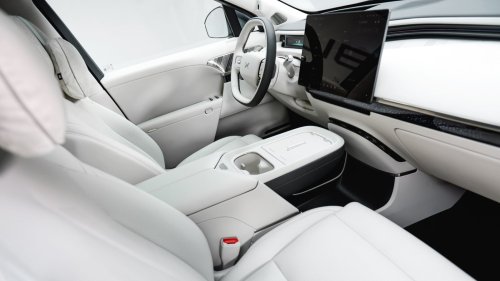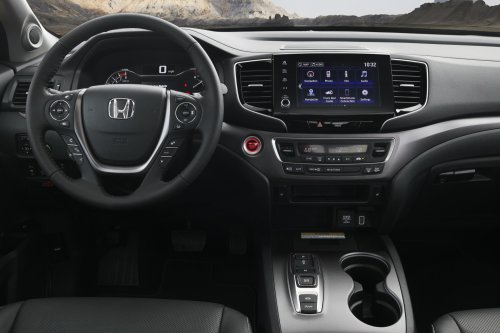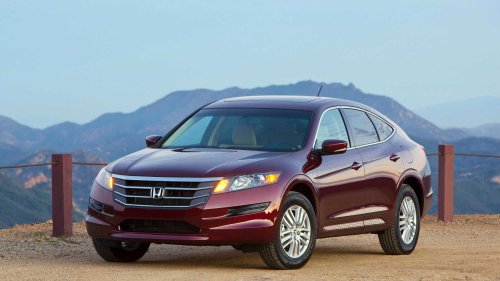
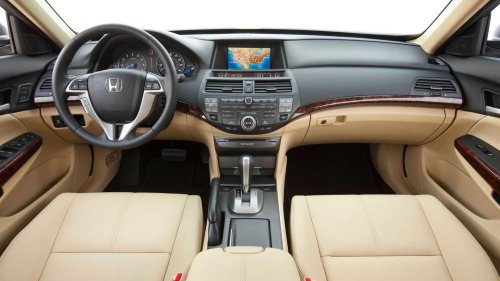
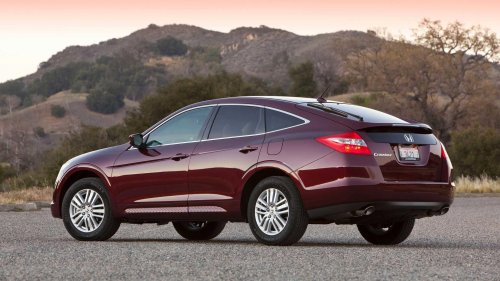
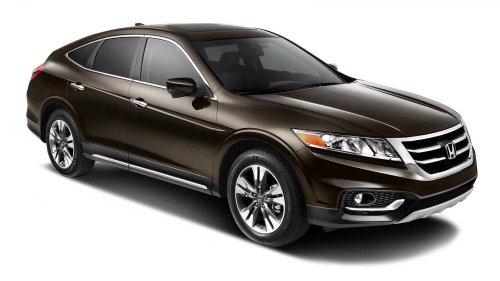
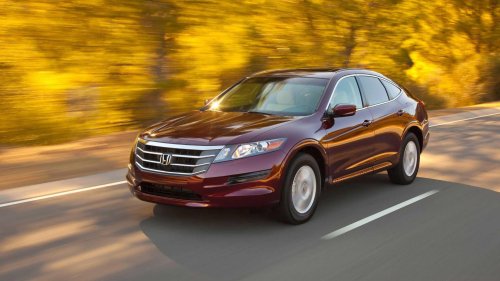



















The Honda Accord Crosstour (later just called Crosstour) was one of those good ideas that should have been a hit. It took all the things people loved about the Accord and made it even more practical. It added in a hatchback design with far more cargo space than the regular Accord, it offered all-wheel-drive – something unavailable on the sedan – and wrapped it all in the trendy coupe-like styling that was becoming popular.And yet, it was discontinued after just five model years due to slow sales. Let's examine what made the Crosstour good, why it failed and what they're worth today.Quoted Crosstour pricing is for clean title, no-accident examples with average miles. What Made It Good HondaBeyond the extra practicality and all-wheel-drive, there was a lot to like about the Crosstour. Unlike the regular Accord of the time, every trim of the Crosstour was well-equipped, with only EX and EX-L trims to pick from, the latter adding on a few extra niceties like heated leather seats with memory, a leather-wrapped wheel and shift knob, 18-inch wheels, a better stereo, and the option for satellite navigation.Once you were in that interior, you were treated to more headroom and a higher ride height, thanks to the Crosstour being seven inches taller than the regular Accord. And yet, because it was still based on the Accord platform and sat about half an inch closer to the ground than the CR-V, it handled better than the popular CR-V.Those Crosstour buyers also were likely drawn to the prospect of having something that wasn't just another Accord or CR-V, and actually stood out from the sea of ordinary Hondas, for better or worse. And because it was taller than the Accord, the bigger size also imparted it with a higher status, both visually and in Honda's hierarchy, which was another perk.HondaDue to that somewhat premium positioning, it also had plenty of power. From 2010-2012 it came standard with a 3.5-liter V6 that made just as much power as Honda's current V6, but 15 years earlier. And because of the better aerodynamics and a cylinder deactivation system, it still managed 22 MPG combined.When it was refreshed in 2013, Honda attempted to broaden its appeal and lower the starting price by offering their 2.4-liter four-cylinder. While this did make it slower, it also improved fuel economy up to 24 MPG combined.No matter which engine you went with, both had great reliability just like the regular Accord, as did most of the rest of the car's components. The 2013 refresh even improved the automatic transmission from the older 5-speed to a newer and better 6-speed. Why It Failed HondaUnfortunately, after five years on the market, Honda decided to discontinue the Crosstour in 2015, blaming low sales figures. After its meager peak of 28,851 units in its first full year on sale, every year thereafter saw a sales decrease aside from 2012, when the refresh slightly lifted sales to 20,848 units.There are a few reasons for this sales struggle. The first is bad timing. The market was just beginning to recover from the recession of 2007–2009, so anything premium was a tougher sell than it would have been a few years earlier, or a few years later. The other timing component is trend timing. While coupe-like crossovers were starting to become popular, the consensus is that the Crosstour was a little early to the party and would have fared better a few years later, once the segment was more established.Getting back to the "premium" component, one other big problem with the Crosstour was its price. When it launched in 2010, it's starting price was $29,670. Adjusted for inflation, that equates to over $45,000 in 2026. Even a loaded 2026 Accord is just over $40,000 these days, with a hybrid powertrain to boot.So you can see why Honda quickly ran out of buyers willing to pay a significant premium for a more practical Accord, especially when the even more practical CR-V started nearly $6,000 less back then for a comparable EX trim, although that didn't have the V6.The introduction of the four-cylinder Crosstour in 2013 helped bring prices down to the mid-$27,000 range, but that still left a decent premium over the identically powered CR-V, and likely because of this, it appears that the price cut wasn't enough to bring a significant amount of new buyers into the showroom.Honda Speaking of the CR-V, it's popularity and sales were soaring at this time, going from an already-impressive 203,714 sales in 2010 up to 345,647 in 2015, with each year better than the last. It was the fastest era of growth for CR-V ever.In the decade following 2015, CR-V sales have only grown by less than 60,000 units total, passing the 400k mark for the first time in 2024. For the more expensive, more controversially styled and likely harder-to-find-on-dealer-lots Crosstour, it's likely that even many of those shoppers that were initially interested in the Crosstour were easily converted to CR-V buyers.Speaking of styling, while it is subjective, many were turned off by the Crosstour's looks, which certainly didn't help matters. The side profile and back end were the biggest offenders. BMW tried a similar approach with the 3 Series Gran Turismo and 5 Series Gran Turismo and were met with the same pushback from buyers and as a result, those cars met similar fates.The final reason the Crosstour failed was simply the segment it was targeting: this was the Subaru Outback's domain. Just about every non-premium brand that tries to make their version of an Outback ends up failing. Subaru seems to be the only mainstream brand that can get away with lifting a wagon or hatchback, adding some cladding on it, and then proceed to sell it like hotcakes.The Crosstour is just one in a long line of cars that all attempted the same thing either before or after Honda and met the same fate. The Ford Freestyle, the Toyota Venza (first generation), the Volkswagen Golf Alltrack, and the Buick Regal TourX all fell into the "why can't we do this too" trap, followed the Subaru formula and yet got very different results.Some would argue that some of these vehicles (including the Crosstour) had less capable all-wheel-drive systems. While that certainly might have played a part for the more mechanically savvy shoppers, a more likely factor for the masses is Subaru's powerful marketing and long-running reputation. Used Market Today HondaOn the used market in 2026, because of its rarity, the Crosstour has held its value better than a regular Accord or CR-V, and continues to maintain a price premium. Higher mileage examples on the CarBuzz Marketplace range from $5,000–$10,000, with the lower mileage ones mostly in the $10,000-$14,000 range. Comparable Accords and CR-Vs are usually a few thousand less.Because of this rarity for the Crosstour, it's likely a better investment and less likely to continue to depreciate further. The flip side is that while they share lots of common parts with those other Hondas, finding Crosstour-specific parts will likely be more challenging, and more expensive as a result. So be warned if you do decide to venture into Crosstour ownership and plan accordingly.Lastly, there seems to be a bit of a cult following for the Crosstour, and even in our last Crosstour article, several people sounded off in the comments about their current or former Crosstours and how much they enjoyed them.It's likely not a large group of folks, but clearly the car is good enough that overall sentiment about them appears to be pretty positive. Many are even publicly wishing for the Crosstour to return, which is unlikely. Buyer preferences have shifted, and those looking to pay a premium over an Accord or CR-V are now flocking to the strong-selling Passport instead.But for those five years from 2010–2015, Honda actually managed to make a great crossover, even if it missed its mark.Sources: Honda