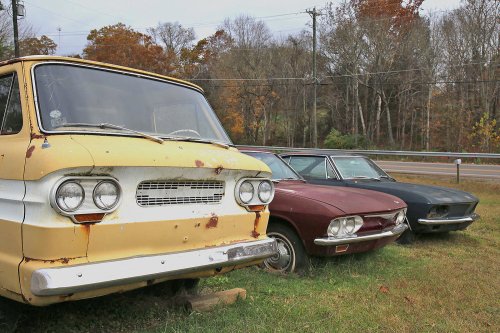
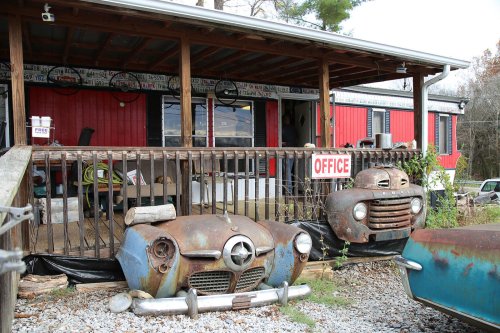
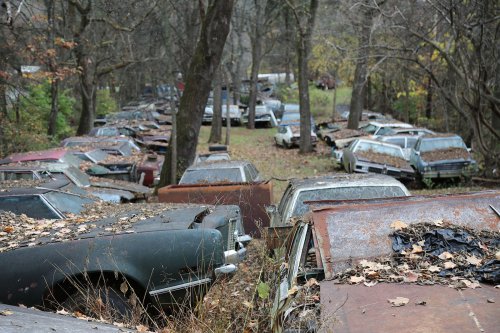
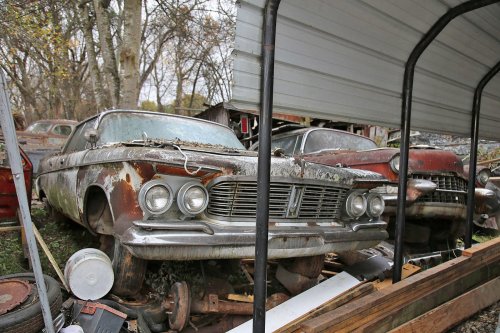
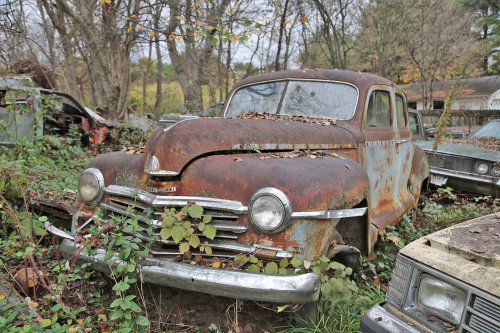
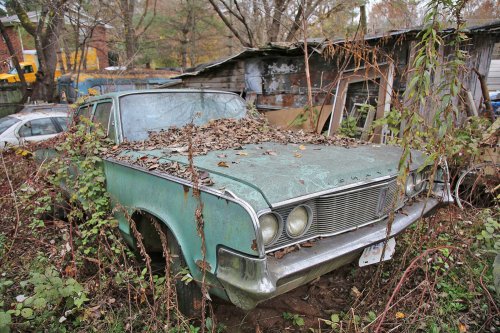
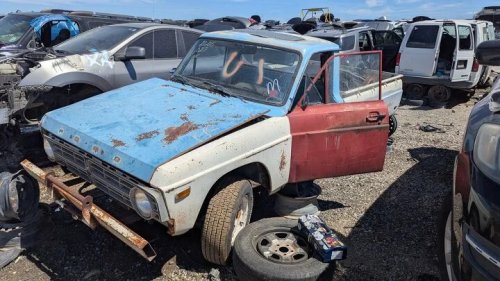
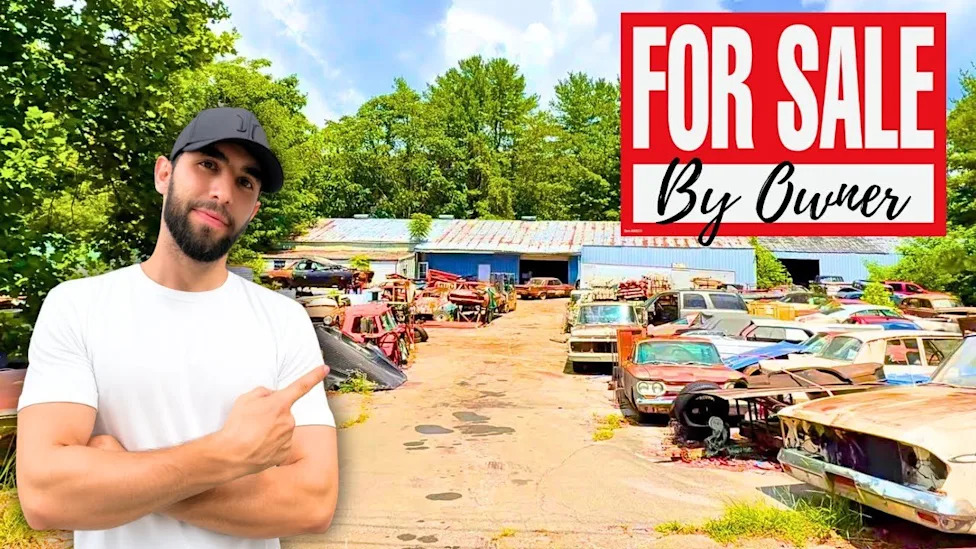
Hidden in Plain Sight: The Tennessee Junkyard With 30+ Classic Cars You Can Actually BuyRogersville, Tennessee is a small city of about 4,500 people in Hawkins County, in the northeastern corner of the state. It's the kind of place where things get stored and eventually forgotten—and where, if you know to look, the forgetting has preserved some remarkable things. Backyard Barn Finds documented one of those places: a property deep in the county that has accumulated more than 30 classic American vehicles over the decades, most of them sitting in the open air or under basic cover, available to anyone willing to make the drive.The 264,000-view video is a useful field guide to what a property like this actually looks like—and what the realistic assessment process looks like for a buyer trying to separate the opportunities from the projects that have crossed the line into parts territory.What's Out ThereThe Tennessee inventory runs the range of American automotive history from the 1950s through the early 1980s. Muscle cars, pickup trucks, wagons, and sedans—some sitting reasonably intact, others clearly stripped over the years by previous visitors who pulled what they needed and left the rest. The video documents specific vehicles with enough detail to give a remote viewer a realistic sense of condition.AdvertisementAdvertisementStandouts from the documented visit include several mid-1960s through early 1970s Detroit muscle cars in rough but salvageable shape, a number of pickup trucks from the 1960s and 1970s with the kind of patina that currently commands serious premiums in the truck market, and various pieces of trim, glass, and mechanical components that have value as parts even where the car as a whole is past restoring.The Economics of Junkyard BuyingProperties like this operate differently from a private collection or estate sale. The owner typically knows they're sitting on something, but often lacks the infrastructure to sort, assess, and price individual cars at market rate. The result is a pricing dynamic where a buyer with knowledge and patience can extract real value—if they approach it correctly.The first principle is specificity. Come looking for something in particular rather than browsing for value. If you know you need a specific engine, a specific door, or a specific transmission for a project you're already running, a junkyard like this can yield parts at a fraction of what they'd cost from a specialty supplier or auction. If you come without a specific need, it's easy to overpay for a car's "potential" and underestimate what it will actually cost to realize it.The second principle is condition honesty. Cars stored in Tennessee's climate—humid summers, moderate winters, significant rainfall—develop specific patterns. Body panels that face up rust faster than those that face down. Trunk floors and floor pans often look worse than the rockers. Frame and structural members need inspection with the car off the ground. The video is useful but can't substitute for hands-on assessment.The Truck PremiumOne of the most notable shifts in the collector car market over the past several years has been the appreciation of vintage American pickup trucks. First-generation Ford Broncos exploded in value earlier, but the ripple effect has reached into standard half-ton pickups from the 1960s and 1970s. Clean, solid-bodied examples of the 1967–1972 Chevy C10, the same-era Ford F-100, and various Dodge trucks now command $25,000–$45,000 in driver condition—and considerably more in restored or restomod form.AdvertisementAdvertisementProperties like the Tennessee junkyard, which accumulated trucks when they were simply transportation and not yet collectibles, occasionally contain examples that were parked before the market moved. A buyer who can identify one of those and extract it at a pre-appreciation price is doing exactly the kind of market-aware buying that the barn find hobby rewards.Getting ThereRogersville is a roughly five-hour drive from Atlanta, four hours from Nashville, and about two hours from Knoxville. It's accessible but not urban—which is part of why these cars have sat as long as they have. A buyer serious about any of the documented vehicles should plan on making a visit, not buying blind from video, and should bring the equipment needed to spend several hours inspecting before committing.Related ArticlesFive Things Every First-Time Barn Find Buyer Gets Wrong (And How to Avoid Them)AdvertisementAdvertisementThree Mopars in the Weeds: These Super Bees and a Coronet R/T Are Rough… But Hard to IgnoreThe Underdog List: Ten Classic Cars That Are Still Affordable—and Won't Be for Long



















 +47 others