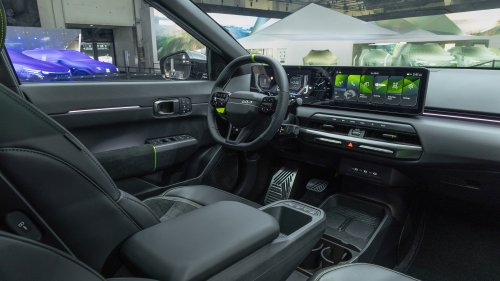
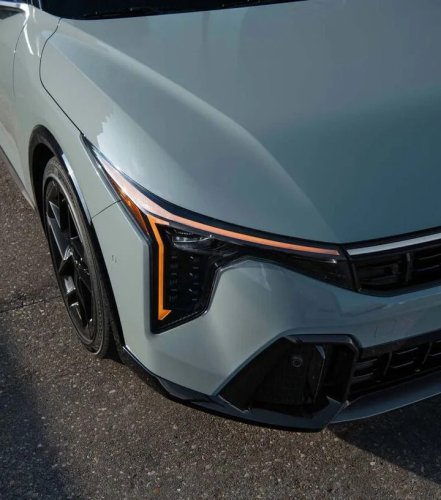
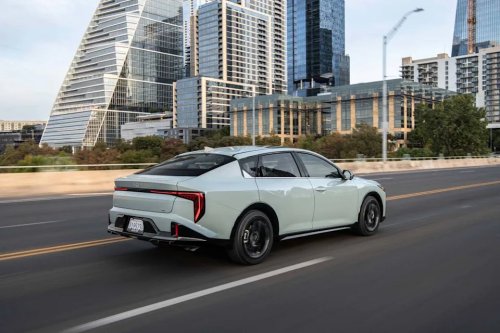
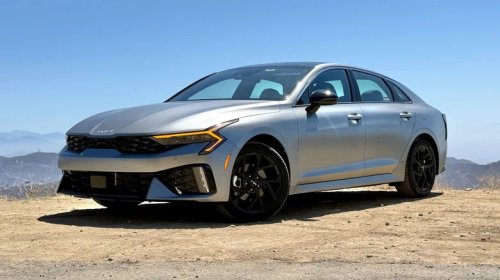
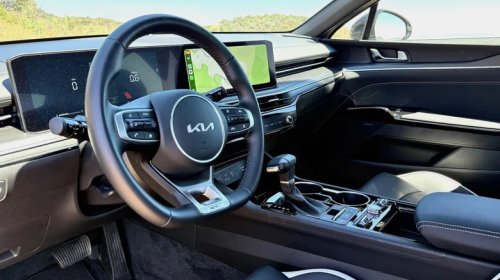
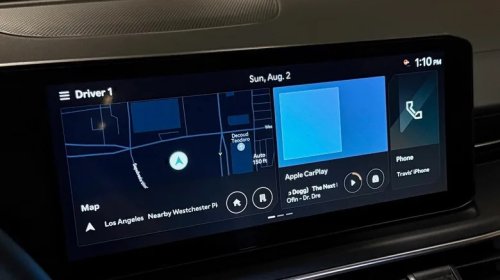
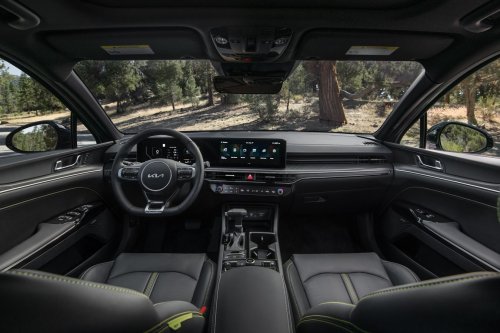
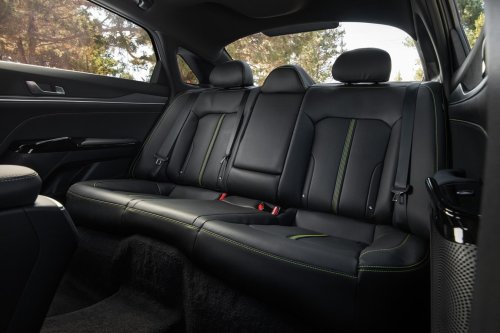
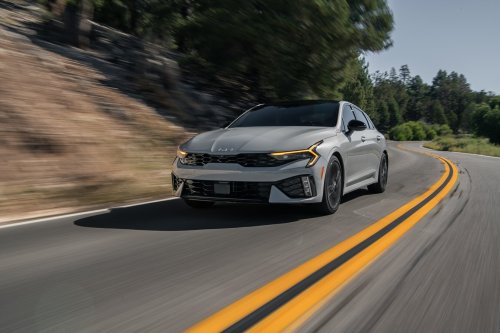
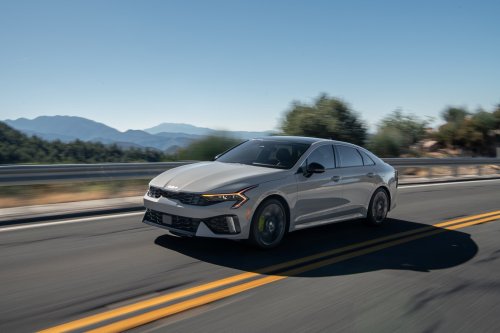
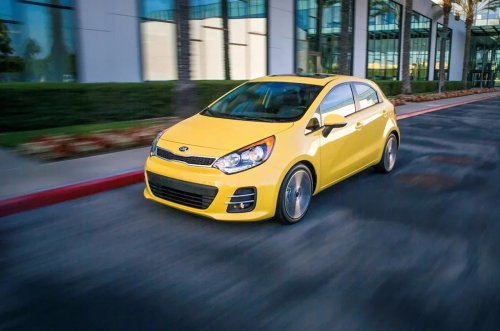
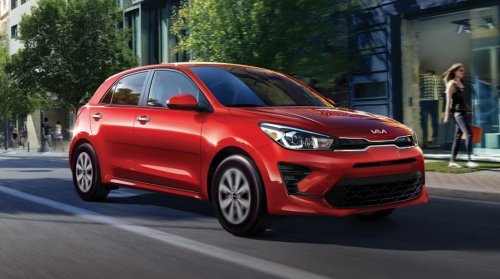
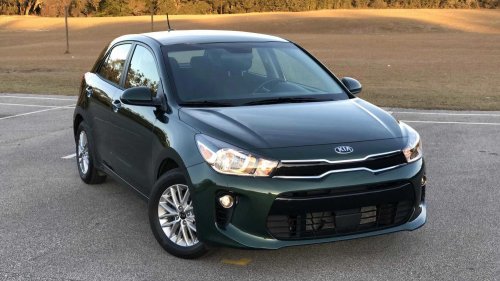
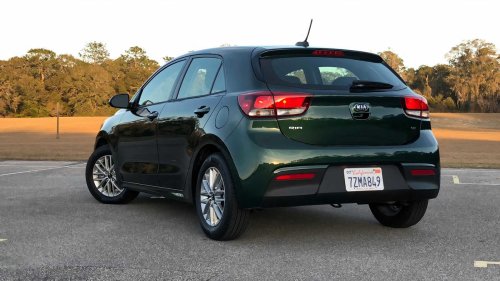
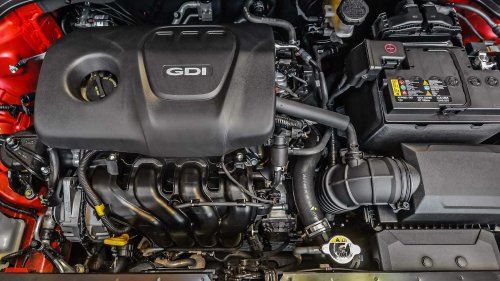
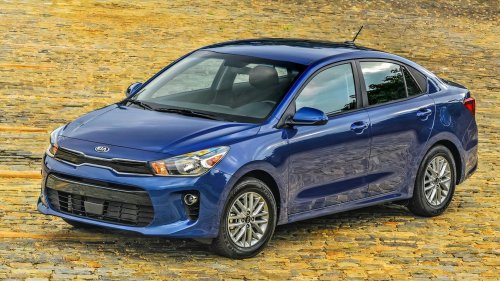
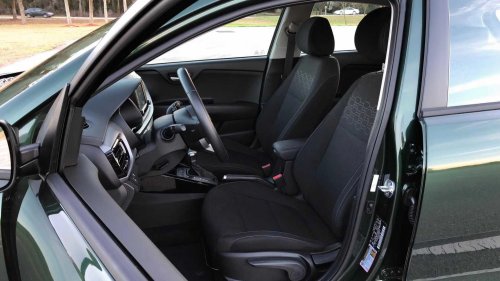
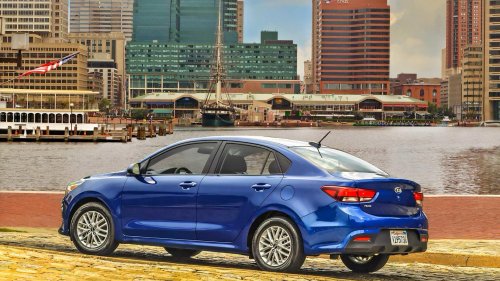
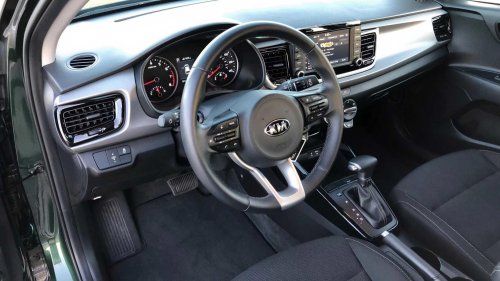
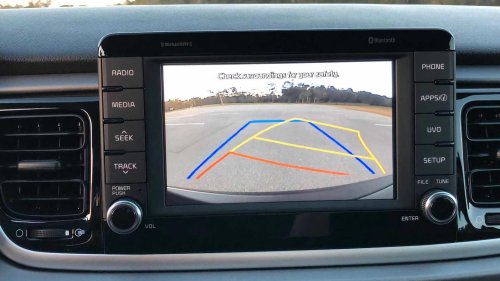
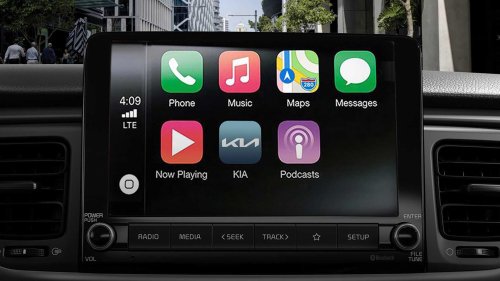
The used-car market has become brutally expensive over the last few years. Vehicles that were once considered cheap commuter cars now command prices that would have seemed absurd a decade ago. Honda Civics, Toyota Corollas, and Mazda3s still dominate the conversation whenever reliability comes up, but that popularity has created a problem: they are no longer true bargains. Buyers hunting for dependable transportation are increasingly paying a premium simply because of the badge on the hood.That is exactly why the Kia Rio has become such an interesting hidden gem. Overshadowed by larger compact sedans and often ignored by enthusiasts, the Rio quietly evolved into one of the smartest used-car purchases on the market. Later models especially deliver excellent fuel economy, surprisingly refined road manners, modern infotainment technology, and reliability that many buyers still underestimate.The fourth-generation Rio, sold in the U.S. from 2018 through 2023, proved particularly impressive. Powered by a simple naturally aspirated four-cylinder engine paired with either a conventional automatic or Kia’s Intelligent Variable Transmission (IVT), the Rio focused on efficiency and low operating costs rather than flashy performance numbers. That simplicity is now paying dividends for used buyers. Today, clean low-mileage examples can still be found for compact-car money from nearly a decade ago, making the Rio one of the most overlooked used-car deals hiding in plain sight. How The Kia Rio Became A Used-Car Bargain Topspeed Part of the 2023 Kia Rio’s appeal comes from the simple fact that most buyers overlooked it when new. American consumers increasingly abandoned subcompact sedans in favor of crossovers, which pushed cars like the Rio into the background. Meanwhile, buyers who still wanted small sedans usually defaulted to more recognizable names like the Toyota Corolla, Honda Civic, or Hyundai Elantra. That lack of mainstream attention heavily affected depreciation. While used Civics and Corollas continue to command inflated resale values, the Rio depreciated much faster despite offering similar commuter-friendly practicality.Current listings on Cars.com show just how affordable these cars have become. A used 2021 Kia Rio LX with around 45,000 miles can often be found in the $12,000-$14,000 range, while higher-mileage examples dip below $10,000. By comparison, similarly aged Honda Civics frequently cost several thousand dollars more despite offering only marginally better interior space and refinement.Topspeed The Rio’s affordability becomes even more impressive when looking at what buyers actually receive mechanically. Under the hood sits Kia’s 1.6-liter naturally aspirated inline-four producing 120 horsepower and 112 pound-feet of torque. Those numbers are modest, but the engine’s simplicity is part of the appeal. There are no turbochargers, no hybrid battery packs, and no complicated dual-clutch transmissions waiting to create expensive repair bills later in life.Beginning with the 2020 refresh, Kia also introduced its IVT continuously variable transmission. Unlike many early CVTs that earned reputations for poor durability and rubber-band driving characteristics, Kia’s unit proved smoother and more refined than expected. The IVT was tuned primarily for efficiency and smooth urban commuting rather than aggressive acceleration, which helped improve long-term durability expectations. The Rio also remained lightweight compared to modern compact sedans. Most versions weigh under 2,800 pounds, allowing the small engine to deliver respectable real-world responsiveness around town without excessive fuel consumption. For budget-conscious buyers, that lightweight engineering directly translates to lower tire wear, reduced brake wear, and cheaper maintenance overall. Why The Kia Rio Is Surprisingly Reliable KiaKia spent years fighting an image problem in the automotive world. Older models from the early 2000s damaged the brand’s reputation for quality, and many buyers still associate Kia with cheap economy cars that would not last long-term. The reality is very different with newer Rios. The fourth-generation Rio became one of Kia’s simplest and most dependable vehicles. Its naturally aspirated Gamma II 1.6-liter engine avoids many of the issues associated with turbocharged small-displacement engines. Without forced induction, the engine operates under less stress, reducing long-term heat and pressure loads on internal components.Consumer reliability data for the 2021 and 2022 Rio consistently showed above-average dependability with relatively few major trouble spots reported by owners. Owners regularly praise the car’s durability, fuel efficiency, and minimal maintenance requirements even after crossing 100,000 miles.2020 Kia RioMuch of that reliability comes down to mechanical simplicity. The Rio uses multi-port fuel injection instead of relying solely on direct injection, helping reduce carbon buildup issues commonly found in some modern engines. Maintenance requirements are straightforward as well. Oil changes, spark plugs, filters, and transmission servicing remain relatively inexpensive compared to larger modern vehicles. However, there are some areas buyers should still inspect carefully. Earlier Kia models earned notoriety for engine-related recalls, and while the Rio largely avoided the catastrophic failures seen in larger Hyundai-Kia engines, buyers should still verify service history carefully. Some owners have also reported cabin noise and occasional infotainment glitches, particularly in extremely hot climates.Transmission behavior should also be evaluated during a test drive. While the IVT has generally proven dependable so far, some owners have reported hesitation or jerky low-speed behavior if maintenance intervals are ignored. Importantly, the Rio’s reliability story improves dramatically when owners simply follow basic maintenance schedules. Many examples now exceed 100,000 miles with minimal major repairs, which was once unheard of for entry-level Korean subcompacts. Low Ownership Costs That Are Hard To Ignore Topspeed The biggest reason the Kia Rio makes so much sense as a used buy is ownership cost. In nearly every measurable category, the Rio remains remarkably affordable to run. Fuel economy is one of its strongest selling points. The 2021 and 2022 Rio models achieve EPA estimates of 32 mpg city and 41 mpg highway, with a combined rating of 36 mpg. In real-world driving, many owners report highway fuel economy comfortably exceeding 40 mpg when driven conservatively. That efficiency matters even more today as fuel prices remain unpredictable. A commuter driving 15,000 miles annually could save hundreds of dollars per year compared with operating a larger midsize sedan or crossover.Insurance costs are another major advantage. Because the Rio is inexpensive to repair and not considered a high-performance vehicle, premiums are often dramatically lower than similarly sized sporty compact cars. Replacement parts are widely available and relatively cheap as well, thanks to Kia’s global production scale.Kia Tire replacement costs also stay refreshingly low. Most Rio trims ride on modest 15- or 16-inch wheels, meaning replacement tire sets can cost hundreds less than larger crossovers or premium sedans. Maintenance accessibility further enhances the Rio’s appeal. The naturally aspirated engine layout is simple for technicians to work on, reducing labor costs during routine servicing. Unlike turbocharged competitors, there are fewer expensive components that can fail outside warranty coverage.Depreciation has also slowed considerably because the Rio is already so affordable on the used market. A buyer purchasing a clean 2021 Rio today for roughly $13,000 is unlikely to experience the massive depreciation hit that original owners absorbed when buying new. For first-time buyers, students, commuters, or households needing a dependable secondary vehicle, those low operating costs add up quickly over several years of ownership. Modern Features In An Affordable Package Topspeed One reason the Kia Rio surprises many used buyers is because it never actually feels excessively cheap inside. Kia steadily improved interior quality throughout the late 2010s, and the Rio benefited enormously from that corporate shift. Even base trims included features that older economy cars lacked entirely. Apple CarPlay and Android Auto became available, along with touchscreen infotainment systems, Bluetooth connectivity, rearview cameras, and steering wheel-mounted controls. Later models also offered automatic emergency braking, forward collision warning, and lane departure warning technology.The cabin layout itself is straightforward and ergonomic. Physical climate controls remain easy to use, while the infotainment screen placement feels modern without becoming distracting. Unlike many low-cost competitors, the Rio avoided overwhelming users with confusing menus or touch-sensitive controls.CarBuzz Material quality is naturally economy-car grade, but assembly quality is generally solid. There are fewer squeaks and rattles than many buyers expect at this price point. The Rio’s dashboard design also feels cleaner and more upscale than many subcompact rivals from the same era. Ride quality also exceeds expectations for a subcompact sedan. The suspension tuning prioritizes comfort rather than aggressive handling, which works perfectly for commuters. The soft setup absorbs potholes reasonably well, and highway stability is surprisingly competent considering the car’s size.Cargo practicality is another underrated strength. The sedan offers a usable trunk, while the hatchback version becomes especially versatile for urban buyers needing compact dimensions with additional storage flexibility. Most importantly, the Rio feels modern enough that buyers do not constantly feel reminded they purchased a budget vehicle. That matters psychologically for long-term ownership satisfaction. Why The Kia Rio Still Makes Perfect Sense To Buy Used Kia The automotive market has become obsessed with oversized crossovers, expensive technology packages, and increasingly complex drivetrains. In that environment, the Kia Rio represents something refreshingly honest, affordable transportation engineered to do basic tasks extremely well. For used buyers, the formula works brilliantly. The Rio delivers dependable commuting ability, excellent fuel economy, low repair costs, and enough modern technology to avoid feeling outdated. It may not generate excitement like a hot hatch or sports sedan, but it succeeds in the areas that matter most to everyday drivers. That balance becomes even more compelling when examining current used prices. A well-maintained 2020 or 2021 Rio often costs thousands less than an equivalent Civic or Corolla while still delivering many of the same real-world benefits.Kia The Rio’s long-term simplicity also deserves recognition. As modern vehicles become increasingly dependent on turbocharging, hybrid systems, and advanced electronics, simple naturally aspirated economy cars are quietly becoming rare. That simplicity could make the Rio especially attractive for buyers planning long-term ownership beyond 100,000 miles. Of course, the Rio is not perfect. Highway noise remains noticeable, rear-seat space is limited, and acceleration is merely adequate. But none of those flaws overshadow the car’s core strengths as dependable, efficient transportation.In many ways, the Kia Rio is exactly what used-car buyers should be looking for today: inexpensive to buy, inexpensive to own, and reliable enough to trust daily. The fact that so many shoppers continue overlooking it only makes the bargain even better.Sources: Kia U.S.




















 +46 others