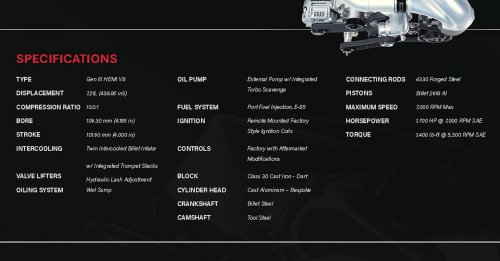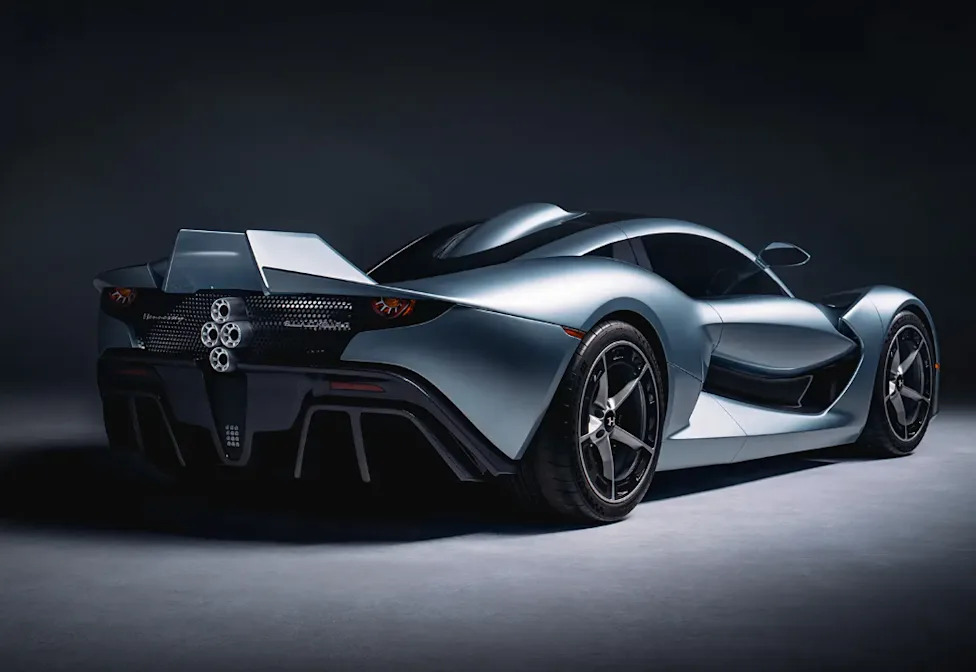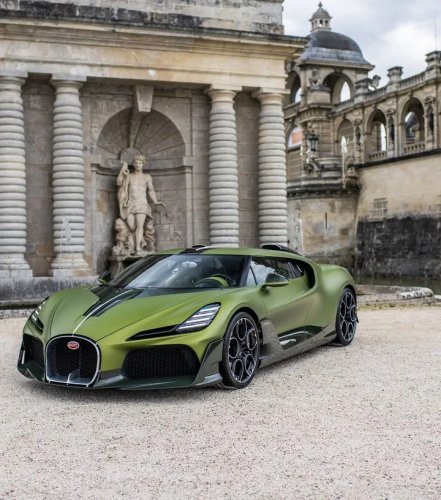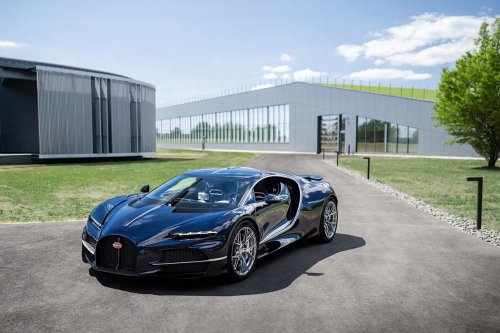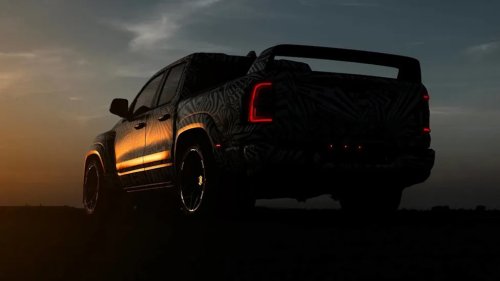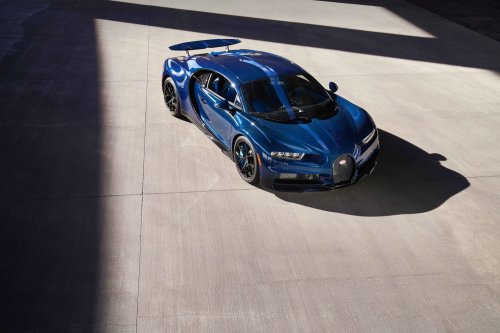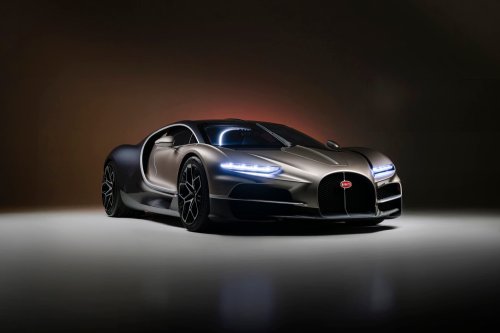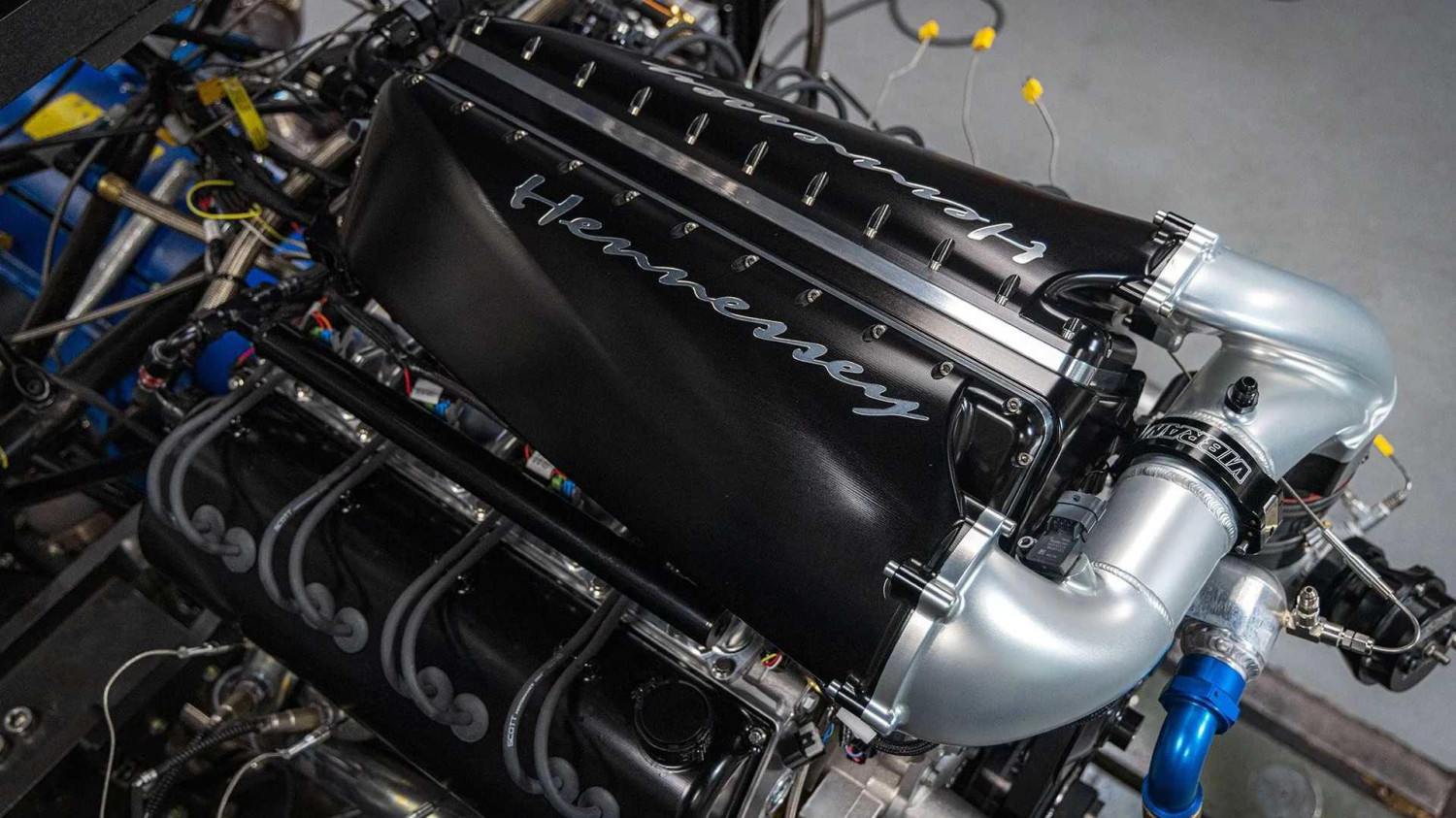



















While the standard for measuring and reporting engine output among OEMs is at the crankshaft, that isn't necessarily the most accurate representation of what you get on the road. We don't drive disembodied engines. We drive cars that take the power from the crankshaft, through a transmission, driveshafts, a differential, and, finally, the wheels and tires. Going through all that will result in some losses, and whatever you measure at the wheels is really what's moving you. Hennessey put one of its insane Demon 1700s on a chassis dyno to show that wheel horsepower, and it's still impressive, both in maximum and base boost settings. Its Power Is Over 1,000! The video that shows off the Demon 1700's dyno run is pretty straightforward. After a quick pull, Jason Haynes, Hennessey's Chief Powertrain Technical Specialist, gives a bit of a preamble about the car before showing off the dyno chart. In the vehicle's maximum boost setting, which makes 1,700 horsepower and 1,400 pound-feet of torque at the crank, the Demon managed to send 1,355 horsepower and 1,202 pound-feet of torque to the rear wheels. That's still a huge amount of grunt. To put it into perspective, the Demon 1700 makes more torque at the rear wheels than the Bugatti Chiron does at the crankshaft.Hennessey PerformanceWhat's also interesting, though, is that Hennessey also showed what the Demon 1700 makes in its base boost setting, which seems to be around 15 psi, as opposed to more than 20. Even then, it managed to make 1,032 hp and 941 lb-ft of torque. Those numbers are roughly the same as a stock Demon's at the crank. It actually makes 7 more hp and 4 less lb-ft. So, even in its least impressive mode, the Hennessey Demon 1700 is still a monster. How The Demon Makes Its Power Like the Dodge Challenger SRT Demon 170, the Hennessey Demon 1700 runs on E85 ethanol. However, instead of a supercharged 6.2-liter Hemi, the Hennessey uses a 7.2-liter Hemi with a pair of turbochargers. Those turbochargers feed a custom intake and a pair of intercoolers, and the internals are upgraded with forged rods and a billet crank and pistons. The aluminum heads are unique, too. Furthermore, Hennessey upgraded the eight-speed automatic, all the driveshafts, and suspension control arms. So, presumably, the 1700 can make the power and not break itself apart putting it to the ground. We Have Some Bad News If you don't have a Hennessey Demon 1700 in your garage or on the way right now, you're not going to have one. The company has sold all the cars it planned on making. That comes to just 12 examples. They weren't cheap, either. Hennessey charged $200,000 to build one, and you already had to have a Demon 170 to convert. Since the Demon 170 came in just under $100,000 before destination charges, a Hennessey Demon 1700 would've ended up costing around $300,000. Then again, that's arguably a massive bargain for a car that outguns multiple seven-figure supercars, including the Bugatti Chiron.