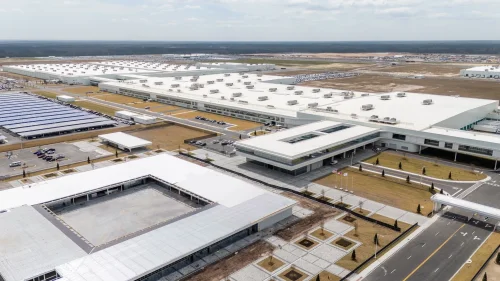



















Good Neighbors Louisiana coalition urges LDEQ to provide at least 60 days for public comment Labor, environmental health, civil rights, and community groups are warning that the recently published proposed air permit for Hyundai’s steel mill will have a severe impact on community and worker health, exacerbating cancer, asthma, and respiratory and nervous system disease. The warning from the Good Neighbors Louisiana coalition, which includes the United Steelworkers, the Sunrise Community Group of Donaldsonville, the Sierra Club, and the NAACP Louisiana State Conference, follows the issuance of a proposed air permit by the Louisiana Department of Environmental Quality that imposes weak, inadequate restrictions on the $5.8 billion Hyundai facility. This is despite warnings by the Sierra Club, United Steelworkers, and other groups filed to the department over the past several months outlining the health risks. “Hyundai’s project should be held to the highest standards, backed by meaningful commitments to neighboring communities and the future workforce,” said Jacob Horwitz of the United Steelworkers. “USW supports responsible investment in new industry and knows firsthand the value that a good union job in the steel sector can provide — but economic development should not come at the expense of worker protections, public health, or community accountability.” Good Neighbors Louisiana is also raising concerns about LDEQ’s short, 30-day timeframe for public comment, and is calling on the Department to provide at least 60 days for the community to engage with the 2,165 pages of draft permit materials. LDEQ’s “expedited” permit process for the Hyundai steel mill follows a dangerous trend by the Landry administration of rushing through complex industrial siting and permitting processes in total secrecy. Louisiana’s $2.6 billion taxpayer-funded incentive package for the steel mill was negotiated under the cover of non-disclosure agreements Hyundai signed with local elected officials, which continue to restrict access to information by journalists and community members. “Hyundai knows they’re asking LDEQ for a blank check to pollute, and that’s exactly what this draft permit represents,” said Dr. Angelle Bradford Rosenberg, a medical researcher. “Now that they’ve amended their application just a few weeks ago, following months of community pressure, they can’t feign ignorance that cleaner, better technology is available. We won’t stop campaigning until we secure legally binding commitments to the use of that technology.” LDEQ’s proposed permit does not address serious concerns about Hyundai’s air permit application, including: Failure to consider comprehensive electrification of finishing processes, which would significantly reduce the facility’s pollution, Failure to control toxic dust that blows off the trucks and storage piles, which include slag and cement dust and other fine particulate matter, Failure to provide any details about its carbon capture and sequestration plans, Failure to establish a credible timeline for transitioning away from methane gas towards zero-emissions green hydrogen in the ironmaking process, Inadequate planning for pollution events, industrial accidents, and other dangerous incidents at the plant, and how the company would deal with community notification. “Hyundai’s proposed air permit neglects to consider readily-available electric technologies, toxic dust control methods and the green hydrogen that would significantly minimize harmful pollution at its greenfield plant,” said Andrea Issod, Sierra Club Senior Attorney. “We urge LDEQ to follow the law and require Hyundai to evaluate cleaner technologies and conduct a thorough environmental justice review to ensure the permit protects local communities and plant workers from harmful pollution. If they do not, Hyundai Steel will be just another source of pollution in a region already known as Cancer Alley.” Sierra Club’s previous comments on the permit application included analysis showing that if Hyundai used electricity instead of pollution-intensive methane gas for ‘steel finishing’ operations at the steel mill, the company could potentially save $2.7 million per month in operating costs while reducing greenhouse gas emissions and other toxic emissions. Good Neighbors Louisiana has yet to receive a reply to the coalition’s letter to Hyundai CEO José Muñoz demanding that the steel mill meet strong health and environmental standards while providing quality jobs. The coalition has held several town hall meetings of local residents informing them about the potential impacts of the facility and their rights, and gathering support for a Community Benefits Agreement, which would hold Hyundai to account on limiting pollution and promises about delivering for local residents. “This permit is simply not good enough. Not even close,” said Glenn Price, President of the Sunrise Community Group of Donaldsonville. “We need them to come to the table, not throw us scraps from it. To Hyundai, we say: come to Modeste and have a real conversation with the community.” The local community in Donaldsonville, where the facility is planned, have voiced concerns about health impacts from methane gas iron and steelmaking at the facility, which is known to release toxins such as nitrogen oxides, sulfur dioxide, and airborne lead and mercury, which are linked to cancer and other chronic illnesses.