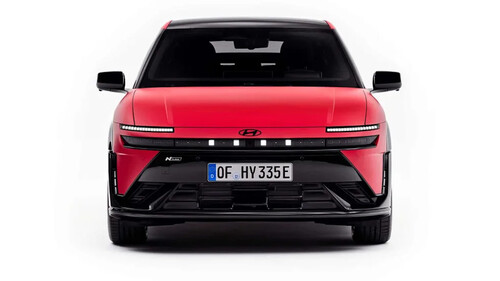
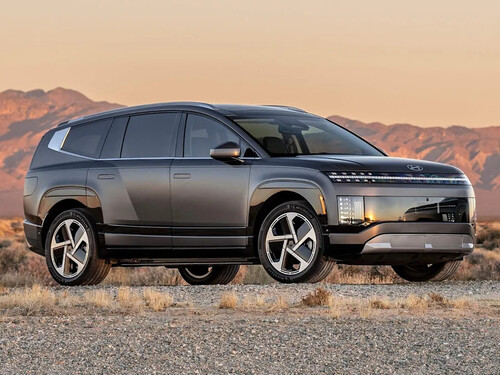
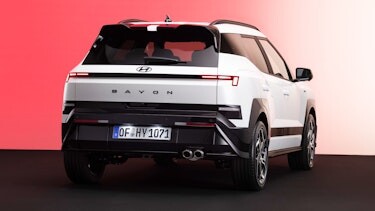
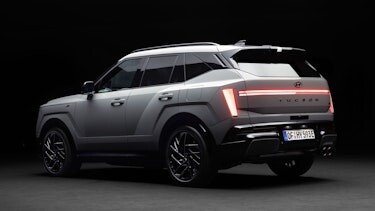
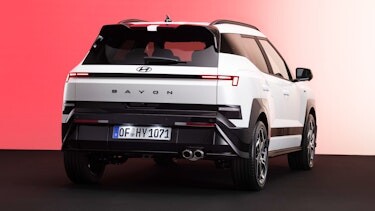
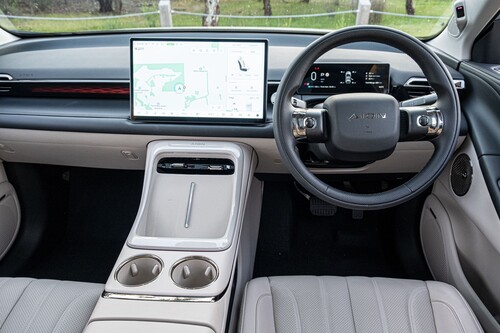
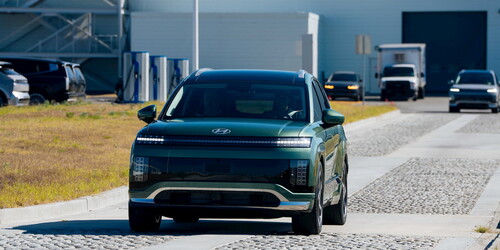
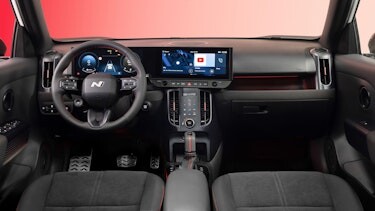
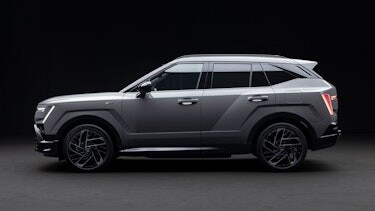
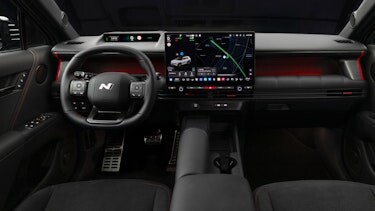
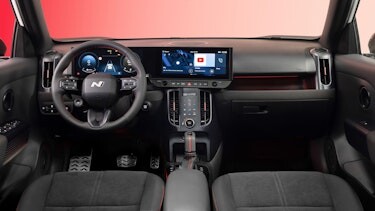
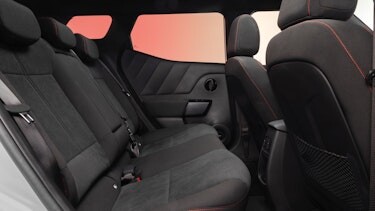
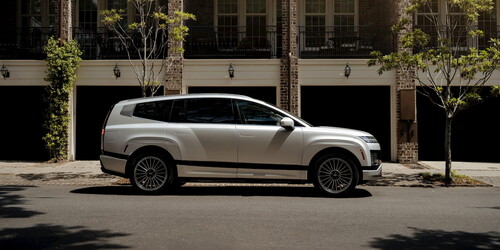
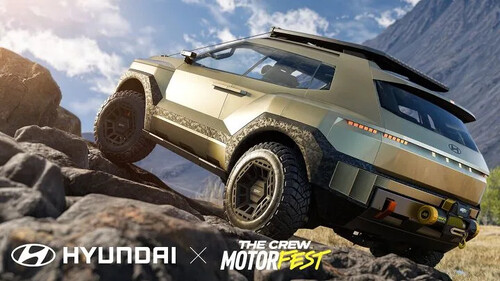
Hyundai Gives the Tucson a Tough New Look for 2027HyundaiAt a "World Premiere" event in Long Island City, New York, October 1, Hyundai staged the global debut of the 2027 Tucson compact crossover SUV, a complete makeover of the model. Much is at stake: The Tucson is the Korean automaker's volume car in the US, with 234,230 sales in 2025. In all its versions (including Chinese iterations), it's the company's global SUV leader, with more than 11 million cumulative sales since the launch in 2004. Approximately 20 percent of those transactions were in the US.The new Tucson will be available in North America next year, following the Korean launch later in 2026. The changes start with the "Art of Steel" design language, full of sharp angles and cues to suggest competence off-road—including in the base model. The 2027 looks pretty upright, with fender bulges that suggest a 1941 Chrysler, but active air flaps, aero-optimized wheels, and other subtle changes actually make it more aerodynamic than the previous model, from a 0.33 coefficient of drag to 0.30. Full-width LEDs light the Tucson up front and rear.The fender bulges, seen in this side view, are "deep, tense and dominant."HyundaiThe new Tucson is 2.4 inches longer, 1.6 inches wider, and has an added 1.2 inches of wheelbase. Cargo space is now 42 cubic feet. The bulging fenders "are deep, tense, and dominant," said SangYup Lee, head of Hyundai and Genesis global design.Hyundai Motor Company President and CEO José Muñoz ran through a fairly impressive record of sales success, in the US and globally. Tucson is, obviously, a big part of that. "The Tucson is the seventh best-selling vehicle in the world, in 100 markets, more than any other vehicle we make," Muñoz said. "For many, Tucson is the first Hyundai they choose."The new model is available in long-wheelbase form as a regular 184-horsepower gas car or a 233-horsepower hybrid with two electric motor and up to 42 mpg (and zero to 60 in 8.5 seconds). Some markets, not the US, get a plug-in hybrid. The 1.6-liter turbo-four is common to both US models, but in the hybrid the electric system gooses the powertrain to 233 horsepower. Top speed is 118 mph. A range-extender electric version is coming next year, Muñoz said. The hybrid can tow 3,000 pounds, up from 2,000 pounds with trailer brakes and 1,650 without. Hybrids were 31 percent of total US Tucson sales in 2025. The ICE car gets an eight-speed automatic, the hybrid a six-speed.A very dominant central screen. Hyundai says its Pleos Connect system gets smarter over time.HyundaiThe company is obviously very bullish on hybrids, and Muñoz said it would have 10 of them available by 2030. "By 2030, hybrids will be half of what we sell in this region," he said. The gas version of the Tucson was barely mentioned at the premiere.Variants of the Tucson include the XRT, with a carbon-inspired design and abundant cladding for a rugged look, plus skid plates so it actually can go off-road; and XRT Pro, which takes leaving the trail behind to even higher heights (1.2 inches of added ground clearance, all-terrain tires, recovery hooks, and bodywork-saving approach and departure angles). There will be a variety of trim levels, and a sport variant hits the 2026 Paris Auto Show on October 12.Inside, new features include a steering wheel flattened at top and bottom, a 9.9-inch driver's display, dual wireless charging pads, and a huge central touchscreen (12.9 or 17 inches) that could be on a Tesla. Massage seating is available, as is a "comfort seat" that reclines to 10 degrees with a single button push. Information can be gleaned from Gleo AI, the in-car assistant that understands natural language. Just say, "Find me an Italian restaurant that serves pizza with pineapple," and it should be able to comply, adding a capsule review of various local establishments.The new 2027 Tucson is rugged looking.HyundaiThe Pleos Connect infotainment system, with over-the-air updates, was first seen on a Hyundai Grandeur model for the Korean market, but by 2030 Hyundai said it would be on 20 million Hyundai, Kia, and Genesis vehicles. Eric Wood, senior vice president and head of product experience at 42dot, said that the system is constantly evolving and getting smarter. "For most of history, the vehicle you bought was the one you kept," he said. "But now what you take home is no longer the end of the development story."The system's navigation integrates with the aforementioned Gleo AI, which uses a large language model for route assistance and information searches. To use it, the driver looks at a central screen divided into three quadrants, driver information, apps (viewable in two modes), and a bottom bar for frequently used applications. There are also some physical buttons mounted below the central screen, and three-finger gestures can used to remove unnecessary apps or move them.Hyundai hasn't taken many chances with the new Tucson, just worked on enhancing the value proposition. It's a gamble that's not likely to fail.