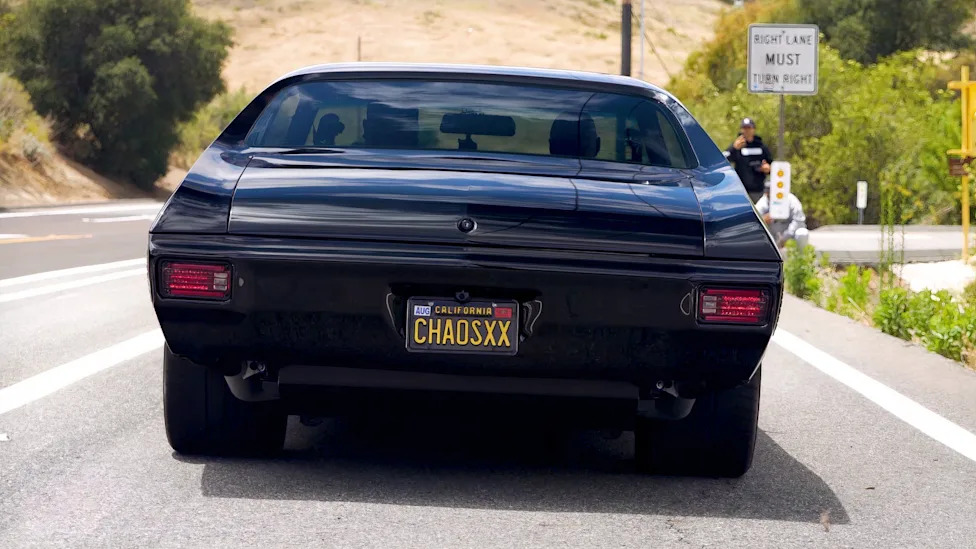
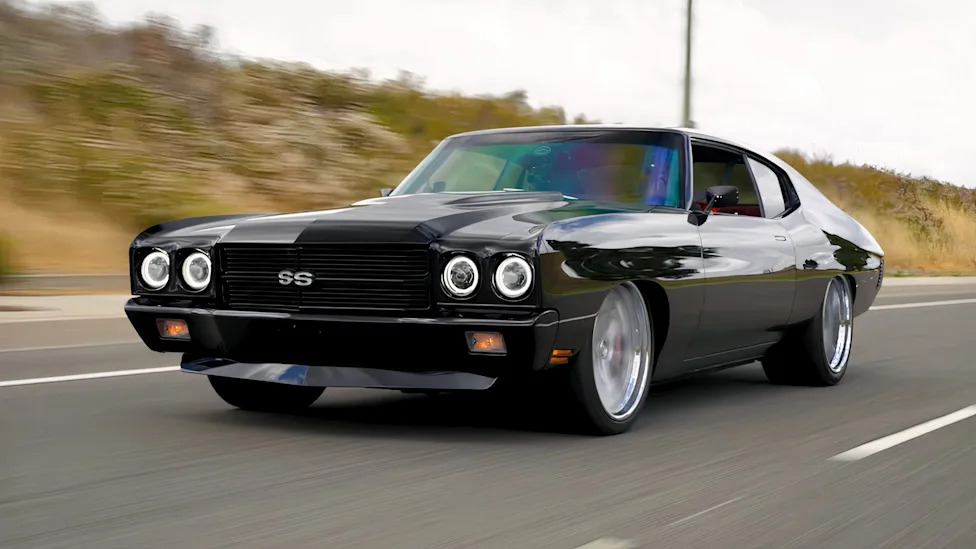
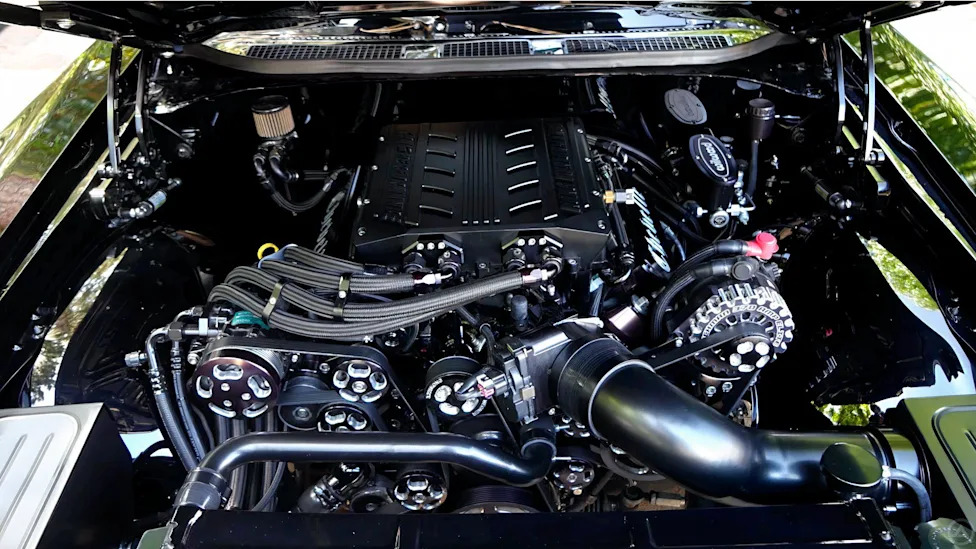
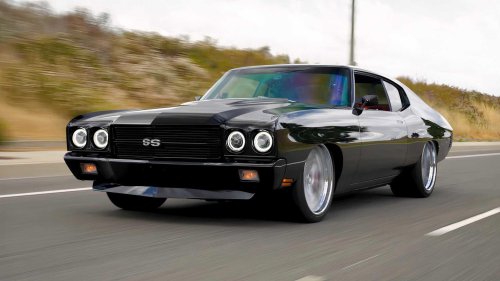
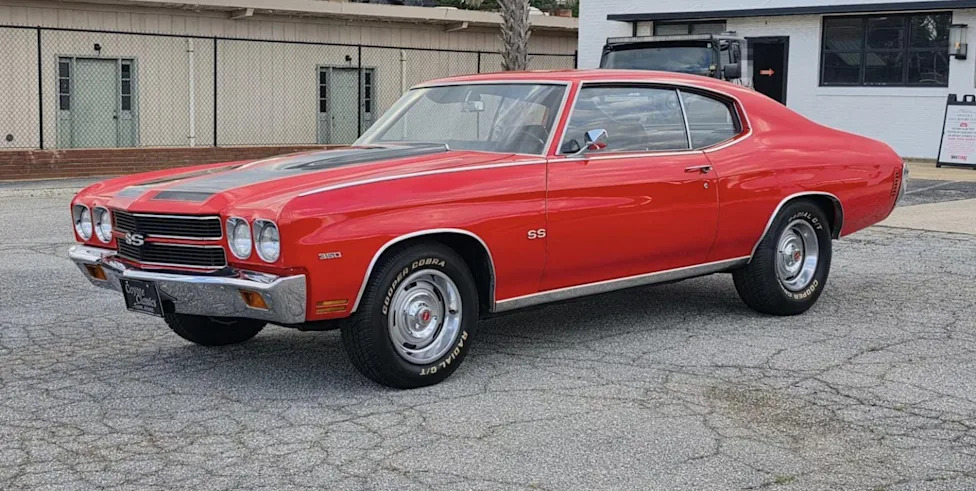
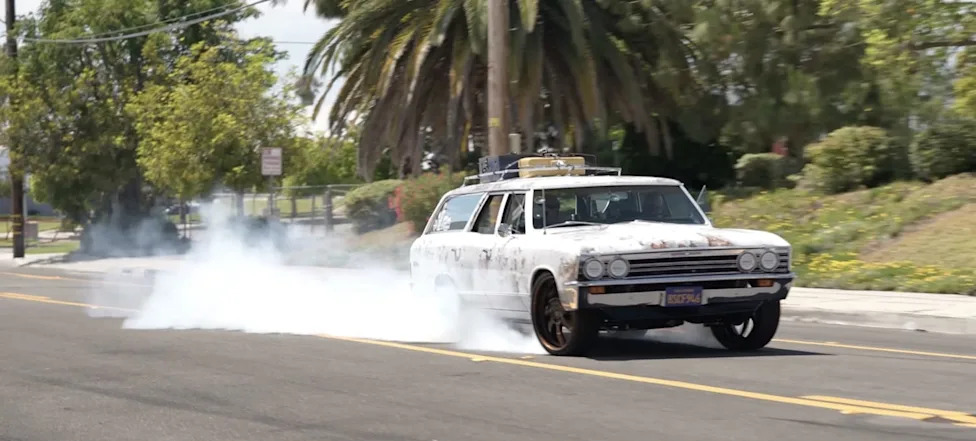
There is a certain kind of builder who doesn't wait for a manufacturer to hand them their dream car. They find something worth saving, tear it down to nothing, and put it back together the right way — their way. Junior, the owner and head builder at Backyard Specialties in Southern California, is exactly that kind of person. His latest project is a 1970 Chevrolet Chevelle that looks deceptively stock from a distance and absolutely devastating when you floor it.The car recently appeared on the AutotopiaLA YouTube channel for a full drive and walkthrough, and it's the kind of build that stops you mid-scroll. Covered in deep, flawless black paint and riding on a set of massive Compression wheels, the Chevelle carries a custom California plate that reads "CHAOSXX." That name turns out to be entirely accurate.Rear view of the 1970 Chevrolet Chevelle by Backyard SpecialtiesThe Engine: A Supercharged LSX Built for the StreetAt the heart of the build is a GM Performance LSX 376 crate engine — a platform chosen specifically because its low-compression design can handle significant boost without a major internal overhaul. That was critical to Junior's plan, because from the start, the customer wanted one thing above everything else: supercharger whine and real, usable power on public roads.AdvertisementAdvertisementTo get there, Junior consulted with Tom Nelson, a respected name in the engine-building world, who pointed him toward a Kong Performance supercharger setup. The combination worked better than even the builder expected. When the car was strapped to the dyno, it laid down approximately 750 horsepower to the rear wheels. Factor in typical drivetrain losses through the car's upgraded T56 six-speed manual transmission and Ford 9-inch rear end, and the estimated crankshaft output is approaching 900 horsepower.That's an extraordinary number for a car that also drives to the grocery store. Interestingly, the initial tune was considered too aggressive even for the owner — throttle response was so sharp that gentle inputs could unexpectedly snap the rear loose. The tune was dialed back after initial testing, though it's worth noting that "dialed back" still means roughly 750 rear-wheel horsepower on demand at any moment.The supercharged 1970 Chevelle driving on a California roadA Chassis Built to Use the PowerNine hundred horsepower in a 1970 Chevelle means nothing if the car can't put it to the pavement safely. A lot of big-power classic builds end up terrifying to drive — they spin freely, wander on the highway, and require constant correction just to stay in a straight line. Backyard Specialties took a different approach here.Rather than retaining the factory A-body frame, the team installed a complete Speedtech Performance Extreme chassis underneath the Chevelle. This is a purpose-built modern platform that replaces the original rails entirely and brings with it updated suspension geometry, a torque-arm rear setup, and Wilwood brakes at all four corners. The result is a car that handles and stops like something built in this decade, not the last one.AdvertisementAdvertisementThe suspension work paid off. AutotopiaLA host Shawn Davis spent considerable time behind the wheel during the feature, and his repeated observation was that the car felt planted and composed even when he was deliberately trying to upset it. Hard launches, spirited pulls, and burnouts all produced tire smoke and theater without the chassis punishing the driver. That kind of confidence in a car with this much power is genuinely rare.The wheel and tire package required significant modification to fit. The Compression wheels wear massive 345-section rubber out back, and to accommodate them, Junior's team cut and rebuilt the wheel tubs and rear structure. It's invisible work once the car is together, but it represents hours of careful fabrication that separates a clean build from one that just has big tires stuffed in awkwardly.If you've ever wondered what separates a successful high-power street build from an unruly mess, this chassis approach is a big part of the answer. We've covered the ongoing debate between restoration and modification extensively in our piece on the $200K muscle car debate every collector is facing. Builds like this Chevelle sit firmly in the restomod camp — and they make a compelling case for it.The Details That Make It a Real BuildThe Chevelle is black, it's fast, and it has a supercharger on it. Those are the headline facts. But the details underneath are where you start to understand what kind of builder Junior actually is.AdvertisementAdvertisementThe bumpers were reshaped and tucked tightly against the body for a cleaner, lower appearance. The rear bumper was taken further — it was reworked into a one-piece unit that flows seamlessly with the surrounding bodywork. Ringbrothers mirrors and hood hinges replace the factory pieces, adding a precise, modern look without visually screaming aftermarket. These are the kinds of touches that take significant time and money to execute correctly, and most people who walk past the car will never notice them.Inside, the seats are one of the build's great hidden jokes. They're Hyundai Veloster units that were cut, reshaped, and retrimmed to look like they belong in a 1970 muscle car. They maintain a low profile, sit correctly in the interior, and nobody would ever guess their origin. It's the kind of hot-rodding resourcefulness that has defined American builders for decades — finding a solution that works better than the obvious answer and making it invisible.Interior and detail view of the custom 1970 Chevelle buildWhy This Kind of Build MattersThe 1970 Chevelle is one of the most iconic shapes in American automotive history. In stock form, it was already a serious machine — the SS 454 is still one of the benchmark muscle car engines by reputation. What Backyard Specialties has done here is take that foundation and bring it fully into the present without destroying what made it special in the first place. The car still looks like a 1970 Chevelle. It still sounds like a V8. But it now handles, stops, and accelerates at a level that competes with modern performance cars costing several times more.It's also a reminder that some of the most interesting performance cars in America aren't being built by manufacturers or stunt-driven at SEMA by corporate teams. They're being built by small shops with deep knowledge, the right partners, and a customer who trusted them to deliver something real. Backyard Specialties built this car to be driven, and the owner does exactly that — through Southern California roads, every week.AdvertisementAdvertisementWe've seen that same spirit in some of the other builds we've followed. The Vietnam vet's 1966 Corvette rebuild at Old Anvil Speed Shop is another example of what happens when someone takes a classic seriously and gives it the work it deserves. The 1969 Camaro SS that came back from 22 years of storage is a different kind of story — a numbers-matching survivor rather than a performance build — but the underlying commitment to the machine is the same.The Chevelle with the CHAOSXX plate isn't a show car. It isn't a trailer queen. It's a street driver with 900 horsepower and a chassis that lets you actually use them. In a world full of builds that look great in photographs and fall apart on the road, that distinction matters more than most people realize.If you're the kind of person who wants to find your own classic to build or preserve, the path from raw find to finished car starts with the right foundation. Every build starts somewhere — and this one started with a tired Chevelle in someone's backyard.