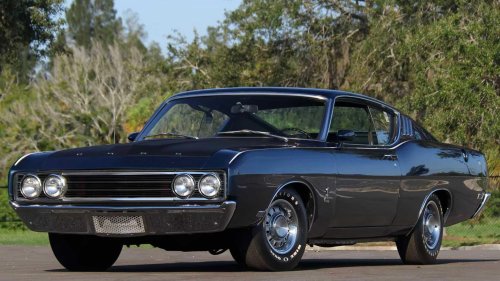
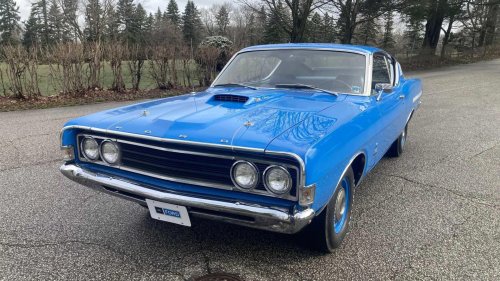
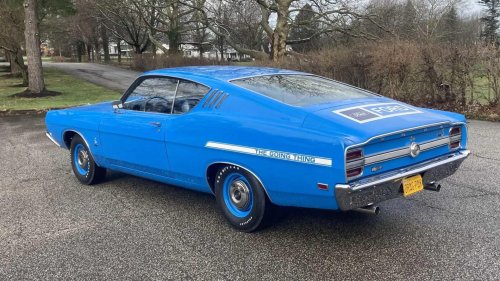
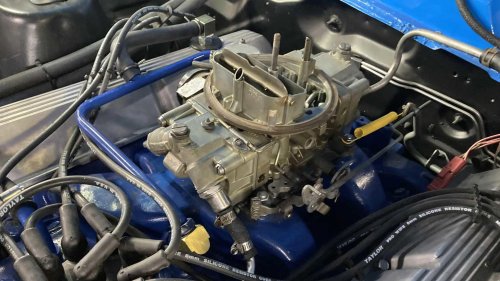
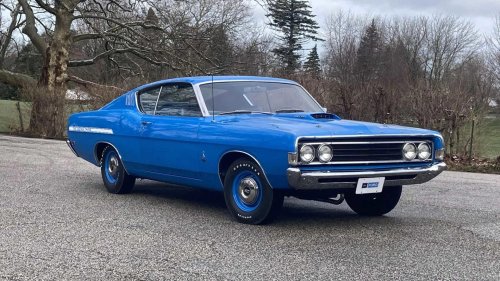
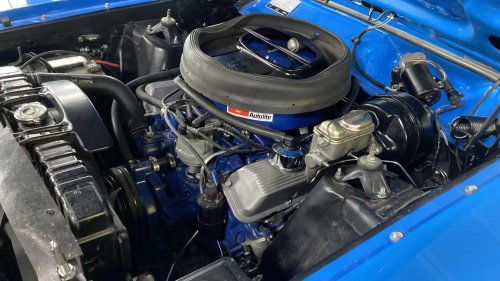
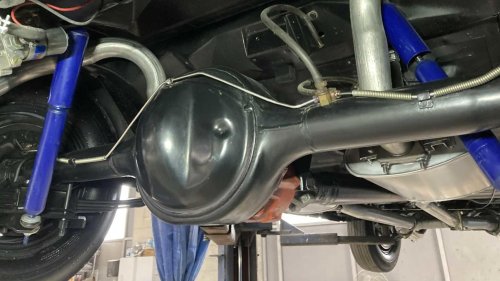
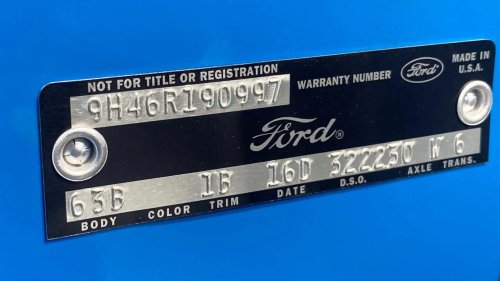
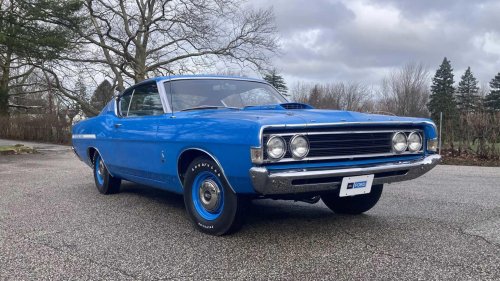
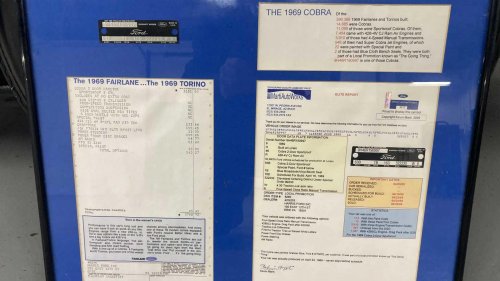
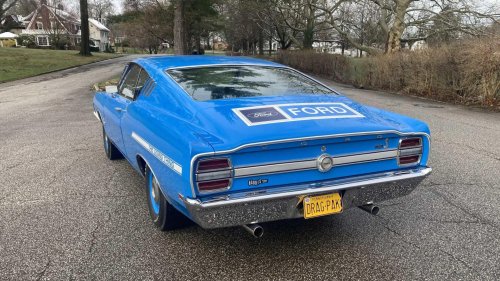



















In 1969, the muscle car war was fought on two fronts: the high-banked ovals of NASCAR and the oil-stained pavement of the local drag strip. While Ford fans flocked to dealerships to catch a glimpse of the sleek, aerodynamic specials built for superspeedways, a far more lethal predator was hiding in plain sight. UPDATE: 2026/03/04 20:24 EST BY JARED SOLOMON Updated to include authentication tips for collectors.This machine was born from a cryptic combination of heavy-duty hardware and aggressive gearing tucked away deep within the factory order sheets. It remains a ghost in the production logs as a street-legal weapon designed for one purpose: total quarter-mile domination. The Torino Talladega: Ford’s Rarest Homologation Special Via: Mecum Auctions The 1969 Torino Talladega was Ford’s ultimate "Aero Warrior," built specifically to dominate NASCAR’s high-speed ovals. With only 754 units produced for homologation, it remains the rarest standalone Torino model. Engineers extended the nose by six inches and flush-mounted the grille to reduce drag at 180 mph. However, while rare, the Talladega was ill-suited for the drag strip. Equipped with highway-friendly 3.25:1 gears for top-end endurance, its long legs resulted in sluggish launches, often trapping this aerodynamic specialist in the 14-second bracket while more aggressive machines disappeared down the 1,320-foot stretch. The Torino Super Cobra Jet Is The Real Racecar Bring a Trailer While the Talladega took the headlines, the Torino Super Cobra Jet (SCJ) was the real choice for racers of the late 1969-70 muscle car wars. Though total SCJ engine production exceeded the Talladega’s run, the SCJ becomes the rarest factory-built drag weapon when narrowed to specific Drag Pack (Code 602/603) configurations. Because the SCJ was an engine upgrade rather than a standalone model, it was spread across multiple body styles, creating pockets of extreme scarcity.This 7.0-liter (428 cubic inch) V8 sleeper traded aero-tricks for race-hardened internals like forged pistons and Le Mans rods. While the Talladega was built for NASCAR Speedways, the SCJ was built for quarter-mile sprints. The production data proves its rarity: Ford produced around 45 SCJ Formal Roof Torino GTs. For the drag racer, the SCJ provided a level of exclusivity and off-the-line performance that no blue-oval muscle car could match.Bring a Trailer The brilliance of the SCJ lay in its disguise. You could walk into a dealership and order a Torino that looked virtually identical to a standard model, yet hidden beneath the hood was the 7.0-liter (428 cubic inch) V8 engine built with the durability of a race car. Most performance buyers were content with the standard Cobra Jet, but a small, fraternity of racers understood that the real power was buried in a particular option code.Bring a Trailer Because the SCJ was a performance upgrade rather than a standalone trim, it never received its own specific badge. This led to a fascinating production reality: while the Talladega's production was a fixed batch of 754 cars, the SCJ was spread so thin across different body styles that many versions, such as the SCJ "Formal Roof" or the GT Convertible, resulted in double-digit production runs. It was the ultimate "if you know, you know" machine of the 1960s and 1970s. Option Code 602 Weaponized The Torino SCJ For The Drag-Strip Bring a TrailerThe transformation from a standard 428 Cobra Jet to a "Super" Cobra Jet was triggered by ordering the Drag Pack (Option Code 602 or 603). This was a mandatory mechanical overhaul centered around a 7.0-liter (428 cubic inch) V8engine. To survive the violent stress of competitive launches with the mandatory V-code 3.91:1 or W-Code 4.30:1 rear-end gears, Ford utilized an eight-cylinder block with race-grade internals: forged aluminum pistons, heavy-duty "Le Mans" 427 capscrew connecting rods, and a balanced 1UA nodular iron crankshaft. The tell-tale sign of this factory drag racer was an external engine oil cooler mounted behind the driver-side grille to prevent a meltdown during high-RPM runs.Bring a Trailer The SCJ's weapon status is substantiated by the gap between its factory ratings and its actual performance. Ford conservatively rated the 428 SCJ at 335 horsepower and 440 lb-ft of torque a number widely understood to be a gross understatement to lower insurance premiums (modern dyno tests often place the actual output closer to 370–380 hp).Bring a Trailer On the strip, a factory-stock Torino SCJ was a consistent 13.6 to 13.9-second performer at roughly 101 mph. This put it in a dead heat with the GM L78 Chevelle SS 396, which typically ran 13.8 to 14.1 seconds. While it sat just behind the legendary Chrysler 440 Six-Pack Road Runner (which could dip into the mid-13s or lower with the A12 package), the Torino SCJ's advantage was its mechanical durability. While other big-blocks were prone to failure under the strain of 4.30 gears, the SCJ was overbuilt to take the abuse, run after run, making it Ford's most reliable quarter-mile assassin.Bring a Trailer Ford Torino Super Cobra Jet Drag Pack Features 428 Super Cobra Jet Engine: Ordering the Drag Pack automatically upgraded the engine from a standard CJ to an SCJ. This meant you received: "Le Mans" 427 Capscrew Connecting Rods: Stronger, race-proven rods designed to handle high-revving abuse. Forged Aluminum Pistons: Upgraded from cast units for better heat dissipation and strength. Nodular Iron Crankshaft (1UA): A specifically balanced and strengthened crank to handle the violent torque of a launch. External Engine Oil Cooler: Mounted on the driver's side in front of the radiator to lower oil temperatures by as much as 30°F. High-Ratio Rear Axles: You had to choose one of two "digger" gears: V-Code: 3.91:1 ratio or W-Code: 4.30:1 ratio Relocated Horns: To make room for the oil cooler, the driver's side horn was moved to the passenger side, resulting in a unique dual-horn bracket configuration on the right. Mandatory Deletions: Because of the oil cooler's placement and the engine's high-RPM nature, Air Conditioning was not available with the Drag Pack. How Much A 1969 Torino Super Cobra Jet Is Worth Today Bring a Trailer For a modern collector, the value of a 1969 Torino is dictated by its displacement and its documentation. According to Hagerty, a standard 1969 Ford Torino Cobra with the 8-cylinder, 428 cubic-inch, 335hp 4bbl Cobra Jet engine currently commands $84,000 for a car in Concours condition. Even those in Excellent condition are valued at $59,800, while cars in Good condition sit at $39,300. However, these baseline figures do not account for the massive premium added by the Drag Pack option.Bring a Trailer When a Torino is verified as a true Super Cobra Jet, the market value shifts significantly higher. Data from Classic.com shows that models in good condition equipped with the factory Drag Pack are currently selling for close to $100,000. This "SCJ premium" exists because the hardware is so specific; the presence of the external oil cooler and the "V" or "W" axle codes on the door tag transform a standard muscle car into a blue-chip investment. For serious collectors, the extra $15,000 to $30,000 spent on a documented SCJ over a standard CJ is the price of admission for owning Ford's ultimate factory-built drag weapon. The Legacy Of the Ford Torino: Talladegas, Cobra Jets, And Super Cobra Jet Bring a Trailer To understand the 1969 Torino hierarchy, one must distinguish between fame and raw performance. At the top of the "visibility" ladder was the Torino Talladega, the aerodynamic specialist built for NASCAR speed. While it is the most famous 1969 Torino with a final production of 754 units, its highway-friendly 3.25:1 gearing made it a secondary player on the drag strip. Below it was the Torino Cobra, which provided the 428 V8 power to the masses and remains highly sought after today. Production Numbers Bring a Trailer The Super Cobra Jet occupied a unique, almost invisible peak above them both. It was the racer's choice—the version of the car you bought if you cared more about the win light at a local drag strip, or just beat everything at the stop light. Today, the SCJ stands as a reminder that Ford's most lethal performance machines weren't always marketed with flashy names or custom bodywork. They were hidden in the order sheets, defined by forged internals and brutal gearing, waiting for a driver who knew that true power didn't need a disguise. Today, these Super Cobra Jets are true unicorns. How To Authenticate A Real 1969 Torino Super Cobra Jet In a market where clones and misrepresented cars are common, knowing how to verify a genuine SCJ can save you tens of thousands of dollars.Start with the door data plate. A real Drag Pack car will carry either a "V" axle code (3.91:1) or a "W" axle code (4.30:1) — no exceptions. Anything else is a red flag. Next, check for the external oil cooler on the driver's side in front of the radiator, and confirm the engine block's partial VIN stamp matches the car's identification number. As a final detail, verify the horn configuration: because the cooler occupied the driver's side horn position, Ford relocated both horns to a unique dual-bracket on the passenger side — a small detail most cloners miss.Above all, demand a Marti Report. This document, pulled directly from Ford's original build records, will confirm the Drag Pack option code (602 or 603) and factory specs. Without it, you're buying on faith — and faith doesn't justify a six-figure price tag — most of the time.Source: Ford, Hagerty, Classic, Bring a Trailer