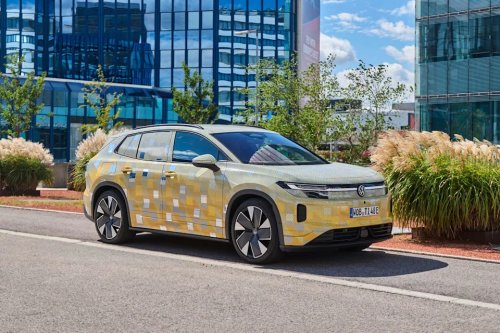
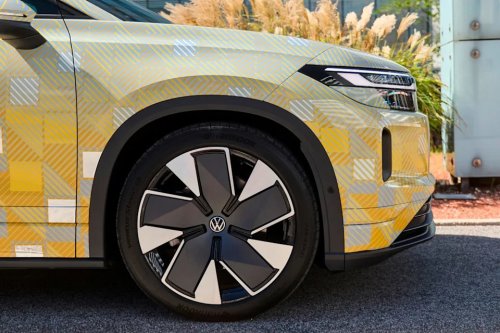
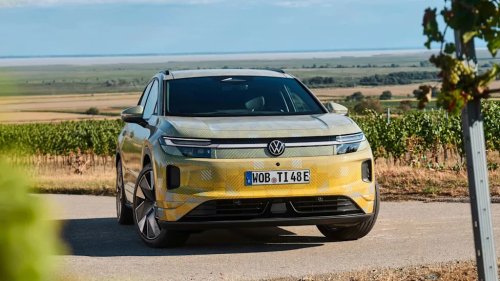
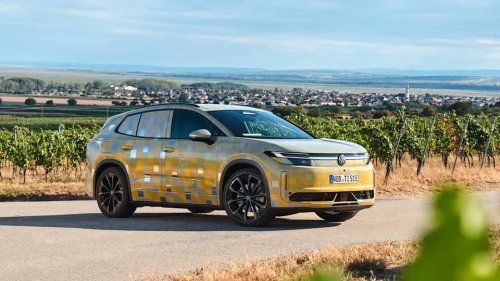
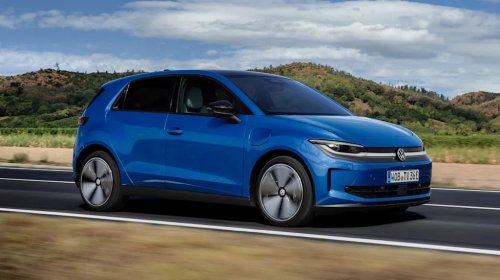
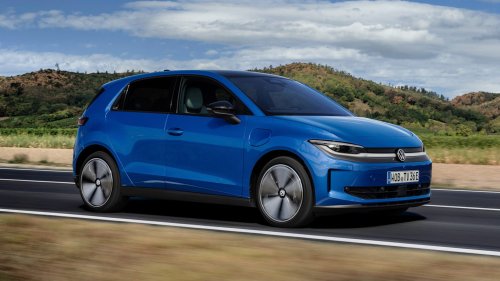
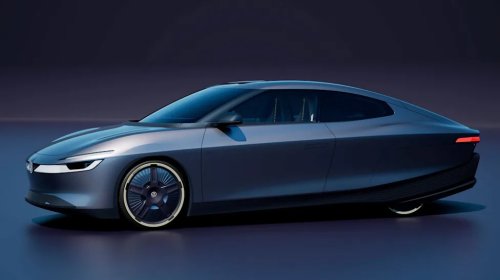
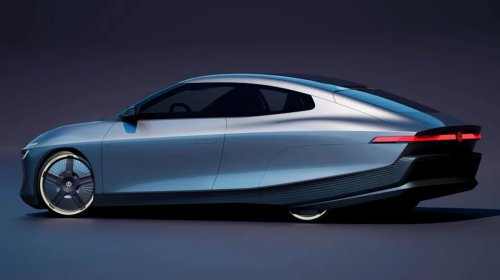
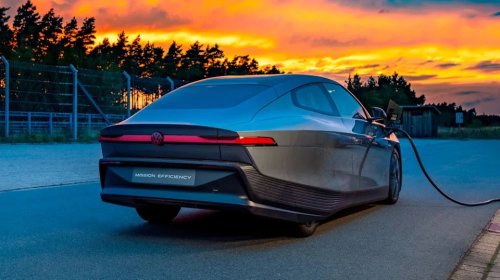
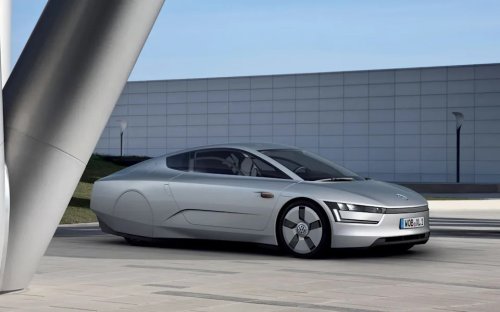
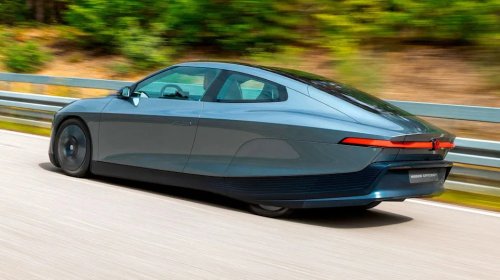
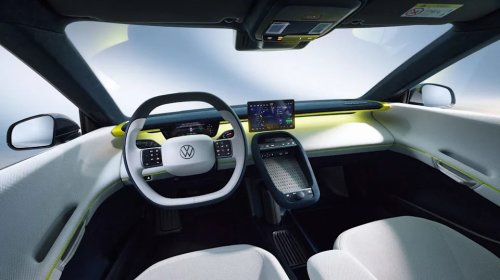
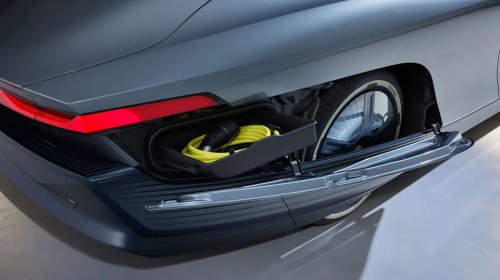
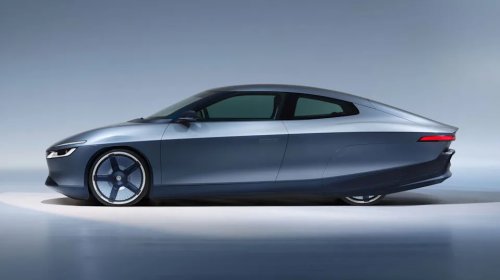
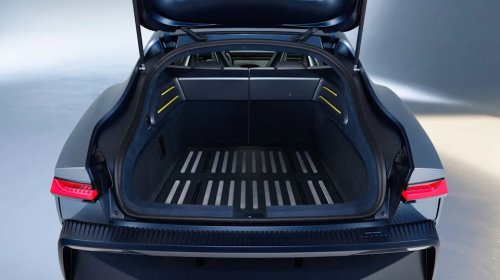
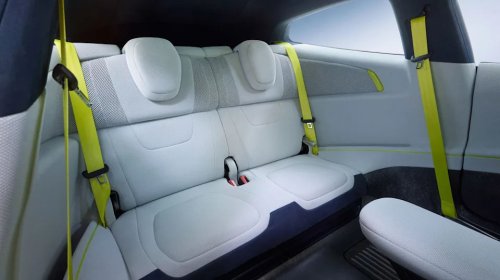
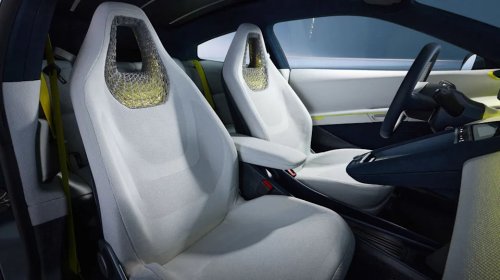
First Look: Volkswagen’s Mission Efficiency Concept Is the Most Efficient EV YetMotorTrendScott EvansTue, September 15, 2026 at 3:38 PM UTCAdd us on GoogleVW Mission Efficiency Concept Does What It SaysManufacturerEarlier this century, Volkswagen was known as an engineering powerhouse, building everything from the world's fastest production car to the most efficient. After a turbulent decade, the company is looking to regain its engineering mojo by one-upping itself with the world's most efficient car, the Volkswagen Mission Efficiency concept.ManufacturerBig and Little NumbersThe title was held for the last several years by Mercedes-Benz and its EQXX EV concept. That car achieved an incredible 7.1 miles per kWh and 747 miles of range from its 100-kWh battery pack. It did this by achieving a world-beating 0.17 coefficient of drag (Cd) and a relatively light (for an EV with a large battery) curb weight of 3,870 pounds. The VW Mission Efficiency concept EV smashes most of those numbers.Efficiency is an unheard of 9 miles per kWh, and with a 54.9-kWh battery, range comes in at 514.5 miles for a battery slightly more than half the size of the EQXX's an the car will reach 62 mph in 9 seconds. (Doubling the size of the battery would not necessarily double the range as it would also increase the weight substantially, and likely the size of the vehicle.) Production EVs today struggle to exceed 4 miles per kWh, with EV maker Lucid publicly declaring its goal of a 5-miles-per-kWh production car in the future.ManufacturerHelping achieve this is a Cd of just 0.158. Curb weight hasn't been shared, but at 188.0 inches long, 68.6 inches wide, and 54.8 inches tall, the Mission Efficiency is substantially smaller than the EQXX (195.9 inches long, 73.6 inches wide, and 53.1 inches tall) and likely lighter as a result. Indeed, the EQXX had a frontal area of 2.10 square meters to the Mission Efficiency's 2.08 (frontal area is the total surface area of the front-facing parts of a car which have to push through the air).AdvertisementAdvertisementUnlike the EQXX, which introduced new technologies which would later be put into production on the new CLA-Class, the Mission Efficiency works with production parts fitted to an experimental vehicle. The battery and 133-hp electric motor were borrowed from an ID Polo, a small electric hatchback sold in Europe and other markets. The Mission Efficiency concept's slippery shape allows it to use far less energy, with Volkswagen claiming it uses the same amount of energy to cruise at 87 mph as the ID Polo needs to cruise at 62 mph. The concept's top speed is limited to 99 mph.2013 Volkswagen XL1MotorTrend - MotorTrendXL1 2: Electric BoogalooIf the wedgy shape looks familiar, it's because Volkswagen used it before, back when it held the title of world's most efficient production car with the 2013 XL1. That car was much smaller and powered by a diesel-electric plug-in hybrid powertrain. Its 0.8-liter two-cylinder turbodiesel engine and 27-hp electric motor combined to make 68 hp and return 261 mpg on the European WLTP test cycle. A 5.5-kWh battery gave it an all-electric range of 30 miles and a combined range of 250 miles on its 2.6-gallon fuel tank. It hit 62 mph in 11.9 seconds and its drag coefficient was 0.186.The Mission Efficiency concept looks similar because the laws of physics and their effects on aerodynamics haven't changed since the XL1 came out in 2013, nor have engineers learned any substantially new ways of cheating them. Still, the Mission Efficiency is particularly impressive because it's a much bigger car than the XL1. That tiny model had seating for two and a teeny 2.8-cubic-foot trunk behind its mid-mounted engine. The Mission Efficiency is a 2+2 with seating for four and a 17-cubic-foot trunk. No surprise since the new car is about 35 inches longer.ManufacturerUnlike the XL1 and EQXX, the Mission Efficiency is front-wheel drive as a result of its ID Polo drivetrain and MEB+ platform. This left room not only for the trunk but for a pair of hidden storage compartments behind the rear wheels and another bin under the rear seats. Like those other concept cars, the new VW benefits from a set of special ultra-low rolling resistance tires made just for this car by Continental. Like the Mercedes, the VW features a 370-watt solar panel (roughly a third of what a residential panel produces) integrated into its roof and rear window that can deliver up to 9.3 miles of range per day in ideal conditions.Could I Buy One Someday?Volkswagen isn't saying anything about a production model, but while we're calling it a concept car, the company is insisting it's a "near production" car without explaining what that means. Because it's based heavily on a production ID Polo, though, it's possible VW could put the Mission Efficiency into production if a business case can be made.ManufacturerDoing so would be far from unprecedented. The EQXX went on to become the new Mercedes-Benz CLA-Class EV. In doing so, the car got much heavier, gained all the creature comforts you'd expect, lost the solar panel, and saw its range drop to 317 miles. A production version of the Mission Efficiency could follow the same path.AdvertisementAdvertisementThen again, VW could also do what it did with the XL1: build 250 production models exactly like the concept just for "world's most efficient production car" bragging rights.Volkswagen Mission Efficiency Concept external storage.Photo credit: manufacturerVolkswagen Mission Efficiency Concept external storage compartments.Volkswagen Mission Efficiency Concept side view.Photo credit: manufacturerVolkswagen Mission Efficiency Concept side view.Volkswagen Mission Efficiency Concept trunk.Photo credit: manufacturerVolkswagen Mission Efficiency Concept trunk.Volkswagen Mission Efficiency Concept rear seats.Photo credit: manufacturerAdvertisementAdvertisementVolkswagen Mission Efficiency Concept rear seats.Volkswagen Mission Efficiency Concept interior.Photo credit: manufacturerVolkswagen Mission Efficiency Concept interior.



















 +58 others









![Volkswagen, Volkswagen ID.4, Volkswagen ID.5, Volkswagen's best-seller is going electric in 2027 to replace the ID.4 and ID.5 [Images]](https://cdn.topcarnews.net/thumb/id/aHR0cHM6Ly9pMC53cC5jb20vZWxlY3Ry-ZWsuY28vd3AtY29udGVudC91cGxvYWRz-L3NpdGVzLzMvMjAyNi8wOS9Wb2xrc3dh-Z2VuLUlELVRpZ3Vhbi1JRC00LmpwZWc_-dz0xNTAwJmFtcDtxdWFsaXR5PTgyJmFt-cDtzdHJpcD1hbGwmYW1wO3NzbD0x/aed2aa2870791850c8e69c5fc3a0ed85.jpeg?t=20261006&post_id=66267)
![Volkswagen, Volkswagen ID.4, Volkswagen ID.5, Volkswagen's best-seller is going electric in 2027 to replace the ID.4 and ID.5 [Images]](https://cdn.topcarnews.net/thumb/id/aHR0cHM6Ly9lbGVjdHJlay5jby93cC1j-b250ZW50L3VwbG9hZHMvc2l0ZXMvMy8y-MDI2LzA5L1ZvbGtzd2FnZW4tSUQtVGln-dWFuLUlELTQtZnJvbnQtcXVhcnRlci5q-cGc_c3RyaXA9aW5mbyZhbXA7dz0xMDI0/97fb00cd3919b8d0dc36440715039e6e.jpg?t=20261006&post_id=66267)
![Volkswagen, Volkswagen ID.4, Volkswagen ID.5, Volkswagen's best-seller is going electric in 2027 to replace the ID.4 and ID.5 [Images]](https://cdn.topcarnews.net/thumb/id/aHR0cHM6Ly9lbGVjdHJlay5jby93cC1j-b250ZW50L3VwbG9hZHMvc2l0ZXMvMy8y-MDI2LzA5L1ZvbGtzd2FnZW4tSUQtVGln-dWFuLUlELTQtc2lkZS5qcGc_c3RyaXA9-aW5mbyZhbXA7dz0xMDI0/ed240b20e8275f3af4b904f46ebb5fb3.jpg?t=20261006&post_id=66267)
![Volkswagen, Volkswagen ID.4, Volkswagen ID.5, Volkswagen's best-seller is going electric in 2027 to replace the ID.4 and ID.5 [Images]](https://cdn.topcarnews.net/thumb/id/aHR0cHM6Ly9lbGVjdHJlay5jby93cC1j-b250ZW50L3VwbG9hZHMvc2l0ZXMvMy8y-MDI2LzA5L1ZvbGtzd2FnZW4tSUQtVGln-dWFuLUlELTQtcmVhci1xdWFydGVyLmpw-Zz9zdHJpcD1pbmZvJmFtcDt3PTEwMjQ/436c7979cf5b947053f7f0bf39ff94bc.jpg?t=20261006&post_id=66267)
![Volkswagen, Volkswagen ID.4, Volkswagen ID.5, Volkswagen's best-seller is going electric in 2027 to replace the ID.4 and ID.5 [Images]](https://cdn.topcarnews.net/thumb/id/aHR0cHM6Ly9lbGVjdHJlay5jby93cC1j-b250ZW50L3VwbG9hZHMvc2l0ZXMvMy8y-MDI2LzA5L1ZvbGtzd2FnZW4tSUQtVGln-dWFuLUlELTQtZnJvbnQuanBnP3N0cmlw-PWluZm8mYW1wO3c9MTAyNA/ec2e4ca027ccbfb42942abe523f3acf7.jpg?t=20261006&post_id=66267)
![Volkswagen, Volkswagen ID.4, Volkswagen ID.5, Volkswagen's best-seller is going electric in 2027 to replace the ID.4 and ID.5 [Images]](https://cdn.topcarnews.net/thumb/id/aHR0cHM6Ly9lbGVjdHJlay5jby93cC1j-b250ZW50L3VwbG9hZHMvc2l0ZXMvMy8y-MDI2LzA5L1ZvbGtzd2FnZW4tSUQtVGln-dWFuLUlELTQtcmVhci5qcGc_c3RyaXA9-aW5mbyZhbXA7dz0xMDI0/668525889dc433b0fd0e166fd5bd8366.jpg?t=20261006&post_id=66267)