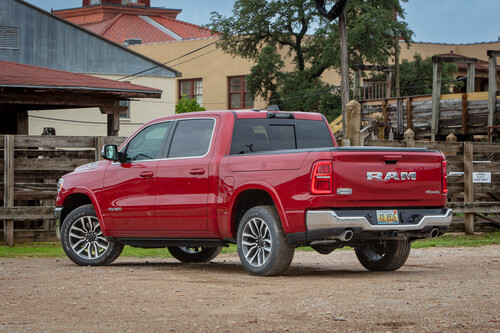
FCA's Pentastar Warranty Settlement Isn't About a Bad Valve Train. It's About Who Gets to Define 'High-Priced.'The Auto WireShawn HenrySat, September 12, 2026 at 1:00 AM UTCAdd us on GoogleFCA's Pentastar Warranty Settlement Isn't About a Bad Valve Train. It's About Who Gets to Define 'High-Priced.'There's a provision buried in California's emissions rules that almost nobody outside a courtroom reads closely, and a class action settlement against FCA US filed this month shows exactly why it deserves more attention.Automakers don't get to pick a single warranty period and call it finished. Parts tied to emissions control carry a baseline of three years or 50,000 miles under California's rules. But when a part is expensive enough to replace, the state pushes that obligation out to seven years or 70,000 miles, whether or not the manufacturer wants to advertise it. The logic is simple: if fixing a failed part is going to hurt financially, regulators don't want owners skipping the repair and driving around with a car that pollutes more than it should. The extended clock is really an air-quality tool wearing a warranty costume.The catch is that nothing forces an automaker to admit a part belongs in that expensive category to begin with. According to a newly settled lawsuit, that single judgment call did a lot of quiet work for FCA US.What Actually HappenedThe case is Regueiro v. FCA US LLC, filed in the U.S. District Court for the Central District of California, Case No. 2:22-cv-05521. The amended complaint alleged FCA improperly withheld extended warranty coverage for three valve train components: the valve rocker arm, valve stem oil seal, and valve tappet, installed in vehicles built around the 3.6-liter Pentastar V6. Rather than tracking those parts under the seven-year, 70,000-mile "high-priced parts" schedule required by California's emissions warranty regulations, the complaint claimed FCA capped coverage at the standard three-year window and pushed the repair bill onto owners instead.AdvertisementAdvertisementFCA has not admitted wrongdoing, and the court has not ruled on the merits of either side's claims, which is typical of a settlement negotiated specifically to avoid that ruling. Still, the terms the company agreed to read like a quiet concession.The deal received preliminary court approval on June 29, 2026. Under its terms, every affected vehicle now carries a seven-year, 70,000-mile warranty extension covering parts and labor for a failed valve rocker arm, valve stem oil seal, or valve tappet, automatically and at no cost, with no claim form required for future repairs performed at an authorized FCA dealership. Owners who already paid out of pocket for one of those repairs have until October 12, 2026, to file a reimbursement claim with proof of payment. A final approval hearing is scheduled for October 28, 2026, in Los Angeles.Eleven Nameplates, One EngineThe vehicle list attached to the settlement is the real tell. It covers the 2015-2020 Ram 1500, 2015-2019 Dodge Journey, 2015-2020 Jeep Wrangler, 2015-2020 Dodge Challenger, 2015-2020 Dodge Charger, 2015-2020 Chrysler 300, 2015-2020 Chrysler Town & Country and Dodge Grand Caravan, 2015-2017 Chrysler 200, 2015-2020 Ram ProMaster, 2015-2020 Dodge Durango, and 2015-2020 Jeep Grand Cherokee, provided each was built with the 3.6-liter engine.That's a full-size pickup, a minivan, two off-road SUVs, two muscle cars, a full-size sedan, a commercial van, and a mid-size sedan, all pulled into a single warranty dispute over three small components. That is what platform-sharing actually looks like from a legal standpoint. Spreading one V6 across nearly an entire lineup is a smart manufacturing decision when everything is working; it multiplies purchasing power and simplifies the parts bin. But it also means a warranty argument over a rocker arm can move money across eleven different nameplates at once. Owners rarely think of their engine choice as a legal exposure question. This settlement is a reminder that it is.Why Owners Outside California Should Still Pay AttentionHere is the detail that surprises people who have never set foot in California: the settlement class also includes owners in Connecticut, Delaware, Maine, Maryland, Massachusetts, Oregon, Pennsylvania, Rhode Island, Vermont, and Washington. None of those states wrote their own version of this warranty rule. They did not need to. Section 177 of the federal Clean Air Act lets states adopt California's stricter vehicle emissions standards wholesale instead of drafting their own, and more than a third of the country has done exactly that over the years. Buy a Wrangler in Portland, Maine, and the warranty paperwork in your glovebox still carries California's fingerprints.The Part That Isn't in This SettlementNotice what is missing from this case: there is no recall. The National Highway Traffic Safety Administration governs safety defects, the kind of failure that can hurt someone. This dispute never went there, because a worn valve rocker arm or a leaking valve stem seal is a durability and emissions problem, not a crash risk. That distinction explains why an owner's dealership never sent a recall notice about a part their engine may eventually need. Some failures get fixed through NHTSA's safety net. Others get fixed, if at all, through a warranty statute most car buyers never learn exists until a lawyer files a complaint on their behalf.AdvertisementAdvertisementIt's worth the comparison: Stellantis has spent this year fielding an actual safety recall on a different Jeep Grand Cherokee component, a suspension coil spring that keeps detaching, which The Auto Wire covered in September. That case runs through NHTSA's recall process because a dropped spring can affect handling. This valve train dispute runs through civil court and a state emissions statute because it is fundamentally about who pays for wear, not who might get hurt. Same brand, same model year range in places, two entirely different regulatory lanes.It also isn't the first time a settlement has exposed a gap between what a company promised and what its fine print actually delivered. Tesla's Supercharger commitments ran into a similar reckoning earlier this year, when a class action forced the company to make good on a 'free for life' promise that its own contract language had quietly narrowed. The vehicles and the companies differ, but the pattern is the same: the exposure lives in the definitions, not the headlines.What to RememberThe Pentastar 3.6 itself is not the story worth carrying away from this. Engines wear parts; that alone is not scandalous. The real story is that "high-priced" is a classification, not a fact, and for years the company doing the classifying was also the company paying the bill for getting it wrong. California built its extended warranty rule specifically so that cost would not decide whether a car keeps running clean. It then left the first judgment call about what counts as expensive in the hands of the one party with every incentive to say it does not.If you own one of the affected 3.6-liter FCA vehicles, that gap has closed for these three parts, at least through the October 28 final approval hearing. Everyone else should file away the mechanism, not the model names. The next fight over the meaning of "high-priced" almost certainly will not involve a Pentastar, but it will involve the same quiet question: who gets to decide, and who benefits from deciding first.AdvertisementAdvertisementJoin our Newsletter, follow our Instagram page, and connect with us on Facebook.