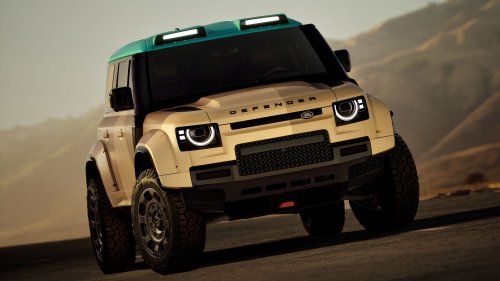
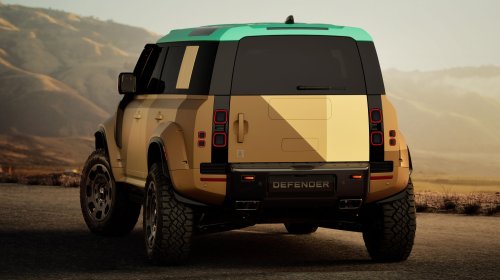
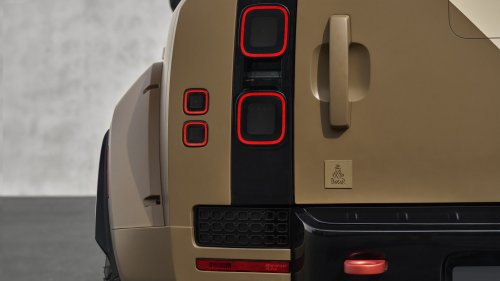
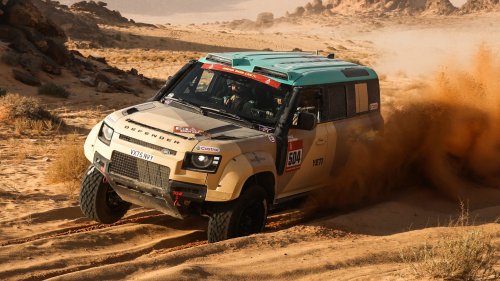
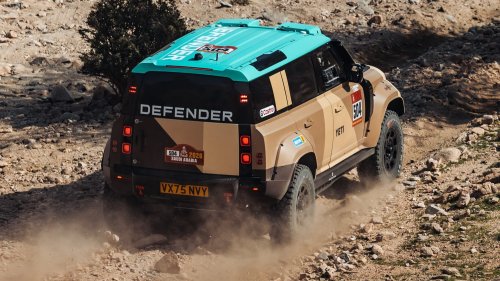
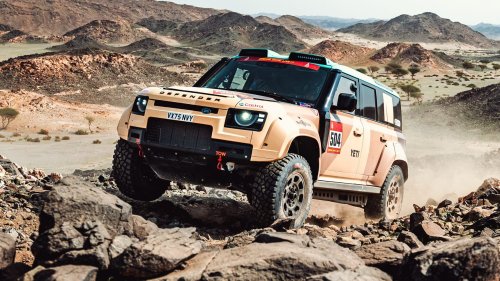
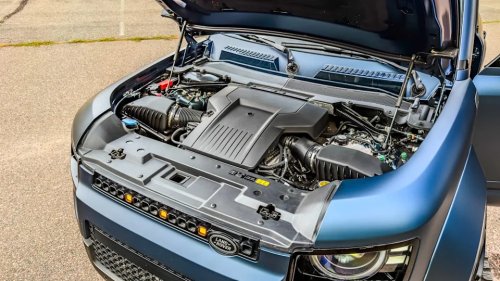
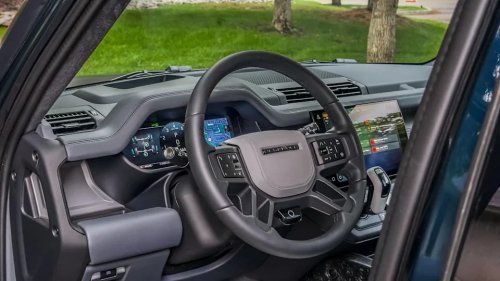
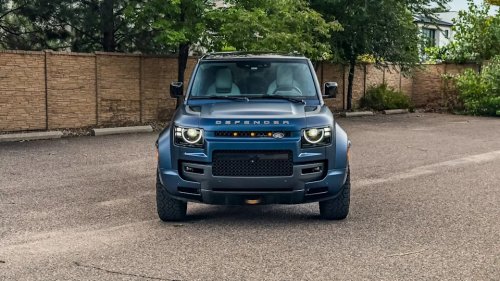
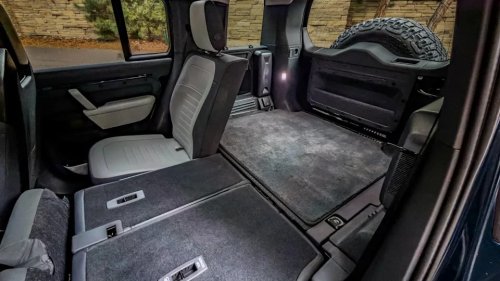
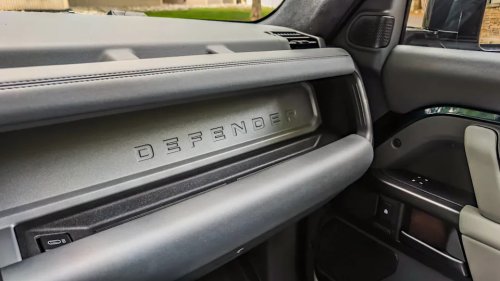
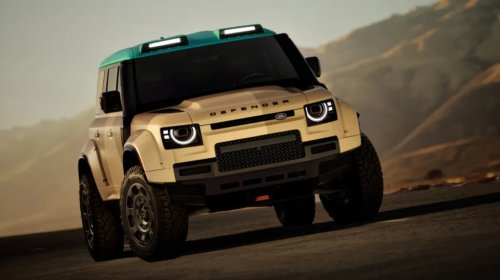
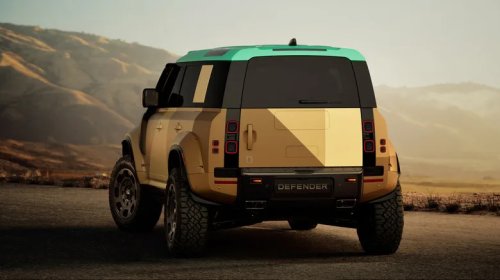
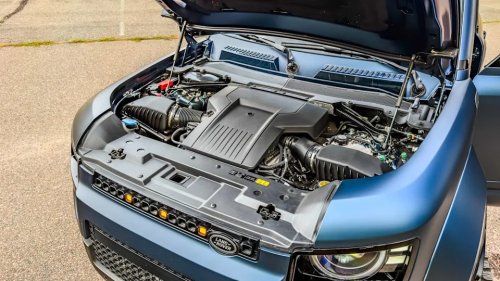
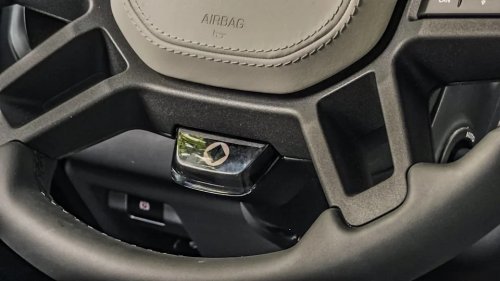
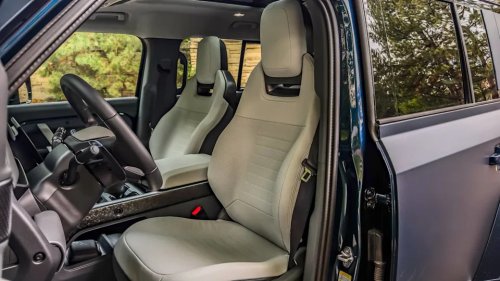
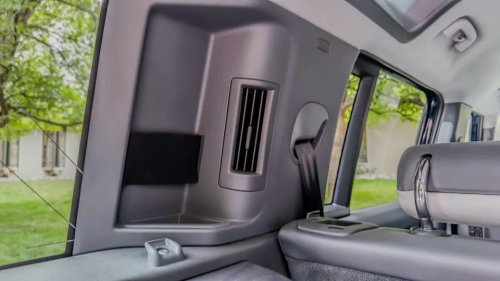
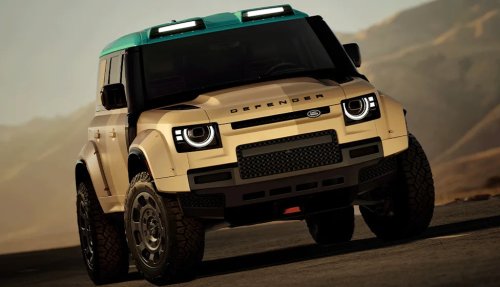
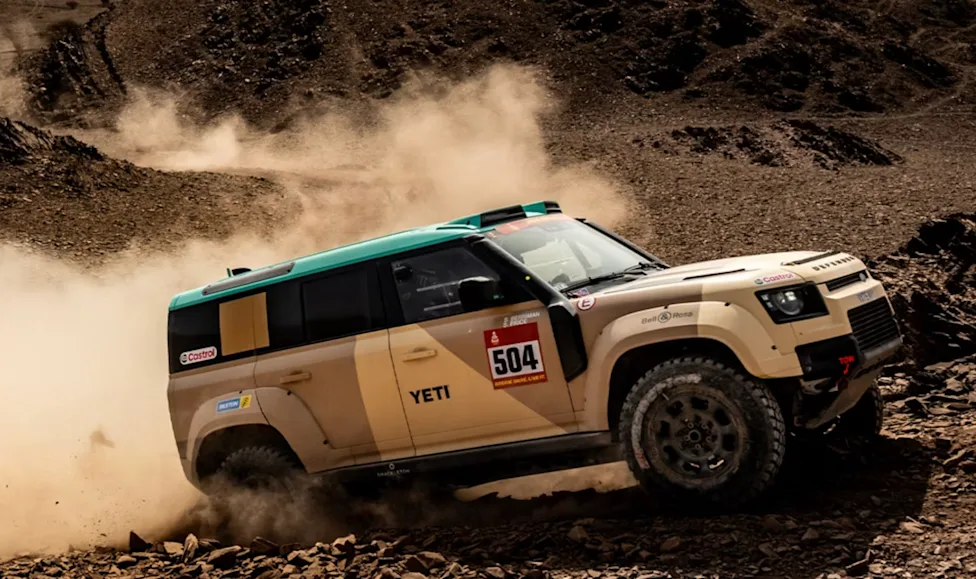
Defender Dakar's Big Number Is the Same One the OCTA Already HadLand Rover brought a race truck, a decades-old NAS Defender, and a covered shape to a lawn in Monterey, and the shape turned out to be the Defender Dakar. What it did not bring was a price, a production number, or a single number you haven't already seen on a Defender OCTA window sticker.That last part is the interesting bit.Per Land Rover's own August 14 announcement, the Defender Dakar is a road-legal evolution of the D7X-R that won the Stock class at the 2026 Dakar Rally on its debut, with three cars finishing first, second and fourth and covering a combined 24,000 kilometers across fourteen days. The road version keeps the D7x body architecture, the transmission, the driveline and the 4.4-liter twin-turbo V8, all of which trace back to the OCTA. What was shown at The Quail is a Design Preview Model — a styling statement, not a production car. Registrations of interest are open, reservations begin in early 2027, and full specifications get revealed at the 2027 Dakar Rally in Saudi Arabia.The horsepower headline is a magic trickLand Rover says the Dakar's V8 will be unrestricted from race regulations to release its full 635PS, with 750Nm of torque and greater cooling.AdvertisementAdvertisementNow go back and read the 2024 OCTA release: 635PS, 750Nm, rising to 800Nm in Dynamic Launch Mode. Same numbers. The Dakar isn't more powerful than an OCTA — it's a race car that was choked down for a rulebook and is now being handed back the output the road car always had. The "unrestricted" framing is technically accurate and commercially clever, and it is not a power upgrade.Related ArticlesKia and Hyundai Mobis Just Paid $11.5 Million to Settle a Georgia Visa Scandal — Here's What the Filing RevealsKoenigsegg's 1,600-HP CCGT1 Is the Le Mans Monster the FIA Never Let RaceThe cooling note matters more than the horsepower does. Rally-raid duty cooks everything: transmission fluid, differential oil, brake fluid, turbo intake charge. Carrying competition-grade cooling capacity into a road car is genuinely useful hardware for anyone who tows, lives somewhere hot, or actually uses the thing on trails at low speed with no airflow. It's also the kind of change that quietly costs money to service — more heat exchangers, more lines, more fittings to fail at fifteen years old.The suspension swap nobody is talking aboutHere's the real engineering story. The OCTA's headline chassis feature is 6D Dynamics — hydraulically interlinked semi-active dampers that replace conventional anti-roll bars and let Land Rover control pitch and roll without sacrificing wheel articulation.AdvertisementAdvertisementThe Dakar release describes something different: coil suspension with Bilstein Advanced Dampers, wider track, and increased ride height. No mention of 6D Dynamics anywhere.If that holds through to production, it's a deliberate philosophical move rather than a downgrade. Interlinked hydraulic systems are brilliant at controlling body motion on pavement and at moderate off-road speeds. What they're not built for is repeated high-energy impacts — the kind you generate landing a two-and-a-half-ton truck off a dune crest at speed. That job wants big-bore dampers with external reservoirs, generous oil volume, and enough surface area to shed heat over hours of abuse. Rally-raid teams run that hardware for a reason, and they run it because it survives and because it can be rebuilt in a bivouac.For an owner, simpler is better here. Conventional coils and Bilsteins mean a damper is a damper — serviceable, revalvable, and replaceable without a specialist hydraulic circuit needing to be bled. The trade is on-road body control. Expect the Dakar to lean and pitch more than an OCTA does on a back road, and expect that to be the correct decision.What 35-inch tires actually changeThe Dakar moves to a 35-inch all-terrain package on forged 20-inch wheels, up from the OCTA's 33s.AdvertisementAdvertisementTwo inches of overall diameter is not a cosmetic change. Taller tires effectively raise the final drive ratio, which blunts acceleration and forces recalibration of the speedometer, ABS wheel-speed logic, stability control thresholds and the transmission shift map. A factory-engineered 35-inch fitment means all of that is done properly, warranty intact — which is exactly why buying capability from the factory beats bolting it on afterward.The costs are real, though. Bigger tires are heavier unsprung mass, they cost more to replace, and aggressive all-terrain compounds wear faster and howl on the highway. Budget accordingly, and know that a full set of five for a machine like this is a four-figure proposition every few years.The harnesses and the fine printLand Rover confirms a 2+2 seating layout with bespoke front race seats, optional four-point racing harnesses, rear stowage sized for helmets, and a load-bay mounting for the spare wheel and an air compressor. Note that 2+2 means four seats where a standard 110 gives you five — a genuine family-car concession in exchange for the motorsport furniture.On the harnesses, US buyers should understand what they're getting. FMVSS 208 requires a Type 2 lap-and-shoulder belt at the front outboard seating positions, per 49 CFR 571.208, so a factory four-point option sits alongside the compliant three-point belt rather than replacing it. That matters in a vehicle with front airbags, where the certified restraint system is calibrated around the belt geometry it was crash-tested with.Related ArticlesStolen in 1993, Found Decades Later: How a Routine CHP VIN Check Cracked This Chevelle Cold CaseNASCAR Turns 8/18 Into Kyle Busch Day—and the Numbers Tell the StoryAdvertisementAdvertisementThe roof-mounted light pods are worth a similar note. Auxiliary forward lighting is regulated at the state level in the US, and rules on how many lamps may be illuminated on public roads — and whether unused lamps must be covered — vary. Check your state's vehicle code before you assume the pods are just decoration you can switch on.Ignore the volume numbers for nowLand Rover has said "limited-run" and "exclusive" and nothing more. There is no announced production cap and no announced price. Anyone quoting you a specific unit count today is guessing, and the company has explicitly reserved technical details and specifications for January.What we can reason about: the OCTA already sits at the top of the range, the Dakar sits above it, and the modifications listed — carbon fiber hood and raised air intakes, fixed metal roof, riveted arch extensions, tailgate blanking plate, enhanced metal front undershield, bespoke seats — represent substantial body and interior re-engineering rather than a trim package. Cars built that way, in small numbers, do not get cheaper.The genuinely good news for enthusiasts is that this one has receipts. Defender is the official car partner of the Dakar Rally through 2028 and entered the FIA World Rally-Raid Championship's Stock category in 2026 as the first year of a three-year program. Whatever the Dakar ends up costing, the hardware it's borrowing was proven somewhere considerably harder than a press launch.Images via: Land Rover


















 +67 others