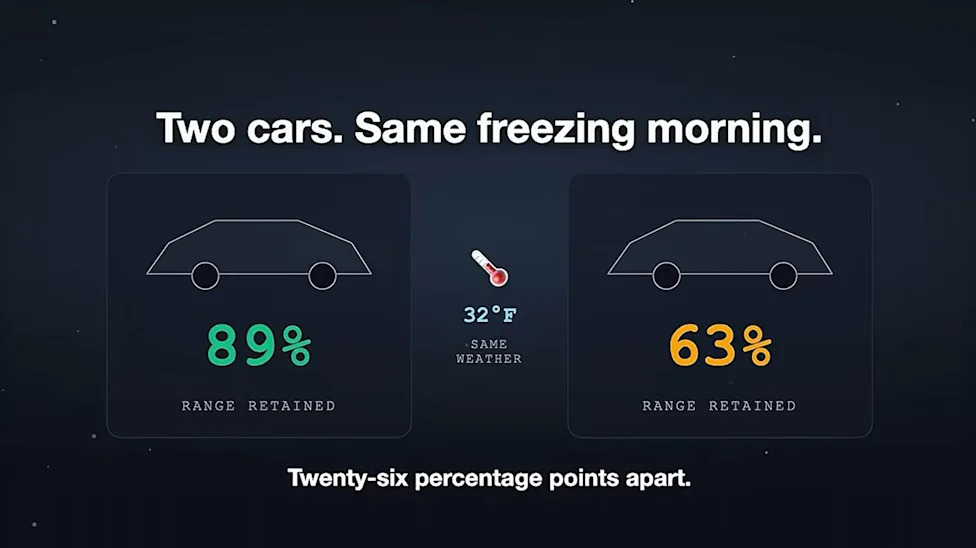
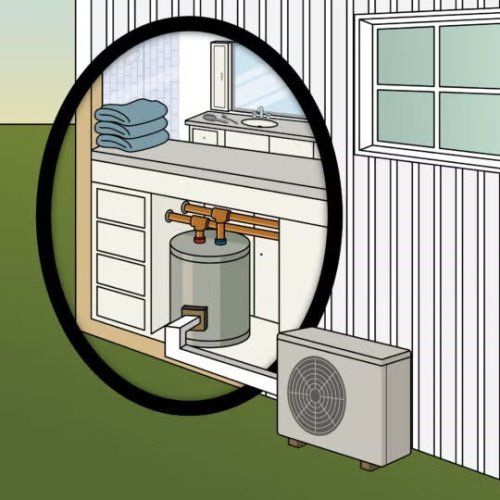
2 EVs faced the same freeze: One kept 89% of range, the other 63%, and the heat pump was keyThe Cool DownJames NanzoSun, September 13, 2026 at 11:07 PM UTCAdd us on GooglePhoto Credit: YouTubeTwo electric vehicles can sit in the same freezing weather and deliver very different results once it is time to drive.In a comparison, one vehicle kept 89% of its range while another held onto just 63%, a gap that Shayan_EV (@shayan_ev) said came down to whether the car had a heat pump.Here's what to knowThe creator explained the disparity in a video on YouTube.Having a heat pump instead of resistive heat is so significant because warming the cabin takes energy. Internal-combustion engine vehicles can tap engine heat that would otherwise be wasted, but EVs generate far less surplus warmth, so warming the interior means using battery power.AdvertisementAdvertisementThat is where the hardware changes the outcome. A resistive heater turns electricity into heat directly, roughly one unit for one unit, whereas a heat pump moves heat from the surrounding air and can provide several units of heat for each unit of electricity it consumes.According to the video, cars with heat pumps average about 83% range retention in freezing weather, compared with about 75% for EVs that rely on resistive heating. Shayan_EV also cited an analysis that showed the cold-weather range penalty can be 15-25% less for vehicles with heat pumps.He pointed to the Tesla Model 3 as a test case because it is available in both configurations. Shayan_EV said real-world range drops by 13% in cold weather for the heat pump version and 21% for the version without one.More backgroundThe Tesla Model X sat atop his ranking with 89% retained range. Shayan_EV said Teslas tended to do well, which he linked to the Octovalve the company introduced in 2021.AdvertisementAdvertisementOutside the leaders and laggards, he said EVs land in a broad middle, typically giving up 20-30% of their ranges in the cold. The Volkswagen ID.4 had the weakest result at 63% retained range. Shayan_EV noted that U.S. versions lacked a heat pump; later models that added one improved the losses to the mid-20% range.The Chevrolet Bolt lineup also finished near the bottom in his comparison, a result he tied to the combination of a small battery pack and the absence of a heat pump. He added that big, heavy, upright EVs can lose more range at highway speeds because weight and aerodynamics work against them.Two commonly cited cold-weather figures measure different things. Recurrent looked at more than 30,000 vehicles and found a 22% drop at 32 degrees Fahrenheit relative to the range drivers actually get on the road, while AAA's May 2026 dynamometer test of six vehicles found a 39% drop at 20 F compared with rated range. That makes 22% a reasonable expectation for a freezing day and 39% a conservative planning figure for a harsher cold snap.Shayan_EV clarified the loss shows up in driving range, not damage to the vehicle. He said it was a temporary issue and not a sign of future range loss or degradation. Preconditioning an EV in cold weather is also an important step to protecting the battery in the long term.Where can I learn more?A single range-retention figure only tells part of the story. Many outlets have examined which EVs hold up best in winter, how Tesla compares in head-to-head freeze tests, and why charging habits and battery care can make cold weather easier to manage.AdvertisementAdvertisement• In frigid road tests, winter battery range performance separated Tesla, Hyundai, and other major EV brands.• In a newspaper winter trial, Tesla stacked up against rival EVs in freezing temperatures.• In China, BYD showed fast charging after deep-freeze exposure can still outpace rivals.• In freezing garages, other factors can hurts batteries matters more than the cold itself.Get TCD's free newsletters for easy tips, smart advice, and a chance to earn $5,000 toward home upgrades. To see more stories like this one, change your Google preferences here.



















 +11 others





























![The BMW iX5 sets the benchmark with 525 miles of range [Images]](https://cdn.topcarnews.net/thumb/id/aHR0cHM6Ly9pMC53cC5jb20vZWxlY3Ry-ZWsuY28vd3AtY29udGVudC91cGxvYWRz-L3NpdGVzLzMvMjAyNi8wNi9CTVctaVg1-LWRlYnV0LXJhbmdlLmpwZWc_dz0xNTAw-JmFtcDtxdWFsaXR5PTgyJmFtcDtzdHJp-cD1hbGwmYW1wO3NzbD0x/c4973226b7742febc1ecddd912670d02.jpeg?t=20261004&post_id=41248)