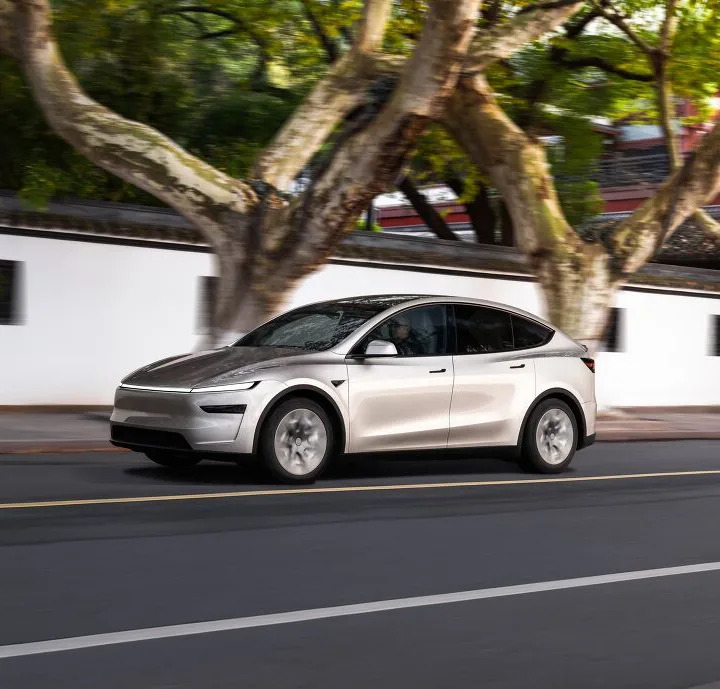



















Drew Baglino spent nearly two decades building Tesla’s batteries, motors, and power electronics. Now the former Tesla SVP is quietly building the one home energy product Tesla talked up for years and never shipped: a residential heat pump. His startup, Sadi Thermal Machines, is a direct bet on an idea Tesla floated openly in 2022 — before the company reoriented itself around humanoid robots and robotaxis. Tesla said it would build this. Baglino is doing it instead. On Tesla’s Q4 2021 earnings call in early 2022, Baglino and Elon Musk spent real time talking up a residential heat pump that would handle both home HVAC and water heating. “From a mission perspective, it’s very aligned,” Baglino said at the time, adding that a home unit would actually be easier to build than a vehicle one because it isn’t “so constrained on mass and volume and energy.” Musk added his usual qualifier — “it is a thing we will do, but we’re not committing to a time frame at this point.” Advertisement - scroll for more content Then Baglino said the line that looks prophetic now: “People should do it anyway.” Tesla never shipped one. Baglino left, and with Sadi Thermal Machines, he’s the one making good on it. Baglino’s heat pump credentials are real This isn’t a random pivot. Baglino is a named inventor on the patent behind Tesla’s “octovalve” thermal system — the suitcase-sized unit in the Model Y that manages the cabin, battery, and motors at once, harvesting waste heat from the motor to pre-warm the battery for cold-weather fast charging. When it launched, it was more sophisticated than anything rivals were shipping. Baglino rose to senior vice president overseeing Tesla’s powertrain and energy engineering before leaving the company in April 2024. His first move afterward was Heron Power, a solid-state transformer startup that raised $140 million in February. Sadi is his second company, and according to TechCrunch, which broke the story, it has been operating largely in stealth. It was incorporated in June 2025, shares Heron Power’s Scotts Valley, California headquarters, and appears to be staffed with several Tesla alumni. The name is a nod to Sadi Carnot, the French physicist who laid the foundations of thermodynamics — and, by extension, the heat pump. Tesla traded its energy mission for robots Tesla’s original stated mission is “to accelerate the world’s transition to sustainable energy.” Home heating is one of the largest sources of fossil fuel use left in the developed world, and Tesla executives once described electrifying it as some of the lowest-hanging fruit in the entire energy transition. A home heat pump fit the mission perfectly. Instead, the company spent the years since pointing its engineering and capital somewhere else entirely. Musk now says roughly 80% of Tesla’s future value will come from its Optimus humanoid robot, a product that isn’t yet in meaningful production. He’s also asked shareholders for a pay package worth up to $1 trillion, tied in large part to building and controlling Tesla’s coming “robot army”, alongside the long-delayed robotaxi push. Energy products that don’t involve robots or self-driving — like the home heat pump Baglino and Musk publicly mused about — simply never materialized. Worse, Tesla’s existing heat pumps are now a liability rather than a selling point. The company was hit with a class action in Quebec this month over alleged heat pump defects in its vehicles that could cover more than 55,000 owners and up to $400 million in damages, after one Model 3 owner was stuck with a $4,477 repair bill. The market is moving without Tesla The idea Tesla walked away from is now becoming a category. At Intersolar Europe in Munich next week, Differ Power will launch what it calls the world’s first “9-in-1” heat pump — the D1 Series, which folds space heating, cooling, hot water, solar inversion, battery management, backup power, and energy management into a single platform, positioning the heat pump as the home’s energy hub rather than just an appliance. Samsung rolled out an all-in-one residential heat pump in January, and a wave of US and UK startups is racing to package heating, hot water, and storage into single, easier-to-install units. The home heat pump is quietly turning into one of the more contested corners of the energy transition — the kind of hardware fight Tesla used to lead. Electrek’s Take Baglino deserves a lot of credit for leading many engineering efforts that helped Tesla succeed over the years. I am really curious to see apply the same approach to design home heat pumps from scratch. He helped design Tesla’s vehicle thermal systems, he understands batteries and power electronics at the system level, and he was literally in the room when Tesla decided this was “aligned with the mission” and then did nothing about it. Sadi is still a stealth-mode startup with almost nothing public, so there’s no product to evaluate yet — but the founder-market fit is about as good as it gets. If you’re electrifying your home heating with a heat pump, pairing it with rooftop solar is one of the smartest ways to keep your operating costs low for decades. With electricity rates climbing nearly 10% last year, home solar protects you against future rate increases. And with lease and PPA options, you can go solar with zero upfront cost and start saving immediately. If you want to find the best deal, check out EnergySage. It’s a free service with hundreds of pre-vetted installers competing for your business, so you save 20 to 30% compared to going it alone. No sales calls until you pick an installer. Get your free quotes here. Stay up to date with the latest content by subscribing to Electrek on Google News. You’re reading Electrek— experts who break news about Tesla, electric vehicles, and green energy, day after day. Be sure to check out our homepage for all the latest news, and follow Electrek on Twitter, Facebook, and LinkedIn to stay in the loop. Don’t know where to start? Check out our YouTube channel for the latest reviews.