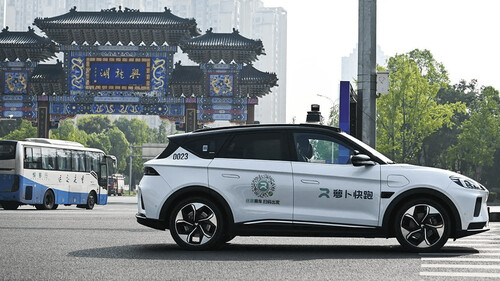
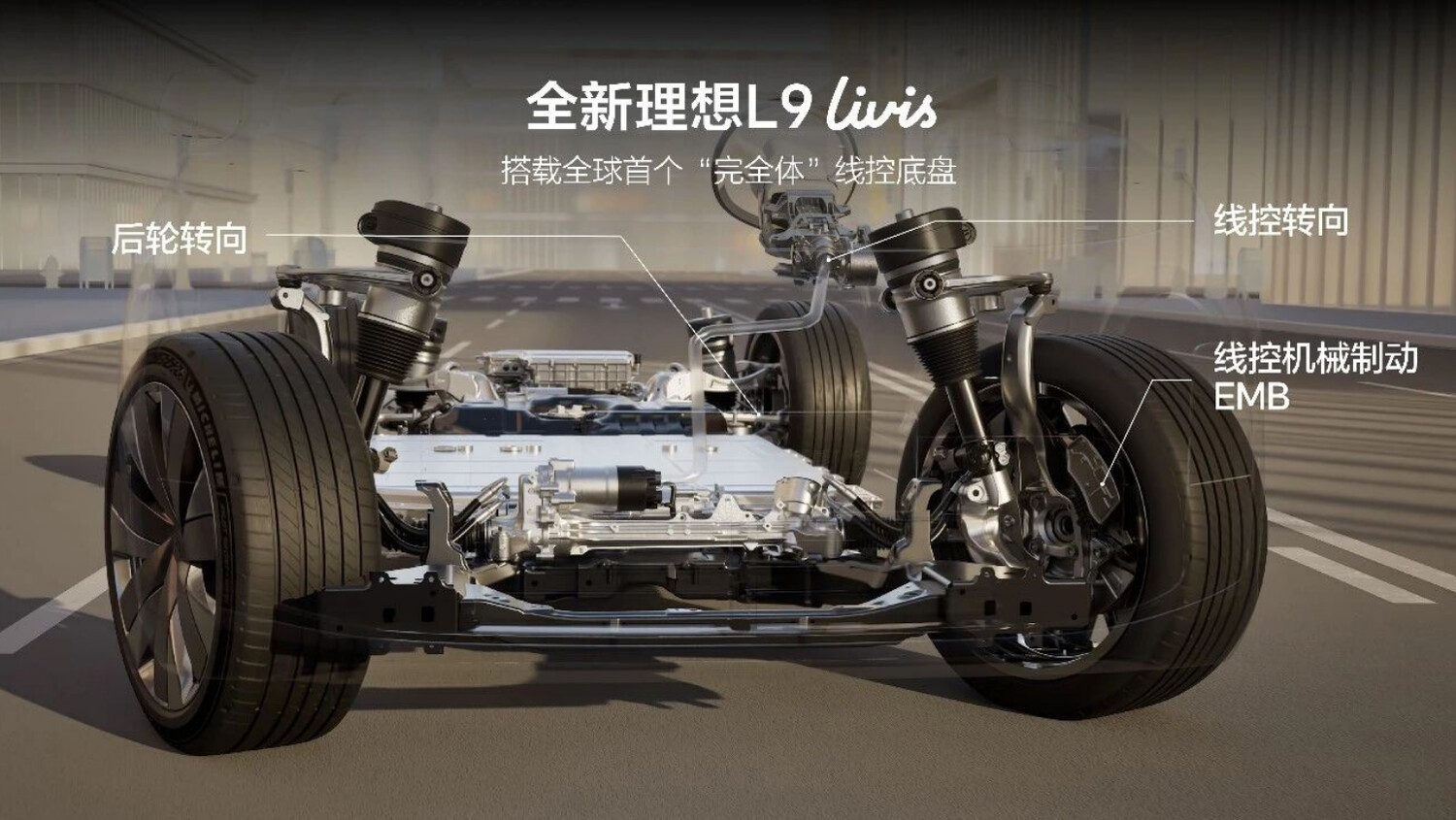
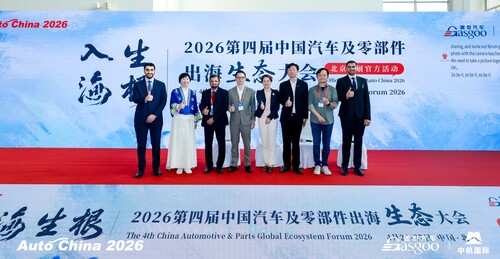
Gasgoo Munich- When discussing Chinese automakers' global expansion, a mature domestic supply chain is often cited as the core backbone. From top-tier component makers building overseas capacity early to the supporting armies landing alongside OEMs, tight upstream-downstream cooperation is bringing years of refined domestic efficiency abroad, underpinning the growth of exports.Yet globalization is never a task for a single supply chain system alone. Chinese automakers are shifting from "product competition" to "system competition." Moving from early reliance on cost-effectiveness to now being forced by geopolitics and tariff barriers to build factories overseas, every step—R&D adaptation, local production, compliance, after-sales—determines long-term viability. Supporting this systemic capability requires more than just domestic suppliers.Image source: Shetu WebsiteChinese Automakers' Global Expansion Relies on More Than Just Domestic Supply ChainsThe global extension of domestic supply chains has delivered significant results, providing strong support for this systemic capability. That is undeniable.On one hand, many top domestic component companies started their global layout early, building capacity and service networks in key markets like Southeast Asia and Latin America. They completed localization before the automakers, with some even establishing compliance and production lines in Europe, capable of independently serving overseas projects.On the other hand, as automakers accelerate their overseas pace, numerous core supporting companies are choosing to follow suit. This creates a cluster pattern of coordinated expansion, bringing the highly efficient collaboration model honed over years domestically to foreign markets.Image source: LeapmotorBut this doesn't mean domestic supply chains can move without friction everywhere. Take Southeast Asia: Japanese automakers have operated there for decades, building a solid supply chain and policy influence. Chinese suppliers face similar challenges—local standards, industrial adaptation, cultural integration—meaning market penetration requires long-term cultivation.When the target shifts to high-barrier mature markets like Europe, the challenges grow more complex: rules of origin, technical standard certification, carbon border mechanisms, and building comprehensive service networks arrive one after another. Even within Europe, market access rules and industrial maturity differ significantly between Western and Eastern Europe.Domestic suppliers still have limited full-chain coverage in high-barrier markets. Relying on single-point layouts makes it difficult to clear all hurdles at once; perfecting the system will take a long cycle.Objectively, this doesn't mean domestic suppliers are completely shut out of mature markets. Many top players have long been present in Europe, accumulating experience in compliance and localized manufacturing to support automaker projects. However, from a full-industry-chain perspective, if the goal is to connect technical standards, carbon accounting, and comprehensive after-sales in one go, relying solely on the single-point layouts of domestic firms reveals shortfalls. Completing overall capabilities will take more time.Image source: Shanghai Baolong Automotive CorporationIt is precisely for this reason that the unique value of foreign supply chain enterprises—those that have cultivated the Chinese market for decades—begins to emerge.Foreign Supply Chains Bring Unique Value Through a "Dual Identity"The core value of foreign suppliers lies in their "dual identity": they are both highly localized partners in China and international service providers with vast global R&D and production networks. This duality solves two problems simultaneously: "collaborative efficiency" and "global coverage."First, consider the localization dimension.Over decades, companies like Bosch and Schaeffler have grown alongside the Chinese auto industry. From early technology introduction to local R&D and joint development, they have lived through the full transition from internal combustion engines to new energy vehicles. They have adapted to the fast pace, frequent iterations, and strict cost control of domestic automakers, shedding the stereotype of "high prices and rigid processes."This tacit understanding, forged over long-term cooperation, is amplified during the expansion phase. Chinese automakers don't need to onboard unfamiliar overseas branches; they can rely on long-standing domestic teams to mobilize global resources. Communication costs, trust barriers, and collaboration rhythms all hold a distinct advantage.With a solid foundation of local collaboration, the value of these foreign companies' global layouts becomes even clearer. The global business network built over decades serves as an efficient channel for automakers entering mature markets.Compliance is the primary hurdle. European standards are strict, and certification processes are complex, making the industry view entry as a high-barrier scenario. Active safety, passive safety, power batteries, drivetrain systems—any deviation in adaptation can extend certification cycles and disrupt launch plans.Image source: BoschZhang Lianchong, Vice President of New Braking Systems for Bosch's Vehicle Motion Control division in China, noted at a recent forum that Bosch's production bases worldwide participate deeply in local standard discussions. They understand policies precisely. When automakers plan to enter a market, Bosch can offer localized compliance advice, clarifying differences between domestic and foreign standards to avoid costly trial and error.R&D and localized manufacturing are equally critical. Bosch operates 13 professional test tracks across Europe, the Americas, Asia, and Australia for vehicle calibration under various scenarios. Verifying performance on German autobahns is something domestic environments can't replicate. As Zhang admitted, hitting 180 km/h or more is common in Germany, while China's limit is 120 km/h. This difference requires export models to undergo specific, differential recalibration for chassis tuning and braking systems.Schaeffler has operated in Europe for 80 years, with 20 R&D centers and 9 production bases, its technical systems long adapted to European regulations. At the forum, Chen Xiangbin, President of Schaeffler China's E-Mobility division, noted that Chinese automakers tend to minimize the number of overseas suppliers to manage costs. Schaeffler alone can cover the work of ten domestic suppliers; the automaker only deals with one team. Moreover, Schaeffler's processing depth is immense—from stamping and machining to motor winding and chip packaging. "In other words, when our domestic companies go there, they only need to handle assembly."Image source: SchaefflerPartnering with such firms allows automakers to plug directly into mature local supply systems. There's no need to search for suppliers from scratch, build factories, or push for certification. It meets hard requirements like rules of origin and localization rates while consolidating the interface work of dozens of suppliers into a few system service providers, effectively reducing management pressure.The value of after-sales support cannot be ignored either. Going global isn't just about selling cars; the completeness of the after-sales system determines whether a brand can take root. Building a network from zero is costly and slow, a heavy burden for Chinese brands new to a market.Bosch's after-sales network covers 130 countries with over 43,000 outlets and resident engineer teams. Before an automaker's own service system takes shape, they can rely on authorized partnerships for after-sales operations. Parts supply and repairs can be handled locally, drastically cutting consumer wait times.In practice, this collaboration has yielded mature results. Public information shows Bosch has supported nearly 300 Chinese model entries overseas. Leveraging its global network for compliance and production, it helped the ZEEKR 7GT become among the first to pass Euro NCAP's 2026 five-star safety rating, aiding its launch across 16 European countries.To be sure, leveraging foreign supply chains isn't the only path into mature markets. Companies can partner with local independent engineering firms or use Chinese-acquired European enterprises. But suppliers like Bosch and Schaeffler, with comprehensive service capabilities, offer the advantage of system maturity and coverage. They allow automakers to consolidate dozens of supplier interfaces into a few system providers, significantly lowering management burdens—a high-efficiency choice for quickly entering mainstream markets.Systemic Expansion: The Core is Global Resource IntegrationOf course, deep binding with foreign supply chains tests an automaker's grasp of technical sovereignty and supply chain leadership. A balance must be found between efficiency and autonomous control. Partner selection should also be rational, prioritizing suppliers with a China track record and mature target-market networks to match capabilities as needed, avoiding cost redundancy from blindly chasing top brands.Overall, domestic and foreign suppliers shouldn't be viewed as mutually exclusive opponents. Instead, they should form a layered, collaborative model.Image source: Shetu WebsiteIn emerging markets, the domestic supply chain cluster model offers cost advantages and faster expansion, making it the main force for grabbing share and the current foundation. In mature markets, foreign supply chains' global networks help automakers clear hurdles like certification, local manufacturing, and after-sales that would otherwise take years to overcome, avoiding massive costs and trial and error. Of course, this isn't a binary choice but a flexible combination based on regional characteristics.Looking at the global auto industry, leaders like Toyota, Volkswagen, and BMW all select premium resources worldwide to build supporting systems tailored to regional demands. The core of globalization isn't self-sufficiency in every link, but making global resources work for you.Industry perception of expansion is moving from product and capacity export to systemic export. This isn't a simple copy of the domestic chain. Automakers need flexible supply systems adapted to different regions, allocating resources based on local conditions to find optimal implementation plans.Schaeffler's Chen Xiangbin offered a metaphor at the forum: the globalization of the Chinese auto industry is a marathon. Running fast is important, but running steadily and running farther matters more. A marathon tests not just short-term sprinting ability, but long-term pacing and risk resilience.The ultimate direction for Chinese automakers is to evolve from companies from China to companies for the world. The high-stakes game of globalization isn't about who owns all resources, but who can dispatch global resources most efficiently. On this path, the ability to integrate global resources determines the height a company can reach. Rational coordination of various resources to continuously push Chinese products and brands onto the global stage—that is the true value of automotive expansion.