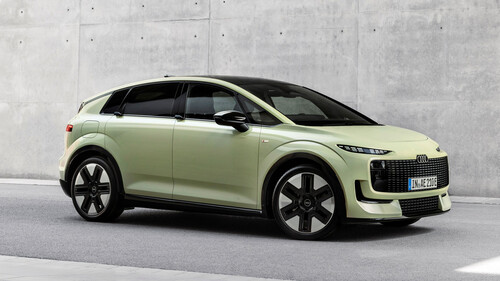
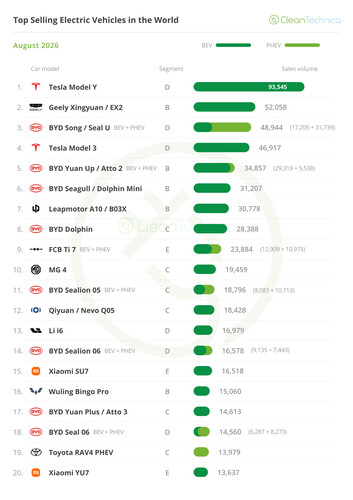
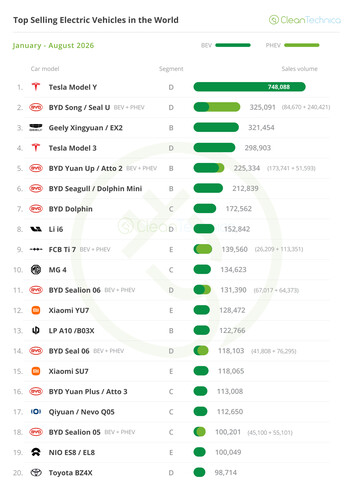
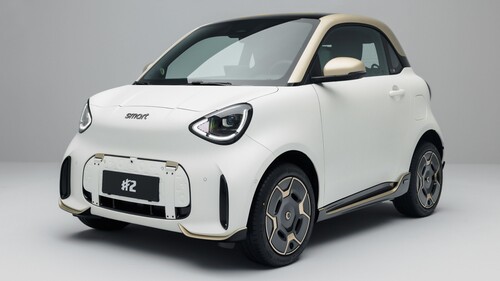
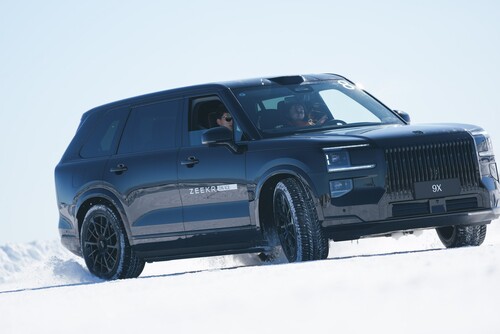
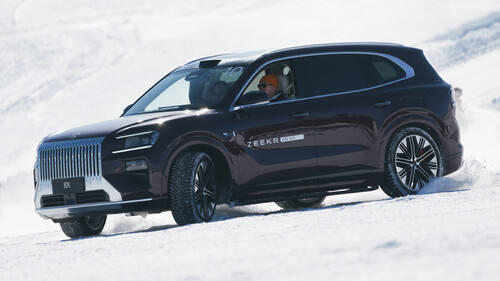
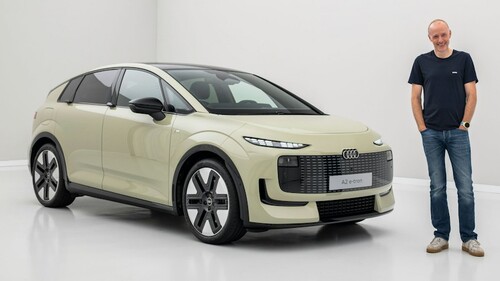
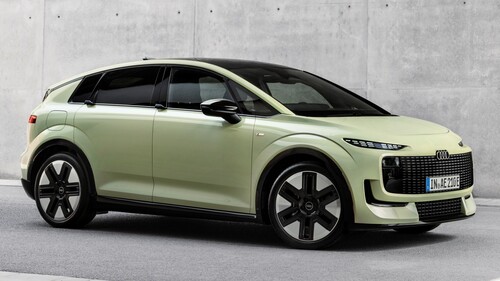
OEM Trends | Auto Mover NewsGasgoo: On September 3, the Audi Innovation Technology Center (AITC), jointly established by Audi AG and SAIC Motor, was officially inaugurated in Shanghai. As a dedicated R&D entity for the AUDI brand, the center boasts full vehicle development and end-to-end delivery capabilities. Headquartered in Shanghai, it is viewed as a critical pillar for Audi's dual-brand strategy in China.Gasgoo: On September 3, Seres Group released an official statement responding to the "Guidelines on Overseas Competitive Behavior and Compliance Construction in the Auto Industry," jointly issued by the Ministry of Commerce, the Ministry of Industry and Information Technology, and the State Administration for Market Regulation. Seres emphasized that legal compliance is an unbreakable bottom line for business operations. The group pledged to uphold the guidelines, adhering to principles of lawful compliance, fair competition, and mutual benefit in its overseas ventures. It aims to continuously refine its compliance framework, standardize operations across the entire chain, and safeguard the global image and reputation of China's automotive industry.Gasgoo: Leapmotor recently announced that cumulative sales of its C11 mid-size SUV have officially surpassed 350,000 units. The model previously crossed the 300,000 mark in November 2025. The jump from 300,000 to 350,000 took only about nine months, demonstrating sustained and steady market momentum.IT Home: According to the latest data from Beijing's online investment project approval platform, Xiaomi's Smart Manufacturing Industrial Base Phase II project has hit a new milestone. The acceptance opinion for the construction engineering archives was approved on September 2.Gasgoo: Following the resumption of work and production this March, Zotye Auto's vehicle business has made further strides. Recently, the company completed the delivery of molds for its new models, and its mold factory has fully resumed operations. According to company disclosures, preliminary R&D, trial production, and verification for the new models are complete, moving the project into the batch production verification phase.IT Home: Reports indicate Geely has begun developing ultra-fast charging facilities for electric vehicles, with a maximum power of 1,800 kW that can slash charging times to five minutes. Yang Xiaoguang, General Manager of Geely Auto UK, revealed in an interview at the UK launch of the new EX2 that the first key technology, all-solid-state batteries, is now "just a few months away" from deployment in China. As the UK is a crucial market for Geely, it will be among the first to receive this technology during overseas expansion. "We are currently developing ultra-fast charging facilities in China with power reaching 1,800 kW," Yang noted. "ZEEKR already has 900V ultra-fast charging models on the road, so the pace of technological advancement is extremely rapid."Component Makers | Supply Chain NewsGasgoo: The 2026 World Power Battery Conference opened in Yibin, Sichuan, on September 3. In his opening address, Wan Gang, Vice Chairman of the 13th National Committee of the CPPCC and Honorary President of the China Association for Science and Technology, stated that China has established the world's largest and most complete power battery industrial system. The industry has ranked first globally in scale for consecutive years, with products shipped to major markets worldwide. Facing new trends in global industrial transformation, Wan emphasized the need to drive progress through technological innovation, consolidate first-mover advantages, and steer the industry toward higher quality and sustainability.IT Home: On September 3, at the 2026 World Power Battery Conference, CATL Chairman Robin Zeng delivered a keynote speech pointing out that the industry is increasingly focused on speed, specifications, and low prices. Development cycles are shrinking, but this comes at the cost of product quality and consumer trust. Zeng reiterated that "quality" is the keyword for the new energy industry's development and announced that the company will launch its first "CATL Quality" Global Open Month this September.Caixin: On September 3, Uber CEO Dara Khosrowshahi announced a corporate restructuring that will reduce the company's headcount by approximately 10%. Uber plans to cut management layers, consolidate teams, and adjust its global office footprint, with affected employees having already been notified. The company stated the move aims to simplify the organization and accelerate decision-making, redirecting cost savings toward growth, innovation, and autonomous driving initiatives. Teams will be centralized in major hubs like New York and San Francisco, and the vast majority of remote employees will be required to return to the office. Moving forward, only about 1% of staff will be permitted to work remotely, a shift from the current hybrid policy requiring at least three days in the office weekly.Industrial Focus | Industrial EconomyCaixin: On September 3, the China Passenger Car Association (CPCA) released preliminary statistics showing that from August 1 to 31, retail sales of new energy passenger vehicles reached 1.069 million units. This figure represents a 4% year-on-year decline but a 12% increase from the previous month. Year-to-date retail sales totaled 6.737 million units, down 11% from the same period last year. On the wholesale side, automakers sold 1.506 million NEVs in August, a 16% year-on-year rise and a 4% month-on-month increase. Cumulative wholesale sales for the year reached 9.754 million units, up 9% year-on-year.Fast Tech: On September 3, at the 2026 World Power Battery Conference in Yibin, Sichuan, Chery Holdings Chairman Yin Tongyue stated in a keynote speech that Chinese automakers are going global not to "harvest" quick profits, but to "deeply cultivate" markets. He projected that China's vehicle exports could exceed 10 million units in 2026, with new energy vehicles accounting for more than half of that total.Caixin: On September 3, ANZ Bank Group suggested that copper prices are poised to climb to record highs early next year, driven by concerns over U.S. tariffs, mining supply challenges, and resilient global demand. Analysts Sony Kumari and Daniel Hynes noted in a report that market speculation over potential tariffs from a Trump administration, leading to a surge in copper flows into the U.S., would benefit the industrial metal. While South American copper supply faces pressure, investments in electric vehicles and new energy infrastructure are also expected to boost copper consumption.Policy Updates | Policy SituationCaixin: On September 3, a representative from the Ministry of Industry and Information Technology (MIIT) outlined future plans, stating that China will use policies, regulations, and standards to continuously refine the power battery governance system. This includes upgrading technical and certification standards and implementing new policies for battery recycling. The goal is to further regulate market competition, prevent blind expansion and irrational rivalry, and foster an environment of fair competition where quality commands a premium. Additionally, the MIIT aims to expand power battery applications into new fields and scenarios, promote the coordinated development of new energy vehicles with energy, transportation, and smart infrastructure, drive the industry's green and intelligent transformation, and cultivate new growth drivers.Fast Tech: On September 3, the Russian government released a development plan for its automotive industry, aiming to boost annual production to 2.8 million vehicles by 2035. The plan targets an 80% market share for domestic models in the new car market, seeking to firmly secure technological sovereignty. After stalling due to Western sanctions and the exodus of foreign automakers, Russia's auto sector has warmed significantly. Vehicle output reached 830,000 units in 2025, nearly double the levels seen in early 2022 when sanctions took hold. Currently, local Russian brands hold a 30% market share, while Chinese brands accounted for 54.6% of the market in the first half of 2026. The plan further sets targets for 2030: achieving 80% technological autonomy for passenger vehicles and 90% for commercial vehicles. By 2035, pure electric and hybrid models are expected to account for one-quarter of total passenger vehicle production, gradually eliminating dependence on external technology.