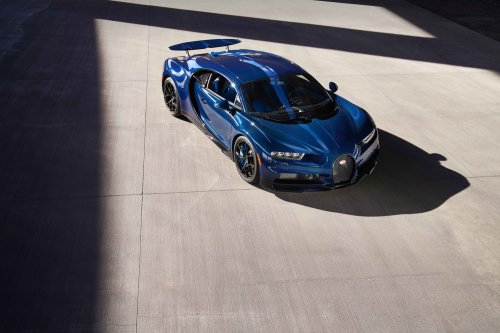
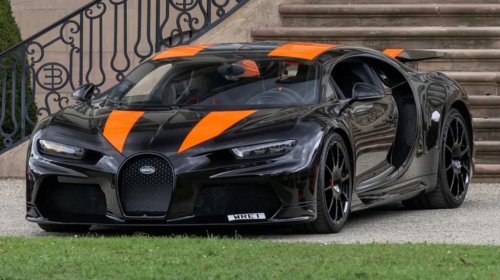
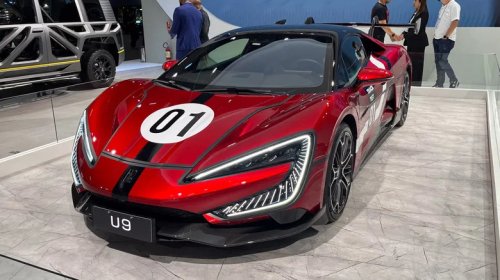
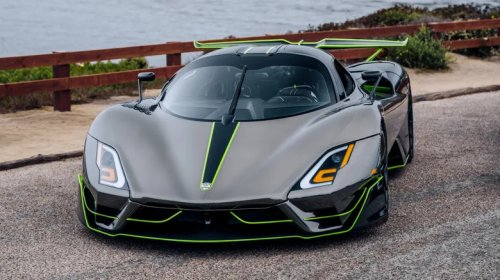
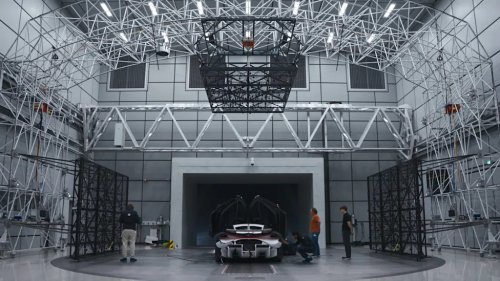
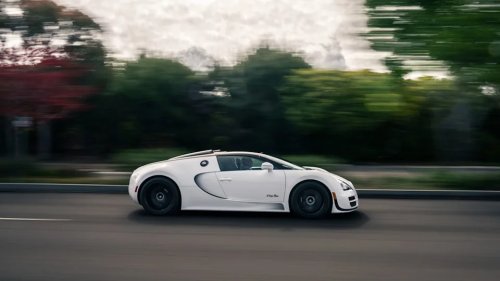
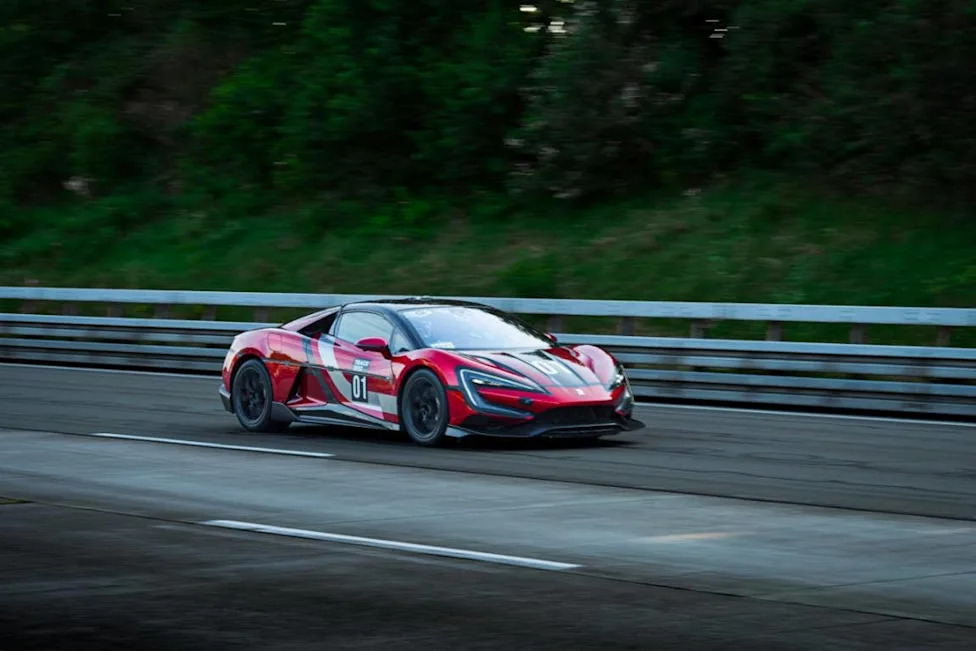
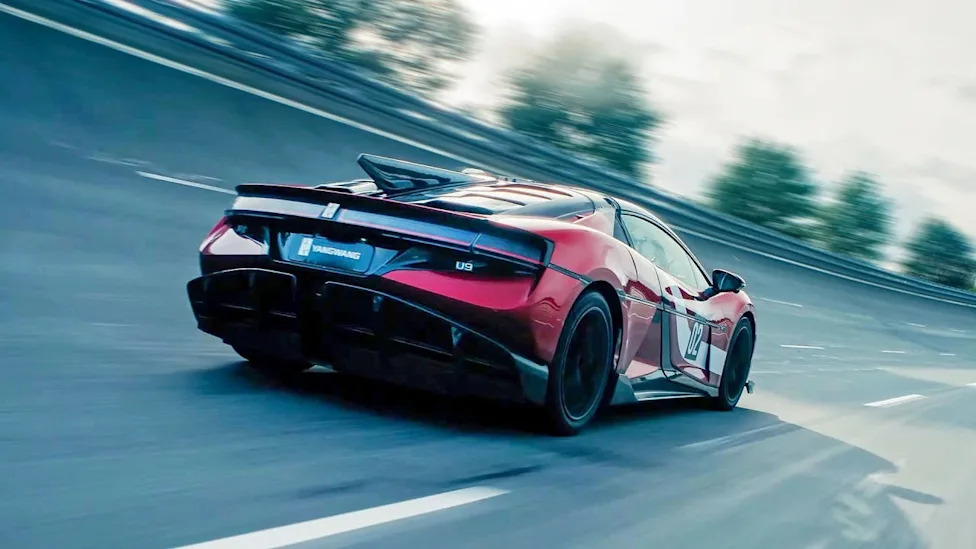
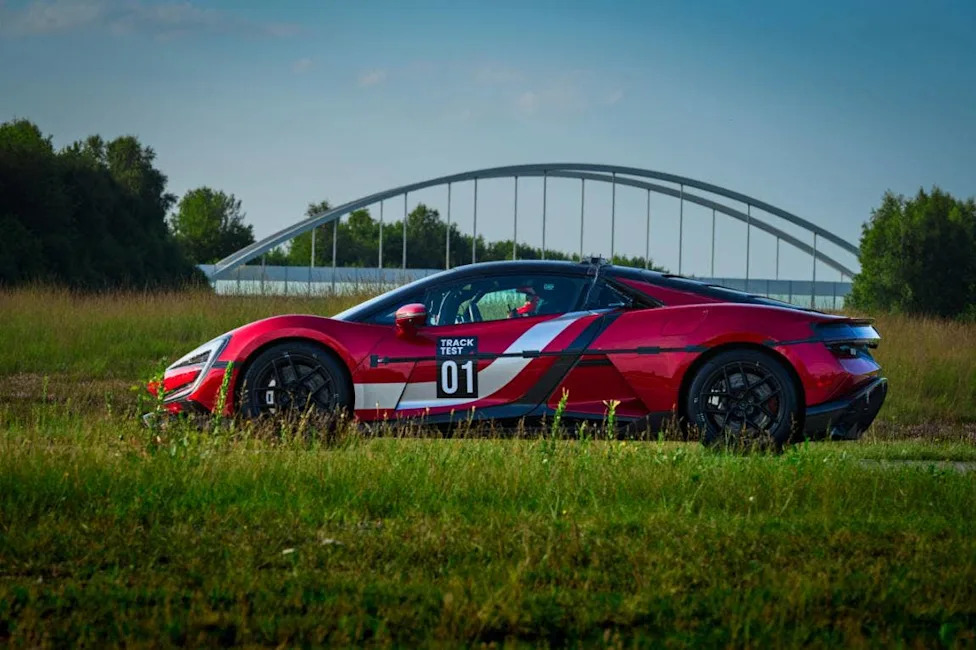
Autoblog and Yahoo may earn commission from links in this article.BYD Vice President Stella Li officially announced at the Goodwood Festival of Speed that the company will attempt to break the 311-mph barrier this November. The high-speed project aims to push the track-ready flagship hypercar past its own prior benchmarks, establishing an absolute speed record for production electric vehicles. The announcement signals a direct challenge to elite legacy brands as the automaker shifts its engineering focus toward capturing the ultimate velocity crown.The upcoming record attempt relies on a heavily revised aerodynamic envelope engineered to withstand the extreme forces of 300-plus-mph travel. This specialized Xtreme variant integrates a comprehensive carbon fiber front splitter, an oversized rear diffuser, and a prominent swan-neck rear wing to maximize downforce. To maintain chassis control during the high-velocity run, an advanced active suspension system continuously counteracts vertical body movements across the vehicle's 5,467-pound frame.BYDTelemetry and Powertrain Details of the Record AttemptThe upcoming attempt follows a previous record run last September where the car achieved 308.3 mph at Germany's Papenburg oval, eclipsing the Bugatti Chiron Super Sport 300+. In a published video conversation alongside brand manager Li Yunfei, Stella Li revealed that telemetry data indicated the initial run did not fully exhaust the vehicle's true mechanical reserves. Data showed that test driver Marc Basseng had roughly 1.5 seconds of full-throttle acceleration remaining before circuit safety protocols required braking for the banking.AdvertisementAdvertisementAchieving the next performance tier requires using an evolved e4 quad-motor powertrain that generates nearly 3,000 horsepower – specifically, 2,977 hp. This configuration delivers an immense power-to-weight ratio of 1,200 hp per ton, kept alive by a specialized lithium iron phosphate Blade Battery pack. The system features proprietary dual-layer cooling designed to sustain intense track sessions with extreme discharge rates of up to 30C.The definitive attempt will take place back at the Automotive Testing Papenburg proving grounds in Germany. The venue features a 7.6-mile high-speed oval with two 2.5-mile straightaways. With the car, driver, and track parameters already pushed to their absolute physical limits, the industry is waiting to see whether these engineering updates can convert that remaining throttle time into a verified 311-mph benchmark.YangwangBending Physics, But Why?This pursuit highlights how rapidly EVs are outpacing conventional performance paradigms and challenging historical infrastructure limitations. Despite my earlier thoughts about EVs becoming too fast, engineering a 5,467-pound battery-electric vehicle to sustain speeds above 300 mph demands massive breakthroughs in thermal management and tire physics. The endeavor moves the hypercar narrative firmly away from European heritage marques toward Chinese technological dominance.Whether the U9 Xtreme secures the definitive 311 mph metric or hits a physical ceiling, BYD has successfully changed the way we look at electric performance. The project establishes clear engineering authority, proving that heavy electric architectures can achieve the sustained high-speed stability once reserved for lightweight internal combustion engines. The upcoming November trials will serve as a critical technical case study for the entire global automotive scene.This story was originally published by Autoblog on Jul 16, 2026, where it first appeared in the News section. Add Autoblog as a Preferred Source by clicking here.



















 +19 others