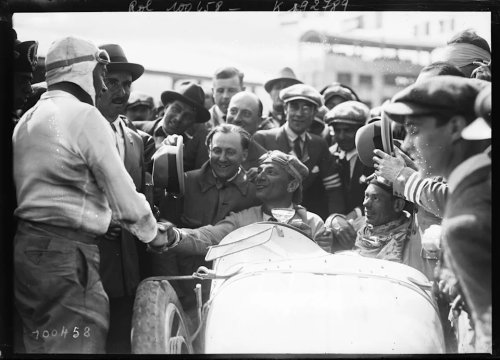
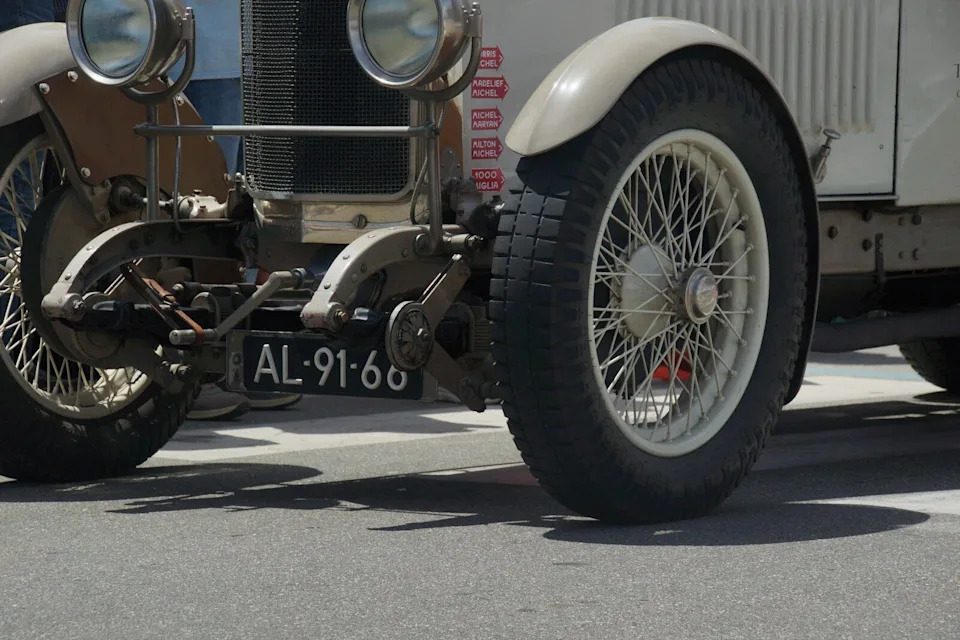
Today in Automotive History: The Car That Killed Isadora Duncan Wasn’t the Bugatti Everyone RemembersBackfire NewsEL PuckettMon, September 14, 2026 at 5:43 PM UTCAdd us on GoogleNinety-nine years ago today, on a cold evening in Nice, a hand-painted silk shawl found the rear wheel of a small French sports car and killed one of the most famous women on earth. Isadora Duncan died on September 14, 1927, and the story has been retold ever since by people who cannot agree on her last words and who almost universally get the car wrong.The legend says Bugatti. The legend is wrong. And the real car matters, because the specific way it was built is the entire reason this happened.What Actually Happened That NightDuncan was 50, an American dancer who had spent two decades detonating the rules of classical ballet, and she was living the tail end of a chaotic, glamorous, frequently broke existence on the French Riviera. That evening she went out with Benoît Falchetto, a French-Italian mechanic who sold and serviced Amilcars in Nice.AdvertisementAdvertisementHer friend Mary Desti told her to wear a cape. It was cold and the car had no roof. Duncan wore a long hand-painted red silk shawl instead, made by the Russian-born artist Roman Chatov. Desti later said she called out a warning about the shawl almost immediately.It was already too late. The shawl went over the side and into the wheel well, wrapped itself around the open spokes and the rear axle, and pulled her out of the car. The New York Times reported that she was hurled from the automobile in what it called an extraordinary manner and was killed instantly by the fall onto the stone pavement. She never got to finish the drive.The famous exit line, Adieu, mes amis. Je vais à la gloire — farewell my friends, I go to glory — is the version that got printed. Desti later told the novelist Glenway Wescott that what Duncan actually said was Je vais à l'amour. I am off to love. Pick whichever one you like; nobody can settle it now.The Car Was an Amilcar CGSSFalchetto's car was an Amilcar CGSS, and if that name means nothing to you, that is precisely why the Bugatti version ran away with the story.AdvertisementAdvertisementAmilcar built light, cheap, genuinely quick voiturettes in the cyclecar tradition — the French answer to the question of how much sports car you can build if you refuse to add weight. The CGSS ran a 1,074cc four-cylinder making about 35 horsepower, on a 91.5-inch wheelbase, with an overall length of 134 inches and a three-speed gearbox. It was produced from 1926 to 1929. That second S stands for surbaissé, meaning lowered, because the CGSS was a dropped version of the existing CGS.Thirty-five horsepower reads like a lawn tractor in 2026. Put it in context: 134 inches long is shorter than a modern Mini, the wheelbase is about that of a golf cart, and the whole car weighed a fraction of anything currently sold with a warranty. With a Cozette supercharger bolted on, an Amilcar won the 1927 Monte Carlo Rally. This was not a novelty. It was a real sports car that happened to be the size of a bathtub.Open spokes, a cycle fender that covers the top of the tire and nothing else, and a rear hub sitting right out in the airstream. Standard practice in 1927.So Why Does Everyone Say Bugatti?Two reasons. The first is that Bugatti is simply the better-sounding noun. A bohemian icon dying in a Bugatti on the Riviera is a finished myth; dying in an Amilcar demo car belonging to the local dealer is just a Tuesday that went horribly wrong.The second reason is the good one, and it is the detail most retellings miss entirely. Falchetto did not stay a shop mechanic. He became an actual Grand Prix driver. In 1932 he won the Nîmes Grand Prix in a Bugatti Type 51, finishing a full lap ahead of René Dreyfus. He founded Ecurie Braillard in 1933, raced through the middle of the decade, stepped away in 1935, and made one last appearance at the 1947 Belgian Grand Prix after the war.AdvertisementAdvertisementSo there is a Bugatti in this story. It just shows up five years late, with a different outcome, driven by the same man. Somewhere between those two facts, a century of retelling quietly welded them together.The Engineering Detail That Did ItSixty-odd open spokes and a proud hub. Beautiful, light, strong — and an unguarded rotating machine bolted to the outside of the car.Here is the part worth actually learning something from. Go look at a 1920s wire wheel. The spokes are open. The hub protrudes. The rear axle and brake hardware sit right there in the breeze behind a cycle fender that covers the top arc of the tire and essentially nothing else. There is no disc, no cover, no spat, no wheel liner, no shroud of any kind.A wheel built like that, turning at road speed, is an unguarded rotating machine. Anything soft that touches it — cloth, hair, a strap, a long shawl — does not bounce off. It gets grabbed by a spoke, wound onto the hub, and pulled in, and the winding happens faster than a human reflex can respond to it.That is not hindsight. Watch what happens to bodywork through the 1930s: full valanced fenders, enclosed rear wheel spats, wheel discs over the spokes. That transition usually gets written up as pure styling, and the streamline look certainly drove a lot of it, but covering the rotating hardware was a genuine functional gain at the same time. The reasoning that put a disc over those spokes is the direct ancestor of the plastic wheel-well liner in your daily driver right now.AdvertisementAdvertisementThe shop-floor version of the rule survives untouched. No loose sleeves, no dangling chain, no hoodie strings, no scarf anywhere near anything that turns. Every machinist learns it on day one, and so does everybody who has ever leaned over a running engine and watched a drawstring swing toward the belts.Why Enthusiasts Still CareBecause the warning still applies, for a start. If you own a pre-war car, a speedster, a roadster with cycle fenders, a bucket T, or anything else with rotating hardware hanging out in the open, the lesson from September 14, 1927 is not a museum curiosity. Tuck it in, zip it up, and do not let anything you are wearing get anywhere near the rear wheels. It is one of the few genuinely practical reasons a lot of owners of open classics look at modern mechanical and safety upgrades for old cars instead of leaving everything factory-correct.It also stands as the original example of how sloppy celebrity car stories get once they start moving. The make changes, the quotes change, the details harden into something that feels true and is not. That pattern has never stopped — it is the same reason a single Instagram post about a celebrity behind the wheel of a classic Ferrari can spin up a week of nonsense, and the same reason old clips of famous people and their cars get recaptioned into complete fiction.And there is the object itself. Car culture assigns enormous weight to the physical hardware present at a famous moment, which is why a scarred helmet can bring $837,500 at auction and why people spend their lives chasing provenance. The same instinct is what keeps private car museums built around pop-culture vehicles alive. A small French voiturette that nobody would otherwise remember is permanently famous because of ninety seconds on a road in Nice.AdvertisementAdvertisementNinety-nine years on, the details that survived are mostly the wrong ones. The Bugatti that was not a Bugatti. The last words nobody can confirm. The one detail actually worth keeping is the boring one: the car was an Amilcar CGSS, its rear wheels were open wire spokes, and the single most useful thing you can do in any old open car is make sure that nothing you are wearing can reach them.




















 +15 others