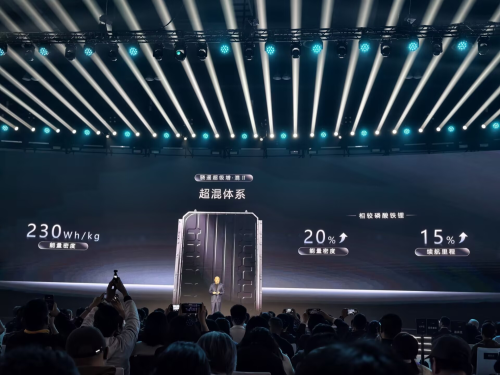
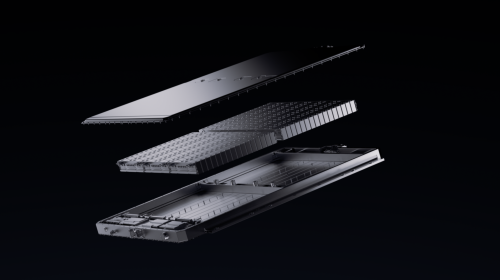
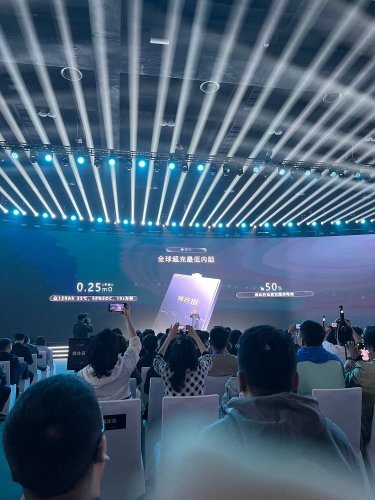
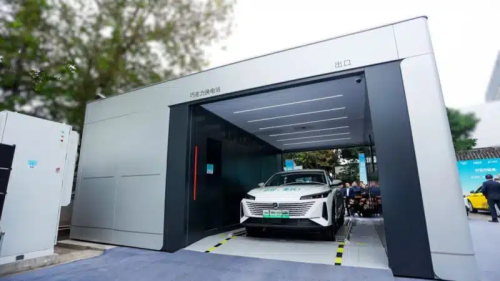
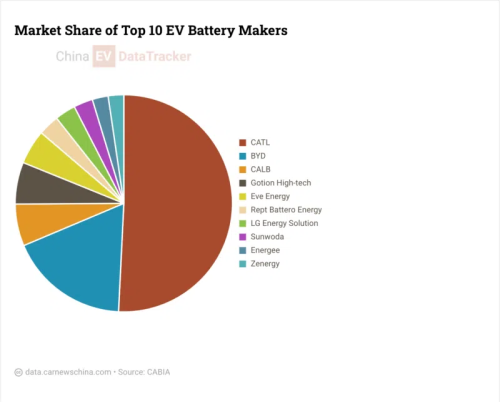
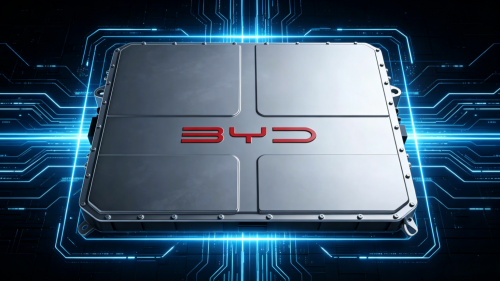
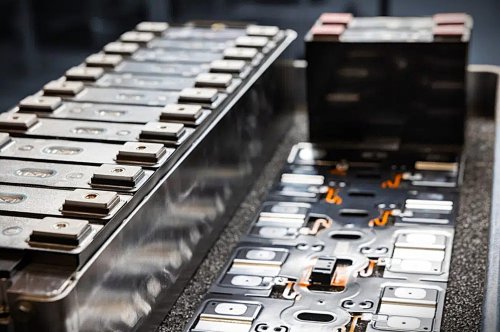
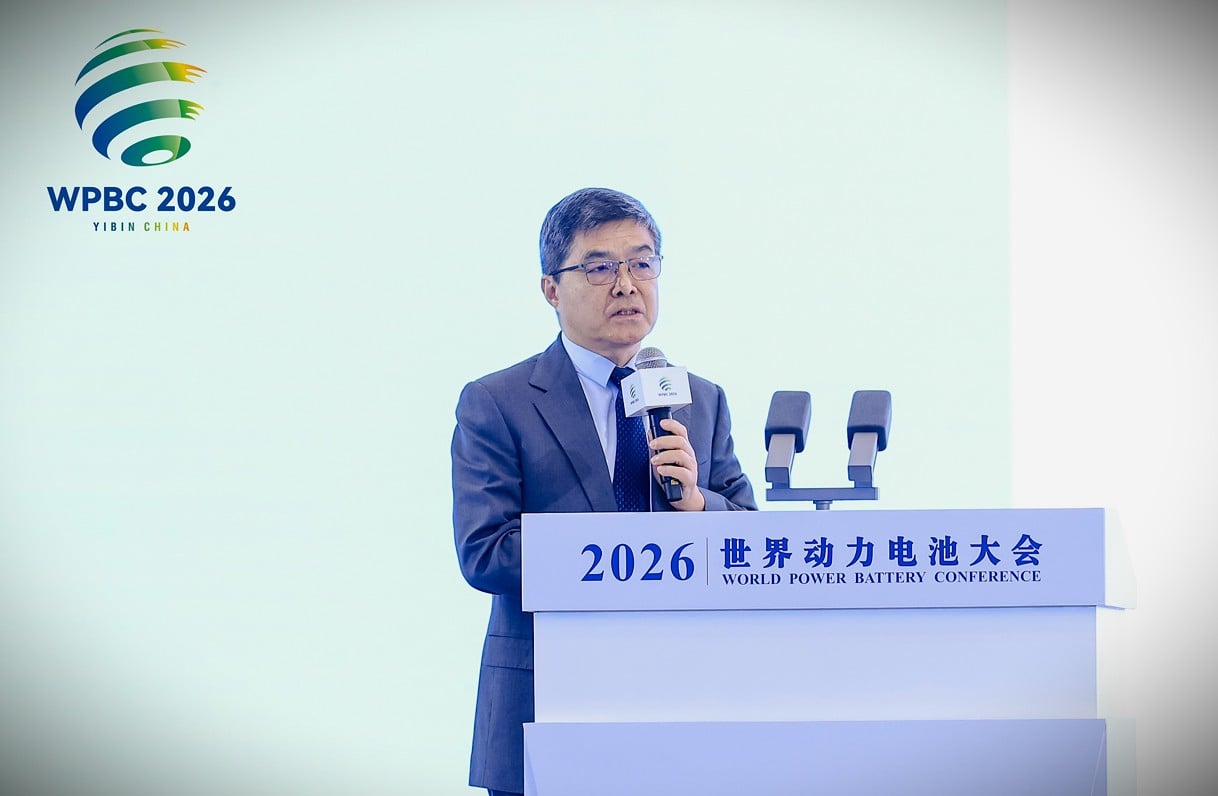
Ouyang Minggao speaking at 2026 World Power Battery Conference. Credit: WPBC Understand China EV’s Market Real-time notifications when critical EV data is released All important data in one place 2,000,000+ data points Become a member China has officially reported a fourth-generation high-compaction lithium iron phosphate (LFP) cell benchmark exceeding 200 Wh/kg, pointing to further energy-density gains from the chemistry without switching to nickel-rich cathode materials. Academician Ouyang Minggao, a Tsinghua University professor and a leading figure in China’s national EV research programs, disclosed the benchmark at the 2026 World Power Battery Conference (WPBC) in Yibin, Sichuan. Separate manufacturing disclosures at the conference highlighted automated prismatic-cell winding speeds reaching 7.5 cells per minute, up from a 4.4 cells-per-minute production-line baseline. The two figures represent separate developments, but together show how China’s battery industry is pursuing both higher cell performance and faster manufacturing throughput. The gen 3 wall: why cell-level density matters again LFP has become the dominant battery chemistry in China’s domestic electric vehicle market. China installed 335.6 GWh of power batteries during the first half of 2026, with LFP accounting for 272.0 GWh, or 81.0% of the total, according to the China EV DataTracker. Much of LFP’s progress over the past several years came from improving cell packaging rather than relying solely on higher cell-level energy density. Cell-to-pack architectures, including CATL’s CTP approach and BYD’s second-generation Blade Battery, reduce inactive material between cells and within battery packs. That strategy can substantially improve pack volumetric utilisation, but returns diminish as packaging becomes more optimised. Further increases in vehicle range or reductions in battery mass increasingly depend on the cells themselves. The importance of the reported >200 Wh/kg benchmark becomes clearer against current production technology. BYD’s Blade 2.0 lineup, for instance, uses different cell formats: its Short Blade version is rated at 160 Wh/kg, while the higher-energy Long Blade reaches up to 210 Wh/kg at the cell level. However, the 210 Wh/kg figure applies primarily to BYD’s flagship long-range applications, leaving cell-level energy density around 200 Wh/kg relatively uncommon across the broader LFP market. That is where high-compaction LFP becomes significant. The reported fourth-generation approach packs more active cathode material into a given volume, with cited material-development figures placing compacted LFP powder density at roughly 2.65–2.80 g/cm³ and volumetric energy density above 430 Wh/L. These are material- and cell-level figures, not equivalent increases in finished battery-pack energy density after accounting for cooling hardware, structural components, electrical connections, and other inactive materials. Higher compaction brings new engineering trade-offs Increasing electrode compaction is not simply a matter of compressing more powder into the same space. Higher density can reduce pore volume and make electrolyte transport through the electrode more difficult, creating a trade-off between volumetric energy density and ion transport. That makes electrode formulation, particle-size distribution, conductive pathways, and manufacturing control increasingly critical as LFP approaches higher compaction levels. The reported >200 Wh/kg figure therefore matters less as an isolated number than as an indication that LFP development is moving beyond pack-level optimisation. It also aligns with earlier assessments by Academician Ouyang that mature liquid battery chemistries will continue to carry the mainstream market while all-solid-state alternatives undergo prolonged development. If the benchmark can be translated into high-volume production, alongside the all-climate thermal management technology disclosed at the same conference to address cold-weather charging and heat management, it could extend the useful energy-density range of a chemistry already dominant in China’s EV market. Even with this milestone, LFP remains below the energy-density ceiling reached by high-nickel ternary cells. CATL’s Qilin battery, for example, has been reported with a high-nickel cell energy density of around 285 Wh/kg, illustrating the remaining physical gap between the two chemistry families even as high-compaction LFP moves past the 200 Wh/kg threshold. Battery manufacturing is moving faster too The WPBC disclosures also highlighted automated winding equipment reaching 7.5 prismatic cells per minute, compared with a cited 4.4 cells-per-minute benchmark. That represents an increase of about 70.5%. Higher winding speed can reduce individual cell cycle time, but overall line throughput still depends on the full manufacturing process. Formation, ageing, inspection, and assembly can become downstream bottlenecks, while yield and quality control remain critical as production speeds rise. The 7.5-cell/min figure is therefore best understood as a winding-process benchmark rather than a direct measure of finished factory output. LFP’s cost and regulatory position The push for higher-density LFP comes as the chemistry already benefits from a mature Chinese supply chain and broad vehicle adoption. Its continued development gives automakers another route to improve energy density without automatically moving to nickel-rich ternary cathodes. China’s revised GB 38031-2025 traction-battery safety standard took effect on July 1, 2026, replacing GB 38031-2020. The mandatory standard sets updated safety requirements for electric-vehicle traction batteries and is now the applicable national standard. That regulatory environment reinforces the need to balance energy density with safety, durability, and manufacturing consistency rather than pursuing a single headline specification. It does not, however, establish a specific advantage for LFP over other chemistries. The reported fourth-generation high-compaction LFP benchmark therefore does not mark the end of conventional lithium-ion development. Instead, it shows where the next gains are being pursued: Chinese battery developers are pushing the cell’s material and manufacturing limits while retaining LFP’s established chemistry and supply-chain advantages. Most important news in your inbox. Recaps · scheduled All you need, in one email. Instant alerts · real-time Ping me when an article goes live. 0 of 27 topics selected Bundle into one email per day — instead of one email per article No spam · Unsubscribe with one click · Change settings anytime



















 +38 others