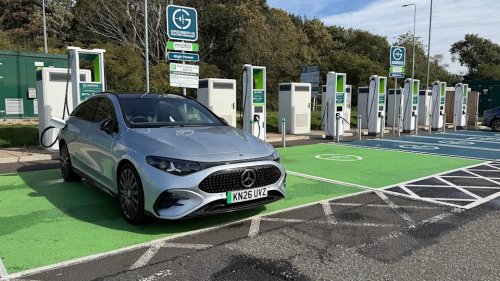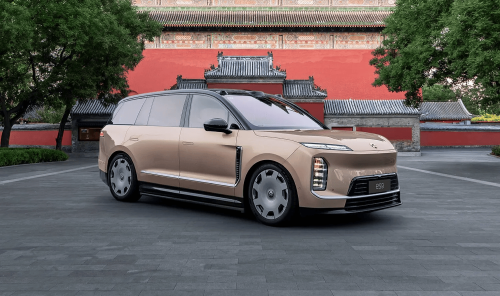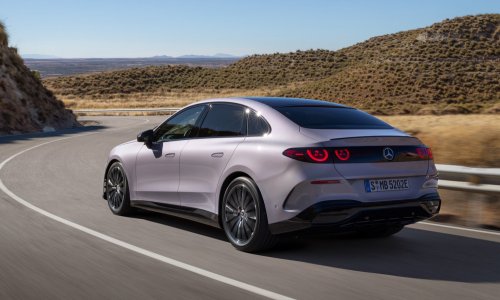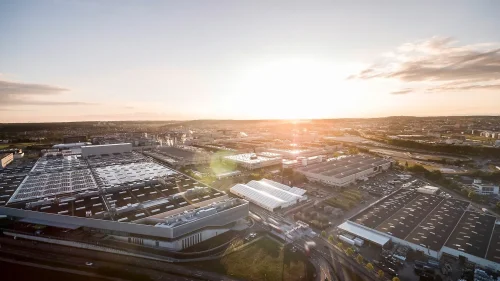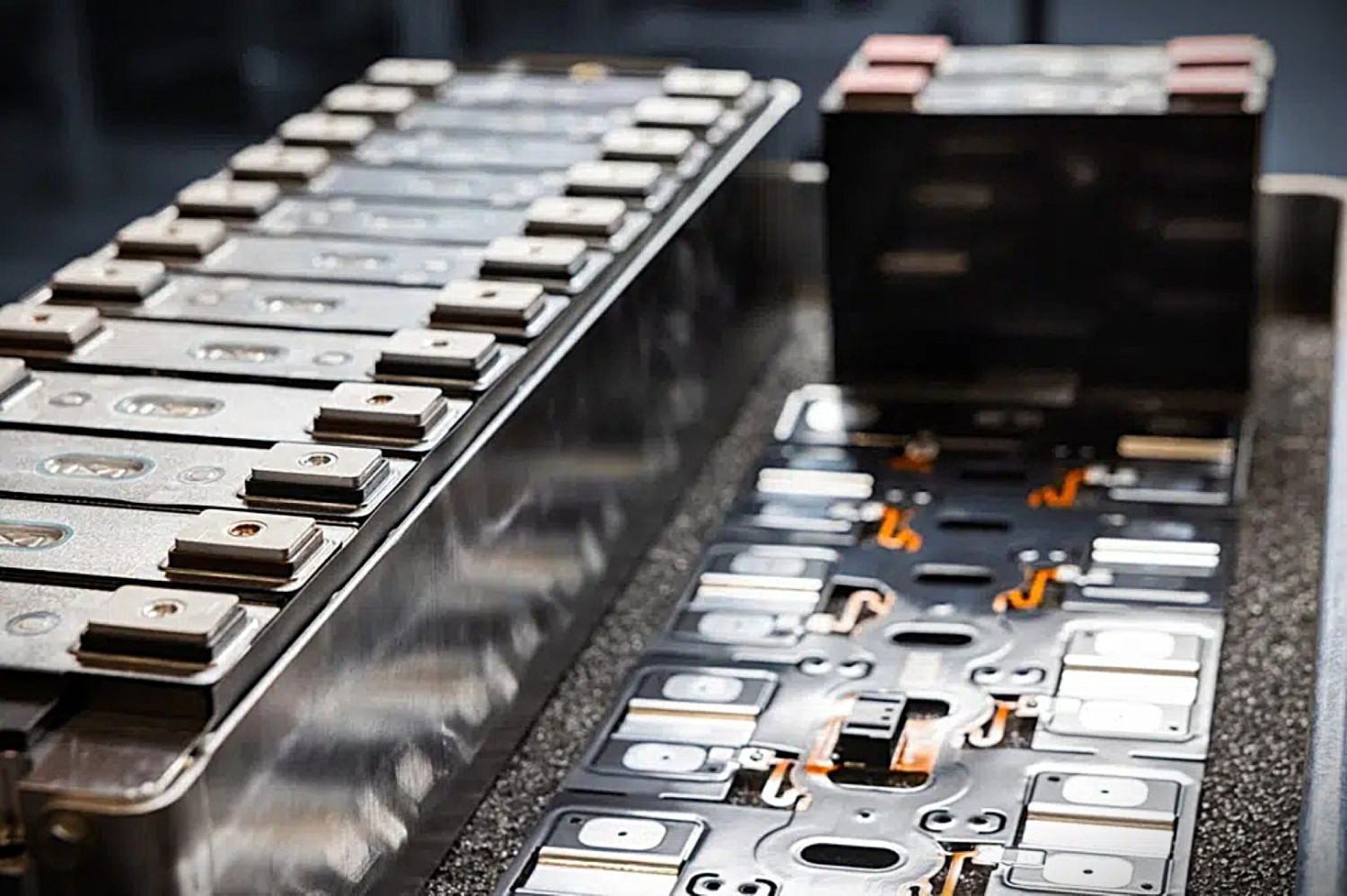



















ProLogium begins 381 Wh/kg cell production, but factory bottlenecks keep carmakers waiting. Credit: Batteries International Understand China EV’s Market Real-time notifications when critical EV data is released All important data in one place 2,000,000+ data points Become a member ProLogium Technology has started mass production of its Generation 3.5 Lithium Ceramic Battery (LCB), bringing a 381 Wh/kg solid-state cell into commercial production and highlighting one of the technology’s potential advantages for EVs: storing more energy within a given battery weight and volume. The company announced the milestone on September 2, reporting 381 Wh/kg gravimetric and 903 Wh/L volumetric energy density from its 185.4 Ah large-format cell. ProLogium has a technology cooperation agreement with Mercedes-Benz and has also worked with Chinese automakers including Nio and Aiways on solid-state battery development and sample-vehicle projects. TÜV Rheinland inspected the energy-density figures, while UL Solutions tested the cell under China’s GB/T 43568-2026 methodology for all-solid-state batteries. Cell-level figures do not settle pack-level questions. ProLogium still needs to demonstrate that the technology can be manufactured at competitive cost, yield and volume for high-voltage traction batteries. GB/T 43568 puts the solid-state claim to the test Under GB/T 43568-2026, UL Solutions subjected the cell to six hours under continuous vacuum at 120°C. ProLogium said it recorded less than 0.05% mass loss, below the standard’s 0.5% threshold, qualifying the cell as all-solid-state under the methodology. The standard adds a measurable boundary to an ongoing terminology fight across China’s EV industry, which we detailed after new national standards took effect in July 2026 to distinguish solid-state architectures from batteries that retain liquid electrolyte. That regulatory baseline follows earlier domestic disputes, including SAIC-backed IM Motors promoting its QingTao-developed pack as a “Light-Year Solid-State” battery despite retaining liquid electrolyte. The distinction matters because “solid-state” is increasingly applied to battery technologies with different architectures. ProLogium’s result gives its classification an independently tested basis under China’s methodology. The company also says China has submitted the standard to the International Electrotechnical Commission (IEC) as a reference for international standardisation. 381 Wh/kg meets a 0.5 GWh factory ProLogium’s Gen 3.5 cell uses its Logithium large-format pouch architecture, combining a ceramic separator with an integrated edge-frame structure for sealing and insulation. The company describes its Taoyuan operation as a Giga-level manufacturing facility. Its initial operational capacity, however, is 0.5 GWh, with plans to expand toward 1–2 GWh. At 0.5 GWh, annual output would theoretically equal about 6,250 battery packs with an 80 kWh capacity. That demonstrates a production program, but it remains small compared with the manufacturing capacity required for mainstream passenger-EV deployment. The scale of the operation therefore matters almost as much as the cell’s headline energy density. 2.4 million cells needs context ProLogium says cumulative LCB shipments have exceeded 2.4 million cells across consumer, speciality and automotive applications. The figure should not be interpreted as 2.4 million high-voltage EV traction cells. Its disclosed automotive business includes supply to a U.S. automotive audio-system company for vehicles produced by a Japanese automaker in North America, with cumulative deliveries exceeding 900,000 cells. ProLogium also reports around 10,000 automotive battery samples. That provides evidence of commercial manufacturing and automotive qualification activity, but not of a high-volume passenger-EV traction program. Energy density meets the cost wall At 381 Wh/kg, Gen 3.5 sits above the energy density of many conventional automotive lithium-ion cells. Its 903 Wh/L volumetric figure is also relevant because both battery weight and available installation space constrain vehicle design. Cell figures do not translate directly into pack performance. Structural components, cooling systems, electrical protection and battery-management hardware add mass and volume, so the final vehicle-level gain depends on the complete battery system. Cost is another hurdle. Mass-market LFP cells in China’s highly competitive battery market have been reported at roughly 300–400 yuan (42–55 USD) per kWh at the cell level. ProLogium has not disclosed a directly comparable Gen 3.5 production cost, so the precise cost gap remains unclear. The broader solid-state race is also divided between different material and manufacturing strategies. ProLogium has pursued a ceramic-based architecture, while major battery and automotive groups in China and Japan are developing alternative approaches, including sulfide-based systems with distinct interface and processing trade-offs. From Taoyuan to Dunkirk: the scaling test ProLogium is expanding its production footprint beyond Taiwan. Its planned battery factory in Dunkirk, France, is designed for an initial 4 GWh annual production phase and a maximum design capacity of 44 GWh. The first phase is expected to ramp progressively toward 2030. If the French project proceeds as disclosed, its initial production phase alone would be eight times the current 0.5 GWh Taoyuan capacity. For now, Gen 3.5 has crossed an important threshold: the company says its 185.4 Ah cell is in mass production, rather than remaining solely at the development or demonstration stage. The harder test is whether ProLogium can turn that cell-level result into high-volume automotive batteries with competitive cost, yield, durability and pack-level performance. Until that happens, 381 Wh/kg remains a high cell-level specification, not proof of a smaller or lighter EV battery pack in the showroom. Most important news in your inbox. Recaps · scheduled All you need, in one email. Instant alerts · real-time Ping me when an article goes live. 0 of 27 topics selected Bundle into one email per day — instead of one email per article No spam · Unsubscribe with one click · Change settings anytime