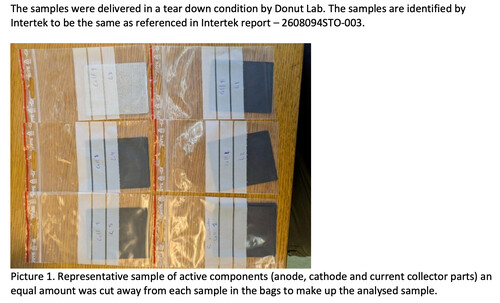
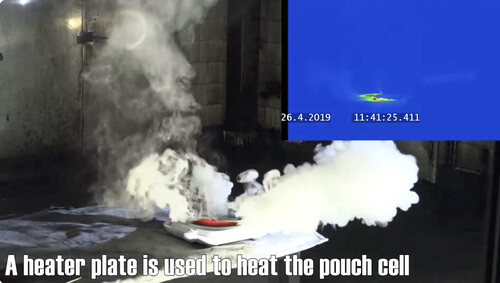
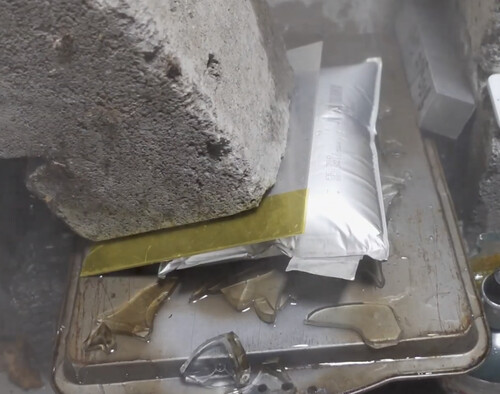
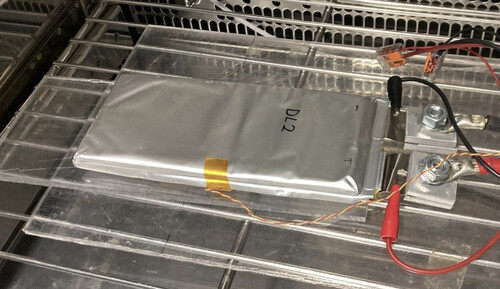
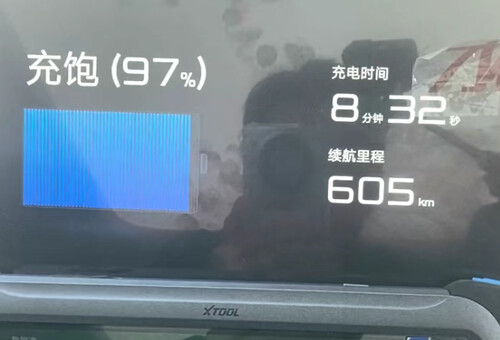
Donut Lab has published a new independent test claiming its battery reached an energy density of 409 Wh/kg and 805 Wh/L, the first energy-density figure the company has put on record after months of scrutiny. But the number lands against a promise the company has already broken: that this “solid-state” cell was in production and ready to power a production EV by the end of Q1 2026. It isn’t, and it wasn’t. The claim was never the number — it was “production ready” When Donut Lab unveiled its battery at CES in January, the headline wasn’t 409 Wh/kg. It was readiness. The company called it “the world’s first solid state battery that is ready for use in OEM vehicle manufacturing” and said Verge Motorcycles would be “the world’s first production vehicle to feature this breakthrough technology,” with “first deliveries in Q1 2026.” That claim — a solid-state cell not five years out, but shipping in a real vehicle within months — is the only reason we covered it. We’ve been burned enough times by battery breakthrough announcements that never leave the lab. Donut Lab’s pitch was different specifically because it wasn’t a lab claim. It was a production claim. Advertisement - scroll for more content We are now in September. There is no production EV running Donut Lab’s battery on the road. The company’s own internal videos, surfaced in our June investigation, showed the “production” motorcycles were pre-production units being used to refine the manufacturing process. CEO Marko Lehtimäki later admitted in Finnish media that the cell being tested “is not even the cell that’s going to be shipped to customers.” What the new VTT test actually measured The new report comes from VTT Technical Research Centre, Finland’s respected national lab, and it’s a legitimate measurement. VTT weighed and measured a single cell — a “Donut Battery V1.5,” designated DL6 — and discharged it across its full 2.3–4.25V range at a 0.1C rate at 25°C. Energy divided by mass gave 409.3 Wh/kg; energy divided by volume gave 804.7 Wh/L. “This was a fairly straightforward test,” said Donut Lab CTO Ville Piippo. He’s right — measuring energy density is trivial, which is exactly why its absence from the company’s previous five VTT tests was so conspicuous. The problem is what the number does not establish. VTT-CR-00391-26_Energy_Density_TestDownload A high energy density is not proof of solid-state — or of anything new 409 Wh/kg is a strong figure, but it does not require solid-state chemistry, and it does not distinguish Donut Lab’s cell from advanced lithium-ion. Amprius already sells a conventional liquid-electrolyte, silicon-anode lithium-ion cell rated at 450 Wh/kg. Top commercial high-nickel cells sit around 250–300 Wh/kg, and solid-state pilots from QuantumScape, Toyota, and Samsung SDI target 350–450 Wh/kg. In other words, 409 Wh/kg sits comfortably inside what good lithium-ion already does. The result is also a best case. The earlier VTT capacity test discharged at 1C down to 2.7V. This one discharges 10 times slower and 0.4V deeper — both choices that maximize the extractable energy and inflate the density figure. And it’s a different cell again. VTT’s own report describes the DL6 as “an energy-optimised variant of the V1 cell.” So the record now includes at least three cells: the V1 that was independently pegged as lithium-ion, the V1.5 that hit 409 Wh/kg, and a separate “next-generation” cell examined by Intertek. Insider Lauri Peltola, the former commercial chief of manufacturing partner Nordic Nano, alleged in an April criminal complaint that the independently tested battery was “an old generation that Donut and its partners gave up on.” Donut Lab denies wrongdoing. Still no cycle life, and a “proof” that proves less than it claims Six independent tests in, there is still zero data on Donut Lab’s most extraordinary claim: a design life of up to 100,000 cycles. This test ran two capacity cycles and stopped. Donut Lab’s cleanest new argument is that Intertek confirmed a bipolar internal structure, and that “a bipolar cell structure is possible only with a solid electrolyte.” But what Intertek reportedly confirmed is the structure, series-connected layers with split metal-foil electrodes, not that the electrolyte is solid. The jump from “bipolar” to “therefore solid-state” is Donut Lab’s inference, and it’s made on a different cell than the one that hit 409 Wh/kg. If that’s hard to follow, it might be on purpose. A separate nail-penetration test showing the cell stayed stable is a real safety result, but safety is not proof of chemistry either — plenty of lithium-ion and LFP cells pass it. VTT, for its part, makes no chemistry determination at all. The word “solid-state” appears in the report only as the customer’s project name. Electrek’s Take Let’s be clear about what Donut Lab actually promised, because the company keeps moving the goalpost to wherever the latest test happens to land. The promise was not “we can hit 400 Wh/kg in a lab.” The promise was a solid-state battery in a production vehicle by the end of Q1 2026. That was the whole story, and it’s the only reason a healthily skeptical EV outlet gave a battery startup the benefit of the doubt in the first place. That promise is now falsified — not by an investigation, but by the calendar. It’s September. There is no production EV on the road with this battery. What we have instead is a steady drip of individual lab tests, each one measuring a single cell, each one on a slightly different cell than the last, and each one carefully avoiding the two questions that actually matter: is it genuinely solid-state, and does it survive real cycling? A 409 Wh/kg number that any advanced lithium-ion maker could match does not answer either. Our last investigation laid out in detail how Donut Lab exaggerated the readiness of its cell to reach production. These results don’t change that, they reinforce it. I’m sorry, Donut Lab, but the burden of proof has flipped. A company that promised production vehicles and delivered a press release doesn’t get to keep the benefit of the doubt. Show us the cell that ships, in the vehicle it ships in, cycling the way you claim, or stop calling it ready. Stay up to date with the latest content by subscribing to Electrek on Google News. You’re reading Electrek— experts who break news about Tesla, electric vehicles, and green energy, day after day. Be sure to check out our homepage for all the latest news, and follow Electrek on Twitter, Facebook, and LinkedIn to stay in the loop. Don’t know where to start? Check out our YouTube channel for the latest reviews.