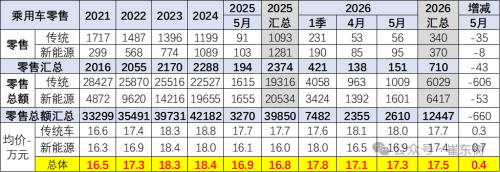
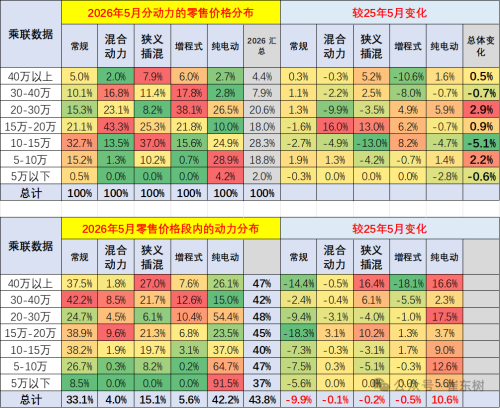
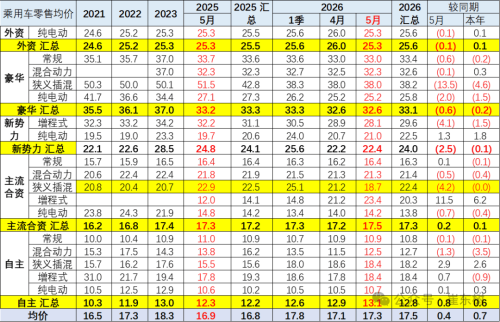
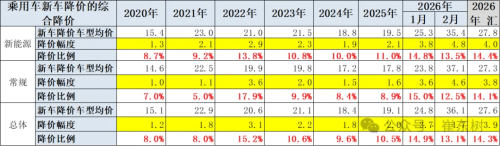
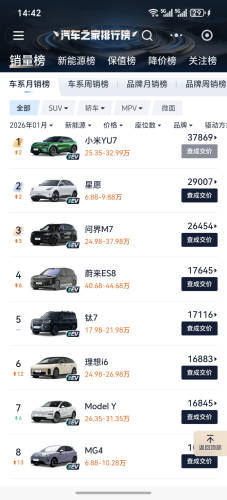
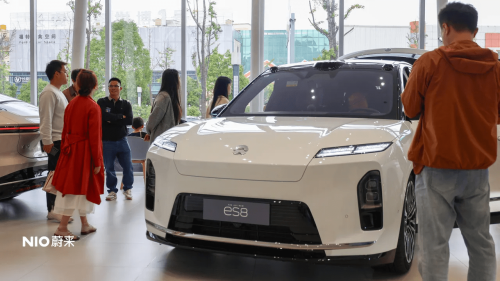
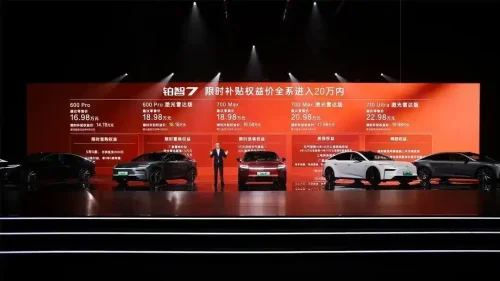
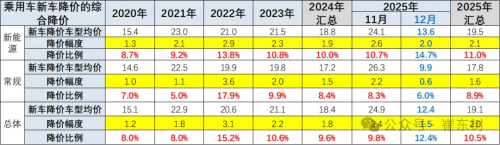
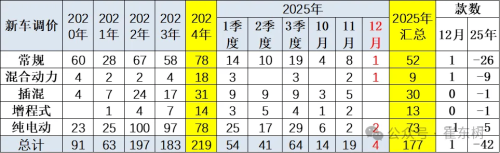
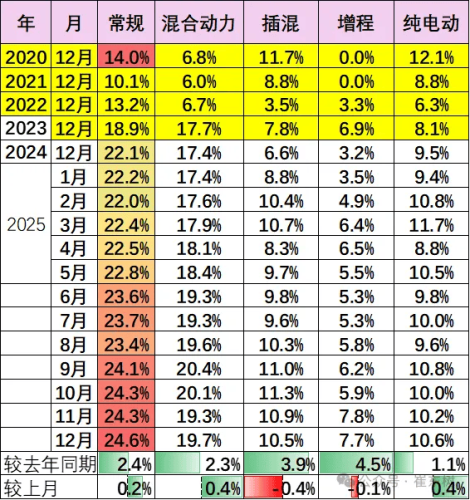
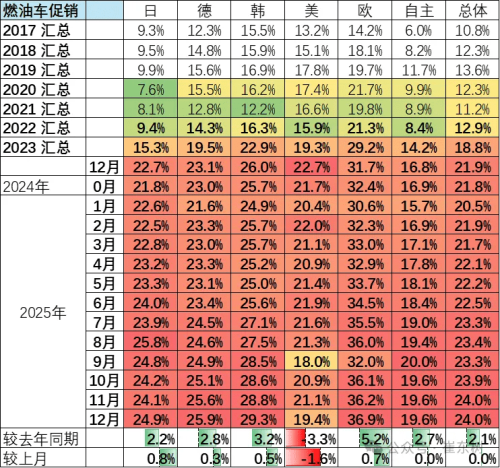
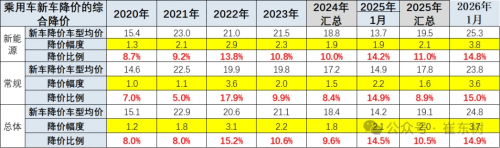
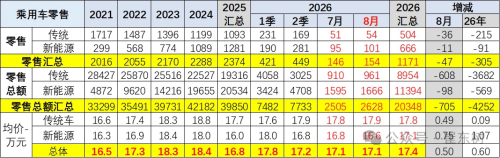
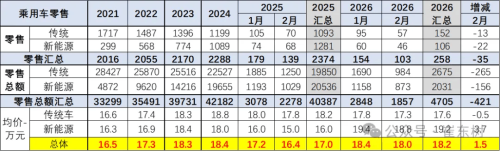
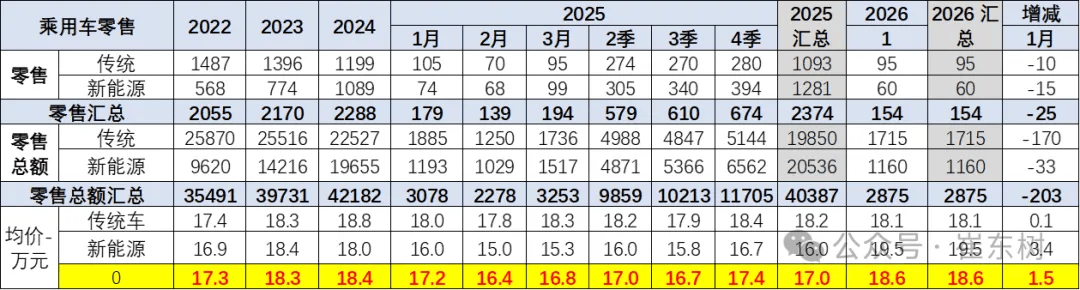
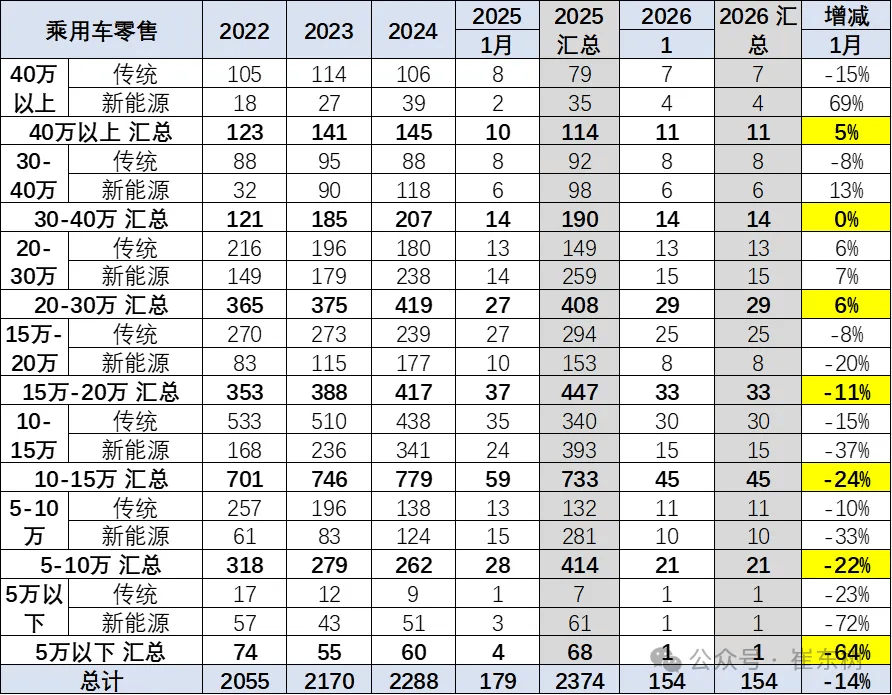
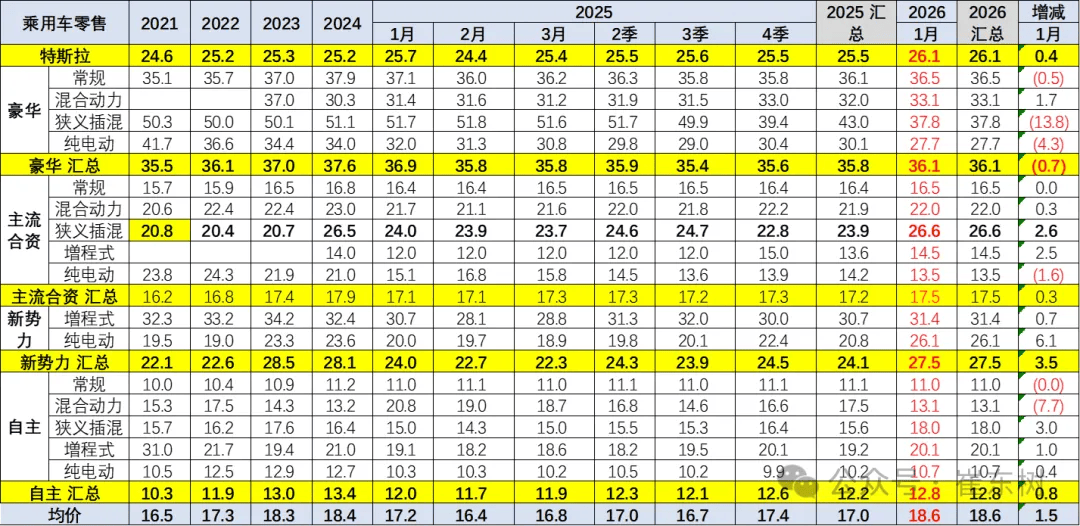
High-end luxury NEVs have strengthened their price competitiveness, while emerging EV brands showed the most pronounced price shifts. Latest data released by Cui Dongshu, secretary general of the China Passenger Car Association, show that the average selling price of passenger vehicles rose to RMB 186,000 ($26,900) in January 2026, up RMB 14,000 ($2,026) year on year. The average price of new energy passenger vehicles reached RMB 195,000 ($28,200), up RMB 35,000 ($5,100), marking a “volume down, price up” trend. Retail price data for passenger vehicles from 2022 to 2026 In recent years, the average price of NEVs has generally declined. The average stood at RMB 184,000 ($26,600) in 2023, fell to RMB 180,000 ($26,000) in 2024, and dropped further to RMB 160,000 ($23,100) in 2025. The earlier decline was driven by rapid growth in mid- and low-priced models and intensifying competition. Entering 2026, however, the rebound reflects a shift in sales structure rather than straightforward price increases. By price band, models priced above RMB 150,000 ($21,700) gained share in January. Retail sales in the RMB 200,000–300,000 ($28,900–$43,400) range accounted for 18.6% of the total, while vehicles priced above RMB 400,000 ($57,800) also expanded their share. In contrast, sales of vehicles priced below RMB 50,000 ($7,200) plunged 64% year on year, underscoring rapid contraction in the low-end segment. By powertrain, extended-range and hybrid models recorded the highest average prices, while battery electric vehicles posted the lowest. In January, sales of fuel and hybrid vehicles stabilized, while overall new energy vehicle growth slowed sequentially, mechanically lifting the statistical average. Segment-wise, battery electric vehicles maintained relatively high retail volumes. Plug-in hybrids have delivered sustained outperformance in recent years, while extended-range vehicles continued to grow moderately. Traditional internal combustion engine vehicle sales remained under pressure. At the brand level, the average price of luxury vehicles stood at RMB 361,000 (about $52,200), down RMB 7,000 ($1,000) year on year. Joint-venture brands averaged RMB 175,000 ($25,300), up RMB 3,000 ($430). EV startups averaged RMB 275,000 ($39,800), up RMB 35,000 ($5,100). Domestic independent brands averaged RMB128,000 (about $18,500), up RMB 8,000 (about $1,200). Overall, high-end luxury new energy vehicles have strengthened their price competitiveness. Emerging EV brands showed the most pronounced price shifts, reflecting product portfolios increasingly concentrated in higher price brackets. The battery electric segment continues to gain momentum, steadily diverting demand from traditional fuel vehicles.



















 +6 others