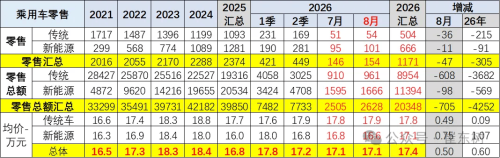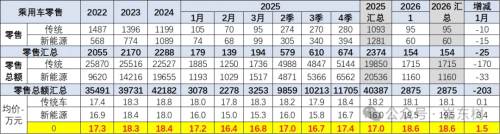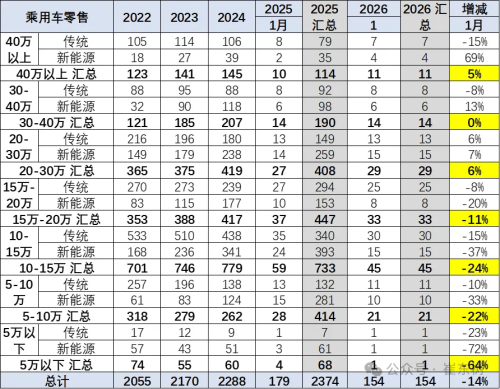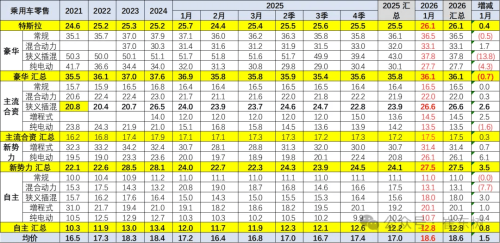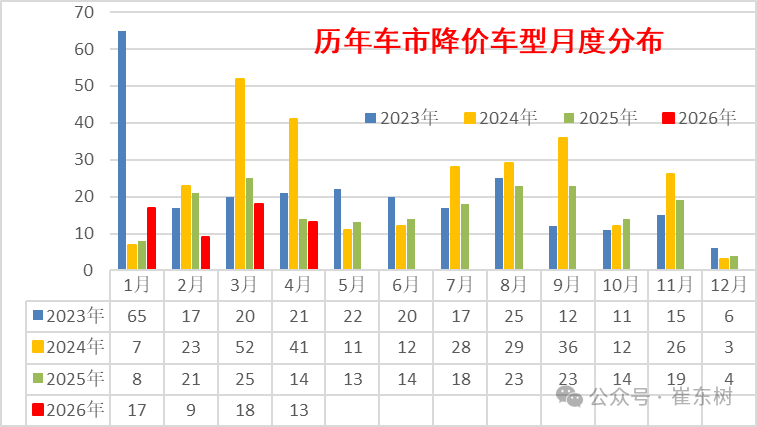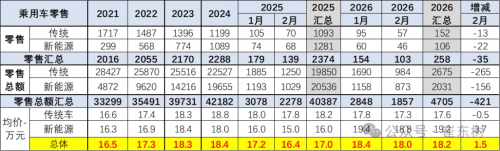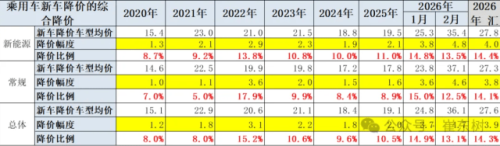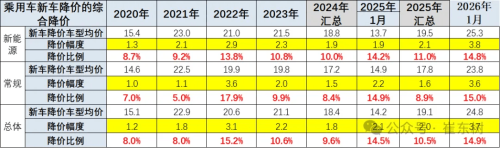
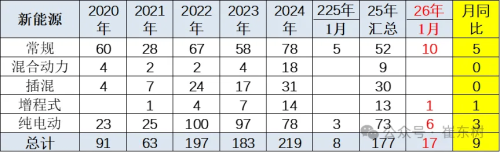
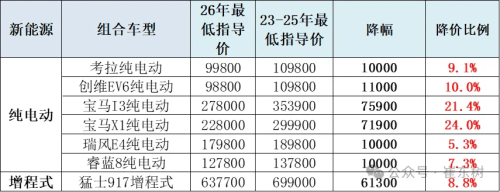
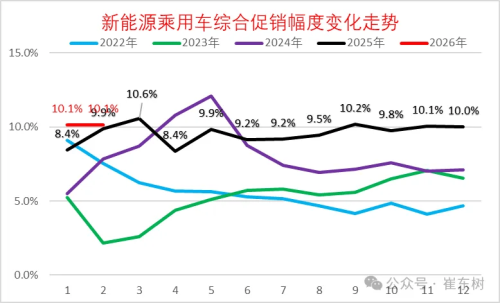



















A total of 17 passenger car models cut their official prices in January, up sharply from December. Top EV cuts included the BMW X1 EV, which trimmed its price by 24%. Latest data from Cui Dongshu, secretary general of the China Passenger Car Association, show that in January 2026, the average transaction price cut for new energy vehicles reached RMB 253,000 ($36,460). Its arithmetic average reduction reached RMB 38,000 ($5,476), representing a 14.8% drop—among the higher readings in the past year. Average price reductions for new passenger vehicles in China from 2020 to Jan 2026 In January, the overall new-car market saw an average guiding price for passenger vehicles of RMB 248,000 ($35,740), with an average reduction of RMB 37,000 ($5,330), equivalent to a 14.9% cut. Conventional internal combustion engine (ICE) vehicles had an average price of RMB 238,000 ($34,300), with an average reduction of RMB 36,000 ($5,188), or roughly 15%. In terms of model counts, 17 passenger car models saw downward adjustments to their official prices in January 2026, nine more than in the same period last year and significantly more than the four models in December 2025. New vehicle price adjustments for different vehicle types from 2020 to 2026 Of these, 10 were ICE models, up five from the prior year; one was an extended-range hybrid, up one; there were no standard hybrid models; and six were battery electric vehicles, up three from the year-ago month. Among EVs, the BMW X1 pure electric version cut its lowest suggested retail price in January from around RMB 299,900 ($43,220) to RMB 228,000 ($32,860), a 24% reduction—the largest EV price cut recorded for the month. Earlier reports from ChinaEV Home noted that BMW China began adjusting suggested retail prices for 31 key models from 2026, and this cut is regarded as part of that broader pricing strategy. NEV price cut percentages in Jan 2026 Among extended-range models, the Dongfeng M-Hero 917 ER SUV reduced its selling price by RMB 61,300 ($8,530) in January, an 8.8% cut. Compared with direct price reductions, promotional activity was relatively moderate. The promotional rate for NEVs in January rose to 10.1%, a mid-to-high level, up 1.7 percentage points year on year and only 0.1 percentage points month on month. Promotional discounts of China’s NEVs from 2022 to 2026 Over the past few months, promotional activity has remained orderly. With cautious and moderate price cuts, the promotional ecosystem has essentially stabilized at a normal high level. Overall, since 2025, passenger car promotional and price-cutting behavior has gradually returned to a more rational pattern. Following the reinstatement of the NEV purchase tax, official guiding prices have again become an important determinant of consumers’ actual acquisition costs, forcing automakers to adopt more cautious pricing and adjustment strategies.