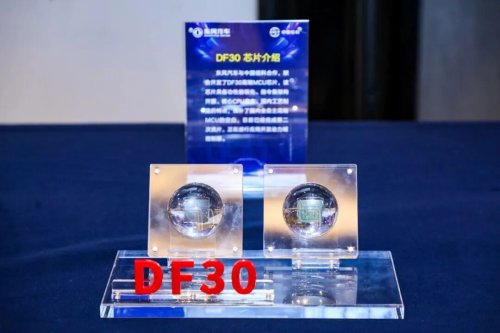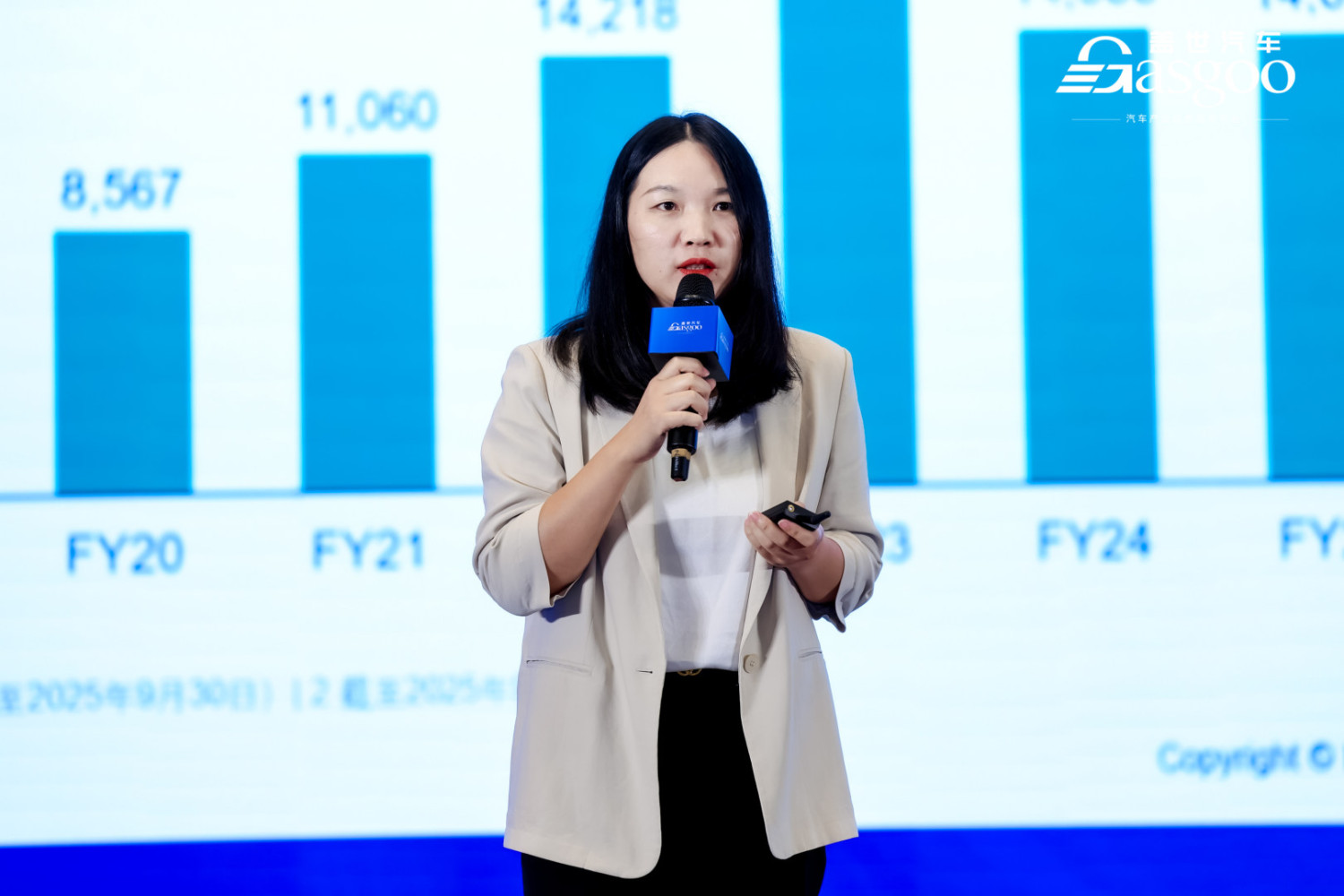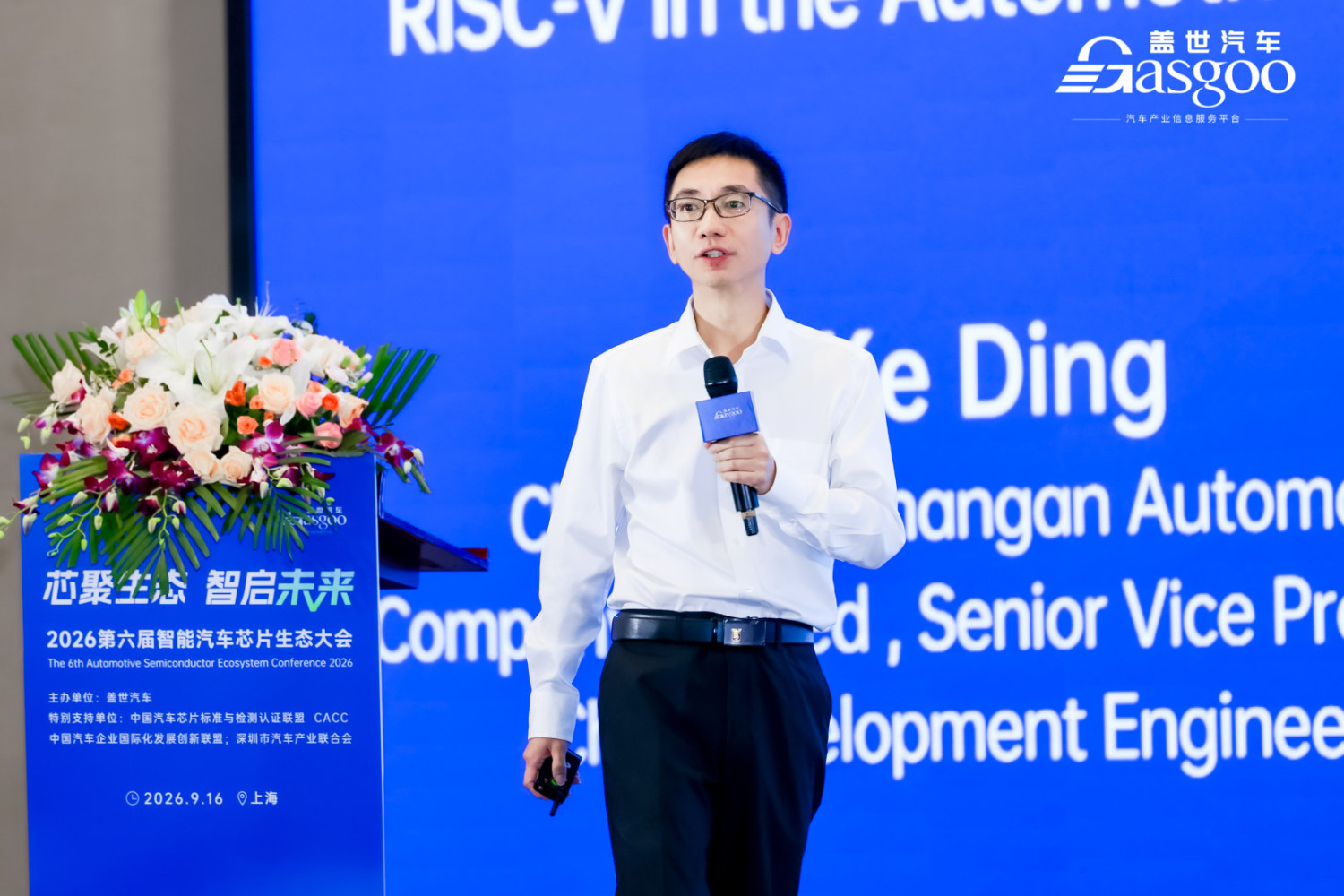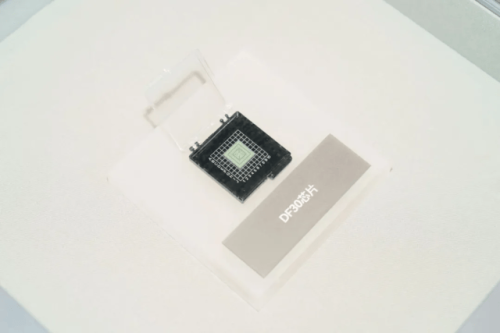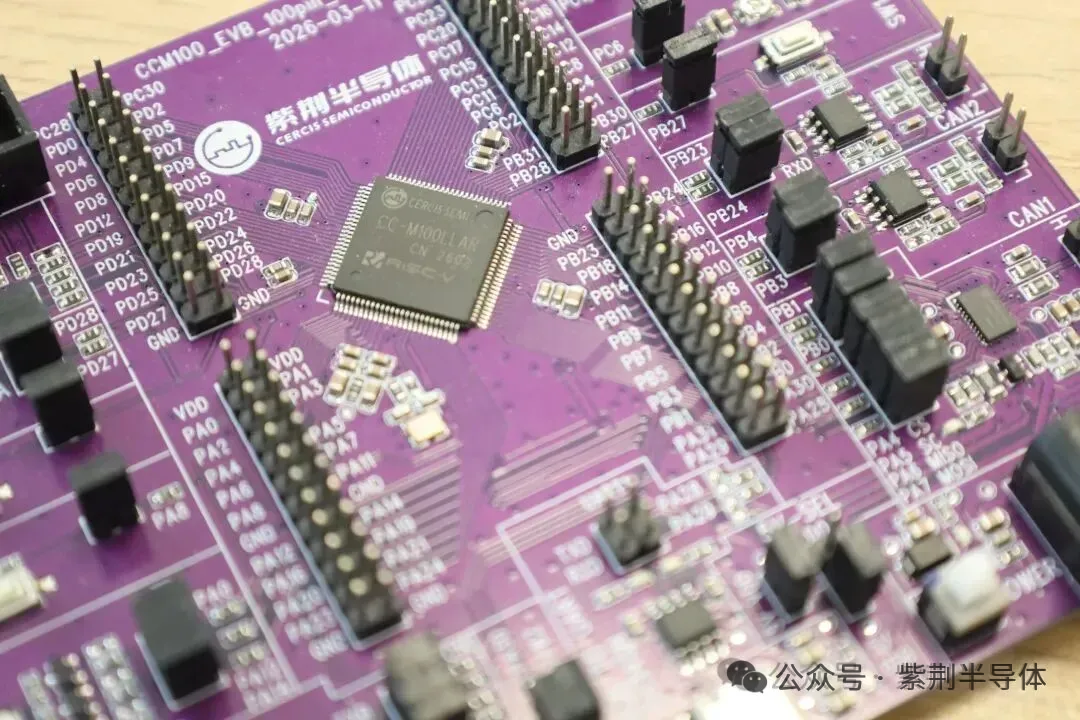



















Gasgoo Munich- Cercis Semiconductor has crossed the 10-million-unit threshold for auto-grade chip shipments.Incubated by Great Wall Motor, the company has pushed the open-source RISC-V instruction set onto mass-production lines. Yet beyond the 10-million milestone, a bigger question looms: in an automotive chip market long dominated by ARM, how far has RISC-V actually gotten?Closing the RISC-V Mass-Production LoopThe standout among those shipments is the M100 — China's first auto-grade MCU built on an open-source RISC-V core. It entered mass production and hit the road on Dec. 18, 2025, handling body-control tasks like combination headlights, ambient lighting, and combination switches.Image source: Cercis SemiconductorAt the recent 6th Smart Vehicle Chip Ecosystem Conference, Xu Xingkui — chief strategy officer and assistant to the president at Great Wall Motor Hunan Cercis Semiconductor — noted that vehicles are morphing from mechanical endpoints into mobile smart terminals. A single car now packs roughly a thousand chips, and their share of total vehicle cost has climbed from around 5% to 20%.The industry, however, has relied on ARM for so long that a de facto closed ecosystem took hold. Xu likened the dynamic to renting versus building: locked into an established instruction set, companies can only "decorate the interior." Open-source RISC-V, by contrast, lets them "build the house themselves."Domestic chips, meanwhile, have long struggled to win spots on the assembly line. That lack of trust only shrinks their application opportunities, creating a vicious cycle.Collaboration models are shifting, too. The old linear chain — automaker to Tier 1 to chipmaker — is giving way to a mesh, as automakers step in to co-design chips directly with silicon vendors around specific scenarios and metrics. Xu sees an opening for RISC-V: carmakers want genuine differentiation, not just incremental tweaks on someone else's instruction set.Cercis Semiconductor's approach works on two levels. On the technical side, the company says it has self-developed more than 15 core IPs and can handle everything from design and simulation to tape-out and mass production. It has built a software toolchain spanning MCAL, low-level drivers, real-time operating systems, and development environments — and secured certifications including ISO 26262 ASIL-D process, ASIL-B product, AEC-Q100, ISO 9001, and ASPICE.On the ground, Xu said the M100's IP, manufacturing, and packaging are fully localized. Great Wall Motor and Mand Optoelectronics helped define and refine the chip, which survived more than 800 chip-level tests, over 1,400 tests by Mand, and nine major vehicle-level validations. Cercis Semiconductor now counts over 15 customers, and the chip's customizable traits have trimmed development cycles by roughly 40% and pulled mass production forward by almost 12 months.The product lineup keeps expanding. The M200 is scheduled for tape-out in the fourth quarter of 2026 on a 40nm process, extending into instrument clusters, T-BOXes, gateways, BCMs, shock absorbers, and stabilizer bars. The M300 targets zone controllers with high compute, large capacity, and rich I/O. And the A100 series of power and driver chips rounds out the portfolio.For now, the chips shipping at volume are clustered in lower-barrier segments like body control, power, and drive. ARM still rules the high-value territory of autonomous driving and cockpit main controllers, leaving RISC-V's auto-grade push in its early days. Xu conceded that technical maturity, software ecosystems, and architectural fragmentation remain stubborn hurdles — and setting standards is the most urgent task.He expects RISC-V and ARM to coexist for the long haul. Infineon, NXP, and Renesas are already placing bets. In May, Cercis Semiconductor teamed up with Great Wall Motor and others to launch a RISC-V Industry Innovation Center, aiming to close gaps in standards and testing protocols.Second Curve Targets Embodied IntelligenceWith its auto-grade business gaining volume, Cercis Semiconductor has picked embodied intelligence as RISC-V's next beachhead.The push leans on Great Wall Motor's broader ecosystem. In 2025, the automaker signed a strategic pact with Unitree Robotics, spanning robot R&D, smart manufacturing upgrades, and intelligent vehicle innovation. The focus is on foundational embodied-intelligence tech, "vehicle-plus-robot" scenario design, and factory automation — starting with off-road settings to explore how cars and robots can team up in complex environments.At the silicon level, Cercis Semiconductor is developing its first "cerebellum control" chip, the E100. Built on RISC-V with a modular, scalable design, its compute spans from low-power joint control to high-performance main processing. The goal: give robots a computational foundation.Logically, the functional-safety and reliability know-how from auto-grade chips can transfer over. And the robot world — with its fragmented SKUs, rapid iterations, and sensitivity to cost and power — plays right into RISC-V's strengths: open-source, royalty-free, and highly tailorable.The "cerebellum" handles motion: multiple joints must coordinate in real time while maintaining balance, demanding ultra-low latency between sensing and execution. That directly mirrors the real-time and functional-safety rigor of automotive chassis and body control. In off-road settings, vehicles and robots could divide labor — and that synergy is precisely the wedge for an auto-grade chipmaker crossing into robotics.The growth trajectories are striking. Industry data pegs the global RISC-V automotive MCU market at roughly $291 million in 2024, scaling to $1.23 billion by 2031. Embodied-intelligence chip shipments worldwide stand at about 800,000 units in 2025; by 2032, the market is forecast to near 20.84 billion yuan, expanding at a 42.2% compound annual growth rate.Automotive MCUs represent a proven replacement market, but embodied-intelligence chips are still on the eve of a breakout. Global shipments sit at just 800,000 units in 2025, and the E100 isn't yet in mass production. How much synergy a "vehicle-plus-robot" model can generate — and when orders will actually land — will take time to answer.RISC-V's open, royalty-free, and highly customizable nature — plus its support for AI-native custom instructions — forms the baseline for pushing into autonomous driving, cockpits, and robotics, Xu told the conference. Yet software tooling, compatibility, and reliability-verification frameworks remain incomplete. He expects a broader wave of RISC-V auto-grade chips to arrive only in the next three to five years. In the near term, robotics chips won't move the revenue needle much; they're a bet on tomorrow.The broader backdrop is the gap in domestic substitution. Xu cited data showing China produced about 70% of the world's vehicles last year, yet domestic chips claimed only a share in the low teens. Cercis Semiconductor hopes to help push that figure from roughly 10% to above 35%, and plans to use M&A to evolve into a platform supplier.Getting one company to mass production is one thing; getting the entire industry to self-sufficiency is another. The standards, ecosystems, and trust in between will have to be built one step at a time.