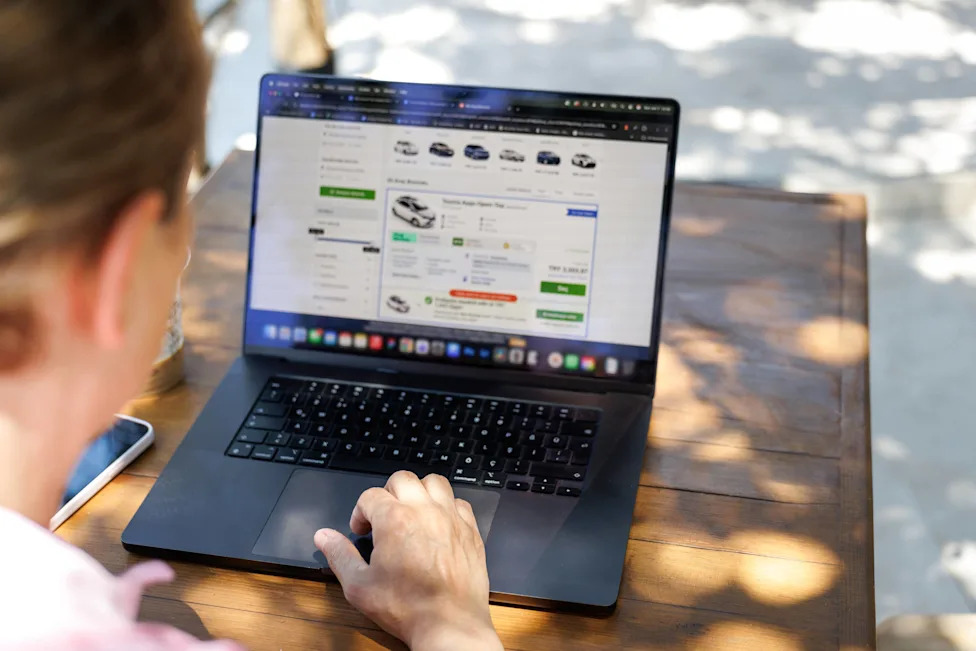
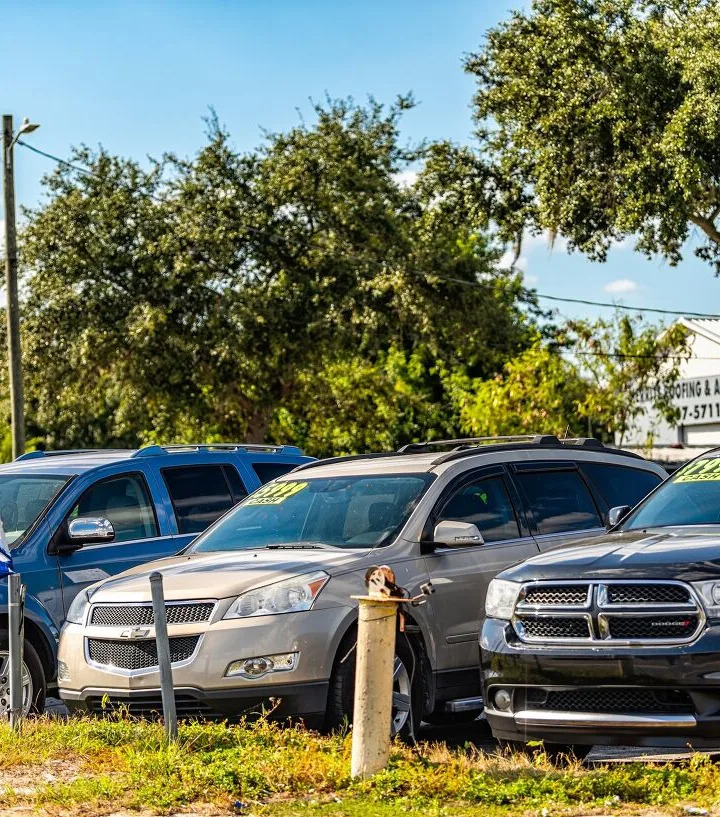
Autoblog and Yahoo may earn commission from links in this article.A Fantastic Voyage (To Get an Awesome Deal)If you have been in the market for a specific kind of car, you may have spent countless late nights and weekends repeating this very cycle. You constantly refresh the search for specific makes and models a few dozen times doing the same thing; playing the same game of automotive "Where's Waldo." You tighten and expand every filter you possibly can, but the local results still spit out the same results. The needle in the haystack doesn't show itself; every listing shown to you is either overpriced, has way too many miles, or its interior or exterior is a weird color that you or your partner doesn't like. But out of curiosity or almost as a joke, you might widen the search radius from 25 or 50 miles to something much bigger. However, in that one search result searching for vehicles within 250 or 500 miles, you find "the one." The car you and/or your partner is searching for; the make and model in the exact trim, the exact color, with the exact options. Even sweeter, it's a few thousand dollars under what anyone near you is asking for the same car. One problem — the dealership it's at is three states away, and you've never bought a car from anyone you couldn't walk up and talk to in person.AdvertisementAdvertisementThis scenario has become almost routine over the last few years. Inventory shortages, supply chain disruptions, and a used car market that saw prices climb to genuinely absurd levels have pushed buyers to stop thinking of their search as local. Where shopping used to mean checking the two or three dealerships within a twenty-minute drive, it increasingly means scanning listings across an entire region or, for buyers chasing something specific, the entire country. The question isn't really whether out-of-state deals exist anymore. They obviously do. The question is whether the hassle of actually closing one is worth what you save.Getty ImagesWhat Actually Changes When You Cross a State LineThe biggest misconception buyers have going in is that they assume an out-of-state purchase will be like buying a car with extra driving. It isn't, and the differences start with many of the things that make car buying headscratchingly complicated, including taxes. Sales tax on a vehicle purchase is generally owed to the state where the car will be registered, not the state where you bought it, which means that most dealers selling to an out-of-state buyer won't collect sales tax at all, as it'll be handled when they register the car back home. Some states such as New York and New Jersey have reciprocity agreements that streamline this process, however, some don't, which means the paperwork burden varies a lot depending on exactly which two states are involved in the transaction.Financing is the next complication, and it trips up more buyers than taxes do. If you're paying cash, none of this matters much. But if you're financing, your lender needs to be comfortable underwriting a loan on a car that isn't titled in your home state yet, and not every lender handles this smoothly. Credit unions and banks that are used to local transactions can be slower or more cautious about an out-of-state deal, while larger national lenders and dealer-arranged financing tend to have already built the process for exactly this situation. It's worth getting pre-approved before you ever contact the out-of-state seller, both so you know your real budget and so you're not scrambling to sort out financing logistics after you've already agreed on a price.Then there's the physical reality of the deal: how the car you bought actually gets from their lot to your driveway. If you are buying new, some big city dealers; especially larger dealer groups, may have sophisticated logistics networks that can assist you with transferring between dealerships. Some adventurous buyers fly out and drive it home themselves, treating the whole thing as a road trip. Others pay for enclosed or open transport, which can run anywhere from several hundred dollars for a mid-distance move and into four-figure territory for a cross-country trip. Nonetheless, buying outside your locale carries an additional cost that can add a day of your life you weren't planning to spend on a car purchase, and it needs to be factored into whatever you think you're saving.Brandon Bell/Getty ImagesYet, the Math Can Still WorkNone of that complexity is enough to erase what's often a genuinely significant price gap. It is true that regional demand for specific models can vary enormously; a truck that's a status symbol and commands a premium in one state might be a dime a dozen two states over. Price aside, buyers chasing a specific configuration, a rare color combination, or a manual transmission in a model that's mostly sold as an automatic often find that expanding the search radius is the only realistic way to find the car at all. However, a dealer that only competes against local stores has less pressure to move on price than one who knows the buyer is comparing them against listings in four other states. Widening your search doesn't just widen your options, it widens your negotiating leverage, because you're no longer the captive audience for the local market.AdvertisementAdvertisementBut certain things can get pretty complicated if you decide to buy out of state. Emissions testing and inspection requirements vary significantly by state, and a car that's perfectly legal to sell and drive in the state where you're buying it may not pass inspection back home without modification or, in rare cases, may not be eligible to register at all. This matters most for buyers looking at diesel trucks, modified vehicles, or cars headed for states with strict emissions rules like California. Checking your home state's specific requirements before you fall in love with a listing will save a headaches down the line.Warranty coverage is the other detail that catches people off guard. Most manufacturer warranties are honored nationally regardless of where the car was purchased, which is good news, but dealer-specific service agreements, certified pre-owned inspection guarantees, and any promised follow-up work may not work in other places. If part of what you're paying for is the dealership's reputation for standing behind their used inventory, that value mostly evaporates once you're not local anymore.And then there's the simple absence of an in-person inspection, which is the risk every experienced buyer names first and which is genuinely harder to solve than people want it to be. Photos and video calls help, but they don't replace sitting in a car, hearing the engine idle in person, and noticing the small things a seller either doesn't think to mention or actively hopes you won't ask about. An independent pre-purchase inspection from a reputable, local mechanic near the seller, may be the best tool available, no matter how good the dealership's reputation looks on Google.Getty ImagesEveryone's Chasing the Same DealNone of this is happening in a bubble, and it's worth a look to see why so many buyers are willing to go through all of it in the first place. According to the latest iteration of Santander Bank's Paths to Prosperity survey, 71% of recent car buyers during Q2 2026 feel priced out of the new vehicle market, and 73% say they've made real compromises to get a new set of wheels, whether it be looking at a smaller car, or an older one to stay within their budgets. AdvertisementAdvertisementIn an interview with Autoblog, Betty Jotanovic, the President of Auto Relationships at Santander Consumer USA, said that those numbers reflect a tight squeeze that consumers are facing. "Cars are expensive, interest rates are going up, but cars are not getting any cheaper — and used cars are now starting to get more expensive too, because new buyers are shifting to used or slightly used CPO," she said. "Everyone's kind of moving down the food chain a little bit." "With affordability challenges — and it's not just affordability, it's even features and color — the search radius has expanded. If nothing else, for price comparison, or to find the right unit at the right price, the features, the color, the options, the trim package." But despite all of the technology available for consumers to streamline car buying online, such as online listings and AI comparison tools, there is still a willingness to cross state lines for the right price. Santander found that just 12% of buyers shop entirely online, while 34% would buy only in-person and 55% land somewhere in between. Jotanovic doesn't see that as buyers lagging behind the technology; she sees it as people refusing to let a bank statement make the decision for them. "Dealerships still remain the preferred place to buy," she said. "They want to test drive it, they want to see it — they probably want to smell it." AdvertisementAdvertisementIn the end, the willingness to pull out all the stops is reflective of where consumers are at in the new and used car market. Budgets are getting tighter, buyers are searching wider, but the car everyone's looking for is still out there. Everyone's on a budget. The banks know it, the dealers know it, and so does the buyer three states away willing to find out if the deal is worth the drive.This story was originally published by Autoblog on Aug 30, 2026, where it first appeared in the Features section. Add Autoblog as a Preferred Source by clicking here.