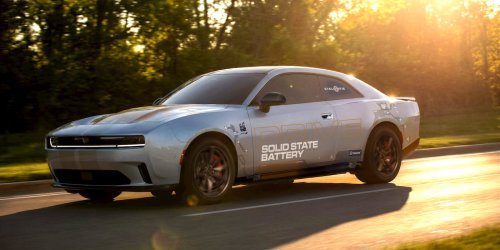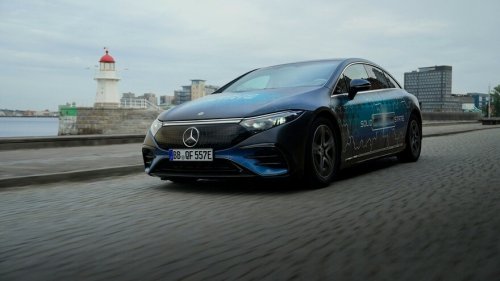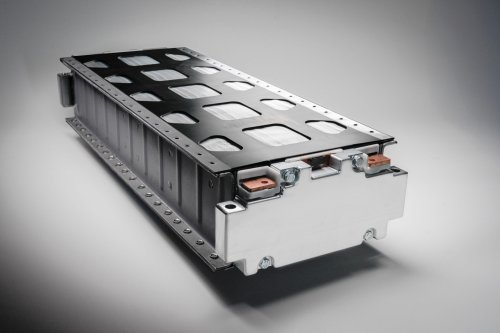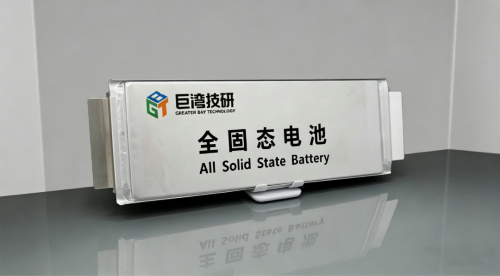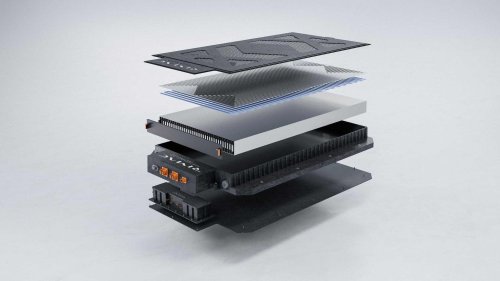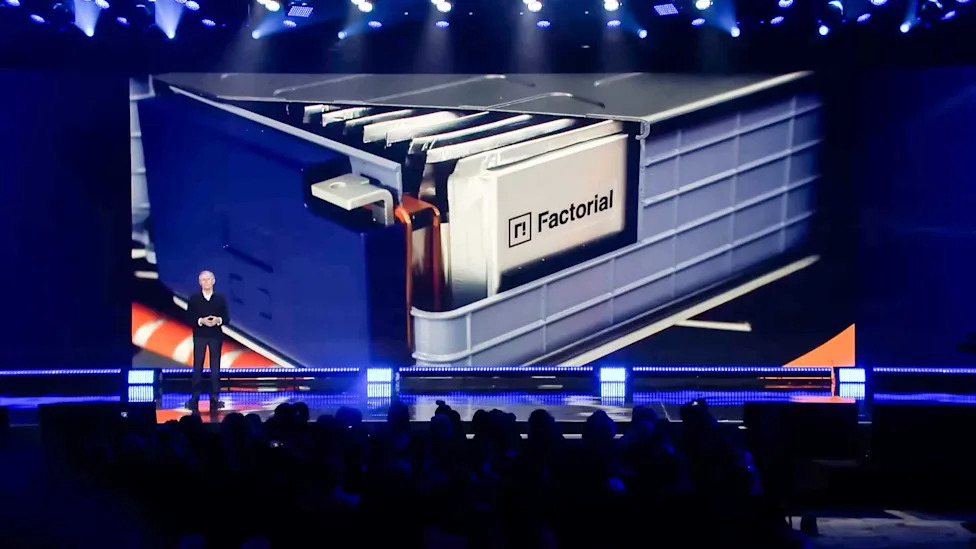
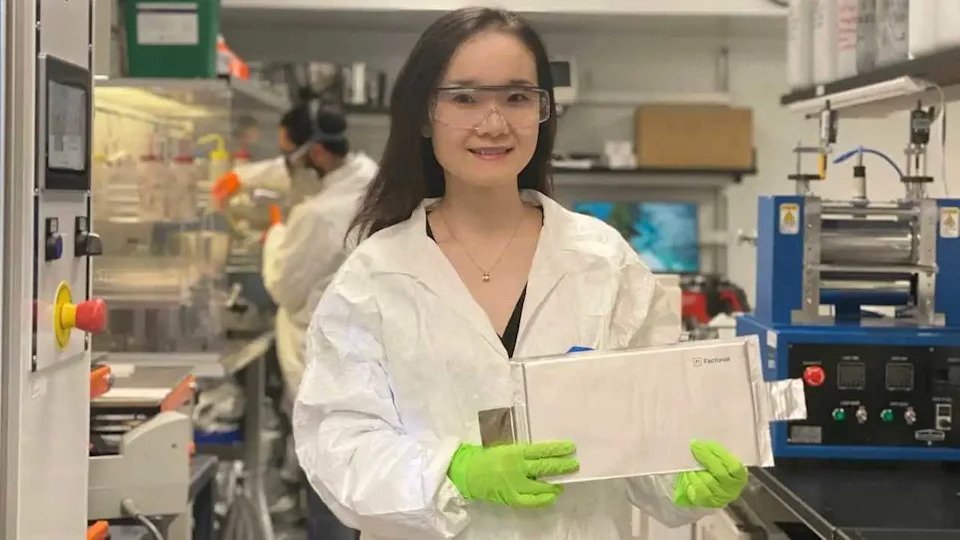
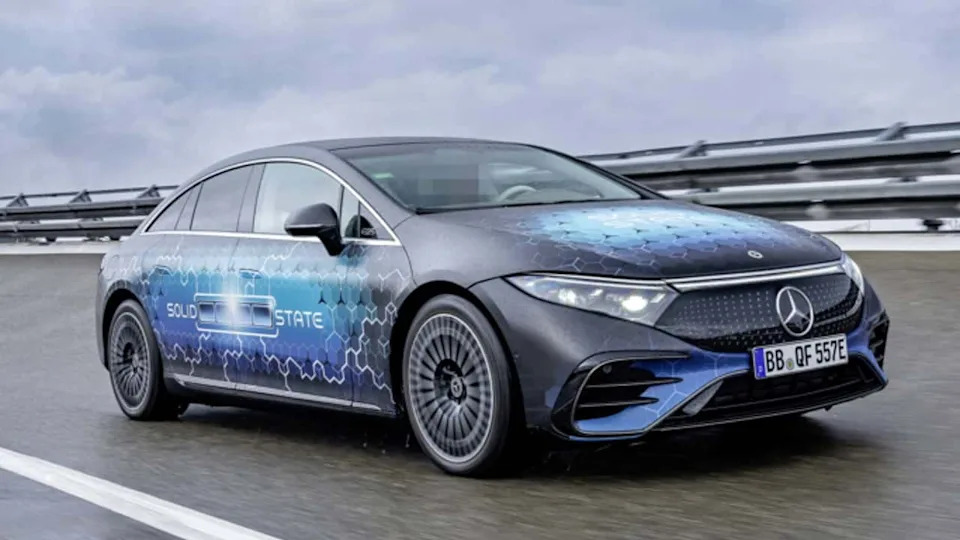



















'Can't Be Done By One Company': This Startup Is Rallying A Team To Bring Solid-State Batteries To LifeInsideEVs[email protected] (Suvrat Kothari)Fri, September 18, 2026 at 5:05 PM UTCAdd us on GoogleFactorial Unveils 100 Amp-Hour Solid-State Battery Cell Concept At CESInstead of going solo, Factorial is bringing battery companies together to make solid-state batteries a reality.Massachusetts-based battery startup Factorial Energy said Thursday it's building a coalition of specialized battery makers to bring the long-elusive all-solid-state battery to market. The company signed a joint development agreement with Japanese firm Mitsui Kinzoku to use its solid electrolytes in Factorial's batteries, the latest in a string of partnerships the company has struck in recent months.Unlike traditional lithium-ion batteries, which use a highly flammable liquid chemical to shuttle charge-carrying ions to power EVs, all-solid-state batteries swap that liquid out for a solid electrolyte. Battery scientists believe the technology can eliminate fire risk, substantially improve energy density, and deliver blistering charging speeds. But the technology has been bogged down by technical challenges for years, while conventional lithium-ion batteries keep improving on range, charging speed, and cost.Factorial CEO Siyu Huang told InsideEVs in an interview that the company is tackling those challenges by bringing together specialized battery makers rather than trying to solve everything in-house. Huang said no single company can crack all-solid-state batteries alone, and that assembling firms that specialize in anodes, cathodes, electrolytes, and advanced manufacturing is necessary to get the technology into production.AdvertisementAdvertisement"We're driving a very strong coalition among all of the supply chain," Huang told me. "There are still significant technical challenges to unlock. It's very important for us to go beyond the existing mindset and framework for lithium ion and focus on a technology that goes beyond."Factorial Energy solid-state battery cellThe company, which went public on the Nasdaq in June, is working with Korean anode and cathode specialist Posco Future M. It is exploring how to scale the technology with SK On and has also signed joint development agreements with Volkswagen Group's PowerCo battery division and the Hyundai Motor Group. A memorandum of understanding with Korea's Phil Energy covers advanced manufacturing tools."We're very well settled for both North American and European volumes," Huang said, referring to its agreements with SK On and PowerCo.Battery startups routinely lean on larger companies to help develop and scale their technology. So what Factorial is doing here is nothing unusual. But its a rare acknowledgement that no single company can get all-solid-state batteries over the finish line on its own.AdvertisementAdvertisementThe Mitsui collaboration is critical to making its Solstice all-solid-state battery, Huang told me. "Having access to this material is very important to enhance the performance of this battery," Huang said. "That's why we're able to get really strong performance and high temperature thermal stability, something we couldn't get without them." Factorial said the company is among the very few companies that holds "foundational IP" for all-solid electrolytes.Mercedes EQS Solid-State BatteryFactorial's two main products are the FEST semi-solid-state battery, which uses a gel-like electrolyte, and the Solstice all-solid-state cell. Both are NMC batteries at their core, using anode-free lithium-metal cells paired with solid or semi-solid electrolytes. The semi-solid-state battery is rated for up to 375 watt-hours per kilogram of energy density and is already installed in prototype Mercedes-Benz EQS and Dodge Charger Daytona EVs. The all-solid-state version goes further, targeting up to 450 Wh/kg, roughly double today's lithium-ion cells.Both products haven't made their way into production vehicles yet, but Huang said the semi-solid-state technology is ready for commercialization, with customer orders already locked in. Karma Automotive is set to be the first to roll out a production EV with its semi-solid battery in 2028. Factorial also landed its first commercial aerospace purchase order for a drone battery this summer. Huang said she expects "large automotive OEMs" to come on board down the line, with timing depending on their requirements for the batteries.Several other battery startups are racing for the next big EV battery breakthrough. A large number of mostly American startups are among those spearheading that effort, including California-based QuantumScape, Colorado-based Solid Power, and Illinois-based Pure Lithium. Toyota, Taiwan's ProLogium, as well as several established Chinese battery makers like CATL and BYD are also racing to crack solid-state batteries. Whether a coalition model like Factorial's or a more vertically integrated approach wins out remains an open question.AdvertisementAdvertisement"Battery innovation," Huang said, "is driven by the entire supply chain and, increasingly, by an entire industry coalition."Related StoriesFactorial Taps Hyundai Supplier To Solve Solid-State Batteries' Biggest ProblemA Solid-State Battery Mercedes EQS Went 749 Miles On A Charge. It Still Had Range LeftThis American Battery Could Break China's Grip On The EV Supply ChainMG Is Putting Semi-Solid Batteries In Its Next Plug-In Hybrids