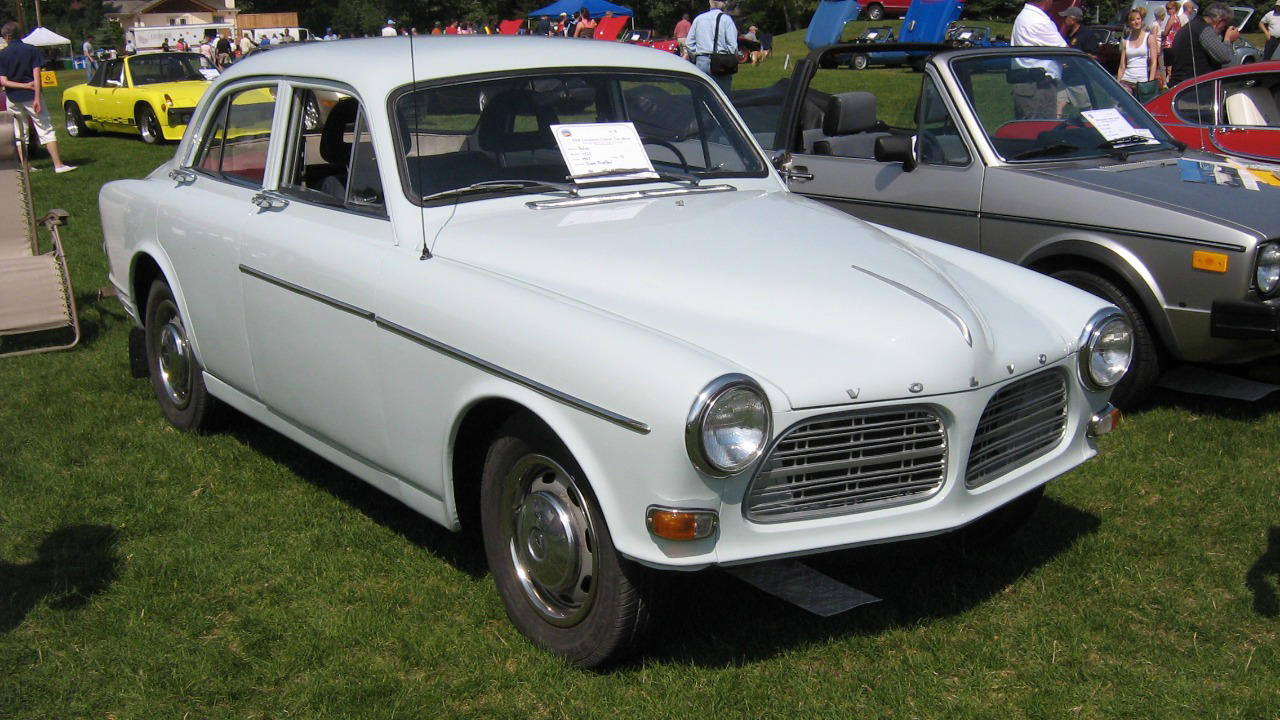
Buying a 1967 Volvo 122S sounds safe until parts sourcing becomes the real challengeThe 1967 Volvo 122S has a reputation that sells itself: a compact Swedish sedan with a sturdy inline-four engine, a cabin built like a safe, and styling that still looks sharp in modern traffic. For many buyers, that aura of durability and safety is the hook. The surprise comes later, when the biggest threat to enjoying the car is not crash protection or engine reliability, but the quiet grind of sourcing the right parts from a shrinking global supply. The safety myth that still sells the Amazon The 1967 Volvo 122S, widely known as the Amazon, is often described as a blend of Scandinavian design, durability, and performance, with a solidly built interior and engineering that gave it a reputation for long life. Enthusiasts still highlight how Volvo focused on quality and safety in this era, which helps explain why the 122S remains attractive to vintage buyers who want something more practical than a fragile sports car. Period advertising and later fan commentary frame the 122S as a family car that could shrug off abuse and keep starting every morning. That image persists in modern listings for wagons and sedans that celebrate a “Dependable Long Life” and show cars still working as suburban haulers decades after they left showrooms. In online communities, owners regularly praise the Amazon for feeling substantial on the road and for tolerating years of storage before being coaxed back to life. Together, those stories feed a powerful narrative: that a 1967 Volvo 122S is a safe bet, both in terms of occupant protection by the standards of its time and in terms of mechanical toughness. The catch is that toughness does not eliminate wear, corrosion, or missing trim, and the deeper a buyer digs into a project car, the more that narrative collides with the realities of a 1960s supply chain in 2026. Rust, brakes and the first wave of reality checks Prospective buyers who scroll through enthusiast advice quickly encounter a blunt first warning: rust. Owners on discussion boards flag corrosion as the main threat to any Amazon, with particular concern around the headlights and front fenders, where moisture and road debris can quietly eat through metal. Comments from experienced owners describe front panels that have often been repaired or replaced, and they encourage buyers to inspect seams and inner structures rather than trusting shiny paint. Once a car is home, the second reality check usually arrives in the braking system. Several project threads describe 122S coupes that sat for decades, then returned to the road only after calipers were stripped and seals inspected. In one case, an owner found that the seal on the large single piston side was still pliable, while dual pistons had likely seized, a reminder that even Volvo hardware needs careful inspection after long storage. Another owner of a 1967 122S listed a familiar early to-do list: rebuilt front brake calipers, new rotors and pads, fresh tires, and repainting of weathered components. Underneath, suspension questions follow. Enthusiasts debating upgrades for a 1965 122 S discuss the limits of the original steering design and the difficulty of fitting a modern rack and pinion without replacing the front end entirely. Others document “serious surgery” on tired shells, noting that most of the work involves taking things apart and confronting earlier repairs that did not age well. For a buyer who expected a quick recommissioning, that first winter in the garage can feel like an ambush. Where the parts actually come from The good news is that a small ecosystem of specialists still treats the Amazon as a core product, and understanding that ecosystem is essential before signing a bill of sale. In the Netherlands, Nordicar presents itself as a specialist in parts for the Volvo Amazon 121 and highlights that it has supplied Volvo oldtimer parts for more than 30 years. That kind of longevity matters, because it signals both inventory depth and experience with what tends to fail on these cars. In the United States and Europe, VP Autoparts has built an extensive catalog specifically for the Volvo 122 Amazon. They emphasize interior components, describing how they are proud of their interiors and how they work to preserve the original look and feel of these classic vehicles. The same catalog lists ignition distributors such as the Fördelare 123 B18/B20, identified as Artnr: 123-B20Tune, priced at $ 524.95, and the Fördelare 123 B4B/B16, Artnr: 123-B16, at $ 52, which illustrates both the availability of modernized parts and the wide cost spread between basic and upgraded hardware. In the United Kingdom, Brookhouse Volvo Parts trades heavily on its reputation as a one-stop shop for older Volvos. The company explicitly lists models such as Volvo PV444, PV544, Amazon, 120, 121, 122, 122S, 123GT, P1800, P1800S, P1800E, P1800ES, 140, and 160, which signals that it treats the Amazon family as a core part of its business rather than an afterthought. That breadth can be a lifeline when a buyer needs both 122S-specific trim and more generic Volvo hardware. Beyond the specialists, mainstream e-commerce still plays a role. General marketplaces such as Amazon occasionally carry reproduction lenses, generic service parts, or tools, while auction sites host a constant churn of used components. One listing category for parts and accessories for the Volvo 122, for instance, advertises a VOLVO 122 AMAZON TAIL LIGHT LENS Pair and a new listing for a 1964 to 1968 Volvo 122S Amazon hubcap, which hints at the mix of new and salvaged stock that keeps these cars on the road. Bodywork: the hardest pieces to find Mechanical components for a 1967 122S are not trivial to source, but body panels and trim often cause the most stress. A dedicated catalog of Amazon 121 body parts shows how specialized this corner of the market has become. Vendors such as classic Volvo bodyparts list fenders, front panels, and other sheet metal tailored to the 120 and 121 series, often reproducing sections that rust first, such as lower wings and headlight surrounds. Even so, availability is uneven. Owners who drag home forest finds, such as a 1964 four door Amazon rescued from long-term outdoor storage, often report that structural rust in sills and floors demands extensive fabrication. Some panels can be bought off the shelf, but others require cutting and welding patches, or hunting for donor shells. A rugged 1967 Amazon wagon highlighted as a suburban workhorse illustrates the other end of the spectrum: a car with only a Broken taillight that could be fixed with an authentic replacement lens sourced from an online marketplace, while the rest of the body survived intact. Trim presents its own challenges. Badges, grille pieces, and stainless window surrounds may not be reproduced in large numbers, which pushes buyers toward used parts. Listings for accessories such as a 1967 VOLVO 122S STATION WAGON 11 X 17 PHOTO PICTURE, sold as Brand New for $15.95, underline how memorabilia can be easier to find than the exact chrome strip missing from a project car. For a buyer who cares about originality, that gap between what exists and what is practical to source can shape the entire restoration strategy. Mechanical parts: easier, but not always cheap Compared with bodywork, the mechanical side of a 1967 122S looks relatively friendly. The B18 engine and its siblings share components across multiple Volvo models, which gives suppliers more volume to work with. Enthusiast catalogs that invite customers to Shop For a 1966 Volvo Amazon 120 4 DR SEDAN Parts and Accessories, for example, illustrate how one engine family can support several adjacent model years and body styles. That overlap helps keep items such as gaskets, hoses, and ignition parts in circulation. Specialist sellers supplement this with modern upgrades. The programmable Fördelare 123 units that connect via USB give owners a way to improve reliability and tuning while keeping the engine bay visually close to stock. However, the price difference between a $ 524.95 programmable distributor and a $ 52 basic unit shows how quickly a parts list can inflate if a buyer chooses high-spec components throughout. Used and new-old-stock parts fill in the gaps. Auction listings for an OEM 67 Volvo 122 front dash black plastic screw and clip set with OEM 7 Knobs and 1 Lighter, priced at $98.39, show how even small interior details can command premium prices when they are original. For a buyer who assumed that a simple dashboard refresh would be cheap, the reality of sourcing correct knobs and switches can be sobering. Community knowledge and the hidden labor cost What parts catalogs do not show is the amount of time and improvisation required to assemble a working 122S from mixed-condition components. Owners who share their builds describe years-long journeys. One 1967 122S coupe that had slept for roughly four decades required careful work just to free brake components and assess whether seals were still usable. Another project thread titled “in way over my head” documents how an owner Rebuilt the front brake calipers, Started making new interior door panels, fitted New tires, and Repainted various pieces, only to realize how much remained. Advice from long-term custodians reflects that learning curve. A proud owner of a 1967 Volvo 122S who had kept the car for 11 years summarized Most of their findings as issues linked to long storage rather than design flaws, then offered three pieces of guidance, including a suggestion to Consider upgraded cooling. That kind of incremental, experience-based advice often matters more than any single part number. Discussion threads on suspension upgrades show the same pattern. An Active member on a Volvo forum remarked that they had not heard of anyone running a rack and pinion setup on an Amazon without replacing the front end, which effectively turns a steering upgrade into a major engineering project. Another builder, chronicling “serious surgery” on a 122, remarked that most of the work involved taking things apart and wondering why the project was started in the first place. The labor cost is not just in hours, but in decisions about how far to modernize a fundamentally 1960s design. More from Fast Lane Only Unboxing the WWII Jeep in a Crate 15 rare Chevys collectors are quietly buying 10 underrated V8s still worth hunting down Police notice this before you even roll window down The post Buying a 1967 Volvo 122S sounds safe until parts sourcing becomes the real challenge appeared first on FAST LANE ONLY.


















 +9 others