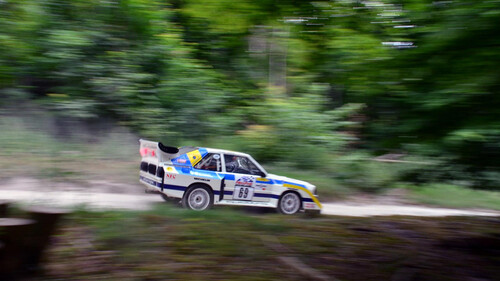
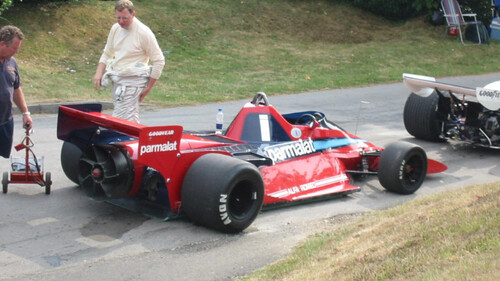
Motorsport has always rewarded innovation, but sometimes a car becomes so effective that organizers feel compelled to intervene. Whether through overwhelming speed, aerodynamic loopholes, or engineering advantages rivals couldn’t match, certain race cars disrupted entire championships. These machines dominated so thoroughly that rulemakers stepped in to restore balance, permanently changing the direction of racing history.Porsche 917/30The Porsche 917/30 nearly destroyed competitive balance in Can-Am racing through sheer power. Developed by Porsche with Penske Racing, it used a twin-turbocharged flat-12 producing well over 1,000 horsepower in qualifying trim. Its acceleration and straight-line dominance left rivals effectively helpless. Combined with lightweight construction and advanced aerodynamics, the 917/30 overwhelmed the field during the 1973 season. Officials eventually introduced fuel-consumption regulations that heavily undermined its advantage, contributing to the collapse of the era’s unrestricted excess.Brabham BT46B “Fan Car”The Brabham BT46B became infamous almost instantly after appearing in Formula 1. Built by Brabham under designer Gordon Murray, it used a large rear-mounted fan to extract air beneath the car, dramatically increasing downforce. At the 1978 Swedish Grand Prix, it dominated its debut race with exceptional grip and stability. Rival teams protested aggressively, fearing the concept would make competitors obsolete. The fan system was withdrawn shortly afterward, effectively ending one of Formula 1’s most controversial engineering innovations.Audi Sport Quattro S1The Audi Sport Quattro S1 transformed rally racing with turbocharged all-wheel-drive superiority. Developed by Audi for Group B competition, it delivered immense traction and power on unpredictable surfaces. Rivals struggled to match its pace once quattro technology proved its effectiveness. The escalating speed of Group B machines eventually created serious safety concerns for both drivers and spectators. Following a series of fatal accidents, governing bodies eliminated the entire Group B category after the 1986 season.McLaren MP4/4The McLaren MP4/4 produced one of the most dominant seasons in Formula 1 history. Built by McLaren and powered by Honda turbo engines, it won 15 of 16 races during the 1988 championship. Its low-slung aerodynamic profile and exceptional reliability amplified the talents of Ayrton Senna and Alain Prost. Competitors simply lacked the pace to challenge consistently. Formula 1 soon moved toward banning turbocharged engines entirely, ending an era heavily shaped by cars like the MP4/4.Chaparral 2JThe Chaparral 2J pushed aerodynamic innovation beyond what rivals considered manageable. Developed by Chaparral Cars, it used twin fans powered by a secondary engine to create constant ground-effect suction. This allowed unprecedented cornering grip regardless of speed. Although reliability problems limited results, competitors feared the concept’s long-term potential. Racing authorities quickly outlawed movable aerodynamic devices, preventing the 2J from redefining motorsport entirely.Mercedes-Benz CLRThe Mercedes-Benz CLR became one of endurance racing’s most notorious cautionary tales. Created by Mercedes-Benz for Le Mans competition, its extreme aerodynamic design prioritized low drag and top speed. During the 1999 24 Hours of Le Mans, multiple CLR cars became airborne in terrifying high-speed flips. The incidents exposed major flaws in prototype aerodynamic stability. Rulemakers responded with revised regulations emphasizing safer body designs and improved lift-control standards for endurance racing prototypes.Lancia LC2The Lancia LC2 represented a turbocharged assault on Group C endurance racing. Built by Lancia, it featured a Ferrari-derived twin-turbo V8 capable of extraordinary speed on long straights. Although reliability issues often prevented championships, its pace forced organizers and competitors to reconsider fuel allocation and turbo equivalency rules. The growing complexity and performance escalation of Group C prototypes led to broader regulatory restructuring. The LC2 became part of an era that pushed endurance racing technology to unsustainable extremes.Williams FW14BThe Williams FW14B brought active suspension and electronic driver aids to unprecedented levels in Formula 1. Developed by Williams Grand Prix Engineering, it used computer-controlled systems to optimize ride height, traction, and stability continuously. Nigel Mansell dominated the 1992 season with overwhelming consistency. Rival teams struggled to replicate the technology quickly enough to remain competitive. Formula 1 authorities later banned many advanced electronic systems in an effort to restore driver influence and reduce technological imbalance.