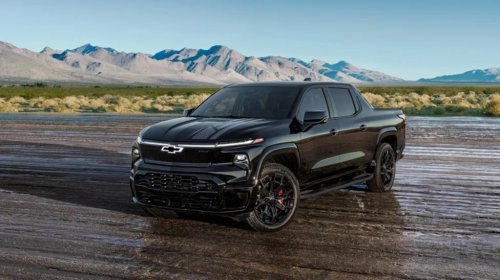

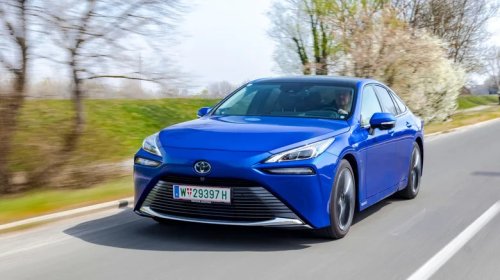
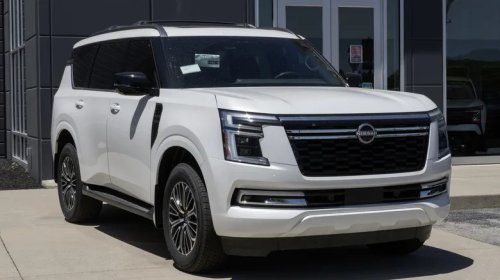
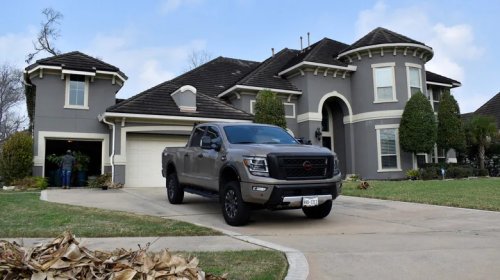
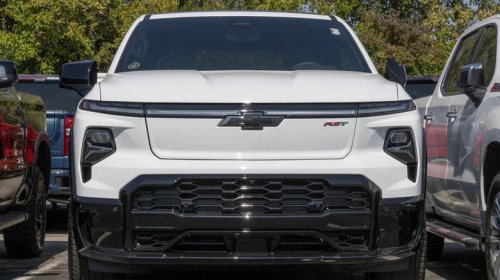
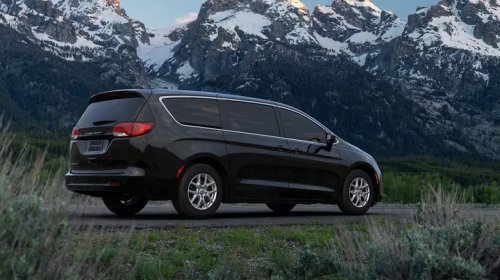
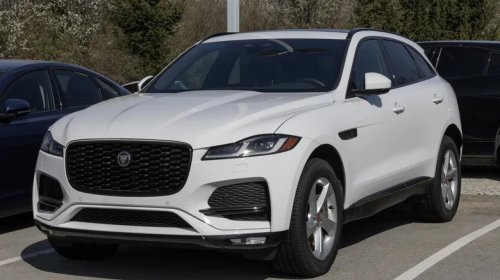



















ChevroletIn today's economic climate, it's more important than ever before to buy things that retain their value as you use them. It's more expensive to buy new stuff, be it computers, smartphones, or cars. So, it's only logical that you should have value retention near the top of your checklist when going car shopping these days; you don't want to pay top dollar for a car that's overpriced relative to its resale value.Now, a car's resale value depends on several factors: How many miles you drive in it, how well you take care of it, the type of vehicle it is, and the manufacturer, to name a few. The last two factors play a slightly disproportionate role compared to the other two. You could drive as carefully as you can manage and religiously follow the maintenance schedule and your vehicle could still lose a big chunk of its value if you buy a model from a car brand that's prone to depreciation.However, the raw depreciation percentage doesn't necessarily mean a car is overpriced in the long run. For instance, the Dodge Durango's 38.2 percent resale value after five years may sound like it should set off warning bells. At an MSRP of $38,995, though, that drop stands at roughly $24,000 — which isn't enough to earn it a spot on this list, especially when you consider it performs similarly to class competitors. Here, we're covering seven of the most overpriced cars on the market.AdvertisementAdvertisementRead more: 8 Little-Known Car Gadgets Worth Trying For YourselfLand Rover Range RoverPhotosvit/Getty ImagesLuxury vehicles can be a dicey category to shop in if you don't do your research beforehand. There's no widespread trend you can follow to estimate resale value. It all depends on the brand. Buying a Lexus GX550, for instance, pretty much insulates you from depreciation; CarEdge estimates that it retains 66.8 percent of its MSRP after five years. Conversely, the Land Rover Range Rover is one of the poorer performers at just 26.1 percent. Estimates from iSeeCars have this figure at a less severe 38.3 percent, but it's still in the top five worst performers by its metrics. We'll concede that resale value is usually not a priority for shoppers in this class. If you place a premium on aesthetics and interior comfort, the Range Rover is probably one of the first options that come to mind. The Land Rover Range Rover is regarded as one of the most luxurious SUVs on the market, despite its questionable reliability (which no doubt contributes to its poor resale figure).However, the price of that aesthetic premium is pretty heavy. A 2026 Land Rover Range Rover starts at $113,300. CarEdge's 26.1 percent resale value estimate means that you can expect it to be worth just $29,571 after only five years of ownership. That's nowhere near the GX 550's league, and more direct competitors like the BMW X7 and the Mercedes-Benz GLS still fare better at 37.1 percent and 52 percent respectively. You're still going to lose a chunk of change at those numbers, but they're easier to stomach than the Range Rover's $83,729 drop.Toyota Miraisupergenijalac/ShutterstockWith EVs taking up more and more of the automotive market share in America, it's safe to say that the future is now. At least, that's the thesis behind the Toyota Mirai: A hydrogen-powered car without a carbon footprint since it emits only water vapor. There aren't many car models on American roads that use hydrogen fuel cells; the Hyundai Nexo and a version of the Honda CR-V are the only other two that are currently in production.AdvertisementAdvertisementGiven the relative rarity, one can be forgiven for assuming the Mirai will hold its value over time. Unfortunately, the problem with technology that isn't mainstream is exactly that: It's esoteric, which translates to it being hard to resell — no matter how impressive it may be on paper. In the Mirai's case, it has a 182-hp motor that can power through an estimated 402 miles of driving before it needs a refill. That range is pretty significant considering the longest-range EV SUV in 2026, the Cadillac IQ, can cover 465 miles on a single charge.Logically speaking, the Mirai's resale value is held back by the general absence of hydrogen fueling stations across the United States. As of 2024, there were only 54 — almost all of which were in California. With this context, the estimated resale value of just $8,100 (down from the original MSRP of $51,795; Kelley Blue Book projects an even lower $5,600) makes sense, but that doesn't make it any less financially painful. Things could change over the next few years if hydrogen vehicles become more popular, though.Nissan ArmadaJonathan Weiss/ShutterstockWe mentioned that vehicle type plays a fundamental role in how much you can recoup if you're looking to sell your car. Three-row SUVs haven't fared well historically in the value department, so singling out the Nissan Armada might seem a tad unfair at first. The reason the Armada is on this list is that its value drop is more significant than its peers. According to CarEdge, the Nissan Armada is the second-worst performer in its popular car category for value retention, coming in behind only the Toyota Mirai at 33.8 percent after five years of ownership. Estimates from iSeeCars and KBB are kinder — they have the Armada's depreciation percentage at 43 percent and 45 percent each. The average of the percentages comes out to 40.6 percent; applying it to the MSRP of a 2026 Armada ($58,840 for the base trim) reveals an estimated resale value of just under $24,000. That's a difference of about $35,000. Compared to competitors like the Chevrolet Tahoe (an average of 51.4 percent from CarEdge and iSeeCars respectively) and GMC Yukon (48.7 percent from the same sources), the difference is significant.AdvertisementAdvertisementThe deficiency in value retention is not a knock on the Armada's reliability or features, though. In fact, it's one of the more capable SUVs for off-roading and towing needs — it pulls up to 8,500 lbs. However, buying one brand new from a dealership clearly isn't the most prudent financial decision, but opting for a used one could be a bargain.Nissan Titan XDArtistic Operations/Getty ImagesEstimating an appropriate value for the Nissan Titan XD can be a bit tedious. It sits at the intersection of half-ton and heavy-duty trucks; there aren't many similarly positioned models to draw a direct line of comparison. So, to determine its relative pricing, we're contrasting both ends of the spectrum. The Ford F-150, RAM 2500, and Chevrolet Silverado 2500 are references we'll rely on.Ideally, the Nissan Titan XD's depreciation curve should sit somewhere in between the categories, but it doesn't. Its estimated resale value comes in at 36.2 percent, a mark well below the three selected competitors in both truck classes. The closest in terms of raw percentage points is the Ford F-150's 50.5 percent. Considering the F-150's base MSRP this year is around $39,585, a buyer is losing less than $20,000, all things being equal. The RAM 2500 and Silverado 2500 fare much better at 65 percent and 69 percent respectively, nearly double the Titan XD's keep.The MSRP of a 2024 base trim Titan XD was pegged at $54,860, so if the 36.2 percent figure holds, you can expect one to be worth just under $20,000. Compared to the other trucks around, that's a far weaker performance. Since its value proposition is to occupy the grey area between both truck types, the Titan XD's figures are concerning, which is probably one of the reasons Nissan decided to discontinue the model after the 2024 production year.Chevrolet Silverado EVJonathan Weiss/ShutterstockThe EV pickup scene is a relative novelty in the automobile industry. The Rivian R1T, one of the few cars we've rated a perfect 10 in a review, is one of the headliners in this category. The Silverado EV is Chevrolet's entry into the market, debuting in the 2024 model year. However, the resale numbers aren't the best.AdvertisementAdvertisementAt 38.9 percent value retention and an MSRP of $55,895, the Chevrolet Silverado EV is estimated to be worth $21,743 by the end of the fifth ownership year. That represents a decrease of about $34,000. We've discussed bigger drops, but the context of the pickup EV niche mandates the Silverado EV's inclusion on this list. Direct competitors in the category, such as the GMC Sierra EV, the Tesla Cybertruck, and the F-150 Lightning, all outperform the 38.9 percent number by some distance. The numbers from KBB are even more worrying for the Silverado EV; it used an MSRP of $75,195 for a 2025 model and estimated a value retention of only 35.5 percent. The GMC Sierra EV is particularly impressive — it retains 60 percent of its value according to CarEdge, although KBB's number for the 2026 model is roughly 46 percent — while the Cybertruck, despite starting at $70,000, has a smaller dollar depreciation than the Silverado EV with its resale value ranging between 52 percent and 54 percent per KBB and CarEdge. The F-150 Lightning is the most comparable at 44.3 percent, but with an MSRP just shy of $50,000 for the base trim, it's a better deal in the long run than the Chevrolet pickup.Chrysler VoyagerChryslerThe market outlook for minivans has been dwindling over the last few years, with Americans preferring standard SUVs these days. Last year, though, the minivan market showed signs of a pulse with a 21 percent surge in sales compared to 2024. The Chrysler Voyager and its sister model the Pacifica are both members of this category. Despite being the entry-level option, the Voyager may prove to be a bit of a budget thinner down the road.According to CarEdge's numbers, the Voyager is estimated to retain just 36 percent of its price tag after five years of ownership. The Pacifica is nearly five percentage points better off at 40.9 percent; presumably the fancier features help it age better than its sibling. It's not just a family affair, too. The Toyota Sienna and the Honda Odyssey are the two top options in the minivan market by sales, and both have resale values well above the industry average. The Sienna retains 62.4 percent while the Odyssey comes in at 56.8 percent.AdvertisementAdvertisementBoth brands have a reputation for reliability that Chrysler doesn't match, so the gulf between them and the Stellantis automobiles isn't surprising. If you're shopping in the minivan department and a Chrysler really tickles your fancy, the Pacifica is the more economical option; going for the Voyager means giving up roughly $3,300 when you want to resell after five years.Jaguar F-PaceJetcityimage/Getty ImagesMost luxury SUVs can handle a fair bit of hard acceleration, but if you're looking for one tailor-made for performance, the Jaguar F-Pace may have shown up on your radar. However, you can't go into this segment uninformed if you care about resale value. CarEdge estimates the F-Pace will keep about 34.6 percent of its original price by the fifth year of ownership. KBB's numbers are slightly more bleak at 29.9. Again, at face value, those numbers doesn't seem too bad for the luxury department — Tesla's Model S and X report comparable figures at 31.3 percent and 32.6 percent respectively. They aren't in the same playing field, though. For a more accurate comparison to determine proper pricing, we're comparing it to its direct competitors: the likes of the Audi Q5, BMW X3, and Mercedes-Benz GLC.The best of this selection, the GLC, performs right around the industry average at roughly 52 percent (which represents a $25,000 depreciation from its $52,400 price tag). The BMW X3 and the Audi Q5 are practically dead even at 45.9 percent. Judging by these numbers, you'd expect the F-Pace to be worth about half of what you spent on it. That's not the case; it returns barely over a third. A 2026 model retails for $58,375, so a 34.6 percent value retention manifests as just over $20,000 by the time you're looking to resell. That's a drop of about $38,000 and change — making it a worse performer than the GLC by 52 percent.AdvertisementAdvertisementWant the latest in tech and auto trends? Subscribe to our free newsletter for the latest headlines, expert guides, and how-to tips, one email at a time. You can also add us as a preferred search source on Google.Read the original article on SlashGear.