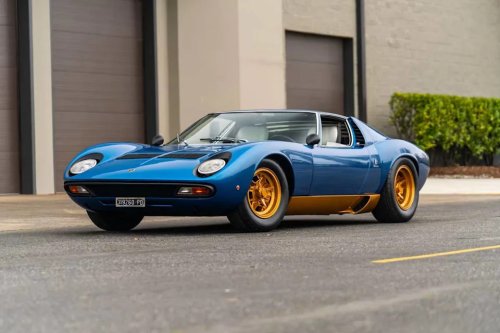
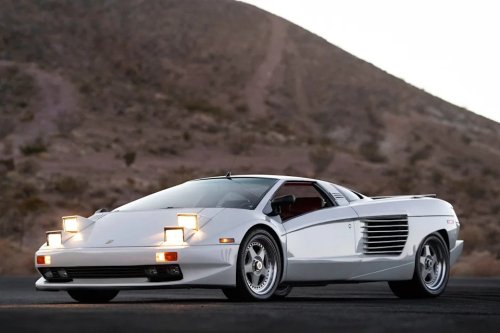
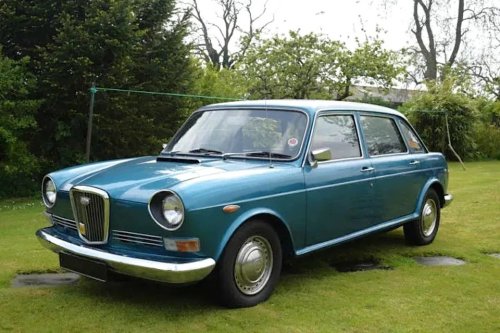
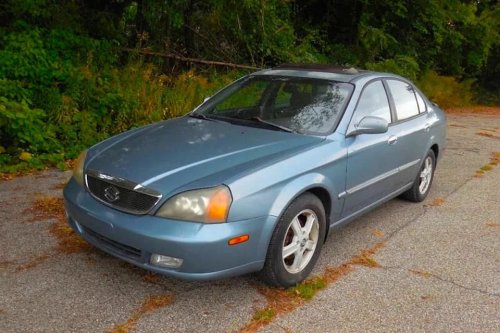
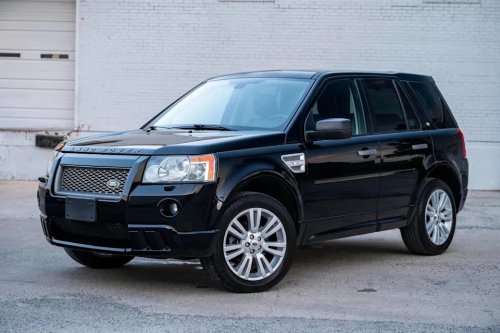
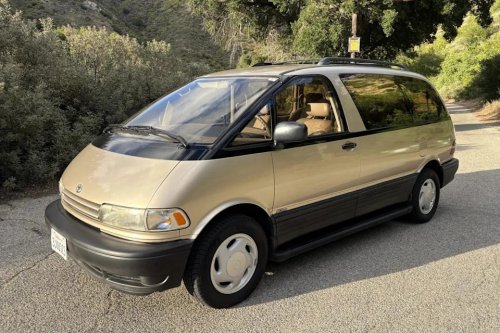
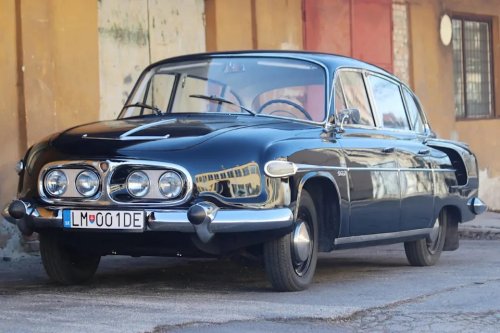
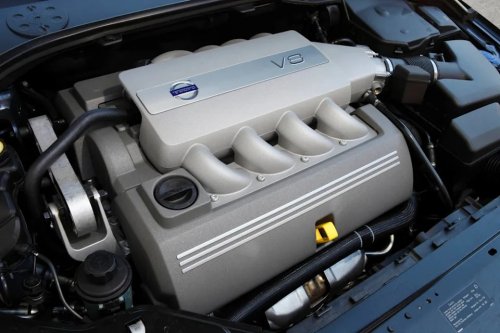
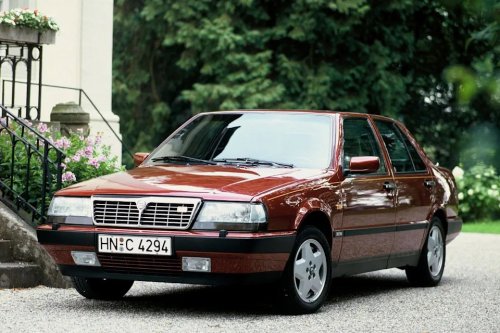



















How a vehicle's engine and transmission are arranged has largely been standardized over the years, and there is far less variation than there used to be in eras past as automakers stick to what works and is economically feasible. If a car is RWD, the engine is typically mounted longitudinally in the nose or tail, while FWD cars normally have transversely mounted engines in the nose or, if they are too big, longitudinally ahead of the front axle. Mid-mounted engines usually sit lengthwise if they're big or transversely if they're small, but hold that thought, because there have been a few strange exceptions over the years. For this article, we stick to regular piston-engine internal-combustion cars, not alternative engine concepts like rotaries or turbine engines.Transverse Mid-engined V12The Lamborghini Miura is a remarkable car for many reasons. Its rolling chassis was conceived in secret by three Lamborghini engineers and rolled out bare onto the 1965 Turin Motor Show stage with its V12 engine mounted transversely behind the cockpit, which gave the template short but wide proportions. Coachbuilder Bertone gave it one look and designed a voluptuous body for it, which debuted a year later in Geneva.1972 Lamborghini Miura P400 SV in Bleu TahitiMecum AuctionsThe 3.9L V12 was married to the transmission using a unique casting, combining the entire engine and transmission lubrication system into one, just like a classic Mini. The Miura is credited with being the first supercar ever, and its transverse mid-engine V12 layout was the first – and last – of its kind. A total of 764 Miuras were built over eight years.Transverse Mid-engined V16The Cizeta-Moroder V16T (T for transverse) was impossibly ambitious. Perhaps inspired by the Miura, since it was developed by ex-Lamborghini engineers, the Gandini-designed supercar came together through the efforts of engineer Claudio Zampoli and music composer Giorgio Moroder, and was first shown in Los Angeles in 1988. Its 6.0-liter V16 engine was made from two 3.0L Lamborghini Urraco 90-degree V8s joined together in one aluminum cylinder block, but with the four separate DOHC cylinder heads from the two V8s, with a total of eight camshafts.1988 Cizeta-Moroder V16TRM Sotheby'sThe crankshafts were joined in the middle with a gear that served as the power output to the transmission. This long V16 engine was plonked into the chassis transversely behind the cabin, necessitating a vehicle width of nearly 81 inches. The resultant 6.0L naturally aspirated V16 revved to more than 8,000 rpm and put out 540 hp, going to the rear wheels via a 5-speed manual transmission. The four stacked pop-up headlights were another extravagant design feature. The very optimistic venture was quickly on the rocks, and only 11 cars were made.Transverse Front-engined I6Transversely mounted engines can't be too long, or they won't fit within the width confines of an engine bay, especially in the nose of a car where the wheels also compete for space. Inline engines are long, and most manufacturers don't even try to squeeze anything more than an inline 5-cylinder transversely into an engine bay. But three automakers in history installed inline 6-cylinder engines transversely under the hoods of their cars.The first was British Motor Corporation / British Leyland, which created the transversely installed modular E-Series 4-cylinder engine, which was meant to be easily expanded to six cylinders. They kept the engine as short as possible with siamesed cylinder bores with no water galleries between them and a small bore. In I6 form, the engine displaced 2.2 liters, and it went transversely under the hoods of ADO17 cars such as the Wolseley Saloon (below), Austin 2200, and Morris 2200.1973 Wolseley SixBring a TrailerDaewoo Motor developed an inline 6-cylinder engine before it went bankrupt and GM took over, and it appeared in the Daewoo Magnus midsize sedan in 2.0L and 2.5L sizes, producing up to 168 hp. The Magnus was also badge-engineered as the Suzuki Verona, the Canadian Chevrolet Epica, the Eastern European Chevrolet Evanda, and the Taiwanese Formose Magnus. Bizarrely, none of the Chevy-badged cars were ever sold in the U.S. The only variant that made it over here was the Suzuki Verona (below).2005 Suzuki Verona LXcarsforsale.comThe transversely mounted I6 was made properly famous by Volvo when the I6 variant of the modular inline Volvo engine appeared crosswise under the hood of the 1999 S80. It was also used in the Mk1 XC90. Then Ford took over and made Volvo and Land Rover part of its now-defunct Premier Automotive Group. As a logical next step, Ford had Volvo develop a successor to its I6, the SI6 (Short Inline 6), shortened to the same length as the old I5 through innovations like a gear-driven shaft to drive the accessories that would otherwise hang off the end of the engine. It came in naturally aspirated and turbocharged variants in the Volvos like the 2000s and 2010s S60, EX60, V70 (below center), and more, and it was even used by Land Rover, which was a PAG brand at the time as well, in the Freelander 2 / LR2 (below left).2009 Land Rover LR2 HSE 3.2Bring a TrailerLongitudinal Slanted Mid-engined I4Though mid-engined sports cars with longitudinally mounted 4-cylinder engines were not that rare, and included the Lotus Esprit and Europa, as well as the Renault Alpine A110, only the Toyota Estima / Previa ever used this layout in a minivan, and with the engine tilted over nearly on its side at a 75-degree angle. A mid-engined minivan sounds bizarre, but it lowered the center of gravity and maximized cabin space by placing the engine under the front seats, also achieving a 50/50 front-to-rear weight distribution. Unfortunately, the 2.4-liter 2TZ big-four engine Toyota used was rough and noisy, and being located right under the front seats, everybody could hear it all of the time.1994 Toyota Previa LE SC All-TracBring a TrailerLongitudinal Rear-engined V8The eccentric Tatra 603 (below left) was a Czechoslovakian luxury sedan built from 1956 to 1975, and it used an air-cooled rear-mounted V8 (below center). The only other production vehicle to use the same layout was the Stout Scarab (below right), the pioneering 1936 American art-deco van, which came with a Ford flat-head V8 in its tail.1967 Tatra 2-603Bring a TrailerHonorable MentionTransverse Front-engined V8Since all Volvos were transversely engined from the late '90s, Volvo couldn't provide a V8 engine to its customers, because existing 90-degree V8s were simply too wide for the Volvo engine bays, so Yamaha developed a 60-degree 4.4-liter V8 (below left) that Volvo used in its S80 and XC90 models. The 3rd-generation Ford Taurus SHO went a different route, instead adding two cylinders to its existing 60-degree Duratec V6 to create the only other 60-degree V8 (below right) in a 3.4-liter capacity.2005-2010 Volvo 60-degree B8444S NA V8 by YamahaVolvoThe transverse V8 wasn't all that uncommon in the past, and transversely mounted V8s with the more traditional 90-degree angle were found in the Mk6 Chevrolet Monte Carlo SS, the Mk9 Chevy Impala SS, late-'90s Lincoln Continental, the 1994-2003 Oldsmobile Aurora, the Cadillac Allante, and the Lancia Thema 8.32 (below). No current car uses this layout.1986-1987 Lancia Thema 8.32LanciaFinal ThoughtsNone of these powertrains are still in use today, as turbocharging has reduced the number of engine configurations, and the 2.0-liter turbo inline four has become so popular that it's taken over the job of most 6-cylinder and some V8 engines. As automakers focus on cutting costs, developing hybrid powertrains, and advancing electric vehicle tech, the time for eccentric pet projects that can't be made and profited from at scale has passed, but we can always look back fondly on a time when automakers tried outrageous things that resulted in unique and characterful cars.