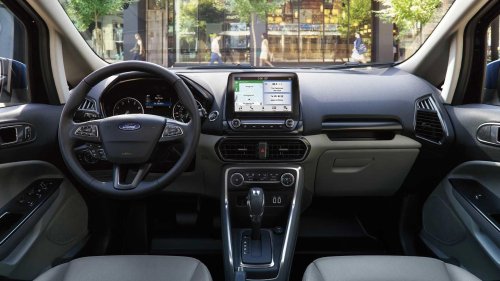
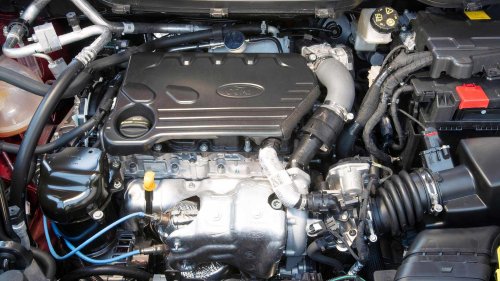
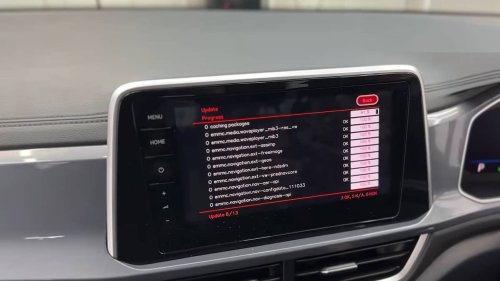
Darthart/Getty Images There's no doubting the fact that we are living in a golden age of mechanical competence. Just take a look at how the Japanese cars have taken over the reliability mantle. We have reached a point where cars are less maintenance prone and can go 10,000 miles between oil changes. Some even come with warranties that cover up to 10 years/100,000 miles. But the lines are blurred between two very different — yet interconnected — concepts: reliability and durability. To put it bluntly, reliability is about the present. It's your car's ability to effortlessly start every morning for the next five years. Meanwhile, durability is the car's ability to withstand the test of time for decades. In many physical ways, modern cars are some of the most durable cars ever built. Thanks to massive advancements in metallurgy, we have high-strength steels and aluminum alloys that are light, yet incredibly fatigue-resistant. The most important advancement, though, is rust proofing. In the 1970s, cars in the salt belt had a shelf life of around three years before their fenders picked up rust. Thanks to modern technology like galvanized steel, advanced electrocoat primers, and sophisticated cathodic dip coating, your modern car's chassis can survive that salt belt better. There are still just a few models with the longest potential lifespans, but many modern cars can survive hundreds of thousands of miles with proper care. The problem arises when this mechanical toughness starts getting undermined by a digital fragility – a problem older cars rarely had to face. Today, almost every part of a car is connected to a computer. And while that computer adds convenience and interesting features, it also adds plenty of new things that can go wrong or become outdated. Silicon brain in an iron heart Bohdan Bevz/Getty Images The bizarre part is that the mechanical bits are outlasting the electronics. Parts like the block, pistons, and transmission gears are so well-engineered that they could theoretically last for decades. However, the electronics managing it have a short shelf life. Fifteen years into the future, your "perfectly healthy" engine could be a 400-pound paperweight simply because the Powertrain Control Module (PCM) that manages the direct injection has conked off and is no longer manufactured. The modern car is also moving from mechanical linkages to drive-by-wire systems where every input, like the throttle and steering, comes from signals generated by a computer. In these cases, a simple software glitch can disable an entire car. In a modern car, the touchscreen infotainment system often is the point of contact to functions like air-conditioning settings, safety settings, or even door lock settings. If the screen delaminates or you're unable to download mandatory Over-The-Air updates, you're losing a lot more than music control. Today, some of the strongest cars come with electronic hardware that, in the face of evolving tech, are in danger of becoming obsolete sooner than expected. Even worse — if a car's "active safety" sensor fails, the car might go into "limp mode," disabling crucial driving aids. A malfunctioning $5 sensor can effectively cripple a $50,000 car. Worse yet, manufacturers can stop software support for a car while the engine is in its prime working condition. This leaves owners with a perfectly functional engine they can no longer use because the digital input needed to run it is now obsolete. The rise of disposable rolling appliances Art Konovalov/Shutterstock You've probably heard of planned obsolescence in smartphones. The concept seems to be catching up with cars, too. Repairing a modern car has transitioned from fixing parts to replacing them. With older cars, you can rebuild an alternator or solder a broken connection. Today, most modern car components you see are designed to be replaced as a whole, not repaired or serviced. It's a cascading effect that sets an expiration date on the vehicle. When your car is twelve years old and worth only $6,000 with a single $4,300 module failure, it's a total loss scenario. With things going this way, the financial logic of keeping a car on the road disappears way before the car is actually worn out. The final nail in the coffin comes in the form of a lack of accessible spare parts in the future. As car makers move towards highly-integrated, VIN-locked parts, the aftermarket ecosystem is unable to provide cheap, spare alternatives. It even makes home repairs too expensive to be feasible. Cars are destined to the scrapyard not because they are junkers, but because the supply chain for their specific, proprietary electronics has ended. Manufacturers might have mastered the art of making unbreakable cars, but that's not the same as cars that can be kept alive for a long time.