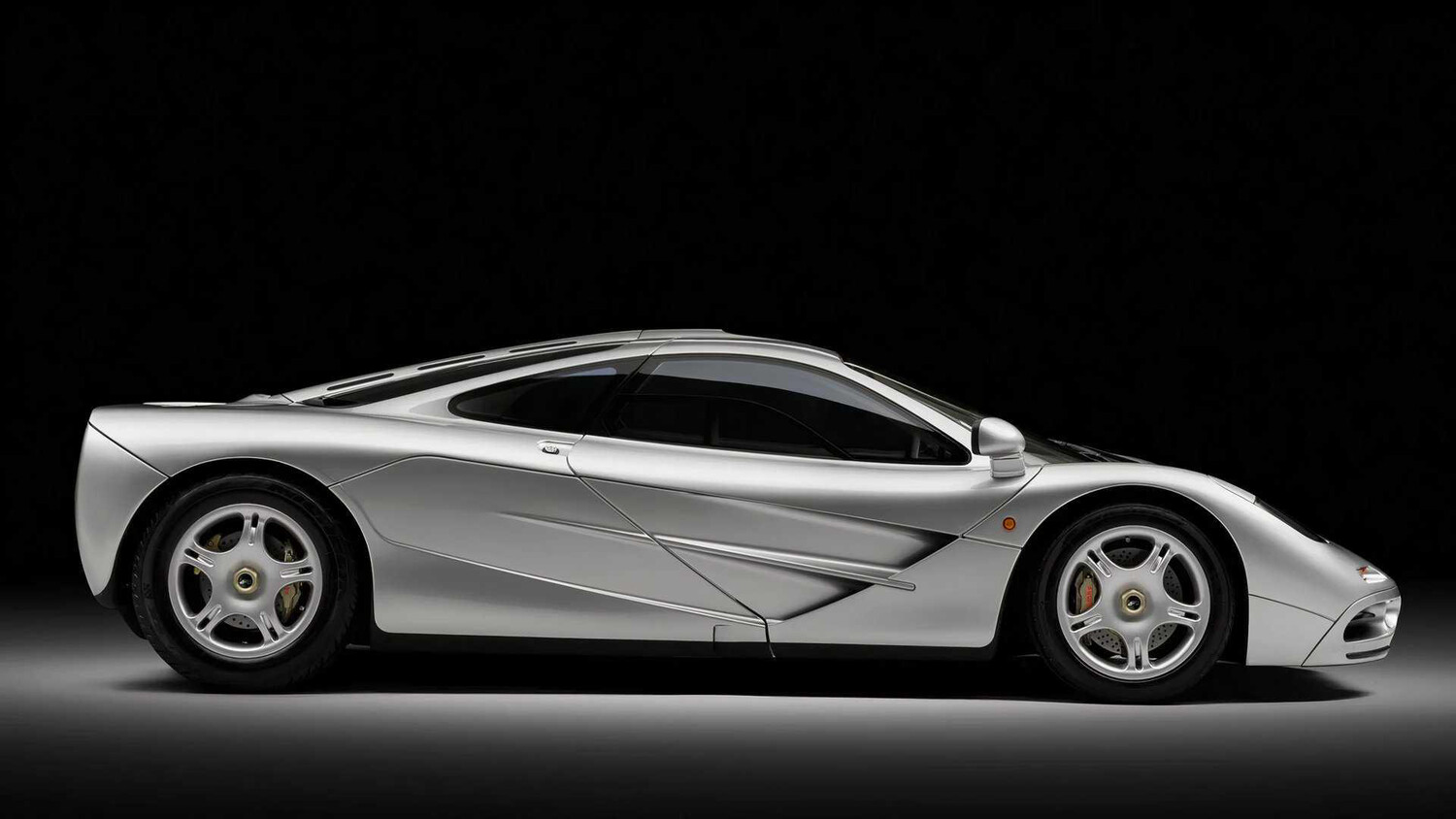
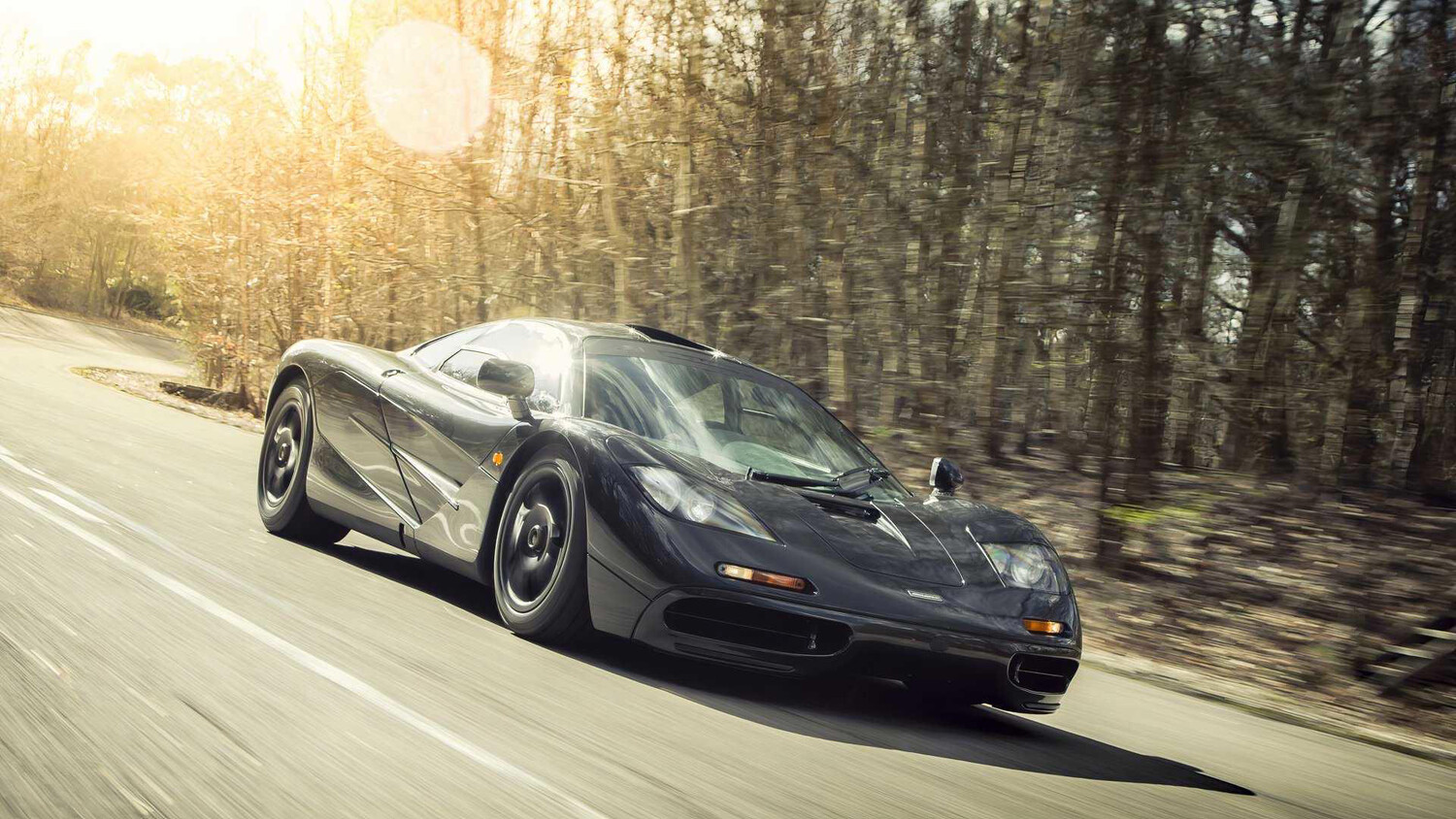
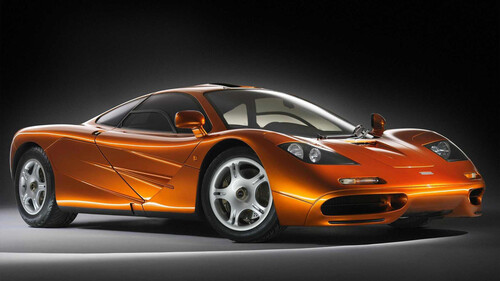
Today's Supercars are absolute marvels of modern engineering. They have the most advanced powertrains, suspension systems and electronics you can get anywhere. That helps them get up to speeds that would have been unheard of for production cars back in the '70s, '80s, or even '90s.But, there is still one old-school supercar out there that can genuinely give today's high-tech monsters a run for their money. This car was intended to be a true, raw, ultimate driving machine, using barely any driver aids and one of the world's most glorious naturally aspirated engines. It also held a very important record long after its production run ended. The McLaren F1 Is A 240-MPH Monster Modern Supercars Still Struggle To Keep Up With McLarenThere aren't many supercars that are more famous than the McLaren F1McLaren F1. The first production road car ever made by McLaren, it was an engineering triumph for its era. Its body was designed to be as aerodynamic as possible; it extensively used high-tech and exotic materials such as carbon fiber, Kevlar, titanium, magnesium, and even gold (the gold was used as a heat reflector in the engine bay), and it had one of the best engines to ever be fitted into a supercar.This was a 6.1-liter V12 that produced 618 hp and 479 lb-ft of torque. Dropped into the 2,778 lb McLaren F1, which gave it a 0-60 mph time of just 3.2 seconds. That kind of performance was genuinely world-beating back in the '90s, and keeps it well in contention with the ultra-high-performance cars of today. With figures like that, it wouldn't be unreasonable to suggest that the McLaren F1 might be the world's first hypercar.Where it differs from modern equivalents, though, is how raw and pure it is. That V12 has absolutely no forced induction — you got raw, naturally aspirated power all the way. It was also only ever available with a traditional 6-speed manual transmission. You got no driver aids to speak of, either. Driving a McLaren F1 to its limit requires the skills of somebody who really knows how to drive. That's not a skill you necessarily need to be able to get great performance out of today's supercars and hypercars. Engineering Input From BMW McLarenThe creation of the F1 may be mainly credited to Gordon Murray and the engineering team that worked under him. But, McLaren did get a bit of outside help. To create that glorious V12 engine, McLaren turned to BMW's M Division. The V12 BMW came up with for McLaren was exclusively for the F1, and it was tested using a modified E34 BMW M5 Touring.Curiously, the existence of the test mule car was only revealed many years later by McLaren's former director of road and race cars, David Clark. He claims that he's actually driven the car, and that BMW has tucked it away in a secret storage facility. The McLaren F1 Was Officially The Fastest Production Car In The World For Nearly A DecadeMcLarenIf you know anything at all about the McLaren F1, it's likely because of one reason, and one reason alone. This car was, at one point, the fastest production car in the world. It set that record in 1998, reaching an average top speed of 240.1 mph around Volkswagen's Ehra-Lessien test track.The F1 actually managed to hit a peak top speed as high as 243 mph during this run, too; however, that run wasn't without controversy. For a start, a prototype version of the F1 (the XP5) was used, so it wasn't done with a production car. Secondly, the rev limiter was raised from its typical 7,500 rpm redline to 8,300 rpm. That helped professional racing driver Andy Wallace have more of a chance of reaching the crazy speeds McLaren hoped it could achieve.McLarenIf that's how fast the McLaren F1 could go with those modifications, then what is its actual top speed in production form? Well, according to Car & Driver, when they drove one of the prototypes in 1994, it topped out at 221 mph. That's still very impressive, and in the kind of top speed range you'd expect from a modern hypercar. However, that's probably not the craziest part. It's Still The Fastest Naturally Aspirated Production Car Ever Made McLarenAs you'll no doubt know, quite a few other cars have since beaten the McLaren F1's 240+ mph record. But, none of those cars that have managed that are naturally aspirated. All of them have used forced induction to some degree. Because of that, the McLaren F1 still holds claim to being the fastest naturally aspirated production car ever made. It stands as the ultimate naturally aspirated supercar benchmark that still haunts modern cars today.With more cars moving toward electrification and forced induction today than ever before, this is a record the F1 will likely to hold onto forever, as there just haven't been any attempts to make a naturally aspirated car that can hit those same kinds of speeds. Internal combustion engines need to be really efficient now to meet ever-tightening emissions regulations, and big naturally aspirated V12s like the one used in the F1 just can't achieve that. It Wasn't The First Attempt At A McLaren Road Car Many people will (understandably) think that the F1 was McLaren's first attempt at making a road car. While it was the first time they managed to get a road car into proper production, there was one other time decades before where McLaren tried to make something road-legal. Back in the late 1960s, Bruce McLaren wanted to create a closed-cockpit version of the M6A Group 7 Prototype race car. This was so it could qualify for the FIA's Group 4 regulations, and therefore race in the 24 Hours of Le Mans. As part of this, at least 50 street-legal versions would have had to be made to meet those homologation rules.Unfortunately, the project never got off the ground. Only a few prototype race cars were ever made. But two of them did end up fulfilling part of the program's wishes and were modified so they could become street legal. One of those two actually became Bruce McLaren's personal car. Its Benchmark Was A Legendary Japanese Supercar Bring A Trailer (The_Dude_Abides)Every brand-new supercar needs an awesome benchmark. That's something that McLaren didn't skimp out on when it was developing the F1. Gordon Murray tested all the top sports cars and supercars around at the time, but there was one that stood out more than the rest to him. That was the original version of the Honda NSX. Murray drove the NSX while he was on a trip to Honda's Tochigi Research Center with Ayrton Senna, and was absolutely blown away by it. He then decided that, while the F1 had to be faster than the NSX, it had to have the same kind of handling and ride quality.Sources: Car & Driver, Collecting Cars Podcast, McLaren