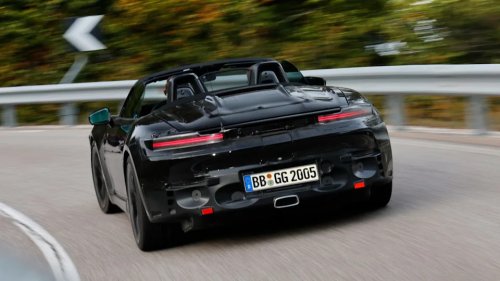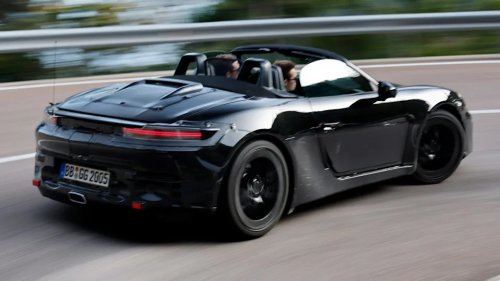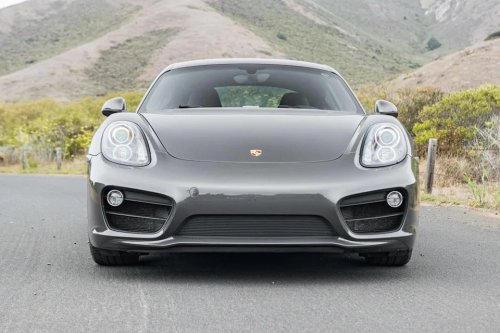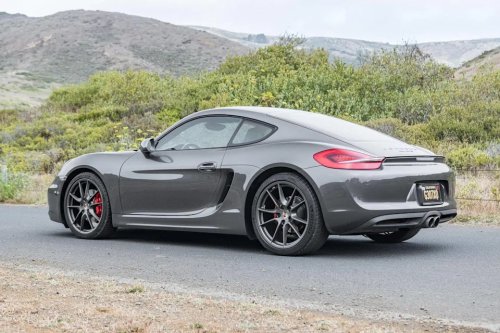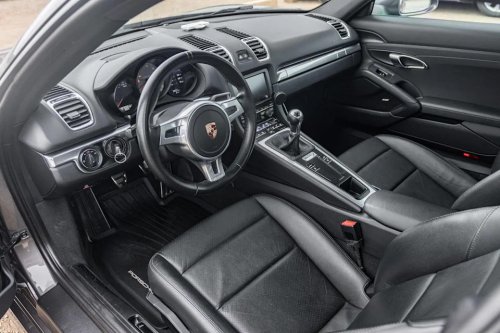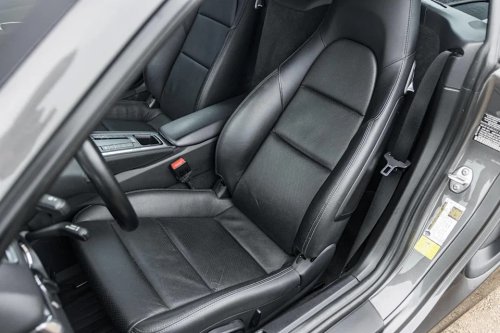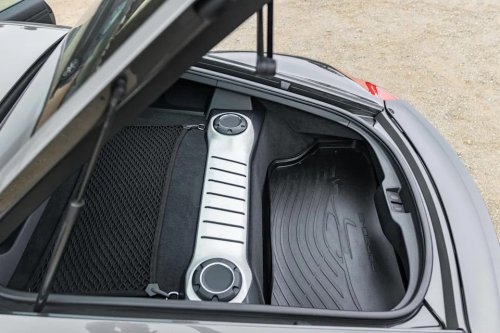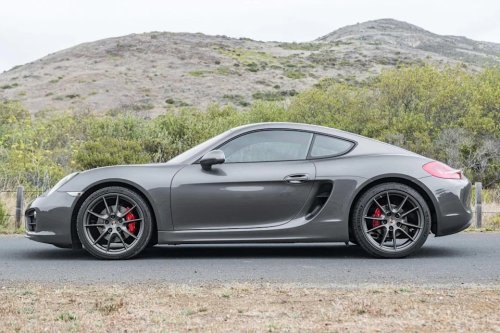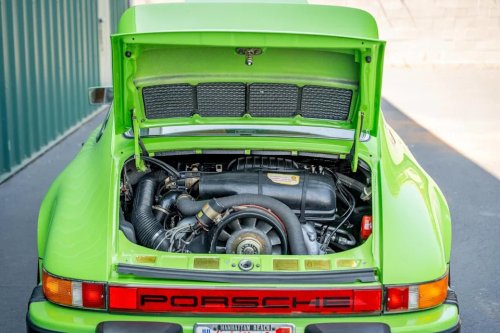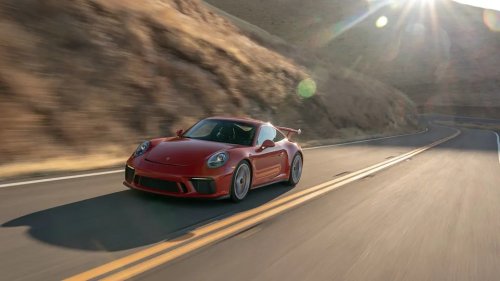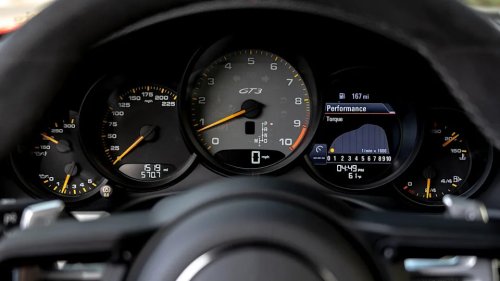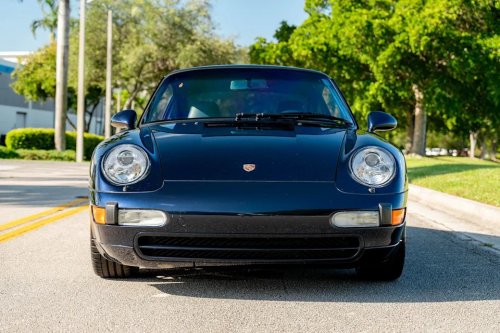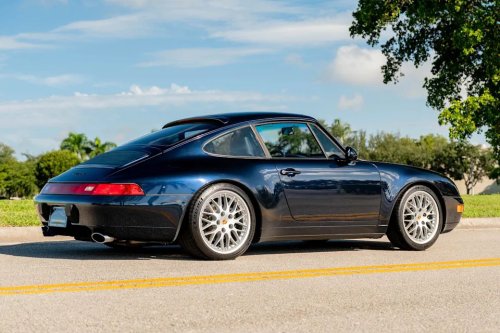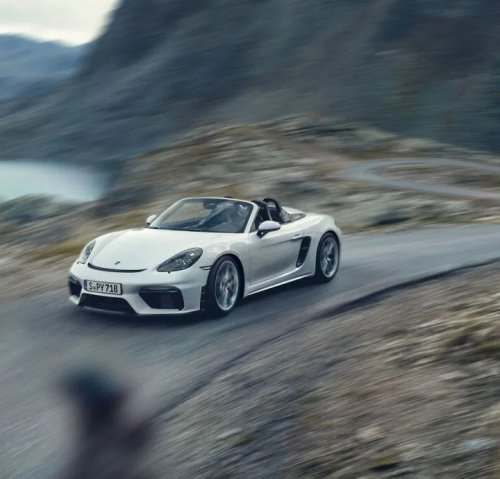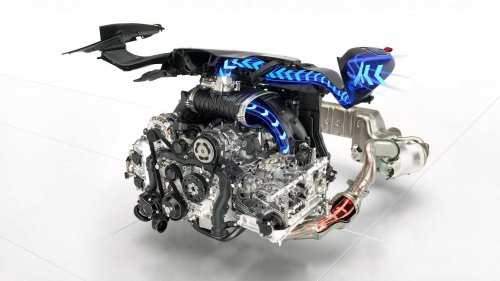
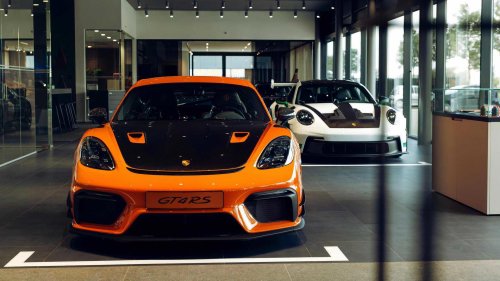
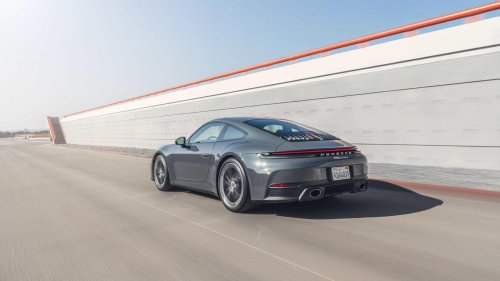
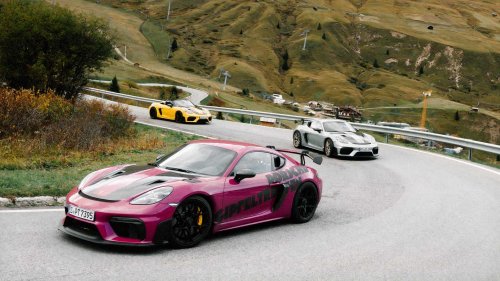
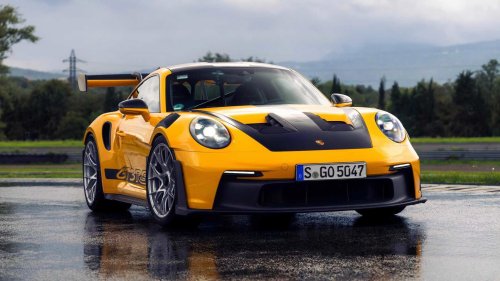



















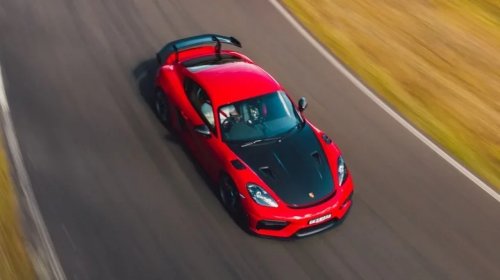

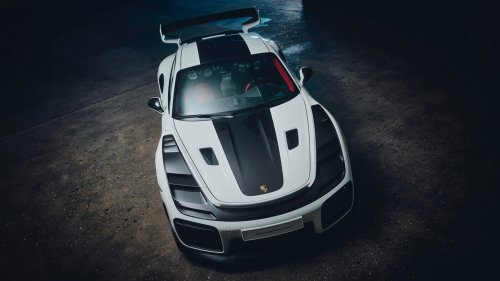
With the widespread adoption of forced induction all throughout the automotive landscape, the phrase “no replacement for displacement” has lost pretty much all its meaning. Engines have been getting smaller and better at producing power more efficiently, so the days of massive, naturally aspirated behemoths are long gone. Today we’re here to talk about six-cylinder engines in particular, and more specifically, the biggest one still present in a modern production car. Call it cheating if you will, but we decided to exclude the pickup segment and focus on sportier, more exhilarating vehicles. Nonetheless, a shout-out to the absolute king is in order, then we’ll get to the exciting stuff. In A World Of Downsized Engines, One Giant Six Still Survives PorscheBy far the biggest production six out there can be found in Ram’s heavy-duty trucks — the 2500 and 3500. It's a colossal 6.7-liter turbodiesel inline-six from Cummins, capable of delivering between 360 and 430 horsepower as well as 800 to 1,075 pound-feet of torque. These are hefty numbers for sure, but high-end sports cars with racing DNA are arguably more intriguing than heavy-duty pickups. So, if we ignore trucks altogether and look elsewhere, which powerplant reigns supreme as the world’s largest six-cylinder in our day and age? Let’s go ahead and find out, because the answer might surprise you.Generally, modern sixes top out at three liters, as seen on cars like the BMW M340i, Mercedes-AMG E53, and Toyota GR Supra. It’s something of a sweet spot — enough to ensure a thrilling experience for performance-minded drivers without upsetting any regulatory bodies in charge of emissions standards. And we can’t really argue with their capabilities, as both the Supra and M340i are able to muster close to 400 hp. On the other hand, the E53 hybrid sedan employs a 120kW electric motor alongside its turbocharged inline-six, for a combined power output of 577 ponies. But the displacement crown goes to a different German brand, one that still uses a naturally aspirated four-liter boxer on a few of its coolest models. Built Like A Race Engine: Why Porsche’s Flat-Six Is So Special PorscheIn case you haven't figured it out already, we're talking about Porsche and its mean, high-revving flat-six—a true rarity in a world full of turbos and hybrids. It was introduced back in 2011 with the 911 GT3 RS 4.0 and has constantly evolved over time, all while retaining the race-bred character that made it so great. Now present in multiple range-topping 718 and 911 variants, the engine has a myriad of distinctive features setting it apart from just about every other powerplant on offer today. Its capacity is one of them, of course, placing it well above the three-liter sixes typically used in modern sports cars. Racing Technology In A Road-Going Engine Porsche Then there’s the fact that it’s naturally aspirated while so many other engines have turned to forced induction, spurred on by stricter emissions standards. Porsche's engineers remained committed to offering the purest driving experience with their flat-six, which ensures instant throttle response, predictable power delivery throughout the rev range, and no such thing as turbo lag. Besides this, yet another notable trait is the boxer’s redline, placed at a whopping 9,000 rpm! That’s almost unheard of in car engines and exclusively reserved for the cream of the crop, requiring high-end materials and some very clever engineering to prevent motors from tearing themselves apart.As such, Porsche employs a nice bit of race-derived tech on its six-cylinder gem, including titanium connecting rods, dry-sump lubrication for constant oil pressure during hard cornering, and valves actuated via shims together with carbon-coated rocker arms. Another thing worth mentioning is the air intake, featuring six individual throttle bodies and engineered to achieve higher air pressure inside the cylinders. Naturally aspirated powerplants typically operate at atmospheric pressure, but Porsche’s bright minds found ways to raise it by up to 20% within their mighty flat-six. So which P-cars are being sold with this rev-happy beast in our day and age? Models Powered By This Naturally Aspirated Phenom 718 Lineup PorscheStarting with the mid-engine 718 lineup, you’ll find it in the Cayman GT4 RS and its Spyder RS sibling, as well as the GTS 4.0 versions of the Boxster and Cayman. For the latter GTS models, the mill is tuned to a relatively tame 395 horsepower and 317 pound-feet of torque, which can result in speeds of up to 182 mph. The GTS 4.0s will reach 62 mph from a standstill in just 4.5 seconds, but things get a lot more serious when it comes to the Spyder and GT4 RS. That's where the engine's capabilities really shine, though, and it's truly impressive to see how far Porsche managed to push the envelope here.Both cars have 493 ponies and 332 pound-feet of torque to play with, though they don’t offer six-speed manual options, unlike their GTS counterparts. The driver’s experience is sure to be exhilarating, nonetheless, as these bad boys can go from zero to 62 mph in 3.4 seconds and continue accelerating to a top speed of 191 mph. Honorable mentions are the non-RS iterations of the GT4 and Spyder, no longer in production but once part of the four-liter boxer family. Now, the 718s aren’t the only ones making use of Porsche’s naturally aspirated six-cylinder, so we are yet to see just how far it was pushed. Performance Specifications 911 Lineup PorscheThat brings us to the 911 range, more specifically the GT3, GT3 Touring, and — the one to rule them all — the GT3 RS. In the standard GT3 and its more understated Touring Package, you’re getting 503 stout German horses along with the same twisting force as the aforementioned RS-badged GT4 and Spyder. They’ll hit 62 mph in 3.4 and 3.9 seconds, respectively, with nearly identical top speeds of 193 and 194 mph. Last but not least, the track-focused GT3 RS extracts 518 hp and 343 lb-ft of torque from Porsche’s flat-six, which will launch you to 62 mph in just 3.2 ticks of the stopwatch. Ultimately, the 911 GT3 RS will top out at 184 mph. Performance Specifications We hope to see this legendary engine sticking around for a long time to come, but the uncomfortable reality leaves us with one big question. How much longer will Porsche manage to keep it alive in an age when everyone is turning to electrification, turbos, and downsizing? With regulations also encroaching on large-displacement, naturally aspirated territory, the answer might not be what any of us wants to hear, so let us cherish the six-cylinder boxer from Stuttgart while it’s still in production. Although we don’t like concluding on a sad note, one must prepare for the inevitable and accept that all great things eventually come to an end.Source: Porsche