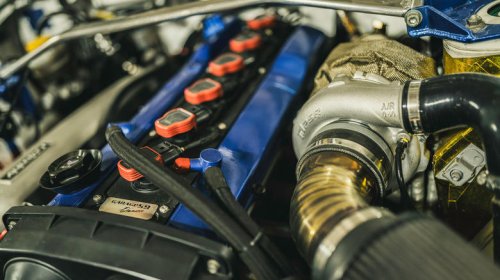
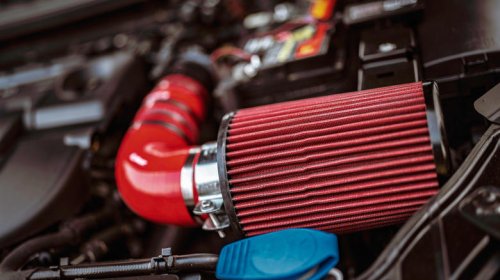
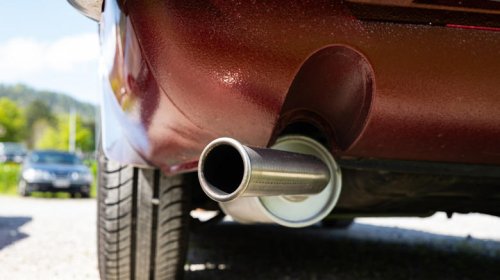
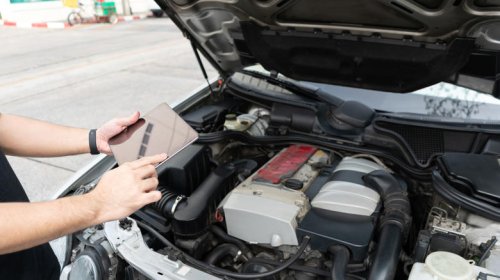
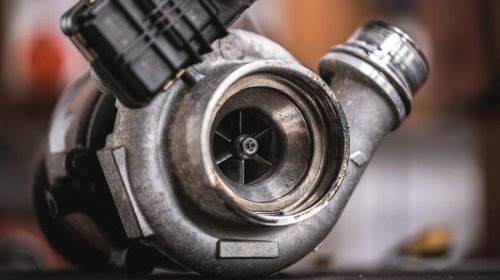
Close-up of Nissan RB-style straight six engine with aftermarket turbo kit, intake, coil pack, and other performance modsMaking your car go faster is a rite of passage for almost any gearhead, and there are a plethora of ways to go about it. The operation of the internal combustion engine is a matured science for the most part, with many well-understood avenues to extract power — but as anyone into cars will tell you, this isn't exactly a cheap hobby. Cars themselves are expensive, repairs are expensive, and aftermarket parts can be even more expensive.Well, a lot of them are, but there are some mods that are friendlier to those with tight budgets. Sure, you may not get the massive gains of an engine swap or a big turbo, but every little bit counts. 10 horsepower here, 15 horsepower there; it all adds up in the end to a well-rounded performance car that won't break the bank and be impossible to drive full-throttle without needing a change of pants. Of course, there are mods for that as well, such as these budget crate engines we've looked at. But let's suppose you're on a shoestring and just want entry-level performance — now we're talking.This article will focus on mods you can find new for less than $1,000 without scouring the depths of eBay or junkyards, as they introduce too many variables. That said, an engine's made up of hundreds of parts, so we're not exactly hurting for choice when it comes to bolting on upgrades, some of which punch well above their weight on the dyno. Let's check them out and see what you might be missing for your build. Cold air intakeCold air intake kit installed in engine bayThis one's easy mode for anyone even remotely into tuners. We're all familiar with that big conical air filter you see under the hood of modified vehicles, but what are they, how do they work, and what do they cost? Well, like any system here, cold air intake prices are varied depending on your engine, but kits typically hover around several hundred USD depending on how big you want it.The basic definition of a cold air intake is that it replaces the factory air filter with one designed to draw in cooler air from outside the engine bay. Cooler air is denser, and that packs more molecules into a smaller space, so there's more air in the combustion chamber for a given volume. It's the same concept as a hood scoop on muscle cars; they're just designed to feed the cold air from the top of the hood into the carburetor's intake as opposed to the intake manifold of a car with fuel injection.If you install a cold air intake, expect a lot more noise from the engine sucking in air, and generally as much as 15 horsepower. Not a lot, but again, every bit counts, and often this mod is about sound as much as the performance gain. The exact amount of power you'll get depends on several factors – ultimately it's about getting more air into the engine, so a larger system with bigger pipes will produce more power. You will also likely need to recalibrate the engine's ECU to accommodate the increase in air; otherwise it could throw off your tune. High-flow mufflerClose-up of aftermarket muffler fitted to economy carHere we see another example of a mod that's often just as much about the sound as the performance gain. Modifying your exhaust is a great way to really bring out a car's character, as well as bring up that power number on a relatively thin budget. A wide plethora of aftermarket mufflers exist, frequently with videos on YouTube of vehicles running them so you can sample what they sound like. But in general, if you're just looking for the muffler and aren't touching the pipes themselves, you're in for about as much as a cold air intake — that is, maybe a few hundred bucks for a decent sounding one, up to over $500 for a nicer example.To understand how these systems make power, we first need to review how a muffler works. A car's exhaust system is designed to extract the spent fuel/air mixture out of the combustion chamber, dampen the noise, and expel the spent gases. The key here is getting the air out as quickly as possible; straight-piped exhausts sound good in principle, but something too big can destroy your exhaust velocity. Imagine blowing air with your mouth partially closed versus your mouth wide-open — the former produces a faster airflow.High-flow mufflers are designed to maximize this airflow, improving performance by prioritizing getting the exhaust out rather than making it quiet. It's again not that big in terms of performance gains, with major brands advertising around 5-10 horsepower for a high-flow muffler depending on application, but it nevertheless remains a perennial favorite entry-level upgrade for muscle cars and tuners alike. And if it's still too much money for you (or you don't care about your hearing), there's always the "get rid of it" option. ECU tune / flashMechanic holding tablet over engine of a 2000s Mercedes-BenzThis one is highly dependent on what car you have; every modern vehicle has different levels of optimization from the factory. But almost universally, if you want big power gains for little money, then an ECU flash is a strong contender. It doesn't technically require modification to the car; what you're doing is changing software settings to optimize certain parameters. Basically, you're finding hidden power gains by doing things like adjusting levels such as ignition timing, fuel delivery, and more. They're the same settings you're likely to see when the car was in the factory being adjusted for the first time.There are multiple levels to modifying your ECU, each with its own associated cost that can range from around $300 to $800. Tuning these systems can be as simple as uploading a pre-existing tune to your car's firmware, or as complex and involved as getting everything dialed in at an in-house dyno. You can also spring for an aftermarket ECU if you have particularly deep pockets, but even budget-conscious owners will see promising results from a professionally-tuned factory ECU.Another bonus of ECU tuning is the side effects outside of just optimizing your car's peak horsepower. You're modifying aspects related to fuel delivery, throttle response, speed and rev limiters, and more, effectively jailbreaking your car. These can lead to a vastly improved driving experience, fully-customizable according to your needs. Just make sure to get a reputable professional for a job like this, because a poor ECU tune is a great way to ruin an otherwise serviceable vehicle. Upgraded fuel systemClose-up of fuel injector at workSpeaking of fuel delivery, one upgrade not often discussed is a good fuel pump and injectors. Think about it: How do you actually get the gas into the engine to produce power? You use a fuel pump, and that fuel pump can only move so much gas at one time. This is especially true of cars that already have mild upgrades; you need additional fuel to maximize that power potential, and that might not be enough for a stock pump or injectors to handle.Of course, that only applies to engines that are already producing more power, but what about stock applications? In those cases, it tends to be more situational. By combining an aftermarket pump with high-flow injectors and uprated hoses, you're able to pull more fuel into the engine; marry this with a nice cold-air intake that lets you draw in more air and a solid ECU tune, and you have a winning recipe. Just the fuel system alone won't significantly improve your horsepower unless your car is used and has worn injectors, or it's from the Malaise Era and fitted with devices that choke fuel delivery. Rather, consider this a component of a more complete package.Nevertheless, a fuel system is actually something you can buy for less than $1000, from head to toe. Basic drop-in fuel pump kits by companies like Walbro run for a couple hundred dollars at the high ranges, plus injector kits for around $600 for mid-tier options like DeatschWerks. Universal kits exist for many applications; fuel pumps don't last forever, after all. Pricing varies depending on the fuel flow rate and the amount of cylinders (thus, how many injectors) your car has. Boost controller / forced induction tuneClose-up of turbocharger outside of engine bayThis upgrade obviously only applies to vehicles with forced induction, either a turbo or supercharger, so ignore this if you have a naturally-aspirated car. That said, more cars are turbocharged than ever before, with automakers fitting these devices to help deal with stricter fuel economy and emissions regulations. Whether or not turbochargers actually increase MPG is a more complex question that we won't get into here. Suffice it to say, though, many turbochargers are often optimized for this purpose, meaning there's a lot of performance potential just begging to be unlocked with a simple tune or boost controller.A boost controller is a device which essentially tricks the engine into thinking it's producing less boost than it actually is. It does this by modifying at what point the actuator spring in the wastegate of a car's turbocharger opens. There are two types of boost controllers: manual ones are fixed and requiring you to open the hood to adjust, while electronic ones can be adjusted from inside your car. Electronic boost controllers are several times more expensive, but even so, you can find them for a few hundred USD.Finally, let's rewind to the ECU flash. Performing this service with a forced induction engine means you can modify certain parameters related to the turbo. This, along with mild supercharger upgrades for so-equipped vehicles, results in significant performance gains, albeit at the cost of reliability. You're not upgrading any engine internals after all, and adding more boost can result in the engine becoming dangerously unstable at high loads. Therefore, this kit is best implemented if you have a good degree of mechanical knowledge and a proven, reliable setup. Want the latest in tech and auto trends? Subscribe to our free newsletter for the latest headlines, expert guides, and how-to tips, one email at a time. You can also add us as a preferred search source on Google.