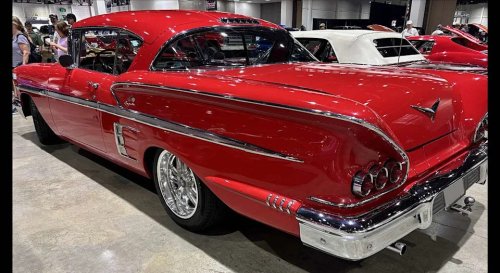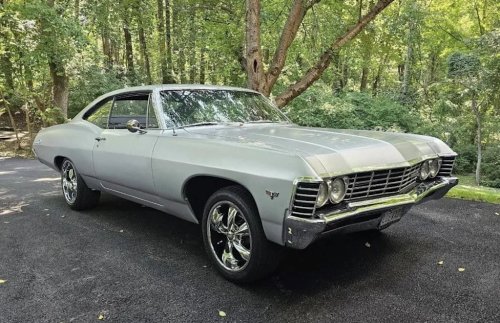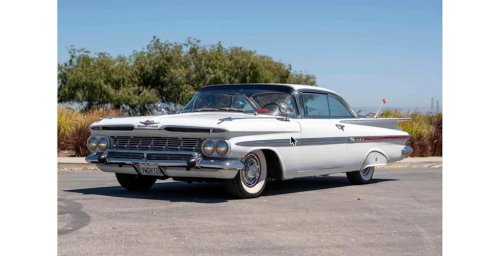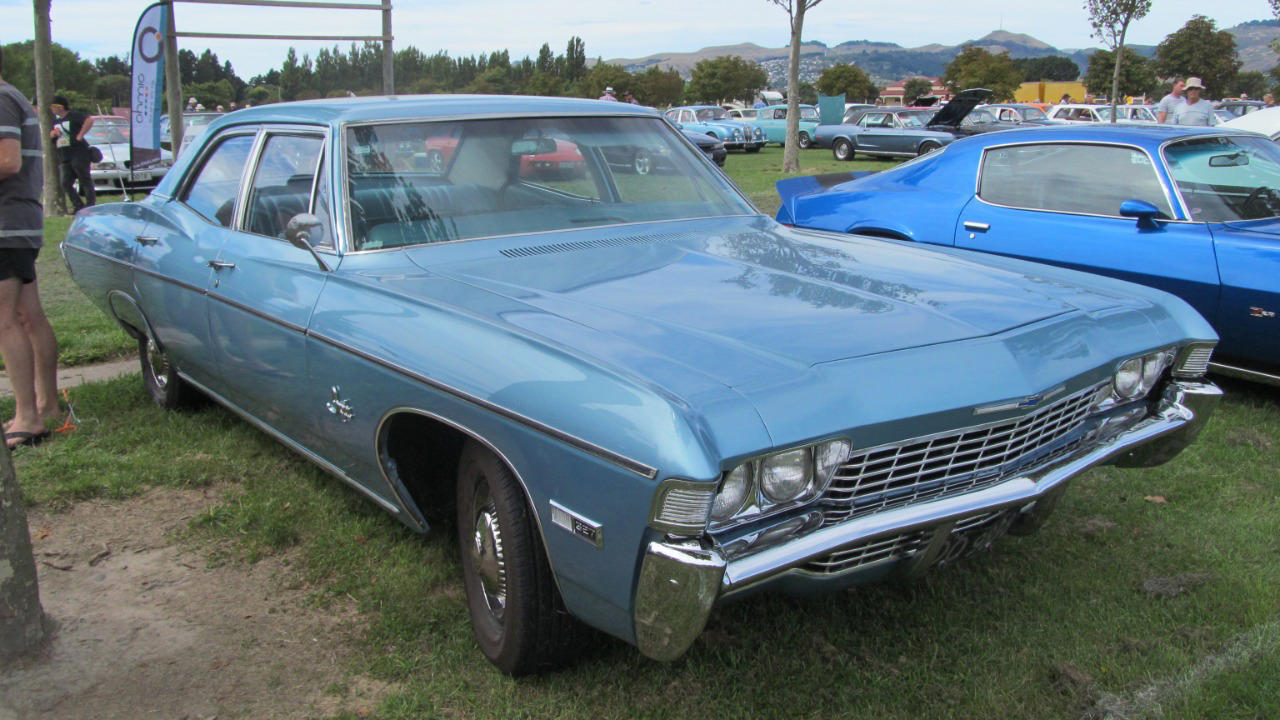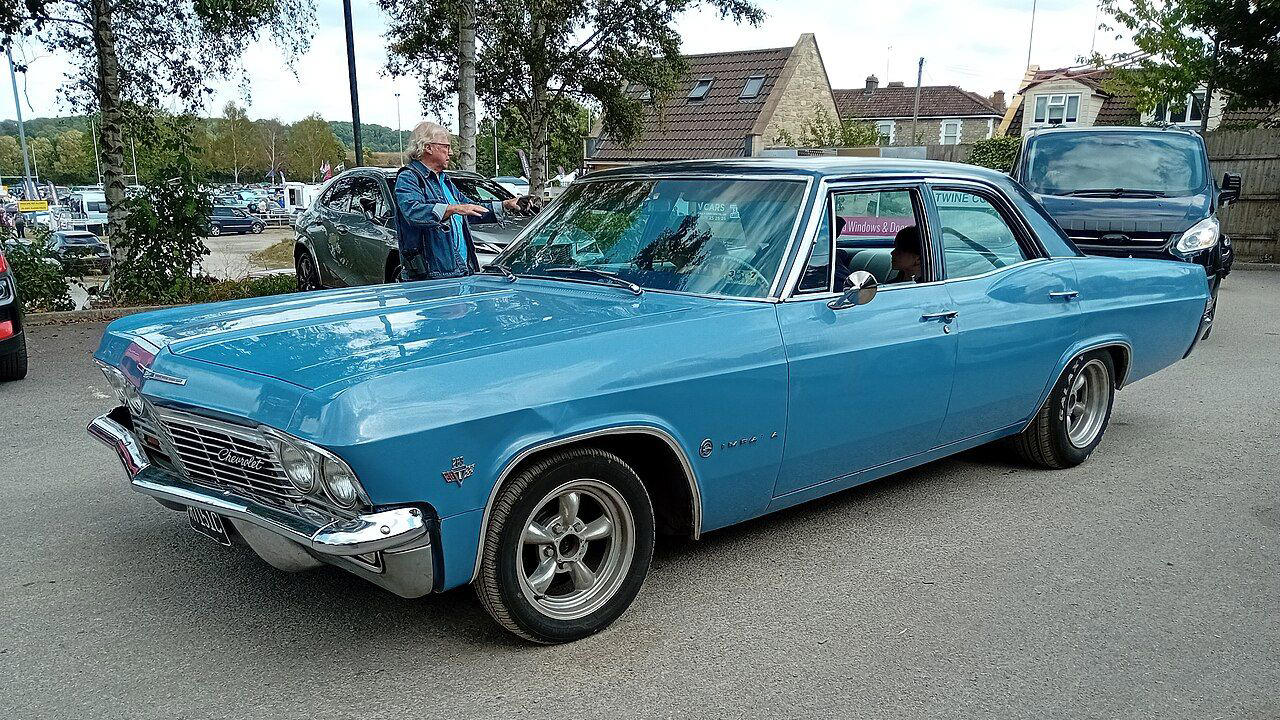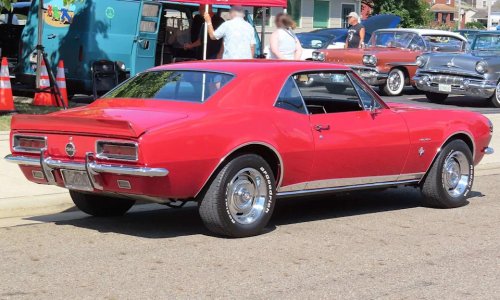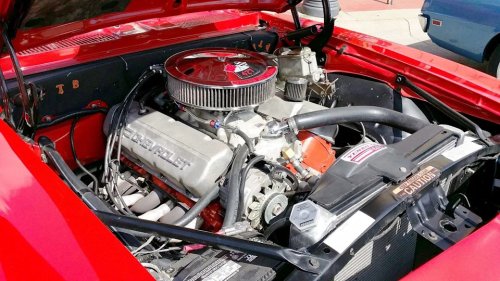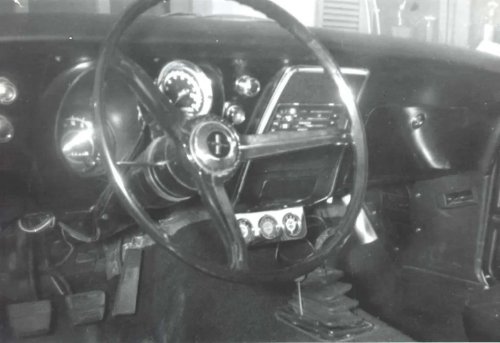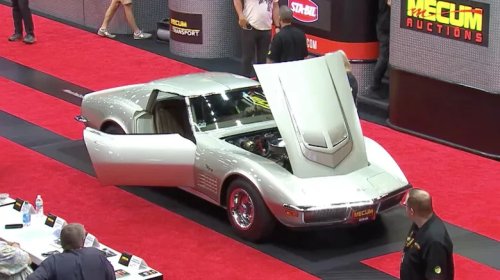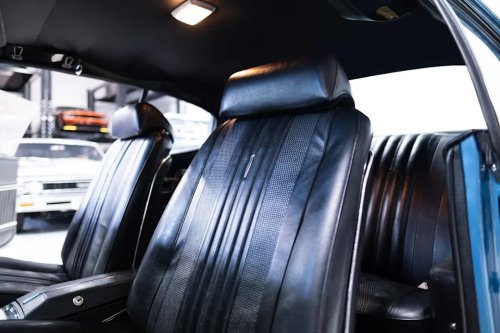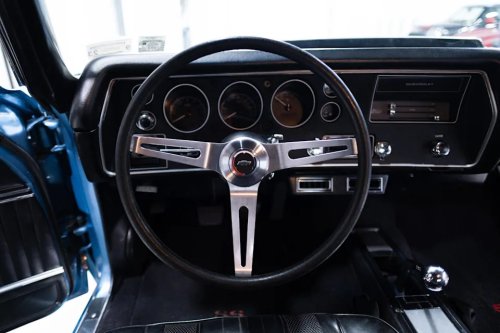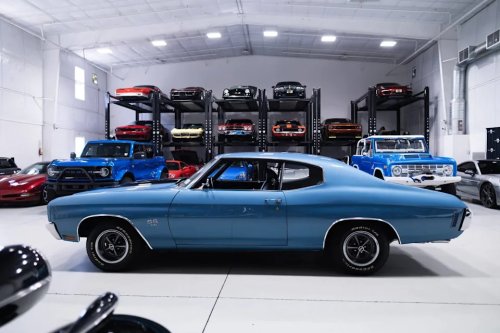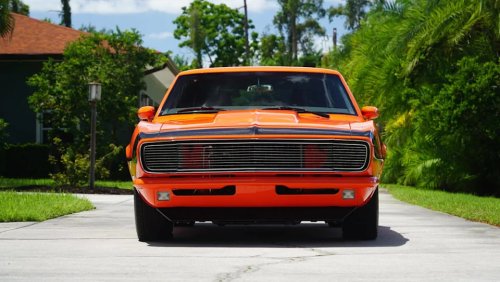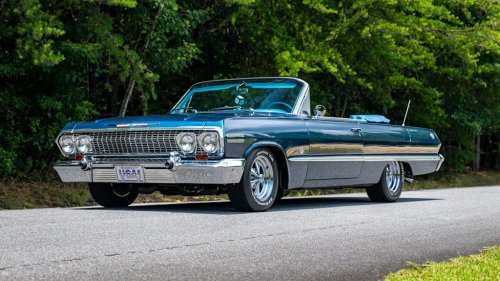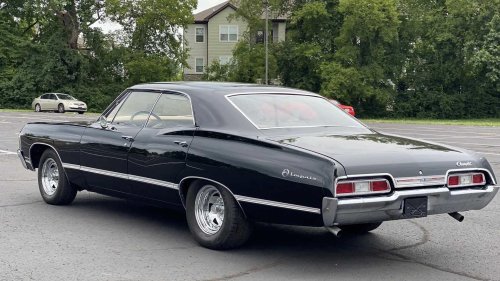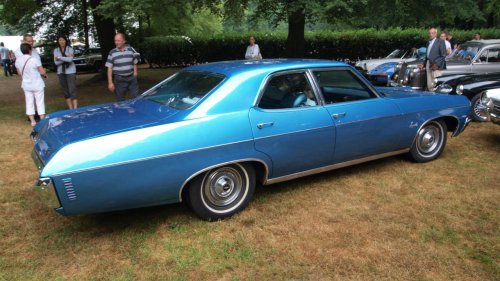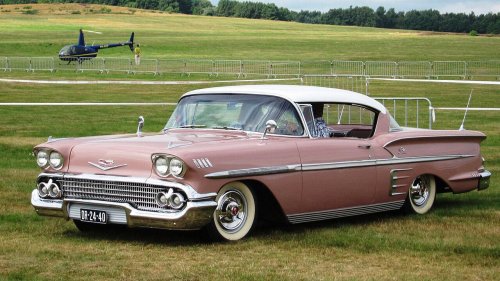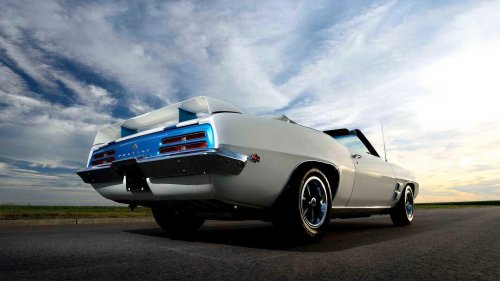
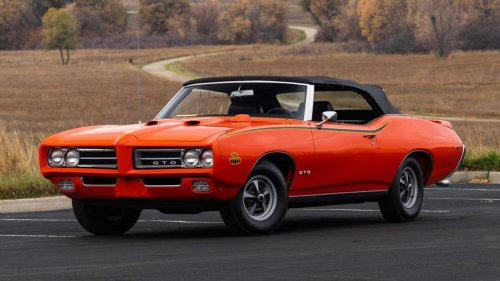
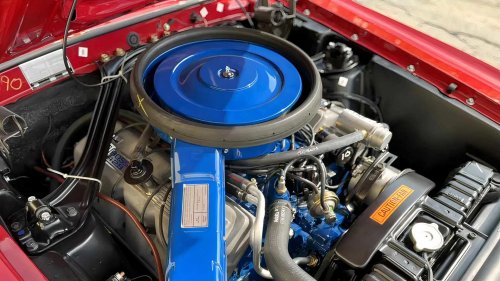
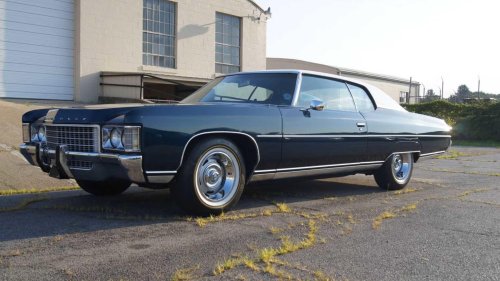
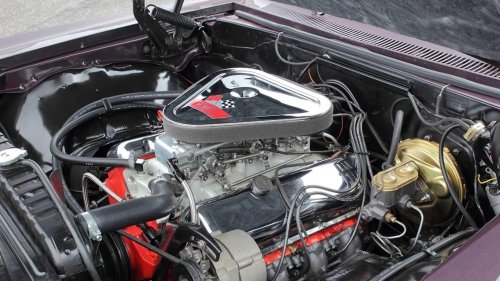
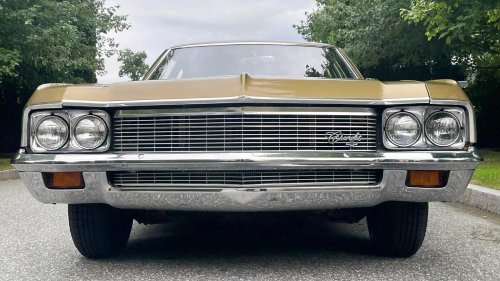
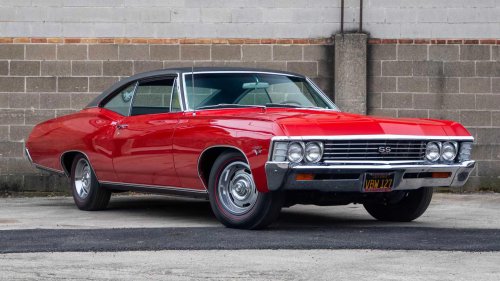
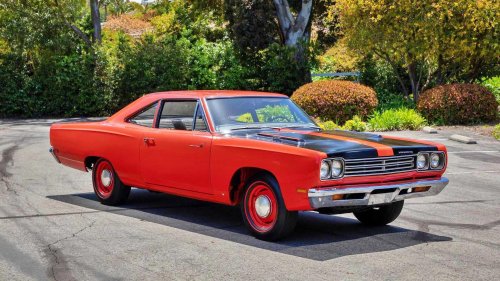
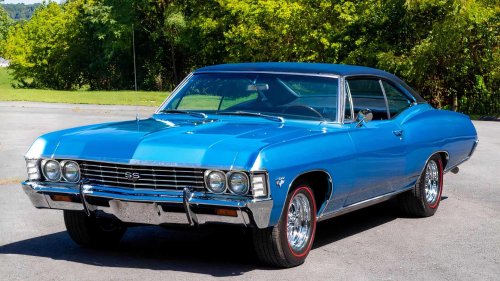


















Some things exist for no reason other than the fact that someone could make them. Nobody asked for it. Nobody demanded it. Nobody put it in a focus group or ran it past a marketing team. And that is precisely what makes it so perfect. One American automaker built a two-ton family sedan with bench seats, room for the whole family, and a NASCAR-derived engine under the hood that made 425 horsepower. Nobody advertised it. It was not in the brochure. The dealer might not have even known what he was selling. And yet it existed, it was road legal, and it could humiliate purpose-built muscle cars at a stoplight while the kids were buckled up in the back.This was 1969. Seatbelts were still optional in some states. Crumple zones were a theory. And this car, this completely unremarkable-looking American family sedan, was hiding a solid-lifter big-block that shared its DNA with the engines winning NASCAR races. The car that did all this was not a Chevelle, not a Camaro, not a Corvette. It was the family hauler that dad drove to work on Monday. With the right engine order, it could smoke a GTO without breaking a sweat. The Muscle Era Had A Problem With The Word Enough Via Mecum Auctions The muscle car era of the late 1960s was a full-scale war fought on American streets and drag strips. The battlefield was the showroom floor, and the weapon of choice was displacement. Ford, GM, and Chrysler were locked in an arms race to see who could shove the biggest, most violent engine into the smallest, most unsuspecting car. This was the era that gave birth to the pony cars: the Mustang, the Camaro, and the Firebird. It was also the era when intermediate-sized family cars started arriving at dealerships with race-spec engines hiding under their hoods like a wolf in sheep's clothes. How Detroit Turned Family Cars Into Weapons MecumIt all started when Pontiac dropped a 389-cubic-inch V8 into a mid-sized car in 1964 tocreate the GTO. Every other American manufacturer followed the same logic immediately after: find the biggest engine you can, find the smallest car it will physically fit inside, and ship it. The results were spectacular and completely irresponsible in the best possible way.You could order a Kingswood Estate station wagon, a car designed to carry the family and the groceries, with a 427 V8 making 390 horsepower. You could get a Biscayne, the fleet car that served as taxis, cop cars, and rental vehicles, with a 427 making 425 horsepower. There were no rules, no regulations, and no internal corporate voice of reason standing in the way. If the engine could be physically installed, the car shipped with it. The only limit was physics and the width of the engine bay. The Arms Race That Led To The Most Absurd Car Ever Built Bring A Trailer By the end of the decade, the horsepower war had gone completely off the rails. Every division of every American manufacturer had one objective: more muscle. More cubes. More compression. More everything. It was in the middle of this insanity that someone at Chevrolet decided to do something that would barely register in the history books but absolutely should have. They took the most popular full-size sedan in America and gave it an engine that had no business being anywhere near a family car. The result was one of the most outrageously over-engineered sleepers ever to roll off an American production line. Chevrolet Put A NASCAR Derived Engine In The Impala And Said Nothing ChevroletThe1969 Chevrolet Impalawas already America's best-selling full-size car, moving hundreds of thousands of units a year. It was comfortable, spacious, and completely unthreatening. It was the automotive equivalent of a living room sofa on wheels. Chevrolet had no reason to make it faster. They did it anyway, and they told almost nobody about it.The 1969 Impala SS 427 (Z24) was available only in three body styles: Convertible, Custom Coupe and Sport Coupe. Four-door Impalas could get big-blocks via other options, but not the official SS 427 package. The base engine was the L36, a hydraulic-lifter 427 that produced 390 horsepower and 460 pound-feet of torque. That alone was already an absurd amount of engine for a family sedan that weighed somewhere between 3,800 and 4,100 lbs depending on options. But Chevrolet did not stop there. 425 HP In A 4,000-Pound Living Room On Wheels The optional L72 upgrade is the real story. The L72 was the same 427 cubic-inch displacement as the L36, but that is where the similarity ended. It featured an 11:1 compression ratio, solid lifters, and a big Holley four-barrel carburetor. Every single component screamed race engine that had been barely tamed for street use. It made 425 horsepower. In a full-size family sedan. With air conditioning. With bench seats. With a column shifter if you wanted one.Approximately 2,455 Impalas were ordered with the 1969 Z24 SS package in total across both engine options. These were unicorns wearing the most boring clothing imaginable. You could identify one by the black-accented grille, SS badges, 15-inch wheels with redline tires, power front disc brakes, heavy-duty suspension, bucket seats, and a console gearshift. From the outside it was subtle. From inside the cockpit, there was not a single SS badge anywhere except a tiny logo on the steering wheel. Nothing on the dashboard. Nothing on the door panels. From the driver's seat, there was no indication whatsoever that you were sitting in the most powerful full-size sedan Chevrolet had ever built. That invisibility was the whole point. A NASCAR Derived Engine With Air Conditioning And A Bench Seat Mecum Auctions The L72 427 traces its lineage directly to the engines powering Chevrolet's NASCAR efforts and shares its basic architecture with the Corvette's legendary L88. This was a competition-derived engine dropped into a car built for comfort, and the combination was completely unhinged. The L72 was paired with the Turbo Hydra-Matic 400 automatic transmission, one of the most robust gearboxes available at the time and the same unit used across GM's high-performance lineup.Rear axle options went all the way up to a 4.89:1drag racingconfiguration, though most buyers opted for the more streetable3.31:1 or 3.55:1 with Posi-Traction. The car had minimal SS badging inside beyond that single tiny steering wheel logo. From the driver's seat there was no way to know you were piloting the fastest full-size car Chevrolet was selling. That was not an accident. Chevrolet was not advertising this engine in any brochure. There was no press release, no showroom placard, no campaign. If you knew, you knew. If you did not, you ordered a station wagon. Why A Full-Size Muscle Car Had No Business Being This Fast Via Bring a Trailer The purpose was simple and completely absurd: beat the competition. Not to satisfy a customer need. Not to respond to market demand. Just win the horsepower war for the sake of winning it. And that lack of purpose is precisely what makes the Impala SS 427 so brilliant. It was the automotive equivalent of someone setting the world record for something nobody tracks, just because they could. It gave you the legitimacy of the family car, the grocery run, the school pickup, combined with the ability to pull onto a drag strip on a Saturday afternoon and embarrass everything that lined up next to it. Drag Strip Numbers From A Car Your Grandma Could Drive To Church Mecum AuctionsWith the upgraded L72 engine, the Impala SS 427 did the 0-60 mph sprint in around five seconds and ran thequarter mile in well under 11 secondswhen properly set up according to referenced period performance data. Those are not supercar numbers, but they are genuinely quick for a car that weighs as much as a small boat and was designed to carry a family of five in comfort. The L36 numbers were slightly slower given the significant engine upgrade, but most period performance data referenced the L36 as the documented baseline. What is not in dispute is that with drag-spec gear ratios and the right setup, this car was an absolute weapon on a straight line despite looking like something you would find in a church parking lot on a Sunday morning. How It Compared To The Muscle Cars That Actually Got Famous The GTO, the Chevelle SS, and the Road Runner were the poster cars of the era. They got the magazine covers, the advertisements, and the cultural cachet. The Impala SS 427 got none of that, yet it was running the same engine as some of them and doing it from inside a car that weighed nearly 500 lbs more. The L72 427 in this car was the same basic engine family that powered the 1969 Corvette. Chevrolet essentially put a Corvette engine into a family sedan, sold it for less money, and told nobody. That is either genius or complete madness, and in 1969 the line between those two things was very thin. The Impala SS 427 Was The Last Gasp Of An Era That Could Not Last via Bring A TrailerWhat killed the muscle car era by the early 1970s was a brutal combination of skyrocketing insurance premiums and the push toward unleaded fuel requirements. The insurance costs alone were enough to price an entire generation of young buyers out of the market. The 1969 Impala SS 427 was the last of its kind. When the SS badge returned to the Impala in 1994, it came with a 260-horsepower LT1. Perfectly decent. Absolutely not the same universe as a solid-lifter 427 with drag gears. What The Ultimate Full-Size Muscle Car Is Worth Today Bring A Trailer Today a clean L36 Impala SS 427 can still be had for less than the price of a new Camaro ZL1. That is a documented piece of American muscle history with jaw-dropping mechanical provenance, available at a price that makes the collector market look like it has not done the math yet. L72 examples are in a completely different category. With only 2,455 SS 427 cars built across both engine options, verified L72 cars are extraordinarily rare. The GTO, the Road Runner, and the Chevelle SS get all the auction headlines. The Impala SS 427 remains the full-size muscle car that the collector market has not fully woken up to yet. When it does, these prices will not hold.