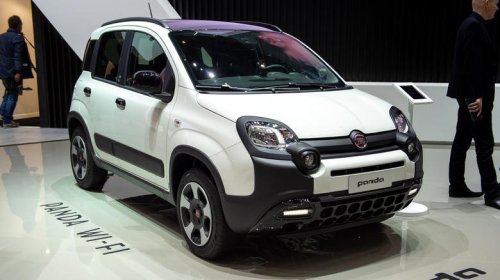
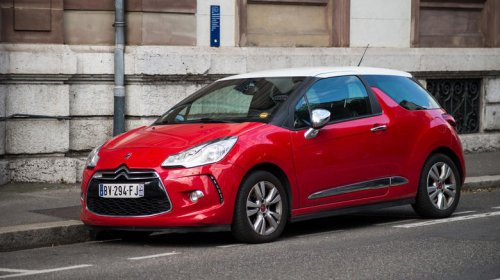
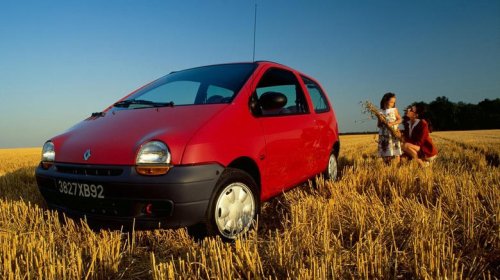
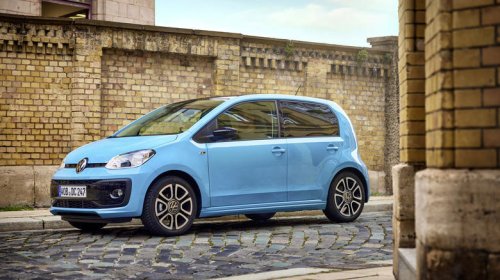
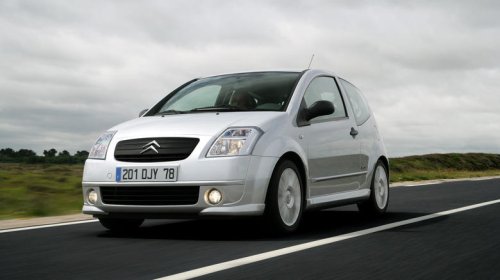



















Fiat PandaIt's one of the best stories in the auto industry. The original Fiat Panda came along in 1980 to replace the Fiat 500 as the automaker's entry-level model. It was a small basic car that could do just about anything you asked from it, and that would also be dependable, reliable, and easy to work on. This would be one of Fiat's best decisions ever, as the original Panda carried on until 2003 with little to no changes.Even in the car's next two generations, Fiat did not forget what made the original Panda so great. Even though Fiat does not have a stellar reputation for reliability, the Panda is a solid workhorse. With the optional AWD system in the 4x4 versions, it can get to places that other small cars wouldn't dare to even touch. Fiat has not given up on the Panda 4x4 either, continuing to offer it to this day. The second generation Panda even brought along a fast version, the Panda 100HP, which pushed 100 horsepower as the name implies. The Panda is still such an enormous moneymaker for Fiat, in fact, that thanks to increased recent demand, it will not be fully replaced by the electric Panda that's due soon. That car is still happening, but the regular Panda will carry on for at least another three years badged as the Pandina. Despite the Panda's diminutive dimensions, its story and success are absolutely colossal.Citroen DS3In the late 2000s, Citroen decided to leverage one of its most storied nameplates, DS, for a group of more upmarket models. The lineup of new DS models kicked off with the small DS3. It was based on a familiar PSA Group platform, but it was much more stylish and trendy. Like some of the aforementioned, the DS3 also wanted a piece of the Mini and Fiat 500 pie, and it was quite successful in that mission.One fun fact about the DS3 is that it shared part of its engine lineup with the contemporary Mini. The small diesel engines were the same as you might find in the Mini One D, and the Racing version of the DS3 featured the same 1.6-liter turbo four banger as the Mini Cooper S. Citroen was banking quite heavily on the fact that the DS3 wasn't retro, and the styling was one of the most loved aspects. The DS3 had its competitors licked when it came to interior space, and with being in this market segment, exterior customization options were mandatory. Along with the regular hatchback, Citroen also offered a Cabrio version of the DS3 with a folding canvas roof. This was not only to sway Fiat 500C buyers, but it also improved on Citroen's less celebrated Pluriel. Sadly, this characterful small hatch could not stay afloat for too long, and it eventually died to make room for a crossover bearing the same name, now under Citroen's DS spinoff brand.Renault TwingoRenault had no idea it was about to launch a total small-car revolution back in the early 90s, but that's exactly what happened when the first generation Twingo officially went on sale in 1992. The idea was fairly simple: Make a car to replace the R4 that would be cheap to manufacture and buy, but also wouldn't feel prehistoric in just about every aspect. The Twingo stuck to these core pillars very well, which is why it was an enormous runaway success.The initial run of Twingos featured a pushrod four-cylinder engine, and options included color-coded key interior pieces, a sunroof, and a fantastic palette of pleasing color schemes and incredibly 90s interior upholstery. Eventually, Renault would begin installing more modern powertrains and finessing the Twingo, but the first generation was such a success, that it carried on with very few changes until 2006.While the second-generation cars were far more conventional, they still retained the Twingo's core pillars: basic, affordable, and incredibly competent transportation. This was also true of the most recent Twingo, despite the move to a rear-engine, RWD design thanks to sharing a bloodline with the Smart Forfour. Now, Renault is poised to bring back the original Twingo design as a super affordable EV, and it can't come soon enough.Volkswagen UpSpurred on by the success of the Toyota Aygo and similar vehicles, and after numerous different concepts, Volkswagen finally decided to join in on the ultra-affordable small car craze with the Up, or if we go by VW's silly suggested spelling, the "up!". Launched in 2011 alongside the almost identical Seat Mii and Skoda Citigo, the Up was built on a bespoke small car platform, and manufactured alongside the Porsche Cayenne and Volkswagen Touareg in Slovakia. Moved along by a lineup of tiny, super-efficient three-cylinder engines, the Up also included some of the familiar cost-cutting measures we've seen on other cheap small cars, like pop-out rear windows and an all-glass tailgate. With it being a Volkswagen, however, it was a grown-up small car in a lot of ways. It was simple, very spacious inside for its size, and well-equipped for its price and class, with even the base models getting air-conditioning and an AUX port for the stereo. The more upscale ones offered stuff like parking sensors, cruise control, and heated seats.Over the years, Volkswagen would expand the Up lineup extensively. There was a ruggedized Cross Up with a healthy supply of unpainted body cladding, the super fizzy Up GTI with a 115 hp turbocharged three-cylinder engine and a manual transmission, and there was also a fully electric version. The Up became one of the undisputed darlings of the segment, to the point that VW ended production only recently in November 2023.Citroen C2It's a common belief that the French are quite good at making small cars. The reason why that belief is common is because it tends to be true. Shortly after Citroen launched its best-selling C3 subcompact, it decided to spin off another model on the same platform aimed at young, trendy buyers. The C2 was a little smaller, and a lot more stylish. Along with its lineup of tiny efficient engines, the C2 was also the only way you could have a small hot hatchback from the French automaker in the 2000s. The C2 VTS replaced the storied Saxo VTS, and with 116 hp, it was pretty brisk, although maybe not quite as fast as its competitors. The C2 was also fairly spacious on the inside, and it offered some pretty hilarious transparent trim options for the interior. You could even get it with a semi-automatic transmission, even though it wasn't very good.Despite its many good qualities, Citroen ultimately wanted to put as many of its customers as possible into the even smaller C1 and the much more popular C3. And so, the C2 was canned in 2009 after only six years, with no direct replacement. The C2 is not very fondly remembered by most, but it stands today as a massively underrated small car with a lot going for it.