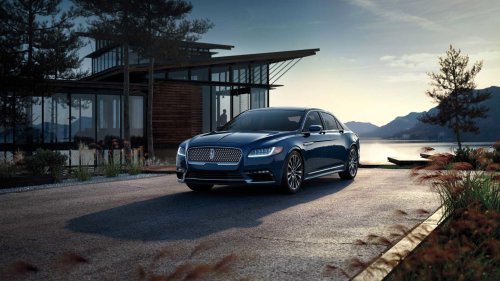
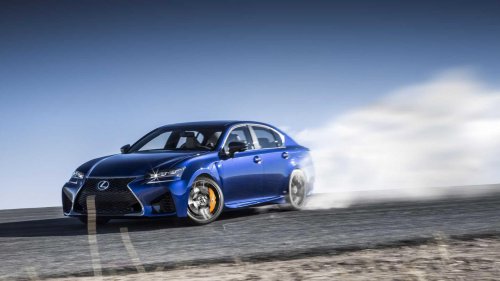
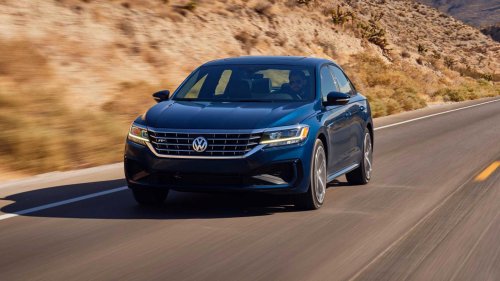
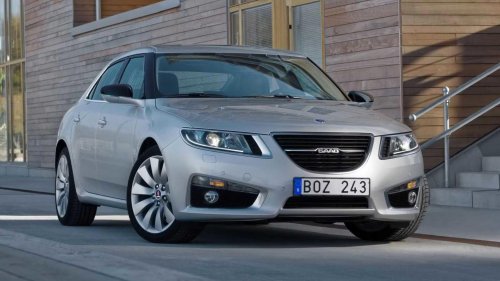
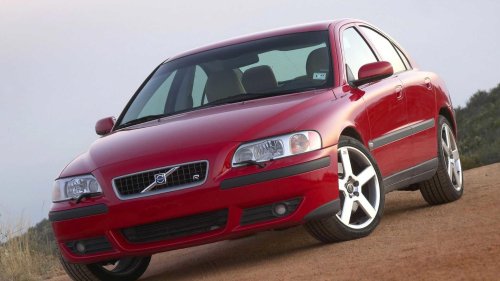
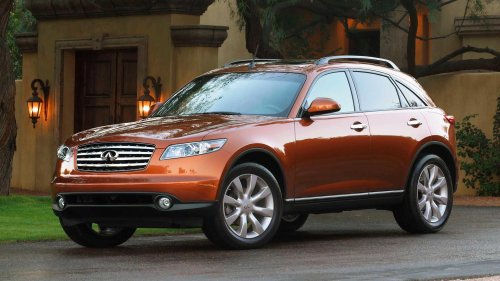
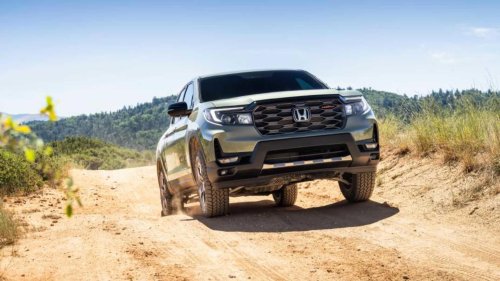
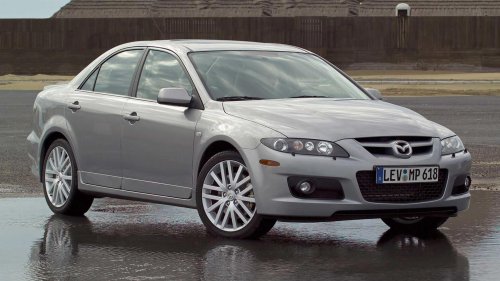
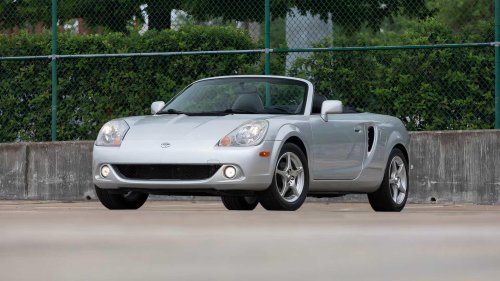
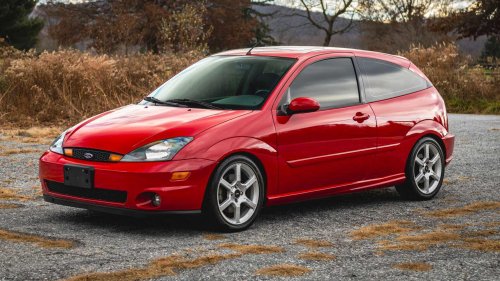


















When a car is great, success usually comes rolling in without much effort. Take the Mk7 GTI, for example. From the time it first hit the streets all the way up until today, owners, journalists, and enthusiasts have not stopped heaping praise on what has very much become one of the greatest hot hatches of all time. This praise turned into sales, and these sales guaranteed a new generation. The Mk7's reputation precedes itself, and this is the case for many other great cars, but for some, the recognition never materializes.There are many reasons why good and great cars fail to receive the recognition and respect they deserve, but the outcome is the same: vehicles that are simply underrated. Once promising cars only talked about by die-hard enthusiasts, while their resale prices drop like rocks, with dreams of one day rebounding. In honor of these vehicles that flamed out much too early, we've selected 10 of the most underrated vehicles of the past 25 years, and there's a little on here for everyone.This article consists of 10 vehicles that failed to garner the respect they deserve from the buying public, and we've placed them in order from oldest to newest. Lincoln Continental 2017–2020 2017 Lincoln Continental front 3/4When the final Lincoln Continental came out, it finally seemed like the return to form for the Lincoln brand we had been waiting for. The car was sharp, with a clean, almost fastback-esque shape that evoked images of much more costly brands, and a quiet interior with some of the most comfortable and nicely appointed seats we've seen from any brand in recent memory. Under the hood, you had a choice of a naturally-aspirated or twin-turbo V6 engine, with the latter putting out an impressive 400 horsepower.It wasn't a sporty sedan; it leaned into its elegance and grace. The iconic throwback coach door version was merely the cherry on top, but it failed to attract the attention the brand was hoping for. Blame some poor interior materials, or an exterior that didn't move the needle far enough, but it doesn't take away from the fact that it's easily one of the best Lincoln models to come out in decades, and makes for one of the greatest used buys today. Lexus GS F 2016–2020 2016 Lexus GS F front 3/4 driftingThe age of RWD, naturally aspirated V8 sedans is dead. Rest in peace. In its stead lie AWD, forced-induced hybrid monsters that would have brought a tear to the eye of anyone involved in the heyday of the sedan segment, and the memories of its greatness. The Lexus GS F was one of the very last of this dead breed, and while it may not beat its competitors on the track or on the streets, its intoxicating blend of performance was something that needed to be experienced to be understood.Lexus's 5.0-liter naturally aspirated V8 is one of the best ever produced, a rev-happy engine with 467 horsepower that scorched the rear wheels when the torque-vectoring rear differential could be overwhelmed. Later models came with an adaptive suspension that did an excellent job of keeping the 4,100 lbs sedan planted on the road, but even at its firmest, body roll was still perceptible. That didn't matter. The car excelled despite its flaws, and it did so defiantly until the end. This is the kind of car you wake up for, and it's a shame it isn't still around. Volkswagen Passat (Last Generation) 2020–2022 2021 Volkswagen Passat front 3/4 drivingWhile not as moving as the previous entries, many forget how great the Passat was in its last US generation. We don't blame them, because it's hard to garner attention when you're going up against juggernauts like the Toyota Camry and Honda Accord, but the Passat never trailed too far behind them, boasting a spacious, smooth, and refined ride. The tried-and-true 2.0-liter engine offered strong low-end torque to make daily driving effortless, and it returned impressive fuel economy.The interior wasn't ostentatious, but the materials, fit, and finish gave it a premium quality that made sinking into the driver's seat rewarding after a long day. It was understated in all the best ways, but in a segment where more is more, and reliability is king, it could never muster the strength for that final sprint to the finish line. In many ways, it was the perfect encapsulation of what a mid-sized sedan should be, which makes its death that much more bittersweet. Saab 9-5 2010–2011 2010-2012 Saab 9-5 Sedan Front 3/4The final Saab 9-5 was just the right car at just the wrong time. Introduced right at the tail end of GM's bankruptcy proceedings, Saab gained a lifeline in Spyker to survive a little longer, and, in this window, the final generation 9-5 was allowed to flourish. Produced for less than 12 months, it featured a strikingly modern look, unlike anything we had seen from the company, yet with classic aviation-inspired design elements, that classic wraparound windshield appearance, and an unconventional silhouette that would never let you forget this was a Saab.The cockpit was driver-focused, with plenty of premium materials, and the top Turbo6 and Aero trims boasted 300 horsepower and the brand's famous XWD all-wheel drive system. It was poised to be a true player in the mid-sized luxury sedan segment for the first time, but it was never meant to be. Underrated, tragically forgotten; however you want to characterize this model, it certainly deserved better. Volvo S60 R 2004–2007 2001 - 2004 Volvo S60 - front 3/4 angle The S60 R was Volvo at its most daring. Well, 20 years ago, that is. It had been dabbling in performance models for decades at this point, but the introduction of the R badge a decade prior opened up new doors, especially to body styles beyond their famed blocky wagons. The S60 was the perfect choice for the brand's new high-performance transformation. It started with the engine, its famed inline-five, which was turbocharged to produce 300 horsepower and 295 lb-ft of torque.This was sent to an advanced Haldex AWD system, which was kept planted on the pavement by an adjustable suspension and brought to a halt by some beefy Brembo brakes. It was refined, fast, and attractive, yet it's always lived in the shadow of its V70 wagon sibling despite being just as good and sharing that incredible shifter design. It's about time that changed. Infiniti FX 2003–2012 2003-2005 Infiniti FX35 front 3/4Alright, we couldn't let this list be completely dominated by sedans, so our SUV pick goes to one of our favorites: the Infiniti FX. Back around the turn of the century, Nissan, and by extension, Infiniti, were in a tough spot, so the higher-ups demanded new and innovative products to reinvigorate the brands. The FX was a product of this effort, an SUV built on the new, sporty FM Platform shared with the 350Z, and draped in sheetmetal that was dangerously curvy and alluring. The design was dubbed the "Bionic Cheetah," and it certainly had the look of a feline that was about to pounce.It was refreshingly new and boasted performance that matched the looks, with the VQ V6 under the hood, or a new V8 offered first as a 4.5-liter unit, and later a 5.0-liter one. The 5.0-liter V8-powered FX50 models were every bit the performance SUV as anything coming out of M or AMG at the time, yet they barely sold, and eventually, the entire line was morphed into the QX before eventually being killed. It was misunderstood, and it suffered because of it. Honda Ridgeline 2006–2014 2025 Honda Ridgeline Trail Sport front quarter off roadOut of all the models on this list, the Ridgeline is the only one still on sale. Some may think that means the model isn't underrated, but, in our opinion, it's been unfairly characterized and vilified by the pickup truck faithful since its inception, and it's about time the record was set straight. This was never a truck that was going to replace the Ford F-150 you bought to tow your 10,000 lbs camper, or the Toyota Tacoma TRD-Pro you use for overlanding.It was, however, meant to be the alternative for nearly everything else, and it would do it all more comfortably and intelligently than many others. It has always been the truck that attempts to reason with the prospective pickup buyer, to genuinely make them question if they really need all of that capability, or if they merely want it. Has it worked? Not really, but sales are obviously enough to justify its existence, and at least now, its naturally-aspirated V6 is a compelling selling point. Doomed to be underrated forever, we guess. Mazda Mazdaspeed6 2006–2007 2006 mazdaspeed 6 front silver 3/4One of the boldest performance experiments of the early 2000s was Mazda's introduction of the Mazdaspeed6. In 2006, Toyota wouldn't have dreamed of coming up with a true high-performance Camry, but Mazda was younger and hungrier, so it devised a model that took its fresh and sporty Mazda 6 and kicked it up a few notches. It gave it a turbocharged 2.3-liter inline-four, a 6-speed manual, and a torque-vectoring AWD system.The looks were hopped up, the suspension was stiffened and lowered, and the brakes were improved. Mazda did everything it needed to do with the model except lower its weight, and this was the Achilles heel that put a damper on its performance numbers. Since most buyers saw it as a competitor to the Subaru WRX and Mitsubishi Lancer Evo, this was a problem, but it was always meant to be more of a sporty GT. This misunderstanding is what killed it so quickly, and has kept it the underrated model it is today, but we finally feel that public opinion may be turning. Toyota MR2 Spyder 2000–2005 2004 Toyota MR2 Spyder SMT front 3/4The MR2 Spyder was created out of Toyota's desire to bring the MR2 name back to the basics of lightweight driving. Many took issue with this after the impressive second-generation MR2, which sported exotic looks and a 200-horsepower turbocharged inline four. However, Toyota felt this car had grown too large and heavy, so it created the Spyder as a more direct, lightweight Miata competitor. It still sported a mid-engined design, but this time the only body style was a convertible, and the only engine was a naturally aspirated inline four.Its 138 hp didn't exactly excite, but the car only weighed a little under 2,200 lbs, so it was still very light on its feet. Additionally, it sported a solid 5-speed manual, but the SMT was the truly fascinating introduction, though many weren't fans. In fact, most weren't fans of the car in general, as the power-obsessed buying public simply couldn't wrap their minds around something like the MR2 Spyder. We think it's about time that changed. Ford Focus SVT 2002–2004 2004 Ford Focus ZX3 SVT front 3/4 redOur final entrant is one we're particularly fascinated with. When the Ford Focus was first introduced, it wore the wild "New Edge" design language that was just the right amount of modern and polarizing to carry the brand into the 21st Century. However, if the brand really wanted to make a mark with it, it needed a performance version, so it handed it over to its Special Vehicle Team to turn it into something special. The team reworked it from the top down, revising the suspension and brakes, exaggerating the looks, and visually lowering the car, and pairing it with some attractive lightweight wheel designs.However, the real magic came under the hood, because it sported a 2.0-liter Zetec 4-Cylinder tuned by Cosworth, and it was paired with a sublime 6-speed close-ratio Getrag manual transmission. The result may not have been the fastest hatchback of the time, but it was easily one of the best-handling, and it carries that mantle still today. Why it doesn't receive more respect in the hatchback community today is still a mystery to us.