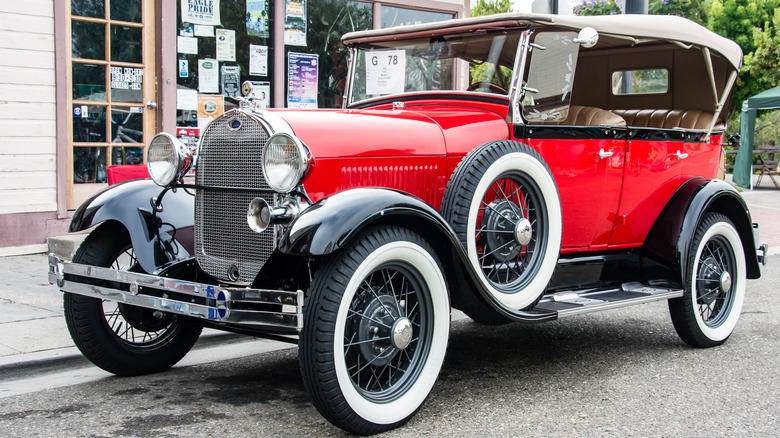
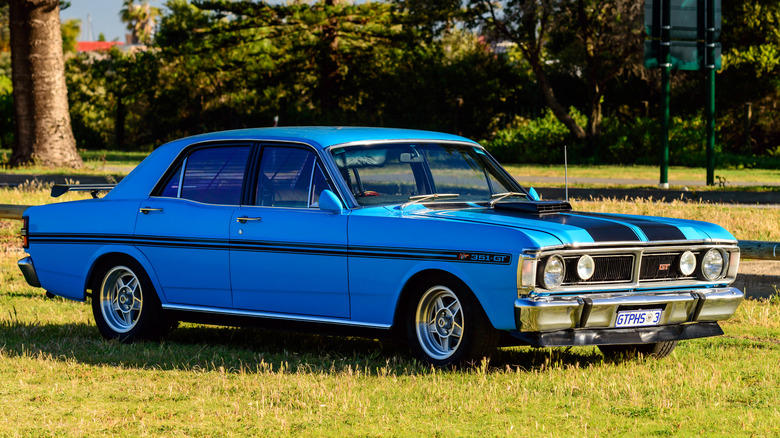



















Ford Model A (1927-1931)The Ford Model A rolled out in 1927 and had a tough act to follow in the legendary Model T. In spite of the pressure, it soared quickly to success — thanks to a mix of improved features and a strategic marketing push that caught the public's attention.Unlike its predecessor, the Model A was available in an array of colors, rather than "any color so long as it's black," as Henry Ford famously said about the Model T. This choice was a hit, and allowed buyers to personalize their purchases. The Model A also introduced technical improvements, like a more powerful engine and the addition of conventional driver controls and safety features, which were modern for the time.The introduction of the Model A was an event in itself. Ford created a massive buzz around its release. It paused the production of the Model T to retool the factory, which built anticipation. When it finally debuted, people were so eager to see it that police were called to manage the crowds at Ford showrooms.Ford's approach paid off with over 4 million units sold by the time production ended in 1931. The Model A is not just remembered for its sales numbers but also for marking Ford's transition into a more modern automaker. During a time of significant change, it was in many ways the model that helped Ford maintain its role in the early automotive industry.Ford Falcon (1960-2016)The Ford Falcon debuted in 1960 and was Ford's answer to America's growing interest in smaller and more economical cars during that era. It enjoyed a successful run for many years, and its appeal wasn't just confined to the U.S. The Falcon found a particularly enthusiastic market in Australia, where it became a cultural icon.The Falcon was truly versatile. It came in several body styles that included sedans, wagons, and even convertibles, which helped it cater to a broad audience. This flexibility meant that whether you were a family needing a reliable daily driver or someone looking for a budget-friendly yet comfortable car, the Falcon had an option for you.From its inception in the early 1960s to the end of its production in 2016, the car found lots of different uses. The Falcon was widely used for police and taxi services as it was known for its durability and reliability. The performance versions, particularly the Falcon GT, became legends on the racetrack and are still celebrated in the muscle car community today. In Australia, the Ford Falcon was more than just popular — it became a symbol of the nation's automotive culture.The Falcon's production run left behind a legacy of reliability, versatility, and a touch of performance, making it one of Ford's most successful and beloved models.