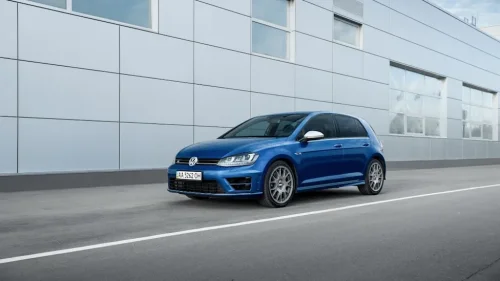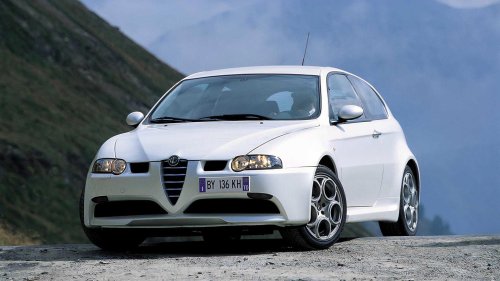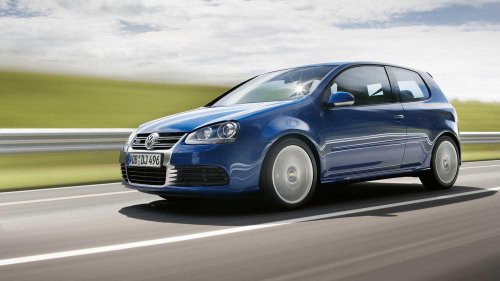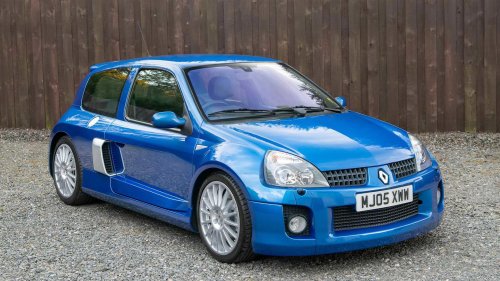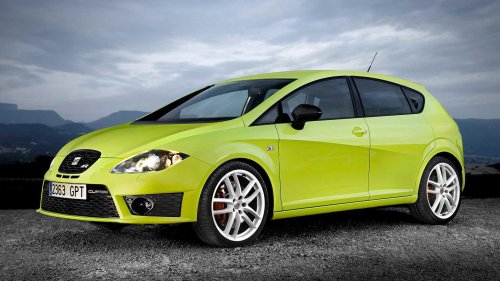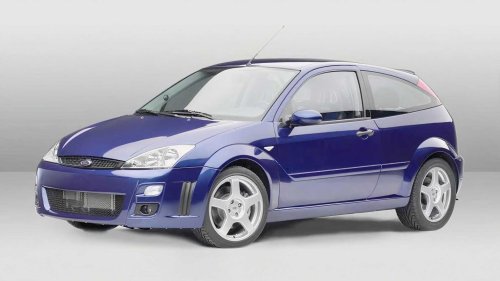
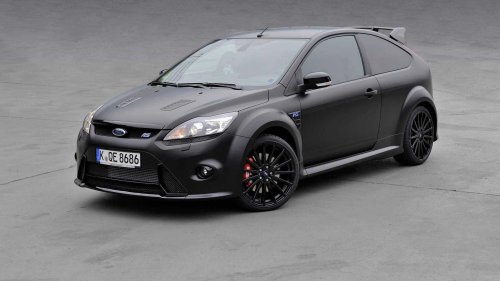
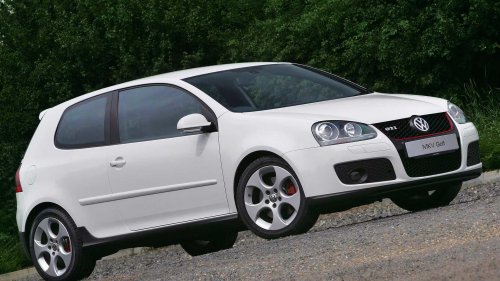





















The 2000s are now often thought of as a golden era when it comes to enthusiast cars. That's certainly the case with hot hatches – a segment that helped bring performance to casual car guys without any of the drawbacks of owning a small sports car. Hot hatches are mainly a European invention, so it's no surprise that most of the greatest hot hatches made during that era were European, and it's the 2000s that most of the greatest ones finally made their debut.Today, the hot hatches on this list are on the brink of becoming classics, rocketing in value and rarity on the market. They come from a variety of different manufacturers. What they all have in common is that they're among the best hot hatches of their era, and any prospective buyer or self-respecting car enthusiast should know about them. Ford Focus RS (Mark I) Ford Racing Performance PartsAre there any 2000s hot hatches that are more iconic than the Mark I Ford Focus RS? It's pretty hard to argue against that. This rally-inspired car is absolutely destined to be a classic in the future, and there are many reasons why. It uses a turbocharged version of Ford's 2-liter inline-4 Zeta engine, producing 212 bhp and 229 lb-ft of torque. This gave it a 0-62 mph time of around 6 seconds, making it one of the fastest hot hatches you could buy at the time. That's especially impressive considering it's front-wheel drive! Ford used a Quaife differential to improve the Focus RS's traction, making it handle a lot better than other front-wheel drive cars of its era and giving the RS some headroom to be tuned.There may have been more powerful hot hatches produced than the Mark I Ford Focus RS during the 2000s. But, this car has gained a legendary status over most of the cars it competed with, and it's entirely because of its fantastic rally car looks and the incredible handling that the trick differential gives it. Ford Focus RS (Mark II) (Ford)The Mark I Ford Focus RS isn't the only version that's worked its way into many lists of the greatest hot hatches of all time. The Mark II version has also become beloved by pretty much everyone who's into performance cars, and like the Mark I, it's destined to become a classic.The Mark II brought an engine change from the 2-liter inline-4 Ford unit to a 2.5-liter inline-5 that was engineered by Volvo. This engine was also used in the Mark II Focus ST, but in the RS, it was given a power bump to 301 hp and 325 lb-ft of torque. It retained the Quaife differential from the Mark I RS, which allowed it to remain front-wheel drive despite the power and torque the new engine had. The result of all of that was a 0-62 mph time of 5.9 seconds and a top speed of 163 mph – seriously impressive figures for its day. The Mark I may have the nostalgia factor, but the Mark II deserves its place, too, among the greatest hot hatches of the 2000s. Volkswagen Golf GTI (Mark V) VolkswagenThe Golf GTI has been the benchmark for hot hatches for pretty much the entire time the hot hatch has been around. While VW sold the underwhelming Mark IV GTI at the start of the 2000s, by the time the middle of the decade rolled around, it had been replaced with the brilliant Mark V. This version of the GTI is beloved by enthusiasts, who saw it as a return to form for the classic nameplate.The Mark V is front-wheel drive and powered by a 2-liter direct injection inline-4 that produces 197 bhp and 207 lb-ft of torque. This power got boosted to 230 bhp for the Edition 30, a limited-run variant produced to mark the Golf GTI's 30th anniversary, and the Pirelli Edition, which had unique wheels and interior details. The Mark V GTI was available with both a 6-speed manual and a 6-speed dual-clutch DSG automatic transmission.Standard Mark V GTIs had a 0-62 mph time of 7.2 seconds with the manual transmission and 6.9 seconds with the DSG, while the Edition 30 and Pirelli Edition are a bit faster. Those may look like fairly weak performance figures today, but back then, it meant the Mark V GTI could hold its own against its competitors. Volkswagen Golf R32 (Mark V) The GTI wasn't the only fast Golf available in the Mark V model lineup – Volkswagen also offered the Golf R32 during this generation. The R32 nameplate had been introduced for the Mark IV, and it carried on from where the Golf VR6s of old left off. The Mark V R32 has a 3.2-liter VR6 that produces 247 bhp and 236 lb-ft of torque. This power went to all four wheels through a 6-speed manual or a 6-speed DSG automatic transmission and VW's Haldex-developed 4MOTION all-wheel drive system. The result of that was a car that could accelerate from 0-62 mph in 6.5 seconds for the manual and 6.2 seconds for the DSG.The spirit of the R32 lives on in today's Golf R. But, it doesn't have that VR6 engine, which was a huge part of why the R32 was so legendary. It's not surprising that many enthusiasts would rather choose an old R32 over a newer Golf R – there's just something about those VR6-engined Golfs that's magical. Seat Leon Cupra R (Mark I) We did mention the underwhelming Mark IV Golf GTI briefly earlier. While this car was not great in VW form, it did end up being much better when it was turned into the Mark I Seat Leon Cupra R! This hot hatch really put Seat and the Cupra nameplate on the map for performance car enthusiasts. It looked a lot better than the Mark IV Golf GTI thanks to its Giugaro-penned design, and it had a more powerful version of the 1.8-liter turbocharged inline-4 (the VW Group's legendary 20v Turbo engine) that produced 207 bhp and 199 lb-ft of torque in 2000-2003 models and 222 bhp and 207 lb-ft of torque in 2003-2006 models. It was also generally better to drive than the Mark IV Golf GTI, with better handling and a more enjoyable feel in general.The Mark I Seat Leon Cupra R is often considered to be one of the best hot hatches of all time. When you consider it shares underpinnings with that underwhelming Mark IV Volkswagen Golf GTI, that really is an achievement! The Cupra and Cupra R nameplate became a fixture for the Seat Leon from then on, before Cupra became its own brand, and the performance Leons adapted that branding over the Seat badge. Renault Megane RS R26 In the world of '00s hot hatches, the Renault Megane RS often goes forgotten. That's a shame in some ways, as it was a genuinely great car with lots of character. That's especially the case for the more hardcore R26 model. This was built to celebrate Renault's triumphs in Formula 1 in 2005 and 2006. The R26 in its name actually comes from the name of Renault's 2006 F1 car. Its 2.0-liter turbocharged inline-4 produces 227 hp and 229 lb-ft of torque, and it gained all the tweaks from the Cup Chassis option on the regular version of the Mark I Megane RS as standard. This included a limited-slip differential, helping to improve handling.Later versions of the Megane RS have been lauded as brilliantly underrated hot hatches. That's something that very much started with this somewhat forgotten gem. The masses may not remember the Megane RS R26, but those who know their European hot hatches will mention it as one of the best you could get back in the 2000s. Mini Cooper S (R53) MiniWhen BMW revived the Mini brand for the 2000s, it was inevitable that a new version of the Mini Cooper S would come along at some point. That's what was delivered with the R53 Cooper S, and it's gone on to have a legendary reputation in the world of hot hatches. It had a 1.6-liter supercharged inline-4 made by Chrysler, producing 163-170 hp and 155-162 lb-ft of torque (depending on what version and model year it was).This power went to the front wheels through a 6-speed manual transmission. While this doesn't seem like a lot of power, the R53 Mini was very light at 2,678 lb for the Cooper S version. This made it a genuinely nippy supermini, putting it on par with other small performance cars of the day.Interestingly, the R53 Cooper S was the first Mini to be sold with run-flat tires as standard. This was due to the car's battery having to be relocated to the back to make space for the supercharger. This meant that there wasn't space for a spare tire. Renaultsport Clio 182 If you ask any hot hatch enthusiast from Europe about the great hot hatches available there during the 2000s, they will always mention the Renaultsport Clio 182. There's a very good reason for that. This car provides a lot of what people would expect out of lightweight analogue sports cars, but it's a supermini with a powerful engine! Its 2.0-liter inline-4 engine produced 180 hp (or 182 PS, hence the 182 name) and 148 lb-ft of torque. That's a lot for a car that only weighs just over 2,400 lbs, and that made it much quicker and much more fun than people might have expected. This power went to the front wheels through a 5-speed manual transmission, helping to give it that super analogue feel that enthusiasts love about it. Alfa Romeo 147 GTA The Alfa Romeo 147 GTA is possibly one of the most infamous hot hatches ever made. It seems like Alfa's engineers had a sudden mad rush of blood to the head when they made this! Alfa took the fairly sedate 147 hatchback (a competitor to the Volkswagen Golf, Ford Focus, and Honda Civic, among others) and put the iconic Busso V6 into it.This version of the Busso was 3.2 liters in size and produced 247 hp (around 100 hp more than the 2-liter Twin Spark variant that was the second most powerful 147 at the time) and 221 lb-ft of torque. This resulted in a 0-62 time of 6.3 seconds and a top speed of 153 mph. If that 0-60 mph time doesn't sound impressive for the amount of power it has, it's because Alfa Romeo made the utterly baffling decision of keeping the 147 GTA front-wheel drive and not giving it a trick differential like the Ford Focus RS. This resulted in a car that was quite difficult to handle when it was being pushed.While the 147 GTA does have its difficulties, the fact that it even existed in the first place puts it among the 2000s hot hatch greats. Owners also worked out how to tame the difficult handling by fitting them with Quaife or Torsen differentials. With a bit of fettling to fix the baffling decisions Alfa made in its development, this car becomes truly special and one of the most unique driving experiences you could possibly have. Renault Clio V6 Bring a TrailerYou thought things couldn't get any crazier than the Alfa Romeo 147 GTA? Think again! The Renault Clio V6 is perhaps one of the most deranged concepts for a hot hatch that has ever existed. It's a throwback to the days of Group B homologation specials, where mental mid-engined hatches like the Renault 5 Turbo 2, Peugeot 205 T16, and Austin Metro 6R4 were developed specially to wreak havoc in this legendarily scary form of rallying.The Renault Clio's platform was heavily modified to deal with the change to a mid-engined, rear-wheel drive layout, the engine going where the rear seats would go in every other Clio model. The body also got big, flared wheel arches and bold new side intakes for the engine.Both Phase I and Phase II versions of the Clio V6 were powered by a 2.9-liter Peugeot-derived V6. This produced around 227 bhp and 221 lb-ft of torque in Phase I cars and 252 bhp and 221 lb-ft of torque in Phase II cars. The Phase II Clio V6 actually ended up becoming the most powerful hot hatch on sale when it was launched! Combined with its light weight (2,987 lb for Phase Is and 3,086 lb for Phase IIs), and you've got a terrifyingly fast hatchback that could genuinely hang with some of the prime sports car offerings of the 2000s.Sources: Alfa Romeo, Ford, Mini, Renault, Seat, Volkswagen