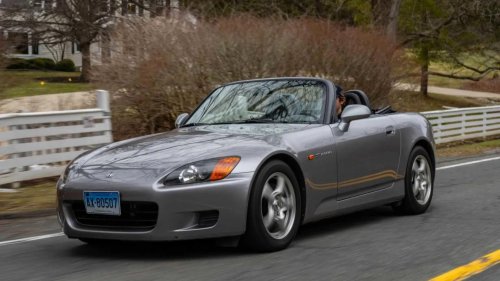
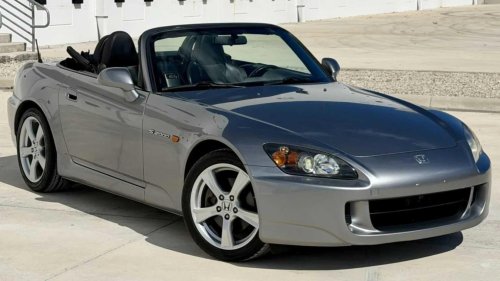
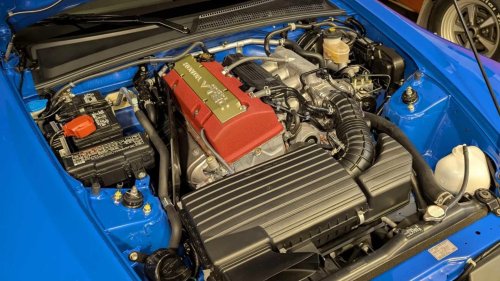
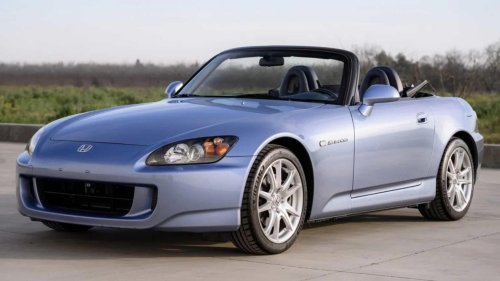
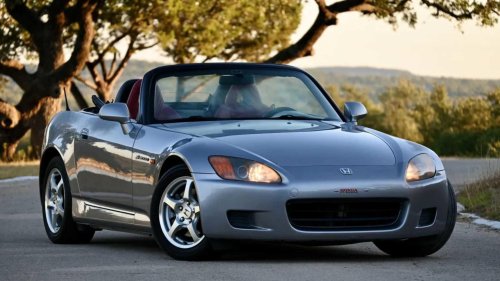
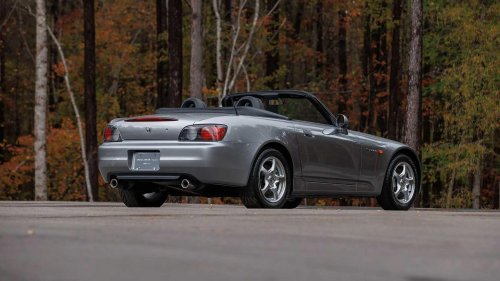
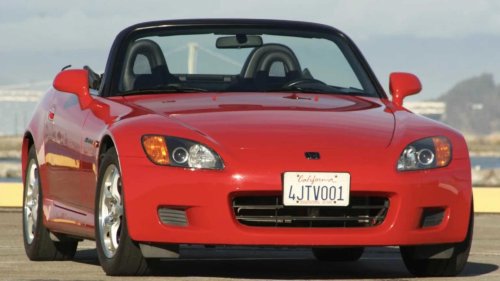
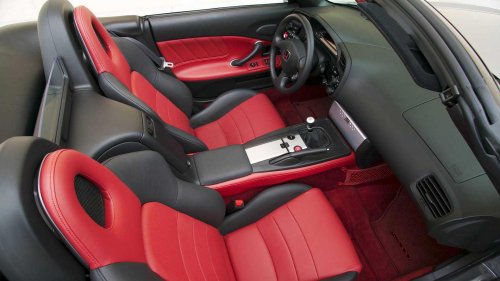
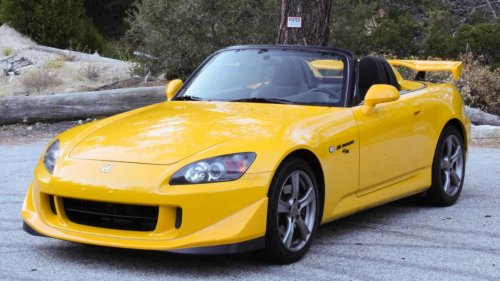
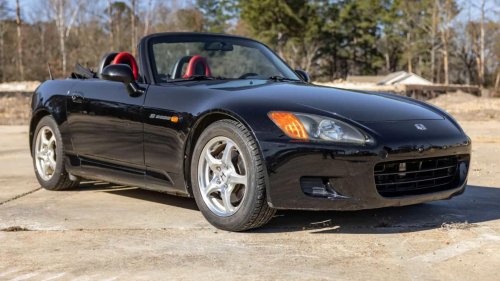



















The Honda S2000 is a sports car that exhilarates. From the first gear, you feel the vehicle stretch, while the engine note sharpens, and then, as it rises past 6,000 RPM, the VTEC hits like a second personality. If you keep your foot down and allow the tachometer to sweep toward 9,000 RPM, expect the Honda S2000 to give you a mechanical crescendo that modern turbocharged sports cars simply can't replicate.Built as a birthday present to Honda after 50 years on the automotive scene, the S2000 was never meant to be ordinary, but an engineering statement. The small sports car was designed as a rear-wheel-drive, with near-perfect balance and one of the best naturally aspirated engines ever put into a production car. More than two decades later, the S2000 sits in a unique space. For some, it’s no longer just a used sports car, but a collector’s icon gaining value as the industry moves further away from analog driving purity, while remaining hidden in plain sight. The Birth Of A Legend — How Honda Built Its Greatest Sports Car Honda Unveiled for the first time on the exact day of Honda’s 50th anniversary, the S2000 wasn’t built as a nostalgia piece. When the Honda S2000 debuted in 1999, it was clearly designed as a driver’s car, the purist’s option, unapologetically focused on precision, balance, and engagement. To achieve this, the formula Honda implemented was simple yet demanding: they needed a rear-wheel drive configuration with a front-engine and near-perfect 50/50 weight distribution. Then, they threw in a rigid chassis and double-wishbone suspension at all four corners, giving the sports car market a platform that rewarded skill rather than masking it.Honda It was built from 1999 to 2009 and sold 110,673 units worldwide, over 66,000 of them in the United States. From 1999 to 2003, the Honda S2000 was offered in the AP1 trim, which was high-revving, raw, and uncompromising. From 2004 to 2009, it came in the AP2 trim, a more refined option, with improved stability and usability. When Honda transitioned the S2000 from the AP1 to the AP2 trim, they introduced a slightly larger engine with revised suspension tuning and subtle styling updates. The particular vehicles designed for the US market received changes that were tailored to emissions and drivability, but Japanese models retained some sharper edges. Movies like The Fast and the Furious, with Suki using the bright pink “suki car”, helped the S2000 break into mainstream recognition overnight. What Lives Under the Hood — The Engine That Rewrote The Rules Bring A TrailerTo provide us with this legendary sports car, Honda had to produce one of the greatest engines ever made: the F20C. This was the original engine the AP1 was fitted with in 1999. This was a 2.0-liter naturally aspirated inline-four engine that churned out 240 horsepower while revving to 9,000 RPM. From ignition, it could deliver approximately 120-124 horsepower per liter, which was an extraordinary figure that was a benchmark for years. In 2004, when Honda launched the AP2, the company introduced the F22C1, a 2.2-liter version producing 237 horsepower. While peak power dropped slightly, the new engine provided a 10% boost in torque, peaking at 162 pound-feet against the previous engine’s 153 pound-feet, making the car more usable in everyday driving.Honda The AP2 was actually more responsive in normal traffic, even though the "screaming" top-end was slightly muted. However, both engines used Honda's VTEC (Variable Valve Timing and Lift Electronic Control) on both intake and exhaust camshafts. This was a defining character trait. The engine feels precise below the crossover point, but restrained, while above it, airflow increases, the cam profile changes, and the engine transforms, pulling hard all the way to redline. Both trims had similar and quite impressive performance figures, hitting 0–60 mph times of approximately 5.4-5.8 seconds, a top speed of 150 mph, and a quarter-mile in the mid-13-second range. Both S2000 trims weighed around 2,800 pounds, which was a major part of their performance, ran on rear-wheel drive, and had a perfectly balanced chassis. Rivals like the Mazda MX-5 Miata, Porsche Boxster, and BMW Z3 didn’t have the kind of razor-sharp focus and race-inspired engine the Honda S2000 had. AP1, AP2, And The Holy Grail CR — Breaking Down Every S2000 Variant Honda The AP1, which was the Honda S2000 produced between 1999 and 2003, was the purist’s S2000. Its lightning-fast steering, F20C engine, and short-wheelbase dynamics came together to give enthusiasts a raw and demanding experience. This version was also the closest to the car’s original identity. By the time the AP2 came around in 2004, refinement took center stage. It came with an engine with a larger displacement, improved stability, and a revised suspension geometry, making the car more forgiving on the roads. The interior also came with a few upgrades, like keyless entry.Broad Arrow AuctionsIn the U.S. between 2008 and 2009, Honda offered the S2000 CR (Club Racer) trim, which was the rarest and most focused variant. This trim didn’t come with a spare tire, but had stiffer suspension, added aerodynamic components, and track-focused tires. With only 699 units produced, this track-focused version is the collector’s choice today. In Japan alone, Honda released the S2000 Type V from 2000 to 2007. This was the world’s first production car to feature Variable Gear Ratio Steering (VGS). While the U.S. received the CR, Japan received the Type S, which was the "Street-Spec" CR, which had a slightly more "forgiving" suspension tuning than the U.S. model, used yellow and black Alcantara interior, and produced 239 horsepower. Buying an S2000 In 2025 — What To Look For Before You Sign Honda Patience is your biggest advantage if you’re browsing for a Honda S2000 for sale. If driving purity is your goal, choose the AP1. If you’re looking for refinement, go for the late AP2 models produced between 2006 and 2009. The S2000 CR is the collector’s obvious choice. But check for these common issues, the first of which is rust in the frame rails, rockers, and/or trunk floor. Every old car suffers from rust. Next is to check for engine wear due to high-rev use. Expect this on any vehicle that was produced for the track, or has such capacity. Make sure you don’t skimp on compression tests.Honda Also, check the soft top for wear. Run tests on the transmission to check for synchro wear in the 6-speed gearbox. Aftermarket modifications are common, so check the quality of these mods. Mileage may not be a deal-breaker on these engines since they were built to rev, but don’t skimp on the maintenance history. This matters far more than odometer readings. If you’re cross-shopping, you might also come across cars like the Acura Integra Type R lineage, Miata, or even used Porsches; only a few deliver the same experience. The S2000’s Rising Value — Collector Car Or Daily Driver Investment? HondaYou can find first-generation Honda S2000 AP1 units from 1999 to 2003 for sale between $16,800 and $36,000, depending on mileage, condition, and model year. Some units in pristine condition sell for as much as $43,000. Collector-grade units could command significantly more. However, the average good-condition first-generation S2000 for sale sells for $27,000. On the other hand, AP2 S2000 units available for sale sell for a minimum of $21,000 and could rise to about $40,000 for a unit in proper condition. A 2009 Honda S2000 with 10,000 miles sold for $63,000 in February 2026.Honda The Club Racer S2000 typically commands a premium compared to the regular AP2 trim. Prices tend to range from $45,000 to over $100,000 for units with very low mileage and in pristine condition. For instance, a 2009 Honda S2000 CR with 1,200 miles sold for $110,000 in November 2025. Another 2009 Honda S2000 CR with just 993 miles sold for $102,000 a year prior. A few months before that, a 2009 Honda S2000 CR with 150 miles had sold for $170,000. So, why the price surge of the Honda S2000 as a whole? With production limited to under 114,000 units globally and no direct successor, coupled with the growing demand for analog sports cars, vehicles like the S2000 are becoming the enthusiasts’ alternative to sports cars like the Acura NSX or AE86.The Honda S2000 is a capable daily driver with adequate ride quality, reduced cabin noise, and just enough practicality to remind you it’s primarily a sports car. However, as a weekend car or a collector piece, which explains why a unit would have been driven just 150 miles after almost two decades, it’s nearly unmatched.FAQQ: Why is the Honda S2000 so expensive now?Limited production, no successor, and increasing demand for analog sports cars have driven prices up—especially for clean, unmodified examples.Q: What is the difference between AP1 and AP2 S2000?AP1 features the 2.0L F20C with sharper dynamics, while AP2 uses a 2.2L engine with improved torque and more refined suspension tuning.Q: How much horsepower does a Honda S2000 have?AP1 models produce 240 hp, while AP2 models produce 237 hp, both from naturally aspirated engines with exceptionally high output per liter.Q: Is Honda bringing back the S2000?There’s no confirmed revival. While concepts have been teased, nothing concrete has been announced.Q: What year S2000 is the best to buy?AP1 for purists, 2006–2009 AP2 for balance, and CR models for collectors.